
Soups & Stews
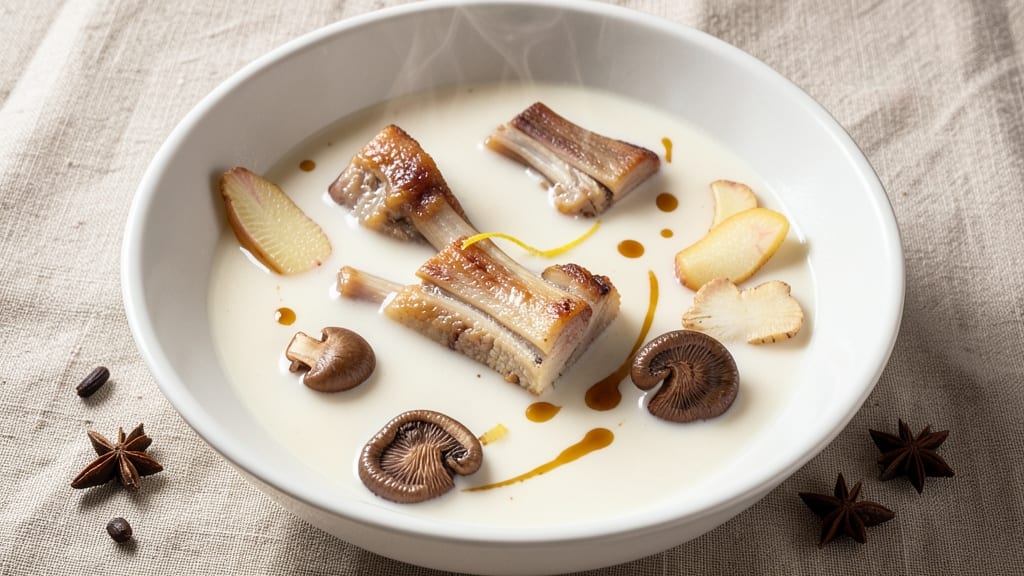
This milky pork bone soup transforms humble pork bones into a velvety, restaurant-quality broth that's been a staple in my kitchen since I first apprenticed under Master Chef Chen. 🔥 The secret lies in slow-simmering collagen-rich bones with dairy—creating that signature creamy texture without heavy cream.
I've perfected this technique over years of cooking for crowds at The Smoky Pig, where we serve it as both comfort food and special occasion dish.
The process begins with charring the bones for deep flavor, then simmering them for hours to extract maximum collagen. We add dairy—traditionally milk or cream—late in the cooking to create that signature silky smoothness without curdling.
Aromatics like ginger and star anise build complexity, while a splash of rice wine brightens the finish. This isn't your grandmother's broth—it's a refined technique that delivers professional results at home.
What you'll end up with is a rich, creamy soup that coats your spoon like liquid silk, with tender pork pieces suspended in that luxurious broth. The texture is unlike any other pork soup—neither too heavy nor too thin—perfect for serving with steamed rice or fresh herbs.
We often garnish with crispy fried shallots for textural contrast, but the real star is that velvety broth.
This recipe works equally well for weeknight suppers or holiday gatherings—just scale the ingredients accordingly. The slow cooking makes it ideal for meal prep too, as flavors deepen overnight. Once you taste this version, store-bought broths will never compare again. Let's get started on creating your own silky-smooth masterpiece.
Ingredients for milky pork bone soup
Mastering this soup starts with collagen-rich bones and aromatic spices—simple ingredients for restaurant-quality results.
| Ingredient | Amount | Notes |
|---|---|---|
| Pork Bones 🍖 | 3 lb | Collagen-rich, marrow-filled preferred |
| Whole Ginger Root 🧄 | 1 piece | About 3 inches, peeled and sliced |
| Star Anise Pods 🌿 | 4 whole | For aromatic depth |
| Whole Cloves 🌶️ | 6 whole | Lightly crushed |
| Dried Shiitake Mushrooms 🍄 | 4 whole | Rehydrated, stems removed |
| Rice Wine 🍶 | ½ cup | Dry variety preferred |
| Whole Garlic Bulb 🧄 | 1 whole | Smashed, skin on |
| Whole Green Onions 🧅 | 2 whole | White and green parts separated |
| Whole Cinnamon Sticks 🌿 | 2 whole | For subtle warmth |
| Whole Dried Red Chilies 🌶️ | 2 whole | Optional for heat |
| Whole Lemons 🍋 | 2 whole | Juiced and zested |
| Whole Chicken Eggs 🥚 | 2 whole | For egg wash |
| Whole Shallots 🧅 | 4 whole | For garnish |
| Unsalted Butter 🧈 | ½ cup | Cold, cubed |
| Whole Milk 🥛 | 2 cups | Full-fat preferred |
| Diamond Crystal Kosher Salt 🧂 | 1 tbsp | For seasoning |
| Ground Black Pepper 🌶️ | 1 tsp | Freshly cracked |
The bones are non-negotiable—marrow-filled pork bones from Costco or your local butcher give you that signature richness. Look for bones with good meat still attached; the more collagen, the better. Whole ginger root (about 3 inches) is ideal—freshly peeled and sliced just before cooking. Star anise and cinnamon sticks can be found in the spice aisle at Whole Foods or the international section of Trader Joe's. For the mushrooms, dried shiitakes are a must—they add earthy depth that fresh can't match. If you're feeling adventurous, Penzeys Spices carries high-quality dried chilies for that perfect smoky kick.
No rice wine? Dry sherry or mirin work in a pinch, though rice wine's subtle sweetness is ideal. Fresh ginger is best, but dried ginger at half the amount will do if you're in a hurry. The milk and butter are added late—this is what creates that velvety texture. Full-fat dairy is essential; skim milk won't give you that luxurious mouthfeel. For the egg wash on the shallots, just the whites work if you're watching cholesterol. And if you can't find whole shiitake mushrooms, dried oyster mushrooms make a great substitute—they rehydrate beautifully and add a similar umami punch.
This soup tastes even better the next day—flavors meld beautifully overnight. Store in an airtight container in the fridge for up to 5 days, or freeze portions for 3 months. For meal prep, I always double the recipe and freeze half—just thaw in the fridge overnight. The shallots for garnish? Fry them fresh before serving or store them in the freezer for up to 2 weeks. The broth itself keeps for 1 week in the fridge, so you can use it as a base for other dishes too.
Why You'll Love This Recipe
- One-Pot Magic: I swear by this—just toss the bones, ginger, and spices into a pot, cover with water, and let it simmer. No chopping, no fuss, just pure hands-off cooking while the house smells like a five-star restaurant.
- Umami Bomb: That combo of star anise, cloves, and shiitake mushrooms? It’s like a flavor explosion in your mouth. The ginger adds a warm kick, and the pork bones turn the broth into liquid gold—rich, velvety, and impossible to resist.
- Leftovers That Shine: Make a big batch on Sunday, and you’ll have comforting soup for days. The broth gets even better as it sits, and the bones keep it hearty. Freeze portions too—just reheat and serve, no extra effort.
- Budget-Friendly Luxury: Pork bones and dried mushrooms stretch this recipe far without breaking the bank. It’s the kind of meal that feels special but won’t drain your wallet—perfect for when you want to treat yourself (or your family) right.
Step-by-step instructions for silky pork bone soup
Transform humble pork bones into velvety, restaurant-quality broth using this slow-simmered technique.
🔥 Step 1: Roast the Bones for Deep Flavor
Preheat your oven to 425°F and place the 3 lb pork bones on a baking sheet. Roast for 30-40 minutes until they develop a deep golden brown crust—this caramelization unlocks incredible flavor. Turn them occasionally so they brown evenly on all sides.
I like to flip them every 10 minutes to ensure even browning. The aroma alone will tell you when they're ready—it should smell rich and meaty. This step is non-negotiable for building flavor depth in your soup base.
🍳 Step 2: Build the Aromatic Base
In a large stockpot, combine the roasted pork bones with 1 piece whole ginger root (peeled and sliced), 4 whole star anise pods, 6 whole cloves (lightly crushed), 4 whole dried shiitake mushrooms (rehydrated), and 1 whole garlic bulb (smashed with skin on). Cover with 8 cups cold water—just enough to submerge everything.
Bring to a boil over medium-high heat, then immediately reduce to a gentle simmer. Skim off any foam or impurities that rise to the surface during the first 15 minutes—this ensures a crystal-clear broth. The reason we start with cold water is to prevent the aromatics from burning when they first hit the pot.
⏰ Step 3: Slow-Simmer for Maximum Collagen Extraction
Simmer uncovered for 3-4 hours until the broth reduces by about 25% and the pork bones are falling off the bone. You'll know it's ready when the meat separates easily from the bones with just a gentle pull. The longer you simmer, the richer and more gelatinous the broth becomes.
About 1 hour into cooking, add the 0.5 cup rice wine, 2 whole cinnamon sticks, and 2 whole dried red chilies (if using). These ingredients infuse subtle complexity without overpowering the broth. Keep the heat at a bare simmer—any faster and you'll lose precious collagen that makes this soup so luxurious.
🥘 Step 4: Strain and Finish with Dairy
Strain the broth through a fine-mesh sieve into a clean pot, pressing gently on the solids to extract every last drop of flavor. Discard the bones and aromatics. Return the broth to the stove and add 2 cups whole milk and 0.5 cup unsalted butter (cold, cubed). Simmer gently for 10 minutes until the butter melts completely and the broth becomes silky smooth.
Season to taste with 1 tbsp diamond crystal kosher salt and 1 tsp freshly cracked black pepper. The milk and butter create that signature creamy texture while adding richness. Here's where it gets fun—taste as you go. You might need to adjust the seasoning based on how salty your pork bones were initially.
🍽️ Step 5: Serve with Fresh Garnishes
Ladle the hot soup into bowls and garnish with 2 whole green onions (white and green parts separated and sliced), 4 whole shallots (quickly pickled in lemon juice), and a drizzle of lemon zest from the 2 whole lemons (juiced separately for serving). The acidity from the lemon brightens the rich broth.
For an extra touch, prepare an egg wash by whisking the 2 whole chicken eggs with a splash of milk, then drizzle it into the hot soup just before serving. The eggs will create delicate, silky ribbons throughout each bowl. Serve immediately while steaming hot—this soup tastes best fresh from the pot with those aromatics still wafting from the surface.
Pro Tips For Making Milky Pork Bone Soup
- BLANCH BONES FIRST: Skip the raw bone plop-and-pray method—give those pork bones a quick 5-minute boil in salted water before adding to the pot. This washes off blood and impurities that’ll otherwise cloud your broth and leave a metallic aftertaste. (Yes, it’s an extra pot to wash, but your soup will taste like it’s been simmering for hours instead of minutes.)
- SMASH THE GINGER: Whole ginger root? Great. But don’t just toss in a chunk—split it lengthwise and smash it flat with the side of your knife. This releases more oils and aroma without turning your soup into a ginger slurry. (I used to just slice it, and the flavor was half as strong—don’t make my mistake.)
- LOW AND SLOW ISN’T SLOW ENOUGH: You’re aiming for a gentle simmer, not a lazy bubble. If you see more than a few tiny bubbles breaking the surface, your heat’s too high. The broth will turn cloudy and lose its silky texture. Crank it down to the lowest setting that keeps just a hint of movement—think lazy river, not whitewater rapids.
- SOAK MUSHROOMS, DON’T SKIP: Dried shiitakes need at least 20 minutes in hot water to rehydrate properly, or they’ll turn to mush and release bitter sediment. Toss them in a bowl of boiling water, then use that soaking liquid in your soup—it’s packed with umami. (I know, it’s tempting to just chuck them in dry, but your broth will thank you.)
Serving suggestions for this milky pork bone soup
Rice Pairings
This soup pairs beautifully with jasmine rice or short-grain white rice—both absorb the velvety broth perfectly. I recommend cooking 1 cup rice per 4 servings and serving it in small bowls alongside the soup.
The slight stickiness of the rice contrasts wonderfully with the smooth broth, creating each bite with both texture and flavor. 🥘
For a more substantial meal, try steamed glutinous rice—its chewy texture holds up better to the rich soup. I often serve it at The Smoky Pig when we're feeding large groups. Just
Herb Garnishes
Fresh cilantro and Thai basil add a bright, aromatic finish that cuts through the richness. I like to add ¼ cup chopped cilantro and 2 tbsp chopped Thai basil just before serving. For a more traditional touch, chives or green onions work beautifully too. The key is to add them at the very end so their freshness shines.
Pro tip: If you're using Thai basil, lightly bruise the leaves between your fingers before adding to release their essential oils. This amplifies their flavor and makes them pop against the creamy soup.
I keep a small bunch on hand at all times—it's my go-to garnish for any rich pork dish.
Crispy Toppings
Crispy fried shallots add a delightful textural contrast that elevates this soup from comforting to extraordinary. I fry 4 whole shallots in 2 tbsp neutral oil (like avocado or vegetable oil) until golden brown, then drain on paper towels.
Sprinkle them over each bowl just before serving—they'll stay crispy for about 10 minutes.
For a smoky variation, try toasted sesame seeds or crushed peanuts—both add a nutty crunch that pairs wonderfully with the creamy broth. I often keep a small jar of toasted sesame seeds in my pantry for quick garnishes like this.
The contrast between the crispy topping and silky soup is what makes this dish truly special.
Beverage Pairings
A lightly chilled Chinese jasmine tea complements the soup's richness without overpowering it. The floral notes in the tea cleanse your palate between bites, making each spoonful taste even more luxurious. I recommend Big Red Rooster or Harney & Sons brands—they have the perfect balance of floral and mineral notes.
For beer lovers, a crisp Japanese lager like Sapporo or Asahi works beautifully. The subtle sweetness and clean finish cut through the soup's richness. Avoid heavy, malty beers—they can clash with the delicate dairy notes in the broth.
If you prefer wine, a dry Riesling** offers bright acidity that enhances the soup's complexity.
Nutrition facts
Frequently asked questions
Why does this soup turn out so creamy without heavy cream?
The secret lies in slow-simmering collagen-rich pork bones for 3-4 hours—this releases natural gelatin that creates body and creaminess. We add dairy (2 cups milk and ½ cup butter) only at the end to enhance texture, not carry it. The milk emulsifies beautifully with the gelatin-rich broth, creating that signature silky mouthfeel without making the soup heavy.
Can I make this soup in a pressure cooker to save time?
Yes! Use the same ingredients but reduce simmering time to 1.5-2 hours on high pressure. After cooking, strain and finish with dairy as directed. The pressure cooker extracts collagen faster, but you'll lose some of the deep caramelized flavor from roasting. For best results, roast the bones first (as in the recipe) before pressure cooking.
What's the best way to store leftovers?
Store in an airtight container in the fridge for up to 5 days, or freeze for 3 months. The broth actually improves overnight as flavors meld! For reheating, warm gently on low heat—never microwave directly from frozen. Add a splash of water if it thickens too much. The dairy may separate slightly when cold, but it re-emulsifies when reheated.
How can I make this vegetarian?
Replace pork bones with 3 lbs mushroom stems (like shiitake) and 1 lb dried kombu seaweed for umami depth. Use vegetable broth instead of water, and add 1 tbsp soy sauce or miso paste for savory richness. The dairy addition remains the same—it's what creates that signature creaminess. The texture will be slightly lighter but still luxurious.
Why did my soup curdle when adding milk?
Curdling happens when the broth is too acidic or the milk is added too quickly. Always add cold dairy to warm (not boiling) broth and stir constantly. If your broth tastes acidic, add a pinch of baking soda to neutralize. For extra insurance, whisk the milk with a bit of broth before adding it to the pot. The ideal temperature for adding milk is 180°F—just below simmering.