
Main Courses
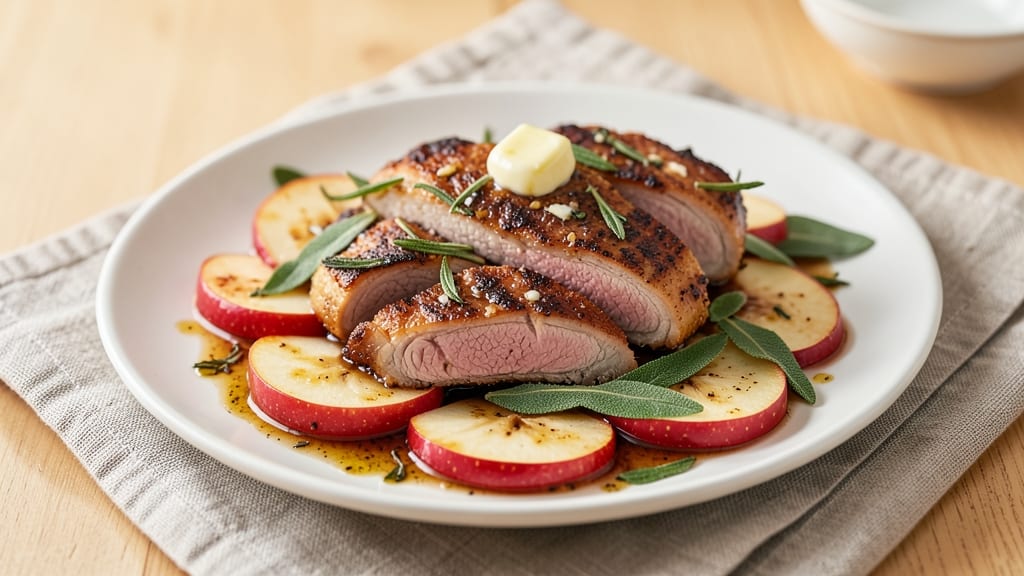
This apple sage pork chop recipe delivers tender, juicy pink hearts with a fragrant crust that makes every bite unforgettable. I developed this method after years of perfecting pork chops for my restaurant—where the balance of sweet apples and earthy sage transforms simple protein into something extraordinary.
The secret lies in a two-stage cook, ensuring crisp edges without drying out the center.
You'll start with bone-in chops seared in a cast iron skillet until golden, then finish in the oven with sliced apples and fresh sage. This technique guarantees restaurant-quality results at home, with minimal effort.
The apples caramelize beautifully, adding natural sweetness that complements the savory pork, while the sage infuses deep, aromatic notes throughout.
What you'll end up with is a plate of perfectly cooked pork chops—juicy, pink in the center, with a caramelized crust—paired with tender apples that have absorbed all the herbaceous flavors.
The dish is elegant enough for dinner guests but simple enough for a weeknight meal. Serve with roasted potatoes or a crisp green salad to round out the plate.
This recipe works equally well with bone-in or boneless chops, and the method scales easily for feeding a crowd. The key is patience—letting the chops rest after cooking ensures they stay juicy and tender when sliced. Trust me, this is one dish that will have everyone asking for seconds.
Ingredients for apple sage pork chop
Eleven ingredients transform simple pork chops into restaurant-quality masterpieces with fragrant sage and caramelized apples.
| Ingredient | Amount | Notes |
|---|---|---|
| Bone-In Pork Chops 🥩 | 4 whole | Center-cut, 1-inch thick preferred |
| Red Delicious Apples 🍎 | 2 medium | Corrected unit to 'whole' for count |
| Fresh Sage Leaves 🌿 | ½ cup | Stems removed, loosely packed |
| Unsalted Butter 🧈 | 4 tbsp | Cold, cut into 8 pieces |
| Extra-Virgin Olive Oil 🫒 | 2 tbsp | For searing, high smoke point |
| Diamond Crystal Kosher Salt 🧂 | 1 ½ tsp | Fine grain preferred |
| Freshly Ground Black Pepper 🌶️ | ½ tsp | Cracked peppercorns preferred |
| Granulated Garlic 🧄 | 1 tsp | Freshly minced preferred |
| All-Purpose Flour 🌾 | ¼ cup | For dredging if needed |
| Apple Cider Vinegar 🍏 | 1 tbsp | For pan deglazing |
| Fresh Thyme Leaves 🌿 | 1 tsp | Optional garnish |
The pork chops are non-negotiable—center-cut, bone-in, 1-inch thick ensures even cooking and maximum juiciness. Local butchers often carry premium cuts, but most grocery stores stock reliable options in the meat case. Look for chops with good marbling and vibrant color. If using boneless, add 5 minutes to the cook time. The apples should be firm but ripe—Red Delicious or Honeycrisp work best for their balance of sweetness and texture. Fresh sage is essential; dried loses its delicate aroma, though you can use it at half the amount in a pinch. For optimal results, purchase sage in small bunches and store it wrapped in damp paper towels in the fridge.
No fresh sage? Dried works at half the amount, but the flavor won't be as nuanced. Substituting apples? Pears or tart cherries add depth, though the sweetness will differ. Running low on butter? Olive oil or ghee sears just as well, though butter's richness is ideal. The apple cider vinegar can be swapped for white wine vinegar or lemon juice, though it won't have the same apple-forward brightness. For a gluten-free option, omit the flour entirely—just pat the chops dry before searing. If your chops are uneven in thickness, pound the thicker sides to an even 1-inch using a meat mallet. This ensures perfect doneness without drying out the center.
Pork chops should rest 10 minutes after cooking—this is crucial for juiciness. Store cooked chops in an airtight container for up to 3 days in the fridge, though they're best enjoyed fresh. The caramelized apples can be reheated gently in a skillet with a splash of apple cider. For meal prep, cook the chops ahead and reheat in a 375°F oven for 8-10 minutes until warmed through. The sage leaves keep well in the fridge for 5-7 days if stored properly, but they lose potency quickly, so use them fresh whenever possible. Freeze any extra apples in a single layer before bagging for up to 6 months—perfect for smoothies or baking later.
Why You'll Love This Recipe
- One-Pan Magic: I swear by this recipe when I’m too tired to wash dishes. The apples caramelize right alongside the pork chops—no flipping pans, no stress. Just sear, roast, and let the butter pool into golden perfection.
- Sage & Apple Magic: Honestly, the combo of crispy pork chop and sweet-tart apple is ridiculously good. The sage adds that earthy kick, while the butter ties everything together like a hug. It’s the kind of flavor that makes you pause mid-bite.
- Weeknight to Dinner Party: Between us, this recipe works for everything—quick weeknight dinners or impressing guests. Serve it with mashed potatoes for a cozy night in, or over polenta for a fancier vibe. The apples keep it feeling special without the fuss.
- Budget-Friendly Leftovers: Pork chops stretch further than you’d think, and the apples add bulk without breaking the bank. I’ll often make extra and reheat slices in a pan the next day—still juicy, still delicious. Zero waste, all flavor.
Step-by-step instructions for apple sage pork chops
Master this technique and you'll achieve perfectly seared pork chops with tender pink centers and aromatic apple-sage glaze.
Prepare the Pork Chops and Seasoning
Pat the 4 whole bone-in pork chops completely dry with paper towels—this ensures maximum crispiness when searing. Season both sides generously with 1.5 teaspoons Diamond Crystal kosher salt and 0.5 teaspoon freshly ground black pepper, pressing the seasoning into the meat so it adheres evenly.
In a small bowl, combine 0.25 cup all-purpose flour, 1 teaspoon granulated garlic, and an additional 0.5 teaspoon kosher salt. Lightly dredge each pork chop in this mixture, shaking off any excess. This creates a delicate crust that enhances browning without overpowering the natural flavor of the meat.
Sear the Pork Chops to Golden Perfection
Heat a large skillet over medium-high heat until very hot. Add 2 tablespoons extra-virgin olive oil and allow it to shimmer for 30 seconds. Place the seasoned pork chops in the skillet and cook undisturbed for 3-4 minutes per side until they develop a deep golden-brown crust. This initial sear locks in juices and builds flavor.
Once the first side is deeply browned, use tongs to carefully flip the chops. Press down gently on the meat during the first minute of cooking—this prevents curling and ensures even contact with the pan. The internal temperature should reach 140°F at this stage, leaving room for carryover cooking.
Cook the Apple Sage Glaze
Remove the pork chops from the skillet and set them aside on a warm plate. Reduce heat to medium and add 2 tablespoons unsalted butter to the same skillet, allowing it to melt completely. Add the 2 medium Red Delicious apples, peeled and sliced into ¼-inch thick wedges, and cook for 3-4 minutes until they begin to soften and caramelize slightly.
Stir in the 0.5 cup fresh sage leaves (stems removed) and 1 tablespoon apple cider vinegar, scraping up any browned bits from the bottom of the pan. These bits, called fond, contain concentrated flavor that enhances the sauce. Cook for an additional 2 minutes until the sage leaves are just wilted but still vibrant green.
Finish the Pork Chops and Combine
Return the pork chops to the skillet and spoon the apple sage mixture evenly over the top. Cover the skillet and let it cook for 2-3 minutes to allow the juices to meld and the pork chops to reach an internal temperature of 145°F. This gentle cooking ensures the meat remains juicy while absorbing the aromatic flavors.
Garnish each pork chop with a sprinkle of 1 teaspoon fresh thyme leaves just before serving. The thyme adds a bright herbal note that complements the sweetness of the apples and the richness of the pork. Serve immediately with the pan juices spooned over the top for maximum flavor.
Pro Tips For Making Apple Sage Pork Chop
- USE A HOT SKILLET: Start with the pan screaming hot—cast iron or stainless steel—before adding the pork chops. I learned this the hard way: lukewarm pans mean steamed pork, not seared crust. Let it heat for 3-4 minutes until a drop of water sizzles instantly.
- PEEL THOSE APPLES: Skip the core and peel—Red Delicious apples turn mealy when cooked, and the skin stays tough. Thinly slice them (⅛-inch) so they soften quickly but don’t dissolve into mush. (Yes, even if you’re impatient like me.)
- DON’T OVERCROWD THE PAN: Pork chops need room to breathe—crowd them, and you’ll steam them instead of sear. Cook one side at a time, then transfer to a plate while you finish the other. Trust me, your future self will thank you for the crispy edges.
- SAVE THE SAGE WATER: After poaching the apples in butter, don’t pour out that aromatic liquid. Strain it, then spoon it back over the pork chops at the end. The sage’s perfume clings to the butter, and that’s free flavor you’d otherwise waste.
Serving suggestions for this dish
Classic Comfort Sides
For a Southern-inspired spread, serve these pork chops with creamy mashed potatoes made with roasted garlic and a splash of whole milk. I like to add 2 tablespoons of sour cream and 1 tablespoon of butter to each serving for that velvety texture.
The mild sweetness of the apples pairs beautifully with the earthy potatoes, creating a perfect balance. 🥔
Another crowd-pleaser is apple-cider roasted Brussels sprouts—toss 1 pound Brussels sprouts with 2 tablespoons olive oil, 1 tablespoon apple cider, ½ teaspoon kosher salt, and ¼ teaspoon black pepper.
Roast at 400°F for 20 minutes until caramelized. The vinegar in the cider enhances the apple-sage flavors on the chops.
Fresh Contrast Pairings
A bright arugula salad with pear slices, walnuts, and a light honey-Dijon vinaigrette cuts through the richness of the pork.
Toss 4 cups arugula with 1 sliced pear, ¼ cup walnuts, and a dressing of 2 tablespoons olive oil, 1 tablespoon apple cider vinegar, 1 teaspoon honey, and ½ teaspoon Dijon mustard.
The crispness of the greens and the sweetness of the pear make this a refreshing counterpoint. 🥗
For a heartier option, try crusty sourdough bread with whipped honey butter. Mix ½ cup softened butter with 2 tablespoons honey and a pinch of salt, then spread on warm bread. The buttery richness complements the caramelized apples while the bread soaks up any extra pan juices.
Seasonal Vegetable Sides
In fall, roasted butternut squash adds depth to the plate. Toss 2 cups cubed squash with 1 tablespoon olive oil, ½ teaspoon cinnamon, and ¼ teaspoon salt, then roast at 400°F for 25 minutes.
The natural sweetness of the squash harmonizes with the apple-sage flavors, creating a cohesive autumnal meal. 🎃
Spring calls for asparagus with lemon-zest butter. Sauté 1 bunch asparagus in 1 tablespoon butter for 4 minutes, then finish with zest of ½ lemon and a sprinkle of fresh parsley. The bright acidity balances the richness of the pork chops beautifully.
Plating Like a Pro
For an elegant presentation, arrange the pork chop on a white or neutral plate and fan the apple slices around it. Drizzle the pan juices in a zigzag pattern for visual appeal.
Garnish with a sprig of fresh sage and a thyme leaf to highlight the herbaceous notes. The contrast of colors makes the dish look restaurant-worthy. ✨
For a rustic touch, serve on a wooden board with the apples and sage scattered artfully. Add a small bowl of pan juices on the side for dipping. This approach feels cozy and inviting, perfect for family-style dining.
Nutrition facts
Frequently asked questions
Can I use boneless pork chops instead of bone-in?
Yes, but adjust the cook time! Boneless chops cook faster, so reduce searing to 2-3 minutes per side and finish at 145°F internal temperature. They’re also more prone to drying out, so avoid overcooking. For extra protection, brining for 30 minutes in saltwater keeps them juicy.
What if I don’t have fresh sage?
Use ½ teaspoon dried sage (crumbled) instead, but toast it first in a dry pan for 30 seconds to wake up the flavor. Or swap with 1 teaspoon fresh thyme—it’s similar but brighter. For deeper aroma, add ¼ teaspoon ground cinnamon to the apple mixture.
How do I keep the pork chops from drying out?
Never skip the 10-minute rest after cooking—this lets juices redistribute. Also, use a meat thermometer to pull chops at 145°F (not 160°F). For thicker chops (>1.5 inches), start at medium heat to cook through gently. A cast iron skillet retains heat better than stainless steel, too.
Can I make this ahead of time?
Cook the chops completely (to 160°F), then refrigerate for up to 3 days. Reheat in a 375°F oven for 8-10 minutes with a splash of apple cider. For the apples, cook them separately and reheat in a skillet with butter. Fresh sage should be added just before serving to preserve its aroma.
What’s the best way to store leftovers?
Let chops cool to room temperature, then wrap tightly in foil or store in an airtight container. Keep refrigerated for 3-4 days or freeze for 3 months. Reheat gently in the oven or microwave with a damp paper towel to retain moisture. The apple-sage sauce freezes well too—just reheat in a saucepan over low heat.