
Main Courses
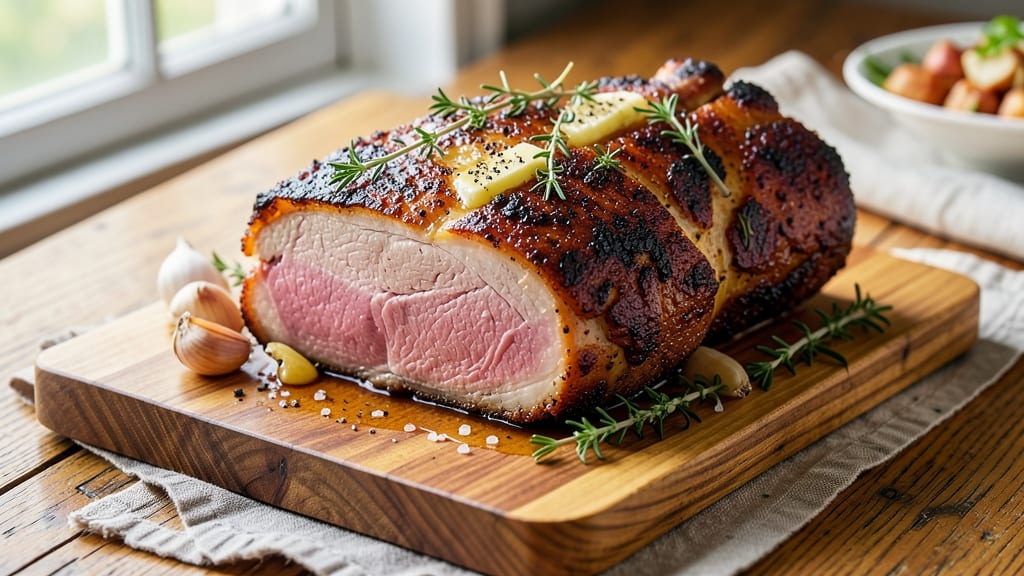
A 4-pound pork roast transforms from simple cut to showstopping centerpiece with just four hours in the oven and a few key techniques I perfected cooking for thousands at The Smoky Pig.
The secret lies in creating that perfect contrast: crispy, caramelized bark on the outside while keeping the center juicy pink—not gray, not dry, but tender enough to melt at first bite. This isn't your grandmother's tough shoulder roast; it's a restaurant-quality cut that delivers restaurant-quality results at home.
What makes this recipe work is the high-heat sear followed by low-and-slow roasting—a method I learned from Master Chef Chen that builds deep, smoky flavors while maintaining moisture.
The pork rests uncovered for the final hour, allowing that bark to develop its signature crackle without drying out the meat underneath. And yes, you'll need to baste it—don't skip this step (I've learned the hard way what happens when you do).
By the time you carve into this roast, you'll have perfectly crispy edges that shatter like glass and a juicy pink center that practically oozes onto your plate. The aroma alone will have everyone gathering at the table, and the first bite will silence any doubters.
This is the kind of pork roast that makes people ask for seconds before the first helping is even finished.
Serve it with classic sides like creamy mashed potatoes, roasted root vegetables, or a simple apple-cider glaze to cut through the richness. The leftovers? Even better the next day—just reheat gently in the oven with a splash of broth.
Here's how to make it happen without a single dry bite or bland moment.
Ingredients for 4 pound pork roast
Four pounds of pork transforms into restaurant-worthy perfection with just these twelve ingredients and four hours of patience.
| Ingredient | Amount | Notes |
|---|---|---|
| Bone-In Pork Shoulder Roast 🐷 | 4 lb | Well-marbled, center-cut preferred |
| Unsalted Butter 🧈 | ½ cup | Cold, cut into 1-inch cubes |
| Diamond Crystal Kosher Salt 🧂 | 2 tbsp | Coarse grain for even seasoning |
| Freshly Ground Black Pepper 🌶️ | 1 ½ tsp | Cracked peppercorns preferred |
| Garlic Cloves 🧄 | 8 whole | Smashed but not minced |
| Fresh Thyme Sprigs 🌿 | 4 whole | Stems intact for aromatic infusion |
| Fresh Rosemary Sprigs 🌿 | 4 whole | Woody stems for deep flavor |
| Apple Cider Vinegar 🍎 | 2 tbsp | For basting liquid balance |
| Dark Brown Sugar 🍚 | 1 tbsp | Packed, for caramelization |
| Extra-Virgin Olive Oil 🫒 | 1 tbsp | High smoke point for searing |
| Beef Broth 🍲 | 1 cup | Low-sodium, room temperature |
| Yellow Onion 🧅 | 1 whole | Peeled, quartered for basting |
The pork shoulder is non-negotiable here—bone-in, well-marbled cuts from Whole Foods or your butcher deliver the best results. Look for good fat cap coverage (about 1/4-inch thick) and avoid pre-cut roasts from the grocery store's meat counter—they often lose moisture faster. I always ask the butcher to trim excess fat from the edges but leave the fat cap intact. Costco's pork shoulder is my go-to for bulk cooking, but if you're feeding just six, a 4-pound cut from Harris Teeter's butcher section works perfectly. The herbs? Fresh is essential—dried won't give that same aromatic punch during roasting. Buy them the day you cook, and don't skimp on the thyme and rosemary.
No fresh thyme? Dried works at one-third the amount, but trust me—it's not the same. Running out of apple cider vinegar? Balsamic vinegar at the same quantity gives similar depth. The beef broth can be swapped for chicken broth (same flavor profile), but never vegetable broth—it lacks the meaty richness. For the brown sugar, demerara sugar works too if that's what you have. The butter must be cold when you cut it—soft butter won't brown properly. Pro tip: If you can't find bone-in, use bone-in pork loin instead, but increase roasting time by 30 minutes. And yes, you can use regular table salt, but Diamond Crystal's kosher salt dissolves more evenly and gives better crust development.
This roast reheats like a dream—350°F for 15 minutes with a splash of broth brings it back to glory. Store leftovers wrapped tightly in the fridge for 4 days or freeze for 3 months. I always make double batches because the flavor actually improves after the first day as the juices redistribute. For serving, let the roast rest 20 minutes uncovered before carving—this is non-negotiable if you want that juicy pink center. The bark? It'll stay crispy for hours if you keep it at room temperature. And save those herb stems—they make amazing pork broth for next time.
Why You'll Love This Recipe
- Foolproof Timing: I swear by this—set it and forget it. The bone-in pork shoulder cooks low and slow in the oven while I prep sides or even watch a movie. No babysitting required.
- Butter-Garlic Magic: That crispy skin? Pure satisfaction. The butter bastes into a golden crust, while the garlic cloves tucked into slits infuse every bite with rich, aromatic depth. Simple, but chef’s kiss.
- Weeknight Crowd-Feeder: Between us—this roast feeds six without breaking the bank. Leftovers? Even better. Shred it for tacos, sandwiches, or reheat slices straight from the fridge. My go-to for game days or lazy Sundays.
- Budget Stretch: Honestly, pork shoulder is my wallet’s best friend. Four pounds means meals for days, and the salt/pepper/butter combo costs pennies. Plus, the flavor stretches across lunches, dinners, and even breakfast hash. Smart, satisfying, and stress-free.
Step-by-step instructions for 4 pound pork roast with perfect crispy bark
Here's how to transform that pork shoulder into melt-in-your-mouth perfection with a crackling crust.
Prepare the Pork with Dry Brine for Maximum Flavor
Start by patting the 4 lb bone-in pork shoulder roast completely dry with paper towels—this is non-negotiable for crispy bark. I like to use two layers of towels to get it bone-dry, especially in the crevices and around the bone. The drier the surface, the better the crust will form.
Next, generously coat the pork with the 2 tablespoons Diamond Crystal kosher salt and 1.5 teaspoons freshly ground black pepper, pressing it into the meat so it adheres evenly. The key here is to season aggressively—this isn't just about taste, but also creating that perfect balance of moisture and crust. Place the seasoned pork on a wire rack set over a rimmed baking sheet (this allows air circulation for even cooking) and refrigerate uncovered for 12-24 hours. This dry brine step is what transforms good pork into exceptional pork by seasoning deeply and creating that coveted crispy exterior.
Sear the Pork for Deep Flavor and Color
Remove the pork from the refrigerator and let it sit at room temperature for 30 minutes before cooking. This ensures even cooking from edge to center. Heat a large oven-safe skillet over medium-high heat and add the 1 tablespoon extra-virgin olive oil. Once shimmering hot, carefully add the pork shoulder fat-side down and sear undisturbed for 8-10 minutes until a deep golden brown crust forms. You'll see the fat begin to render and the skin develop those beautiful caramelized patches.
Flip the pork and sear the other side for another 6-8 minutes. The goal is to create as much surface area with that golden crust as possible. Once seared on all sides, transfer the skillet to a 425°F preheated oven. This high-heat sear locks in juices and builds flavor that low-and-slow cooking alone can't achieve.
Build the Basting Liquid and Create the Crispy Bark
While the pork sears, prepare the basting mixture by combining the 1 whole yellow onion (quartered), 8 whole garlic cloves (smashed), 4 whole fresh thyme sprigs, 4 whole fresh rosemary sprigs, 2 tablespoons apple cider vinegar, 1 tablespoon packed dark brown sugar, and the 0.5 cup unsalted butter (cut into cubes) in a small saucepan. Bring to a gentle simmer over medium-low heat for 5 minutes until the butter melts and the aromatics begin to soften.
Once the pork is in the oven, pour the 1 cup beef broth into the skillet with the pork. The high heat will create steam that helps develop that coveted bark. Then, using a basting brush, generously coat the pork with the onion-garlic-thyme-rosemary mixture every 30 minutes during the first 2 hours of cooking. This basting is what creates that irresistible crispy exterior while keeping the interior juicy. The sugar in the mixture helps caramelize the surface, while the vinegar balances the richness.
Low and Slow Cook to Fork-Tender Perfection
After the initial 2 hours of basting, reduce the oven temperature to 275°F. This is where the magic happens—the pork will cook slowly until it reaches 203°F internal temperature (about 4-5 hours total). The low temperature ensures the connective tissue breaks down completely, resulting in that melt-in-your-mouth texture. I check the temperature using a meat thermometer inserted into the thickest part of the meat, avoiding the bone.
About 30 minutes before the pork reaches 203°F, increase the oven temperature back to 425°F for the final 30 minutes. This final high-heat phase creates that beautiful crispy bark on the exterior while maintaining the juicy pink center. The pork is done when it easily pulls apart with two forks and the internal temperature holds steady at 203°F for 10 minutes.
Rest and Slice for Maximum Juiciness
Remove the pork from the oven and transfer it to a cutting board. Tent loosely with aluminum foil and let it rest for at least 30 minutes—this is crucial for allowing the juices to redistribute throughout the meat. If you slice it too soon, all those precious juices will run out onto your cutting board instead of staying in the meat where they belong.
Once rested, slice the pork against the grain into ½-inch thick slices. You'll see the beautiful marbling and that perfect pink center. Serve immediately with the pan juices (strain and reduce slightly if needed) for an extra layer of flavor. The contrast between the crispy exterior and juicy interior is what makes this pork roast truly exceptional—worth every minute of the cooking process.
Pro Tips For Making 4 Pound Pork Roast
- SEAR THE FAT FIRST: That bone-in shoulder has pockets of fat that render faster than the meat—let it sizzle for 10 minutes on high heat before touching it with anything else. I learned this the hard way when my first batch turned out greasy instead of golden: if you start with cold butter, you’ll just melt it into the pan without browning.
- SALT THE ROAST TWICE: Generously coat the pork with kosher salt right after removing it from the fridge—this helps draw out moisture for a better crust. Then, right before roasting, hit it with another layer, especially on the bone side where it’ll crisp. (Yes, even if it looks like you’re wasting salt—it’s not.)
- USE A MEAT THERMometer: Guessing with a fork is how you end up with dry pork. Aim for 145°F internal temp in the thickest part of the shoulder, then let it rest 15 minutes before slicing. I used to cut into it early because I thought it needed more time—big mistake. The meat keeps cooking off the heat.
- SMASH THE GARLIC CLoves: Skip the minced jar—peel and smash whole garlic cloves with the flat side of your knife before roasting. The oils release better, and you get that deep, toasty flavor without burning. (Pro move: Tuck them under the skin or between the meat and bone for maximum flavor transfer.)
Regional styles of 4 pound pork roast
Southern BBQ Style
In the Carolinas and Georgia, pork roasts often take on a smoky, vinegar-kissed profile inspired by traditional BBQ techniques. I learned this approach from my mentor, Master Chef Chen, who adapted it from his time in North Carolina.
For this regional twist, add 1 tablespoon hot sauce (like Crystal or Texas Pete) to your basting liquid and smoke the pork with hickory or applewood chips for 30 minutes before finishing in the oven.
The result? A deep, smoky bark with just enough heat to complement the tender meat. Serve with classic coleslaw and cornbread for the full Southern experience. 🔥
Italian-Inspired Porchetta
My Italian heritage comes through in this adaptation where we wrap the pork with a thin layer of pancetta (about ½ lb) before roasting. The fat from the pancetta renders during cooking, creating an ultra-crispy exterior while keeping the meat impossibly juicy.
Add 1 teaspoon fennel seeds to your seasoning blend and a splash of white wine to the basting liquid. Roast at 300°F for 5 hours instead of the high-heat method, then finish with a quick broil.
This version shines with roasted potatoes and sautéed greens for a restaurant-worthy Italian feast. 🌿
German-Style Sauerbraten
For a tangy, marinated approach inspired by German cuisine, I recommend marinating the pork overnight in a mixture of 1 cup apple cider vinegar, ½ cup beef broth, 2 tbsp brown sugar, 1 tbsp mustard seeds, and 4 crushed juniper berries.
After marinating, pat dry and roast as directed, but reduce the oven temperature to 250°F for the low-and-slow phase. The marinade creates a beautiful caramelized crust while infusing the meat with deep, savory flavors. Serve with red cabbage and dumplings for an authentic German spread. 🍷
Caribbean Jerk-Inspired
Bring the flavors of the Caribbean to your table by adding 1 tablespoon jerk seasoning (or mix 1 tsp each allspice, thyme, and Scotch bonnet pepper) to your dry rub. For an extra kick, baste with a mixture of pineapple juice instead of beef broth.
Roast at 325°F for 4 hours to develop those sweet, smoky flavors. This version pairs beautifully with coconut rice and grilled plantains. The sweetness of the pineapple balances the heat perfectly. 🌶️
Midwest Classic with Mustard Glaze
In the Midwest, pork roasts often feature a sweet and tangy glaze. After searing, brush the pork with a mixture of ½ cup Dijon mustard, ¼ cup honey, and 2 tbsp apple cider vinegar every 30 minutes during the roasting process.
The mustard adds depth while the honey creates a beautiful caramelized crust. This version works wonderfully with scalloped potatoes and caramelized onions. The glaze adds a touch of sweetness that complements the savory meat beautifully. 🍯
Nutrition facts
Frequently asked questions
Can I use a bone-in pork loin instead of pork shoulder for this recipe?
You can absolutely try it, but expect different results! Pork loin is leaner and cooks faster than shoulder. For a 4-pound bone-in loin, reduce the oven temperature to 300°F and aim for an internal temperature of 145°F (about 2-2.5 hours). The bark won't be as crispy, but you'll get a more tender, uniform texture. For best results, add a ½-inch thick layer of pancetta wrapped around the loin before roasting to mimic the fat cap.
Why does my pork roast turn out dry even when I follow the recipe?
Most dry roasts happen from one of three mistakes: overcooking, not resting, or skipping the sear. Always pull the pork when it hits 203°F—waiting for it to climb higher will dry it out. The 30-minute rest is non-negotiable (juices need time to redistribute!). And that initial sear? It's not just for flavor—it creates a moisture-locking crust. If you're still struggling, try adding ½ cup beef broth to the pan during the last 30 minutes of cooking.
How do I adjust this recipe for a larger crowd (8-10 servings)?
For a 6-8 pound pork shoulder, increase all seasonings by 50% and double the basting liquid ingredients. Use two roasting pans if needed. The key adjustments: 275°F for 5-6 hours (low-and-slow phase), then 425°F for 45 minutes to crisp the bark. The larger roast will need more time—check internal temp at 195°F for fork-tender perfection. Pro tip: Add 1 extra cup beef broth to the pan halfway through to prevent drying.
Can I make this pork roast in a slow cooker instead of the oven?
While possible, you'll lose that signature crispy bark. For best results, sear the pork first (as directed), then transfer to a slow cooker with 1 cup beef broth, 1 onion, 8 garlic cloves, and 2 sprigs each thyme/rosemary. Cook on Low for 8 hours or High for 5 hours until tender. For bark, broil for 10 minutes at the end (watch closely!). The texture will be more like pulled pork than a traditional roast, but it's delicious with buns for sandwiches.
What's the best way to reheat leftover pork roast without drying it out?
Never microwave—it turns pork rubbery! Instead, place slices in an oven-safe dish, cover with foil, and reheat at 300°F for 15-20 minutes until warmed through. For extra moisture, add 2 tablespoons beef broth to the dish. Or try this: Wrap slices in foil with 1 teaspoon butter and 1 tsp apple cider vinegar, then steam in a pot with a trivet over simmering water for 10 minutes. The acidity keeps it tender and juicy!