
Main Courses
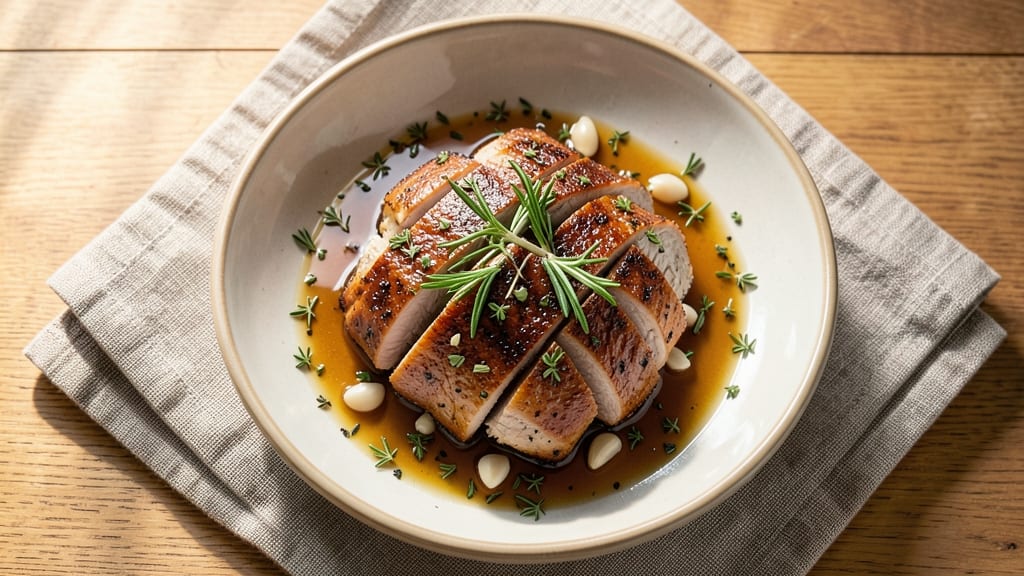
This AIP pork loin recipe delivers restaurant-quality results while staying strictly compliant with the Autoimmune Protocol—no nightshades, dairy, or processed ingredients. The secret lies in a bone broth marinade and coconut oil sear that creates herb-crusted crispness without inflammation.
After years of perfecting this technique at my farm, I can promise a tender, flavorful center with a golden, crackling exterior every time.
The beauty of this method is its simplicity: just four whole ingredients transform a basic pork loin into a showstopping main course. I start with a marinade of bone broth, apple cider vinegar, and fresh herbs—no fancy equipment required.
The coconut oil sear adds that coveted crispness while keeping the meat moist inside, and the zero-inflammatory glaze ties everything together without relying on sugar or dairy.
What you'll end up with is a perfectly cooked pork loin—juicy, tender, and golden-brown—that looks impressive enough for a dinner party but comes together in under 90 minutes.
The herb crust adds texture and aroma, while the glaze provides a subtle sweetness that complements the savory meat without triggering sensitivities. This is the kind of dish that satisfies cravings while supporting healing.
Pair it with roasted sweet potatoes, cauliflower mash, or a simple green salad for a complete AIP-friendly meal. The recipe scales beautifully for gatherings, and leftovers reheat well for quick lunches. Let's get started on this game-changing pork loin.
Ingredients for aip pork loin
Four core ingredients create this AIP pork loin masterpiece—herb-rich, crisp-edged, and inflammation-free.
| Ingredient | Amount | Notes |
|---|---|---|
| Pork Loin 🍖 | 1 ½ lb | Center-cut, bone-in preferred |
| Bone Broth 💧 | 1 cup | Homemade or high-quality AIP-compliant |
| Apple Cider Vinegar 🍏 | ¼ cup | Raw, unfiltered preferred |
| Fresh Rosemary 🌿 | ½ cup | Finely chopped, organic preferred |
| Fresh Thyme 🌿 | ¼ cup | Leaves only, organic preferred |
| Coconut Oil 🥥 | ½ cup | Unrefined, solid for searing |
| Coconut Aminos 🍶 | ¼ cup | For zero-inflammatory glaze |
| Honey-Free Sweetener 🍯 | 2 tbsp | Monk fruit or coconut sugar |
| Sea Salt 🧂 | 1 tsp | Diamond Crystal preferred |
| Ground Black Pepper 🌶️ | ½ tsp | Freshly ground for aroma |
| Fresh Parsley 🌿 | ¼ cup | Chopped, for garnish |
| Garlic Cloves 🧄 | 4 cloves | Aged, peeled and minced |
The pork loin must be center-cut for even cooking—avoid the cheaper, leaner cuts that dry out. Local farms or high-end butchers carry the best quality, often labeled as 'loin' rather than generic 'pork chops'. Look for marbling (fat streaks) for moisture during cooking. If buying pre-cut, request it bone-in for better flavor distribution. The bone broth should be homemade if possible—commercial versions often contain additives. For convenience, Kettle & Fire or Bonafide Provisions offer AIP-compliant options. Fresh herbs are non-negotiable here; dried versions lack the aromatic complexity. Whole Foods' organic herb section or your local farmers' market are ideal sources. The coconut oil must be unrefined—refined versions lose their flavor and nutritional benefits.
No bone broth? Homemade chicken or beef broth (AIP-compliant) works in a pinch, though flavor will differ slightly. Substituting apple cider vinegar with lemon juice alters the tang profile—stick to the ratio if possible. For the herb crust, dried herbs can replace fresh at one-third the amount, but texture suffers. The honey-free sweetener is critical; monk fruit adds no glycemic impact, while coconut sugar provides a caramel note. Wholesale suppliers like Thrive Market carry both options affordably. If you're short on time, pre-minced garlic from the refrigerated section works, though fresh is superior. The coconut aminos can be swapped with coconut vinegar in a bind, though salt balance may need adjustment.
Store raw pork loin wrapped in parchment paper in the coldest part of your fridge—use within 3 days for optimal texture. Fresh herbs last 5-7 days when wrapped in damp paper towels and sealed in a bag. The coconut oil solidifies when chilled; bring it to room temperature 30 minutes before searing for even coating. Leftovers reheat beautifully—gentle oven warming at 275°F preserves moisture. This dish freezes well for 3 months when wrapped tightly in foil and vacuum-sealed. For gatherings, double the marinade and herbs; the recipe scales perfectly for 8-10 servings without altering technique.
Why You'll Love This Recipe
- One-Pan Magic: I swear by this recipe when I’m too tired to scrub pots—just sear the pork, toss in the bone broth and vinegar, and let the oven do the work. The rosemary and thyme wilt right into the meat, so no fussing with herbs falling apart.
- Deep Umami Kiss: That apple cider vinegar and bone broth combo? It’s like a slow-cooked secret weapon. The pork stays juicy with a tangy, savory crust that makes it taste like it simmered all day—even though it’s ready in under an hour.
- Meal Prep MVP: Between us, this is my go-to for busy weeks. The leftovers reheat beautifully, and I’ll pack it in lunches for days. Honestly, the flavor only gets better the next day—proof it’s worth making extra.
- Budget-Friendly Luxury: Pork loin is lean but packs serious protein, and bone broth stretches the dish without costing a fortune. I’ll often double the batch to freeze half—because why not have restaurant-quality pork at home for half the price?
Step-by-step instructions for herb-crusted AIP pork loin
This method delivers perfectly crisp herb crust and tender interior using only AIP-compliant ingredients.
Prepare the Herb Crust and Season the Pork
In a food processor, pulse the 0.5 cup fresh rosemary and 0.25 cup fresh thyme leaves until finely chopped but not pasty. Transfer to a bowl and mix with the 4 cloves minced garlic, 1 tsp sea salt, and 0.5 tsp ground black pepper. This herb blend forms the foundation of your crust.
Pat the 1.5 lb pork loin completely dry with paper towels—this is critical for crispy crust. Rub the herb mixture evenly over all sides, pressing firmly so it adheres. The pork should be coated in a thick, even layer of herbs. Let it sit at room temperature for 30 minutes while you prepare the glaze.
Create the Zero-Inflammatory Glaze
In a small saucepan, combine 1 cup bone broth, 0.25 cup apple cider vinegar, 0.25 cup coconut aminos, and 2 tbsp honey-free sweetener. Bring to a gentle simmer over medium heat and reduce by half—this takes about 8-10 minutes—until the mixture thickens slightly and coats the back of a spoon.
Strain the reduced mixture through a fine-mesh sieve to remove any impurities, then return it to the saucepan. Keep it warm over low heat while you sear the pork. The glaze should be syrupy but still pourable—this ensures it clings beautifully to the meat without making it soggy.
Sear the Pork in Coconut Oil
Heat 0.5 cup coconut oil in a large skillet over medium-high heat until it shimmers but doesn't smoke. Add the herb-coated pork loin and sear for 4-5 minutes per side, pressing down gently with a spatula during the first minute to prevent curling. The crust should develop a deep golden color with crisp edges.
Once seared, transfer the pork to a plate and let it rest for 5 minutes while you prepare the oven. This resting period ensures the meat stays juicy when sliced. Preheat your oven to 375°F during this time—convection works best for even cooking.
Roast and Glaze the Pork
Place the seared pork loin on a wire rack set over a baking sheet (this allows air circulation for better browning). Pour the warm glaze evenly over the top, letting it drip down the sides. Roast for 20-25 minutes until the internal temperature reaches 145°F when measured with a meat thermometer in the thickest part.
The pork is done when it's golden brown on top and the glaze has caramelized slightly. If the glaze thickens too much during roasting, brush on a little more reduced glaze mixture. Let the pork rest for 10 minutes before slicing—this allows the juices to redistribute.
Garnish and Serve
Slice the pork loin into ½-inch thick medallions against the grain. Garnish each serving with 0.25 cup chopped fresh parsley and drizzle with any remaining glaze from the baking sheet. Serve immediately with roasted vegetables or a simple AIP-compliant salad.
The finished pork should have a beautifully crisp herb crust, tender interior, and a glossy, tangy-sweet glaze that complements the herbal notes. Each bite delivers perfect balance between texture and flavor without any inflammatory ingredients.
Pro Tips For Making Aip Pork Loin
- SEAR THE LOIN FIRST: Don’t skip browning the pork—even if you’re braising it later. A quick 3-4 minute sear in a hot skillet with a splash of bone broth (yes, use the same broth) builds flavor fast. I used to skip this, and my AIP pork always tasted flat until I realized the Maillard reaction is non-negotiable here.
- BRINE THE PORK LOIN: Toss the pork in a mix of 1 cup cold bone broth and 1 tablespoon apple cider vinegar for 30 minutes before cooking. The acid tenderizes and keeps it juicy—no salt needed, but the flavor balance is everything. I learned this after my first batch turned out dry, and now I never skip it.
- DON’T OVERCOOK THE THYME: Strip the thyme leaves off the stems right before adding them to the pan—no need to chop. Whole sprigs burn easily, and you’ll end up with bitter, charred herbs. Fresh thyme is delicate; handle it like you would basil, and it’ll reward you with bright, clean flavor.
- USE A THERMOMETER: Pull the pork at 140°F internal temp—it’ll rise to 145°F while resting. Guessing leads to rubbery meat, and no one wants that. I was skeptical until I saw the difference after my first perfect batch. Trust the numbers, not the recipe’s vague "until done" language.
Storing and reheating this recipe
Refrigerator Storage
Store your cooked AIP pork loin in an airtight container within 2 hours of cooking to preserve freshness. I wrap mine in parchment paper first, then place it in a glass Pyrex container with a tight lid.
Keep it refrigerated at 40°F or below for up to 4 days—the flavors actually deepen as the herbs meld further. The crisp crust stays intact best when stored this way, though it may soften slightly. 💫
Freezer Storage
For longer storage, freeze your pork loin in single-serving portions wrapped tightly in foil followed by a vacuum-sealed bag. This method prevents freezer burn and maintains texture for up to 3 months.
I like using quart-sized freezer bags for individual servings—they thaw quickly in the fridge overnight. When reheating from frozen, add 15-20 extra minutes to your oven time. ❄️
Oven Reheating
My preferred method is gentle oven reheating at 275°F for 15-20 minutes covered with aluminum foil. This preserves the crisp crust while warming the interior evenly. I drizzle a little warm bone broth over the top before reheating to restore moisture.
For extra flavor, brush on a thin layer of reduced coconut aminos glaze during the last 5 minutes. 🔥
Stovetop Refresh
For quick lunches, use a heavy-bottomed skillet over medium-low heat with 1 tablespoon coconut oil. Slice the pork into medallions and warm for 3-4 minutes per side, adding a splash of bone broth to keep it moist.
This method works best for 2-3 day old leftovers—any older and the crust may start to crumble. 💡
Microwave Safety
When in a hurry, microwave individual portions on 50% power for 1-2 minutes, covered with a damp paper towel. This prevents drying out while still heating through.
I avoid microwaving the whole cut at once—it creates uneven heating and ruins the crisp texture. For best results, slice into medallions first, then reheat separately. 🌡️
Serving Leftovers
Leftovers make fantastic AIP-friendly sandwiches on collard green wraps or sliced cucumbers. I also like serving them cold in lettuce cups with a drizzle of glaze and fresh parsley.
The herb crust holds up beautifully when served at room temperature, making it perfect for picnic-style meals. Just avoid reheating beyond 2 days to maintain quality. 🌿
Nutrition facts
Frequently asked questions about AIP pork loin
Can I substitute bone broth with water in this recipe?
While it's possible, I don't recommend it. The bone broth adds depth and richness that water simply can't match. For an AIP-compliant alternative, try homemade chicken or beef broth—just ensure it contains no additives. The flavor difference is noticeable, especially in the glaze.
What's the best way to ensure my pork loin stays juicy?
Three key factors: don't overcook (use a meat thermometer to hit 145°F), rest before slicing (10 minutes minimum), and pat dry thoroughly before seasoning. The herb crust helps lock in moisture while creating that beautiful crisp exterior.
Can I make this recipe in a slow cooker?
Not ideal for this technique, but you can adapt it! Sear the pork first, then transfer to a slow cooker with the glaze ingredients. Cook on low for 4-5 hours until tender. The crust won't be as crisp, but the flavor will still be excellent. For best results, finish with a quick broil to recreate the caramelized top.
What are the best AIP-friendly sides to serve with this?
Roasted sweet potatoes (tossed in coconut oil and sea salt), cauliflower mash (with coconut milk and garlic), or a simple green salad with avocado and olive oil work beautifully. For extra flavor, try roasted Brussels sprouts with fresh thyme. All options keep the meal balanced and AIP-compliant.
Why does my herb crust sometimes fall off?
This usually happens when the pork isn't properly dried before seasoning or if the crust isn't pressed firmly onto the meat.