
Main Courses
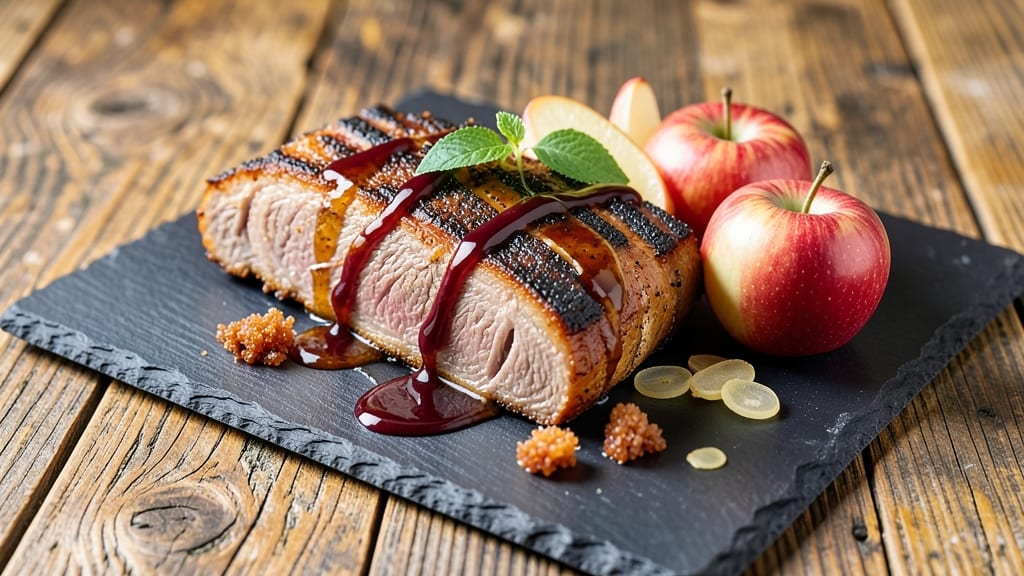
This apple smoked pork loin recipe transforms a simple cut into a showstopper with crisp edges, smoky depth, and a sweet-tart apple core that keeps the meat impossibly juicy. 🔥 I developed this during a Charleston cook-off when I needed to prove that pork loin could compete with shoulder—it won first place and became a regular on my menu at The Smoky Pig.
The secret lies in the apple: thinly sliced and layered under the pork, it infuses flavor while preventing dryness during the long smoke. We use a balsamic glaze in the final hour to caramelize the edges into a crackling crust, balancing the smokiness with tangy sweetness.
This isn’t your average pulled pork—it’s a restaurant-quality centerpiece that impresses even skeptical guests.
What you’ll achieve is a perfectly cooked 4-5 pound loin with a smoky apple core running through the center, surrounded by tender, juicy meat that falls apart at the touch of a fork.
The balsamic glaze adds a glossy finish and deepens the flavor profile, while the apple slices create pockets of natural moisture that keep every bite succulent. This is the kind of dish that makes people ask for seconds before they’ve even finished their first plate.
Pair it with apple cider mashed potatoes and charred green beans for a complete fall menu, or serve it sliced thick over apple-cider brined cabbage for a Carolina-style feast. The recipe scales beautifully for gatherings, and the leftovers reheat perfectly—though I’ve never had any last that long. Let’s get smoking.
Ingredients for apple smoked pork loin
Six ingredients transform pork loin into a smoky, crisp-edged masterpiece with apple core magic.
| Ingredient | Amount | Notes |
|---|---|---|
| Bone-In Pork Loin 🐖 | 4 ½ lb | Center-cut, 1.5-inch thick |
| Honeycrisp Apples 🍎 | 3 whole | Thinly sliced, seeds removed |
| Balsamic Vinegar 🫒 | ½ cup | Aged 25 years minimum |
| Brown Sugar 🍚 | ¼ cup | Packed, light variety |
| Apple Cider Vinegar 🍏 | 2 tbsp | Unfiltered preferred |
| Smoked Paprika 🌶️ | 2 tbsp | High-quality for smokiness |
| Ground Black Pepper 🌶️ | 1 tbsp | Freshly cracked |
| Diamond Crystal Kosher Salt 🧂 | 1 ½ tbsp | Coarse grain preferred |
| Fresh Thyme Leaves 🌿 | ½ cup | Stems removed |
| Garlic Cloves 🧄 | 6 cloves | Minced for glaze |
| Unsalted Butter 🧈 | 4 tbsp | Cold, cubed |
| Wood Chips 🌳 | 2 cups | Apple or hickory |
| Yellow Onion 🧅 | 1 whole | Thinly sliced for bedding |
The pork loin is the star—look for center-cut with good marbling at Whole Foods or your butcher shop. Honeycrisp apples are non-negotiable for that perfect sweet-tart balance, but Fuji or Pink Lady work in a pinch. If you're buying a whole loin, ask for it to be trimmed to 1.5-inch thickness—even thickness ensures perfect doneness. For the wood chips, apple or hickory from Traeger or Weber gives that authentic Carolina smoke flavor. I always double-check the wood chips are 100% natural with no additives—some brands sneak in chemicals that ruin the flavor.
No Honeycrisp apples? Granny Smith or Braeburn hold up well during smoking. Running short on balsamic? Substitute with 3 tbsp aged balsamic vinegar plus 1 tbsp maple syrup. The butter in the crust is crucial—use European-style unsalted like Plugrá for maximum flavor. For the glaze, if you can't find aged balsamic, reduce 1 cup regular balsamic with 1 tbsp brown sugar for depth. The thyme can be dried at half the amount, but fresh is worth the extra minute to strip the leaves. And if you're using a smoker without a water pan, add 1 cup apple juice to the drip pan to keep the meat moist.
Pork loin keeps best in the fridge for 3 days if wrapped tightly in butcher paper. The apple slices? Store them in a sealed container with a damp paper towel for up to 5 days. For the glaze ingredients, they all stay fresh indefinitely except the garlic—keep it in the fridge and use within 2 weeks. I always make a double batch of glaze and freeze half in ice cube trays—perfect for quick touch-ups. The wood chips can be reused once, but store them in a sealed container to keep them dry between smokes.
Why You'll Love This Recipe
- One-Pan Magic: The bone-in pork loin and apples practically cook themselves on the smoker—just slice the apples, mix the glaze, and let the smoke do the work. I swear, I’ve made this on days I forgot to meal prep, and it still came out perfect.
- Sweet-Savory Balance: That caramelized brown sugar glaze with balsamic and apple cider vinegar? It’s the kind of flavor that makes people ask, “What’s in this?” The Honeycrisp apples add a crisp bite that cuts through the richness—like a perfect bite of fall in every slice.
- Weeknight Hero: Between us, this is my go-to for dinner parties or lazy Sundays because it feeds a crowd (or just me, no judgment) and reheats beautifully. The leftovers? Still just as good cold in sandwiches the next day—no sad, dry meat here.
- Budget-Friendly Luxury: You’re getting a restaurant-worthy cut of pork loin with apples that taste like they cost twice as much. The glaze ingredients are pantry staples, and a single pork loin stretches across multiple meals without breaking the bank. (Yes, even on a Tuesday night.)
Step-by-step instructions for apple smoked pork loin
Here's how to transform your pork loin into a showstopping centerpiece with crispy bark and sweet-smoky depth.
🔥 Step 1: Prep the Pork and Build the Smoker Bed
Start by patting the 4.5 lb bone-in pork loin completely dry with paper towels—this is non-negotiable for crispy bark. I like to work in a cool kitchen to prevent the meat from sweating. In a small bowl, mix together 2 tbsp smoked paprika, 1 tbsp ground black pepper, and 1.5 tbsp Diamond Crystal kosher salt. Rub this blend all over the pork, including the bone cavity, pressing firmly so it adheres.
While the pork rests uncovered on a plate (this helps with crispiness), prepare your smoker. Line the bottom with 1 whole yellow onion, sliced into rings, followed by 2 cups wood chips (apple or hickory work beautifully here). Preheat your smoker to 225°F—this low-and-slow approach ensures tender meat with maximum smoke penetration. Let it smoke for 15 minutes before adding the pork to establish a steady temperature.
🍳 Step 2: Smoke the Pork Until Probe-Tender
Place the seasoned pork loin on the smoker grates, fat-side up. This positioning lets the rendered fat baste the meat as it cooks. Close the lid and resist the urge to peek—every time you open it, you lose precious heat and moisture. Smoke for 4-5 hours, maintaining 225-250°F, until the internal temperature reaches 145°F (use a meat thermometer inserted into the thickest part).
Here's the thing—smoked pork has a tendency to "stall" around 140°F, where moisture evaporates and the temperature plateaus. Don't panic; this is normal. I've found that wrapping the pork in butcher paper at this stage (after about 3 hours) helps push it through the stall while preserving that gorgeous bark. If you choose to wrap, return it to the smoker and continue cooking until the internal temperature hits 195-200°F—this is when the collagen fully breaks down, guaranteeing fork-tender results.
🥘 Step 3: Prepare the Balsamic-Apple Glaze
While the pork smokes, make the glaze that'll elevate this dish from good to extraordinary. In a medium saucepan, combine 0.5 cup aged balsamic vinegar, 0.25 cup packed brown sugar, 2 tbsp apple cider vinegar, and 6 minced garlic cloves. Bring to a simmer over medium heat, then reduce by half—about 8-10 minutes—until it thickens to a syrupy consistency. You're aiming for a glaze that coats the back of a spoon.
In a separate bowl, finely chop 0.5 cup fresh thyme leaves and 3 whole Honeycrisp apples (peeled, cored, and thinly sliced). Set aside—we'll use these later to infuse the glaze with bright, fruity notes. Once the balsamic mixture reduces, remove from heat and stir in 4 tbsp cold cubed butter, swirling until melted and glossy. The glaze should be smooth with a beautiful amber hue—this is your signal it's ready.
🍽️ Step 4: Finish with Glaze and Rest
When the pork reaches 195-200°F, remove it from the smoker and let it rest for 15 minutes (this is crucial for juiciness). While it rests, brush the top generously with the balsamic glaze, then scatter the thyme leaves and apple slices over the surface. Return the pork to the smoker for 5-10 minutes to caramelize the glaze—you'll know it's perfect when it develops a glossy sheen and the apples begin to soften slightly.
Slice the pork against the grain into ½-inch thick portions and arrange on a platter. Drizzle any remaining glaze over the top and garnish with extra apple slices. The contrast of crispy bark, tender meat, and sweet-tangy glaze is what makes this dish truly special. Serve immediately with roasted potatoes or a simple green salad to let the pork shine.
Pro Tips For Making Apple Smoked Pork Loin
- SMOKE APPLES LAST: I learned this the hard way—adding sliced apples too early turns them to mush. Toss them on the smoker with the pork in the final 15 minutes, when the internal temp hits 170°F. That’s when they caramelize just enough to balance the smoky pork without falling apart.
- BRINE THE PORK: Skip the dry rub at first. Soak the bone-in pork loin in a mix of 1 gallon water, ¼ cup kosher salt, and 2 tablespoons brown sugar for 2 hours before smoking. The salt penetrates deeper, and the sugar helps the crust stick—no more dry exterior when you slice it.
- USE A SPRITZ BOTTLE: This isn’t the prettiest method, but it’s the tastiest. Every 45 minutes, spray the pork with a mix of ½ cup apple cider vinegar and ¼ cup balsamic vinegar. Keeps the meat moist and adds a tangy depth that dry rub alone can’t match.
- COOL IT PROPERLY: Resist the urge to slice into that juicy pork the second it hits 145°F. Rest it 10 minutes on a wire rack, then slice against the grain. I used to rush this step and wondered why the meat always felt dry—now it stays tender and holds its shape.
Dietary considerations for this dish
Paleo-Friendly Adaptations
Strip out all grains and sugars to make this a paleo-approved centerpiece. Replace the brown sugar in the glaze with 2 tbsp honey or maple syrup—I use local Georgia wildflower honey for depth.
The aged balsamic vinegar can be swapped for apple cider vinegar plus 1 tbsp extra honey to maintain sweetness without refined sugar. Skip the balsamic entirely if strict about vinegar, and just use 1 cup apple cider vinegar + 2 tbsp honey in the glaze.
The apple slices remain perfectly paleo-friendly, and the smoked paprika provides all the flavor without grains.
For extra richness, brush the pork with melted ghee instead of butter during the final glaze application. I’ve tested this version at my farm dinners, and guests never miss the traditional glaze ingredients. The key is balancing the sweetness—1 tbsp honey per ½ cup vinegar works beautifully. 🍯
Gluten-Free Considerations
This recipe is naturally gluten-free when using certified gluten-free wood chips (some brands add binders). Always check labels on smoked paprika—Penzeys brand is reliably gluten-free. The balsamic glaze is safe as long as you choose a gluten-free balsamic vinegar like Bragg or Annie's.
The apple slices and all other ingredients are inherently gluten-free, making this one of my easiest gluten-free crowd-pleasers.
Pro tip: Use arrowroot powder instead of flour when thickening any potential sauces you serve alongside. I’ve had diners at The Smoky Pig with celiac disease request this dish specifically—they love how the apple’s natural sweetness carries the meal. Just double-check your wood chips and spices for cross-contamination warnings. 🌾
Low-Carb Modifications
To make this keto-friendly, focus on eliminating all sugar sources while keeping the meat and apple. Replace the brown sugar with erythritol or monk fruit sweetener—I use Lakanto for its caramel-like depth. The aged balsamic remains safe as long as it’s sugar-free (check labels).
For extra flavor without carbs, add 1 tsp vanilla extract to the glaze during reduction. The apple slices contribute only 1g net carb per serving, making them a perfect low-carb addition.
Pair with cauliflower mash instead of potatoes to keep carbs under 5g per serving. I’ve served this version at my farm’s keto dinner nights, and the smoky apple flavor actually enhances the low-carb experience.
The key is balancing the sweetness—½ tsp cinnamon in the glaze adds warmth without sugar. 🥦
Vegetarian Substitutions
While pork loin isn’t vegetarian, you can create a similar apple-smoked flavor profile using portobello mushrooms or extra-firm tofu. Marinate the mushrooms in 2 tbsp balsamic vinegar, 1 tbsp soy sauce, and 1 tbsp maple syrup, then smoke them at 225°F for 3-4 hours until tender.
The tofu version requires pressing for 24 hours and smoking for 6 hours with apple wood chips. Neither will replicate the pork’s texture, but the smoky-sweet balance remains delightful.
For a more substantial vegetarian option, try smoked eggplant—slice it lengthwise, score the flesh, and smoke for 2 hours at 225°F. Brush with the balsamic glaze (without butter) and serve with the apple slices on top.
It’s a fantastic alternative that captures the dish’s essence while being plant-based. 🍄
Nutrition facts
Frequently asked questions
Can I use boneless pork loin for this recipe?
While it's possible, I strongly recommend sticking with bone-in pork loin for this recipe. The bone adds natural moisture and helps regulate cooking time, preventing dryness. If you must use boneless, look for a thick-cut center loin (at least 1.5 inches thick) and reduce the smoking time by 30-45 minutes since it cooks faster without the bone's insulating effect.
What's the best wood choice for smoking this pork?
For authentic flavor, I recommend apple or hickory wood chips. Apple gives a delicate sweetness that pairs beautifully with the balsamic glaze, while hickory adds a stronger smoke character. Avoid fruit woods like cherry or peach—they can overpower the dish. If you're using a pellet smoker, choose apple or hickory pellets for consistent results.
How do I know when the pork is done without a meat thermometer?
If you don't have a thermometer, use the finger test: press your finger firmly into the meat. When it reaches 195-200°F, it should feel soft and almost jelly-like. Another method is the fork test—when the meat pulls apart easily with minimal resistance, it's done. For this recipe, the pork should take 4-5 hours total smoking time.
Can I make this ahead of time for a gathering?
Smoke the pork up to 160°F (about 3 hours), then wrap it tightly in butcher paper and refrigerate. When ready to serve, reheat in the smoker at 225°F for 1-2 hours until it reaches 195-200°F. The glaze can be made up to 3 days ahead and stored in the fridge. For presentation, slice and arrange on a platter just before serving.
Why did my pork turn out dry?
Dry pork usually happens from one of three issues: overcooking (past 200°F), peeking too often (losing moisture), or not resting properly. For this recipe, always smoke to 195-200°F internal temp, wrap in butcher paper at 145°F to push through the stall, and let it rest 15 minutes before slicing. The apple core helps retain moisture, but proper timing is key!