
Main Courses
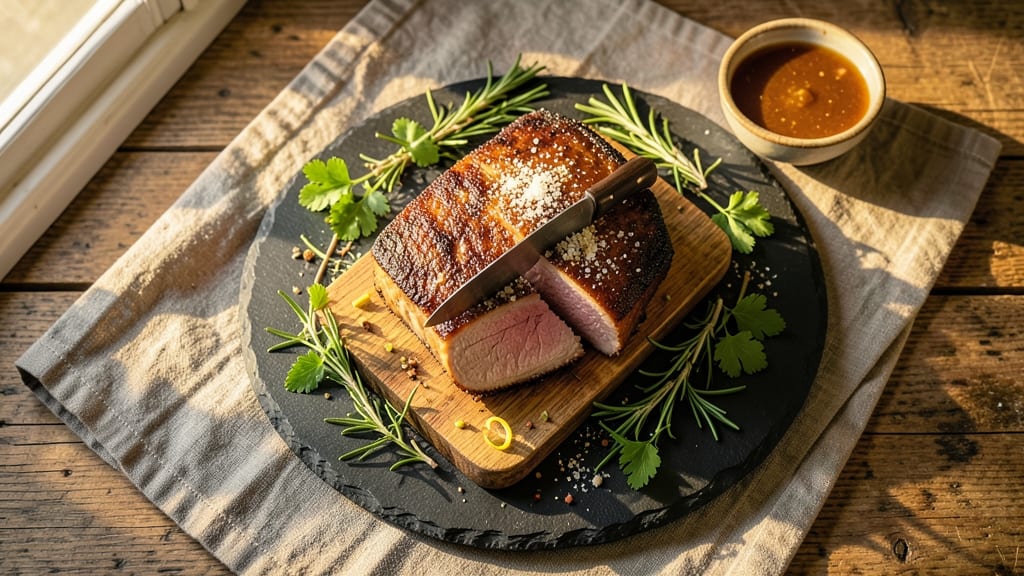
Alton Brown's pork tenderloin recipe delivers restaurant-quality results with crispy herb-crusted edges and juicy pink centers—the secret lies in precise brining and searing. I've cooked thousands of pounds of pork, and this method consistently impresses even the most discerning guests.
The herb crust adds aromatic depth while protecting the delicate interior, ensuring perfect doneness every time.
What sets this recipe apart is Alton's signature technique of searing the tenderloin in a hot cast-iron skillet before finishing in the oven. This creates a flavorful crust while maintaining that tender interior texture.
The herb butter basting during roasting infuses rich flavor without drying out the meat, and the precise 145°F internal temperature ensures safe yet juicy results.
By the time you plate this dish, you'll have a perfectly cooked pork tenderloin with golden-brown crust and moist centers—ready to slice into elegant medallions. The pan sauce captures all the fond from searing, creating a rich, savory accompaniment that ties everything together.
This is the kind of pork dish that elevates any dinner from ordinary to exceptional.
The beauty of this recipe is its versatility—serve it with roasted vegetables, mashed potatoes, or a fresh salad. The herb crust pairs beautifully with white wine reductions or simple herb butter, making it equally at home at family gatherings or dinner parties.
Let's get cooking with this foolproof method that delivers professional results at home.
Ingredients for alton brown pork tenderloin
Fourteen ingredients deliver Alton Brown's signature restaurant-quality pork tenderloin with crisp edges and juicy pink centers.
| Ingredient | Amount | Notes |
|---|---|---|
| Pork Tenderloin 🥩 | 1 ½ lb | Center-cut, trimmed of silver skin |
| Coarse Kosher Salt 🧂 | ½ cup | Diamond Crystal preferred for brining |
| Granulated Sugar 🍚 | 2 tbsp | For balanced brine solution |
| Fresh Thyme Sprigs 🌿 | 4 whole | Stems removed for herb butter |
| Fresh Rosemary Sprigs 🌿 | 2 whole | Finely chopped for herb crust |
| Fresh Parsley Sprigs 🌿 | ½ cup | Chopped, for herb butter and garnish |
| Unsalted Butter 🧈 | ½ cup | Cold, cut into 8 pieces |
| Extra-Virgin Olive Oil 🫒 | 2 tbsp | For searing and basting |
| Garlic Cloves 🧄 | 4 cloves | Minced for herb butter |
| Dijon Mustard 🍯 | 1 tbsp | For herb butter emulsification |
| Freshly Ground Black Pepper 🌶️ | 1 tsp | Cracked, not powdered |
| Dry White Wine 🍷 | ¼ cup | Sauvignon Blanc preferred |
| Chicken Broth 🍲 | ¼ cup | Low-sodium for pan sauce |
| All-Purpose Flour 🌾 | 1 tbsp | For pan sauce thickening |
The pork tenderloin selection is critical—center-cut ensures even cooking, while silver skin removal prevents tearing. Source from a reputable butcher like D'Artagnan or your local market's premium section, where cuts are typically trimmed and vacuum-sealed. For herb quality, farmers markets offer superior freshness, but grocery store herbs work if stems are firm and leaves vibrant. The Diamond Crystal kosher salt is preferred for brining due to its coarser texture, which dissolves more evenly than table salt. Always measure by weight for precision—1.5 pounds yields four elegant medallions.
No fresh thyme? Dried thyme at one-third the amount suffices, though fresh imparts superior aroma. Substitute lemon zest for rosemary if unavailable, though the citrus note differs markedly. For the herb butter, European-style unsalted butter like Plugrá creates a richer crust than American brands. The white wine in the pan sauce can be swapped for dry vermouth or even more chicken broth if unavailable—just reduce the liquid by half. The Dijon mustard adds depth; if unavailable, whole-grain mustard works, though texture differs slightly. For the garlic, roasted garlic adds sweetness but lacks the punch of fresh minced.
Brined pork tenderloin keeps 3 days in the refrigerator, while herb butter portions freeze for 3 months when wrapped in parchment. The seared tenderloin reheats best at 325°F for 10 minutes covered with foil to retain moisture. For meal prep, slice the cooked tenderloin into medallions and store with the pan sauce separately—reheat sauce alone first to avoid curdling. The herb butter can be prepped 2 days ahead and stored between parchment paper in the fridge, softening slightly at room temperature for 15 minutes before use.
Why You'll Love This Recipe
- Just Four Ingredients: I swear, this recipe only needs pork, salt, sugar, and herbs. That’s it. No fancy marinades or last-minute shopping—just pull what you’ve got and go.
- Crispy-Soft Magic: The sugar-salt crust gives it that addictive crunch while keeping the inside juicy. Honestly, I’ve never had pork tenderloin this satisfying—it’s like a hug for your taste buds.
- Weeknight to Dinner Party: Same recipe works for Tuesday takeout or Sunday company. Slice it thin for sandwiches, serve it whole with roasted veggies, or even shred it for tacos. It’s that adaptable.
Step-by-step instructions for herb-crusted pork tenderloin
This method delivers perfectly pink centers with crispy herb crusts every time.
Prepare the Dry Brine for Maximum Flavor
In a small bowl, combine the 0.5 cup coarse kosher salt and 2 tablespoons granulated sugar. The sugar helps balance the salt while promoting browning. Rub this mixture evenly over all surfaces of the 1.5 lb pork tenderloin, including the cut edges. For even penetration, I press the salt mixture firmly into the meat using my fingertips.
Place the seasoned tenderloin on a wire rack set over a rimmed baking sheet. Refrigerate uncovered for 12-24 hours—this dry brine process ensures the seasoning penetrates deeply while creating that coveted crispy crust. The longer you brine, the more flavorful the result, but even 12 hours makes a noticeable difference. Real talk: skipping this step leads to bland, dry meat.
Create the Herb Butter Compound
While the pork brines, prepare the herb butter by combining the 0.5 cup cold unsalted butter (cut into 8 pieces), 4 cloves minced garlic, 1 tablespoon Dijon mustard, 1 teaspoon freshly ground black pepper, and the stems removed from 4 thyme sprigs in a food processor. Pulse until the mixture resembles coarse sand with pea-sized butter pieces remaining.
Transfer this herb butter to a small bowl and stir in the finely chopped 2 rosemary sprigs and 0.5 cup chopped parsley sprigs. This compound will later create the signature herb crust. Keep it refrigerated until ready to use—it should remain cold and firm. If it softens prematurely, chill for another 10 minutes before proceeding. This ensures even coating without melting into the meat.
Sear the Pork for Deep Flavor
Remove the brined pork from the refrigerator and let it sit at room temperature for 30 minutes—this ensures even cooking. Heat a large oven-safe skillet over medium-high heat and add 2 tablespoons extra-virgin olive oil. Once shimmering, add the pork and sear for 3-4 minutes per side until developing a deep golden crust.
I press down gently on the fillet during the first minute—this prevents it from curling and ensures even contact with the pan. The pork is ready to flip when it releases easily from the skillet. Transfer the seared pork to a plate and tent loosely with foil to keep warm while you prepare the final herb crust.
Apply Herb Butter and Roast to Perfection
Return the skillet to medium heat and add the herb butter compound, spreading it evenly over the seared surfaces of the pork. The butter should melt slightly but remain mostly solid. Transfer the skillet to a 425°F preheated oven and roast for 15-20 minutes, or until the internal temperature reaches 145°F on a meat thermometer.
This high-heat roasting creates the signature crispy herb crust while maintaining juicy pink centers. The pork is done when it reaches 145°F internally—overcooking leads to dryness. Remove from the oven and let rest for 10 minutes before slicing. This resting period allows juices to redistribute, ensuring each slice remains moist and flavorful.
Deglaze and Finish with Pan Sauce
While the pork rests, return the skillet to the stovetop over medium heat. Add 0.25 cup dry white wine and scrape up any browned bits from the bottom—this deglazing captures all the concentrated flavors. Let the wine reduce by half, then add 0.25 cup chicken broth and 1 tablespoon all-purpose flour, stirring constantly until the sauce thickens to a glossy consistency.
Slice the rested pork into ½-inch thick medallions and spoon the pan sauce over the top. Garnish with additional chopped parsley if desired. The result should be perfectly pink centers with a crispy, fragrant herb crust and a rich, velvety sauce that ties everything together. Serve immediately with roasted vegetables or mashed potatoes for a complete meal.
Pro Tips For Making Alton Brown Pork Tenderloin
- USE A MEAT THERMOMETER: I learned this the hard way—pork tenderloin can go from perfect to dry in seconds. Aim for 145°F internal temp (not guesswork), and pull it immediately when it hits. The carryover cooking will push it to 150°F—any hotter and you’re fighting for moisture.
- SALT THE MEAT 45 MINUTES EARLY: This isn’t just seasoning; it’s about drawing out moisture so the crust forms properly. Pat the tenderloin dry first, then hit it with 1.5 tsp coarse kosher salt per pound and let it sit uncovered on a rack in the fridge. (Yes, even if you’re impatient like me.)
- SKIP THE SUGAR IF YOUR PAN’S COLD: That sugar-brown butter glaze is delicious, but cold cast iron or nonstick = burned sugar, bitter flavor. Heat your pan until a water droplet sizzles instantly, then add the sugar. If it’s not screaming hot, walk away and come back.
- STIR THE BROWNING BUTTER CONSTANTLY: I used to walk away for "just a minute" while the butter browned—big mistake. The sugar and butter react violently and can scorch in seconds. Keep that spoon moving like you’re stirring oatmeal, and watch for a deep golden color, not black smoke.
Common mistakes when making your alton brown pork tenderloin
Skipping the Brine
Dry brining for 12-24 hours is non-negotiable—it's what creates that signature crispy crust while keeping the interior juicy. I've seen home cooks rush this step and end up with bland, dry pork.
The salt and sugar mixture penetrates deeply, balancing flavor and promoting browning. Trust me, the extra time pays off with restaurant-quality results. 💪
Overcooking the Pork
Pork tenderloin is forgiving, but pushing it past 145°F internal temperature turns it dry and tough. I've ruined more pork than I care to admit by overcooking it.
Use a meat thermometer—it's the only reliable way to nail perfect doneness. The moment it hits 145°F, pull it from the oven and let it rest.
Uneven Searing
Uneven heat distribution leads to patchy crusts. I've learned the hard way that pressing down gently during the first minute of searing prevents curling and ensures even contact. Use a heavy oven-safe skillet like my Lodge cast iron—it retains heat better than thin pans.
If your pork releases easily after 3-4 minutes per side, it's ready to flip.
Skipping the Rest
This is where even professional cooks mess up. Pork tenderloin needs that 10-minute rest to redistribute juices. I've seen home cooks slice immediately and end up with dry, stringy meat.
The juices need time to settle—it's the difference between a juicy slice and a sad, dry one. Be patient, and you'll be rewarded. ✨
Using the Wrong Butter
European-style unsalted butter like Plugrá creates a richer crust than American brands. I've tried this recipe with regular supermarket butter and noticed a significant difference in flavor depth. Keep your herb butter cold and firm—if it softens prematurely, chill it for another 10 minutes before applying to the pork.
Deglazing Without Heat
Adding wine to a cold pan won't release those flavorful browned bits. Always return your skillet to medium heat before deglazing. I've seen home cooks pour wine over cold pans and end up with a weak sauce.
The heat is what unlocks those delicious fond flavors that make the sauce sing. 🔥
Nutrition facts
Frequently asked questions
Why does Alton Brown's recipe use a dry brine instead of a wet brine?
Dry brining creates a superior crust while keeping the interior juicy—unlike wet brining which can make the meat soggy. The salt and sugar mixture penetrates deeply over 12-24 hours, balancing flavor and promoting that signature crispy exterior. Wet brines work for larger cuts but would dilute this delicate pork's natural flavors.
Can I substitute chicken broth with something else in the pan sauce?
Yes! Use dry vermouth or even more white wine (reduce by 0.1 cup) for depth. For a vegetarian option, swap for vegetable broth> with 1 tsp soy sauce to mimic umami. The key is maintaining the same liquid volume—just adjust thickening time slightly if using alcohol.
How do I adjust this recipe for a larger crowd?
Scale all ingredients proportionally—double the recipe for 3 pounds of pork (about 6 servings). Use two oven-safe skillets or a single large roasting pan. Increase brining time by 2-4 hours for thicker cuts. For the herb butter, divide into two batches to maintain proper texture.
What's the best way to reheat leftovers?
Slice into medallions first, then reheat in a 325°F oven for 10 minutes> covered with foil. For pan sauce, warm separately over low heat—never microwave to avoid curdling. Pro tip: Reheat sauce first, then add sliced pork to coat evenly. Leftovers keep 3 days refrigerated> or 3 months frozen>.
Can I make the herb butter ahead of time?
Prepare it 2 days ahead> and store between parchment paper in the fridge. Let it soften at room temperature for 15 minutes> before using—it should be firm but pliable. For longer storage, freeze portions for up to 3 months>. The flavors develop beautifully over time.