
Main Courses
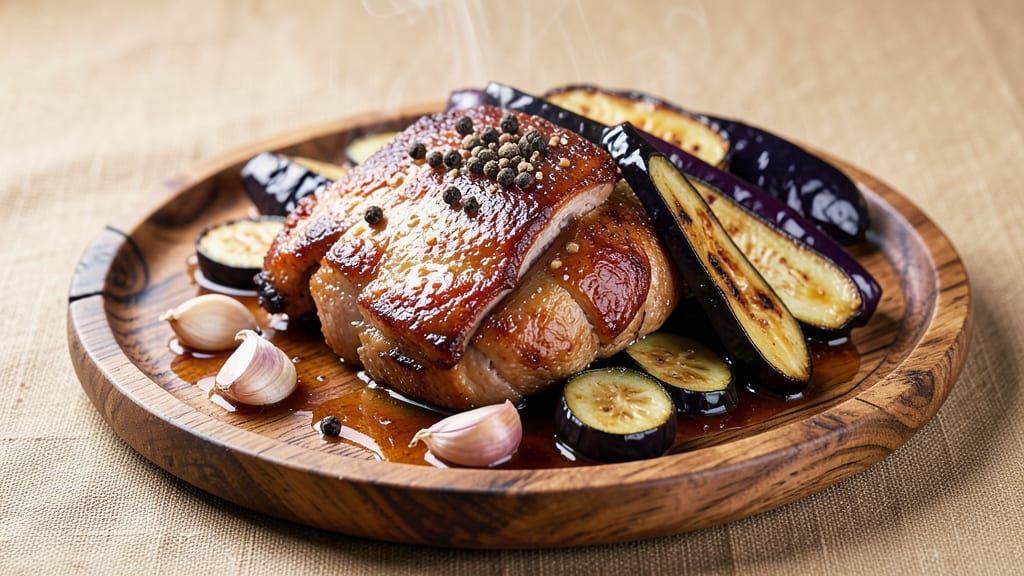
This adobong talong with pork recipe brings the soul of Filipino comfort food to your kitchen with its signature balance of tangy, smoky, and savory flavors. 🌟 The secret lies in the slow braising process, where tender pork and eggplant meld into a velvety sauce infused with soy, vinegar, and garlic.
As a pitmaster who's spent years mastering pork's transformative potential, I've adapted this classic dish to ensure the eggplant stays tender-crisp while the pork becomes fork-tender—just like my grandma used to make.
The beauty of this dish is in its simplicity: just 10 core ingredients working together through a foolproof two-step process. First, the pork is marinated in a blend of soy sauce, vinegar, and spices, then browned before adding eggplant and simmering until everything reaches that perfect harmony of textures.
The result is a dish that's rich enough for a special occasion but simple enough for weeknight dinners, with that unmistakable adobo aroma filling your home.
What makes this recipe truly special is the textural contrast—the pork falls apart at the touch of a fork while the eggplant maintains its satisfying bite, all coated in that glossy, slightly sticky sauce.
The flavors develop as it simmers, creating layers of umami from the soy, brightness from the vinegar, and depth from the garlic and black pepper. It's the kind of dish that improves with reheating, making it perfect for meal prep or leftovers.
Serve it over steamed rice with a side of atchara (pickled papaya) or a simple green salad to balance the richness. The sauce clings beautifully to the rice, creating each bite into a flavorful experience.
Let's bring this classic Filipino comfort dish to your table—it's worth every minute of the slow cooking.
Ingredients for adobong talong with pork
Ten simple ingredients transform into this rich, smoky Filipino classic—perfect over steamed rice.
| Ingredient | Amount | Notes |
|---|---|---|
| Pork Shoulder 🥩 | 1 ½ lb | Cut into 1-inch cubes |
| Eggplant 🍆 | 2 medium | Whole, unpeeled, sliced |
| Soy Sauce 🥄 | ½ cup | Regular or dark soy |
| Cane Vinegar 🍶 | ¼ cup | Or substitute white vinegar |
| Garlic Cloves 🧄 | 6 cloves | Minced, fresh preferred |
| Black Peppercorns 🌶️ | 1 tsp | Crushed, not ground |
| Bay Leaves 🌿 | 2 whole | Fresh or dried |
| Olive Oil 🫒 | 2 tbsp | For searing pork |
| Salt 🧂 | 1 ½ tsp | Kosher or sea salt |
| Brown Sugar 🍚 | 2 tbsp | Light or dark |
The pork shoulder is your secret weapon here. Ask the butcher for bone-in cuts if possible—they add depth to the sauce. Filipino markets or Asian grocery stores usually carry pork shoulder pre-cut for adobo dishes. If you can't find bone-in, regular shoulder works fine. The eggplant should be firm and heavy for its size—no soft spots. I always grab a couple extra eggplants because they shrink dramatically when cooked. For the soy sauce, Filipino brands like Silver Swan give that authentic depth, but regular soy works too.
No cane vinegar? White vinegar or apple cider vinegar works in a pinch—just use the same amount. The garlic can be pre-minced from a jar if you're in a rush, but fresh is always better. Running out of bay leaves? Dried thyme at half the amount mimics the earthy notes. The brown sugar adds just enough caramelized sweetness to balance the tang—don't skip it. For extra smokiness, add a quarter teaspoon of smoked paprika with the black pepper. The olive oil should be light or extra-light—it's just for searing, not for flavor.
This dish tastes even better the next day—make extra. Store in the fridge for up to 5 days or freeze for 3 months. I like to portion it into containers with rice so I can grab it straight from the freezer. The sauce thickens as it cools, so add a splash of water when reheating. For serving, I always keep a bowl of steamed jasmine rice ready—it soaks up all that glorious sauce.
Why You'll Love This Recipe
- Minimal Chopping Required: I swear by this—just dice the pork shoulder into chunks (no fancy cuts needed), slice the eggplant into thick rounds, and mince a few garlic cloves. The rest is stir, simmer, and let the vinegar do its magic.
- Tangy-Savory Magic: That balance of salty soy sauce and sharp cane vinegar? It’s what makes this dish ridiculously good. The eggplant soaks up the sauce while staying tender, and the pork stays juicy—no dry bites here.
- Lunchbox Hero: Between us, this is my go-to for meal prep. The flavors only get better the next day, and it reheats like a dream. Pack it cold for work or serve it warm for a lazy Sunday—either way, it’s a win.
- Budget-Friendly Feast: Pork shoulder stretches for miles, and eggplant is cheap but satisfying. A few tablespoons of soy sauce and vinegar turn simple ingredients into a hearty meal that won’t break the bank. (Yes, even on a Tuesday night.)
Step-by-step instructions for smoky soy-glazed eggplant and pork
Here's how to turn simple ingredients into a rich, velvety adobo with tender pork and silky eggplant.
🔥 Step 1: Sear the Pork Cubes for Deep Flavor
Heat a large Dutch oven over medium-high heat until very hot. Add the 2 tablespoons olive oil and swirl to coat the bottom. Working in batches if needed, add the 1.5 lb pork shoulder cut into 1-inch cubes and sear undisturbed for 3-4 minutes until golden brown on all sides.
I press down gently on the pork cubes during the first minute—this prevents them from curling and ensures even contact with the pan. You'll smell that wonderful meaty aroma developing, which means the Maillard reaction is working its magic. Once all sides are browned, transfer the pork to a plate and set aside.
🍳 Step 2: Sauté Garlic and Build the Soy-Vinegar Base
In the same Dutch oven (don't wipe it clean—those browned bits are pure flavor), reduce heat to medium and add the 6 cloves minced garlic. Sauté for 30 seconds until fragrant but not browned—you want to preserve that sweet garlic flavor rather than let it burn.
Add the 2 tablespoons brown sugar and stir for 1 minute until it melts and begins to caramelize slightly. This is where the sauce gets its signature sweet-savory balance. Then pour in the 0.5 cup soy sauce and 0.25 cup cane vinegar, scraping up all those delicious browned bits from the bottom of the pan.
🍳 Step 3: Simmer the Pork in Flavorful Liquid
Return the seared pork to the pot and add 1 cup water (just enough to barely cover the pork). Bring to a gentle boil, then reduce heat to low and add the 2 whole bay leaves and 1 teaspoon crushed black peppercorns. Cover and simmer for 45-50 minutes until the pork is fork-tender and the sauce has thickened slightly.
Here's the thing—don't peek or stir during this time. The pork needs to develop its own steam and flavors undisturbed. You'll know it's ready when the pork pulls apart easily with a fork and the sauce has reduced to a glossy, slightly syrupy consistency.
👨🍳 Step 4: Prepare and Add the Eggplant
While the pork simmers, wash the 2 medium eggplant and slice them into ½-inch thick rounds. Sprinkle both sides generously with the 1.5 teaspoons salt and let them sit for 15 minutes to draw out excess moisture. This step is crucial for preventing a watery sauce.
After the salt treatment, pat the eggplant slices dry with paper towels. The slices should feel noticeably lighter. Arrange them in a single layer on a baking sheet and broil for 3-4 minutes on each side until slightly charred. This gives them that smoky depth that's characteristic of authentic adobo.
🥘 Step 5: Finish with Eggplant and Perfect the Sauce
Carefully add the broiled eggplant slices to the pork pot, arranging them in a single layer. Cover and simmer on low heat for 15-20 minutes until the eggplant is tender when pierced with a fork. The eggplant should absorb the rich pork sauce while still maintaining some bite.
If the sauce looks too thin, uncover and simmer for another 5-10 minutes to reduce it to your desired consistency. Taste and adjust seasoning—you might need a little more soy sauce or vinegar to balance the flavors. Serve hot with steamed rice to soak up every last bit of that glorious sauce!
Pro Tips For Making Adobong Talong With Pork
- Sear the Pork First: Hit that pork shoulder with a screaming-hot pan until it’s deep golden—no rushing here. I used to skip this step, and the meat stayed bland and rubbery. Three minutes per side with a little oil, then pull it out. The crust locks in flavor and keeps the pork tender during the long simmer.
- Salt the Eggplant: Toss sliced eggplant in salt and let it sit for 10 minutes before rinsing. This pulls out bitterness and keeps them from turning to mush in the sauce. (Yes, even if you’re impatient like me—trust the process.)
- Simmer Gently, Not Boil: After combining everything, keep the heat low enough that you barely see bubbles. A rolling boil will turn your adobo into a watery mess. My grandmother swore by this, and she was right: patience here means rich, thick sauce.
- Bloom the Garlic: Cook the minced garlic in oil until it’s just golden—about 30 seconds—before adding vinegar. Raw garlic burns and makes the whole dish taste harsh. (I learned this the hard way after one disastrous batch.)
Essential equipment for adobong talong with pork
Dutch Oven Essentials
Your Dutch oven is the star of this recipe—it's the only pot that can handle the searing, simmering, and sauce reduction all in one. I swear by my Lodge 5.5-quart cast iron Dutch oven for this dish because it retains heat beautifully and develops those deep, caramelized flavors.
If you don't have cast iron, a heavy stainless steel Dutch oven like All-Clad works too. Just make sure it's large enough to fit all your pork cubes in a single layer for even searing. 🔥
Precision Thermometer
A good meat thermometer is non-negotiable for perfect pork. I use the ThermoWorks Smoke because it's accurate to ±1°F and has a handy backlit display. Insert it into the thickest part of a pork cube—it should read 195-203°F when fork-tender.
For eggplant, check for doneness by piercing with a fork rather than relying on temperature. The thermometer also helps monitor sauce reduction—aim for 205°F for a thick, glossy consistency.
Broiler Pan Accessories
For the eggplant broiling step, you'll need a baking sheet that fits in your broiler. I use a half-sheet pan with ½-inch raised edges to prevent drips. Line it with parchment paper for easy cleanup. A heat-resistant spatula helps transfer the charred eggplant slices safely into the Dutch oven.
Pro tip: Keep a bowl of ice water nearby to refresh your hands after handling hot pans—trust me, it's a game-changer. ✨
Vinegar and Soy Measuring
Precise measurements matter with vinegar and soy sauce. Use a liquid measuring cup for the 0.25 cup cane vinegar and 0.5 cup soy sauce to avoid spills. I recommend a clear glass measuring cup with marked increments—it's easier to read than plastic.
For the 6 cloves garlic, a garlic press saves time over mincing by hand. The brown sugar should be packed lightly—use a coffee scoop for consistent portions. These small tools make a big difference in flavor balance.
Salt Treatment Tools
For the eggplant's 15-minute salt treatment, you'll need a large plate or baking sheet and paper towels. I like to use Bounty paper towels because they're extra absorbent.
Sprinkle the salt generously—about 1.5 teaspoons total—and use a fine-mesh strainer to gently press out excess moisture after the treatment. This step prevents a watery sauce, and proper tools make it effortless. Keep a timer handy to track the exact 15 minutes—set it on your phone if needed.
Optional Smoking Tools
Want to add extra smokiness? A small smoking gun like the Masterbuilt Smoker Box lets you infuse the dish with hickory or applewood smoke during the final simmer. Add it for the last 10 minutes of cooking.
For a more traditional approach, use a smoked salt like Maldon—sprinkle ½ teaspoon over the finished dish. Either method enhances the dish's authentic Filipino character while keeping prep simple. 💫
Nutrition facts
Frequently asked questions
Can I substitute pork shoulder with another cut?
Pork belly or pork ribs work beautifully—they add extra richness to the sauce. For pork belly, cut it into ½-inch thick slices and reduce the cooking time to 30-35 minutes since it's more tender. Pork ribs (cut into 2-inch pieces) need 1 hour of simmering for maximum tenderness. Just adjust the water to barely cover the meat.
Why does my eggplant turn mushy?
Overcooking is the usual culprit, but proper prep prevents this! First, never skip the salt treatment—it removes excess moisture. Second, broil the eggplant just until slightly charred (3-4 minutes per side), then simmer for only 15-20 minutes in the sauce. The eggplant should yield slightly when pierced with a fork but still hold its shape. If it's still mushy, reduce the simmer time by 5 minutes next time.
How can I make this dish spicier?
Add 1 teaspoon of ground chili flakes or 1-2 sliced fresh chili peppers (like siling labuyo) when searing the pork. For heat lovers, increase to 1.5 teaspoons chili flakes and add ½ teaspoon cayenne pepper with the black peppercorns. Remember, the sauce intensifies as it simmers—start with less and adjust at the end if needed.
Can I make this in an Instant Pot?
Yes, but with adjustments! Sear the pork first in a skillet, then transfer to the Instant Pot with all ingredients except eggplant. Cook on High Pressure for 20 minutes, then quick-release. Add eggplant slices and cook on Sauté mode for 5 minutes until tender. The sauce will be thinner—reduce it on the stovetop afterward. For best results, use a 6-quart Instant Pot to avoid overcrowding.
What's the best way to reheat leftovers?
Gently reheat in a skillet over low heat with 1-2 tablespoons water to prevent drying. Stir frequently for 5-7 minutes until heated through. For microwave reheating, cover with a damp paper towel and heat in 30-second intervals, stirring between each. The sauce thickens when cold, so add a splash of water or vinegar if it's too stiff. This dish actually tastes better the next day!