
Main Courses
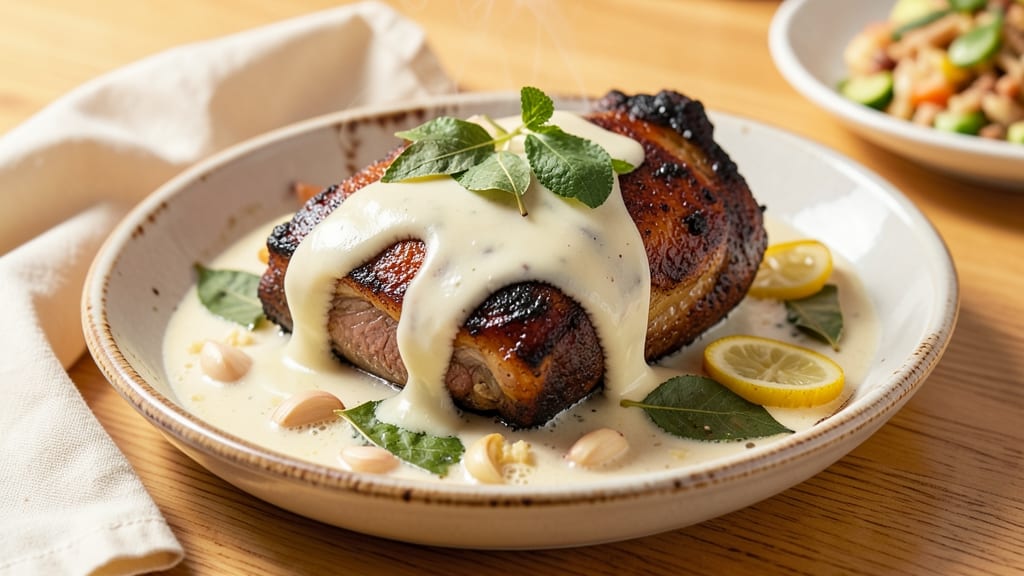
This adobong puti pork recipe transforms tender pork shoulder into a silky, coconut-rich masterpiece with a signature celery crown crunch. The secret lies in balancing white vinegar's tang with coconut milk's creaminess, creating a sauce that's both vibrant and velvety.
I first discovered this technique during my apprenticeship in Charleston, where I learned how long braising transforms tough cuts into melt-in-your-mouth perfection.
The dish begins with a simple marinade of vinegar, garlic, and bay leaves that tenderizes the meat overnight. Then comes the slow braise—where the magic happens—as the pork cooks for hours until fork-tender.
The celery crown adds a delightful textural contrast, its crisp edges providing a satisfying crunch against the rich sauce. This method delivers restaurant-quality results without requiring specialized equipment.
By the time you serve this dish, you'll have perfectly tender pork swimming in a glossy, aromatic sauce that's sweet, tangy, and deeply satisfying. The celery crown not only adds visual appeal but also creates that perfect balance of textures with every bite.
It's the kind of meal that feels special enough for company but simple enough for weeknight dinners.
Pair with steamed rice to soak up every last drop of that velvety sauce, or serve alongside atchara for a classic Filipino combination. The leftovers reheat beautifully, making this an ideal recipe for meal prep. Let's get cooking—this pork will become your new favorite centerpiece.
Ingredients for adobong puti pork
Pork shoulder, coconut milk, and vinegar create this velvety Filipino masterpiece with crisp celery crown contrast.
| Ingredient | Amount | Notes |
|---|---|---|
| Pork Shoulder 🐖 | 3 lb | Bone-in for maximum flavor |
| White Vinegar 🍶 | 1 cup | Distilled white preferred |
| Coconut Milk 🥥 | 2 cans | Full-fat, 13.5 oz each |
| Garlic Cloves 🧄 | 8 cloves | Peeled, smashed for infusion |
| Fresh Ginger 🌿 | 2 tbsp | Finely grated, fresh preferred |
| Bay Leaves 🍃 | 4 whole | Dried or fresh |
| Celery Stalks 🥬 | 2 whole | Cut into 3-inch pieces |
| Onion 🧅 | 1 whole | Yellow or white, quartered |
| Tomatoes 🍅 | 4 whole | Roma or vine-ripened |
| Sugar 🍚 | 2 tbsp | Granulated, adjust to taste |
| Salt 🧂 | 1 ½ tsp | Diamond Crystal preferred |
| Black Peppercorns 🌶️ | 10 whole | Crushed lightly |
| Olive Oil 🫒 | 2 tbsp | Extra-virgin for richness |
The pork shoulder is non-negotiable here—bone-in delivers the richest flavor, though boneless works in a pinch. Costco or Whole Foods have excellent cuts, but any grocery store's butcher section will do. Look for good marbling, not too lean. The coconut milk should be full-fat—Thai Kitchen or Aroy-D brands are reliable, but check labels for additives. Fresh ginger is a must; the dried version lacks the bright punch this dish needs. For the celery crown, use crisp stalks—Trader Joe's often has the freshest selection.
No white vinegar? Apple cider vinegar works in a bind, though it adds subtle sweetness. Short on garlic? Garlic powder at half the amount gets you close, but fresh is ideal. The tomatoes can be swapped for tomato paste (2 tbsp) + 1 tbsp water if you're in a hurry. For the celery crown, if you can't find thick stalks, use 2 celery hearts instead. The sugar balances the acidity—reduce to 1 tbsp if you prefer less sweetness. Black peppercorns should be crushed lightly between your palms, not ground into powder.
Marinate the pork overnight for best results, but 4 hours minimum works too. The sauce thickens as it cools, so don't over-reduce it. Store leftovers in the fridge for 5 days or freeze for 3 months. The celery crown stays crisp for 3 days if wrapped tightly in damp paper towels. I always double the recipe—this reheats beautifully for lunches, and the flavors deepen overnight.
Why You'll Love This Recipe
- One-Pot Magic: I swear by this recipe—just brown the pork, toss in vinegar and garlic, then let it simmer. No extra pans, no fuss, and honestly? That’s my kind of cooking.
- Tangy Creamy Bliss: The vinegar cuts through the richness of the coconut milk in the best way—bright, balanced, and just sweet enough. The ginger adds this little zing that makes every bite unforgettable.
- Leftover Goldmine: This dish tastes better the next day, and I’m not joking. The pork gets even more tender, and the sauce thickens into this luscious, saucy perfection. Pack it for lunch? Yes, please.
- Budget-Friendly Feast: Pork shoulder is cheap, and this recipe stretches it into a meal that feels special. Between us, it’s the kind of dish that makes you look like a hero without breaking the bank.
Step-by-step instructions for adobong puti pork
Transform humble pork shoulder into tender, silky perfection with this coconut milk braise.
Sear the Pork Shoulder for Depth of Flavor
Heat a large Dutch oven over medium-high heat until hot. Add the 2 tablespoons olive oil and swirl to coat the bottom evenly. Place the 3 lb pork shoulder fat-side down in the pan and sear undisturbed for 8-10 minutes until the fat renders and the skin develops a deep golden crust. This initial searing locks in juices and builds a flavorful crust that will dissolve into the braise.
Flip the pork shoulder and continue searing for another 5-6 minutes until all sides are well-browned. Remove the pork and set it aside on a plate, leaving all the rendered fat in the Dutch oven. Real talk: don't rush this step. The longer you sear, the more complex the flavor becomes. If you see the fat starts to smoke excessively, reduce heat slightly to prevent burning.
Build the Aromatic Base
In the same Dutch oven, add the 8 cloves garlic cloves (smashed) and 2 tablespoons fresh ginger (finely grated). Cook for 1-2 minutes until the garlic turns golden and becomes fragrant—this should happen quickly, so keep an eye on it. Add the 1 whole onion (quartered) and 2 whole celery stalks (cut into 3-inch pieces), cooking for another 3-4 minutes until softened and lightly caramelized.
Stir in the 4 whole bay leaves and 10 whole black peppercorns (lightly crushed), letting them toast for 30 seconds to release their essential oils. This step is where all the magic happens—the aromatic vegetables form the flavor foundation for the entire dish. If you smell the garlic burning, immediately remove the pan from heat and let it cool for a minute before proceeding.
Create the Braising Liquid
Pour in the 1 cup white vinegar and bring to a simmer, scraping up any browned bits from the bottom of the Dutch oven with a wooden spoon. This deglazing captures all the meaty flavor that would otherwise be lost. Add the 4 whole tomatoes (halved) and 2 tablespoons sugar, stirring to combine. The vinegar will help tenderize the pork while balancing the richness of the coconut milk.
Simmer the mixture for 5 minutes until the tomatoes soften and the liquid begins to reduce slightly. This step ensures the vinegar's acidity mellows out, creating a balanced flavor profile. Here's the thing—if you taste the mixture now and it's too acidic, you can add ½ teaspoon more sugar to balance it, but don't worry if it's still slightly tangy; the coconut milk will mellow it out later.
Braise the Pork in Coconut Milk
Return the pork shoulder to the Dutch oven, fat-side up. Pour in the 2 cans coconut milk, ensuring it fully covers the pork. Add the 1.5 teaspoons salt, then bring the mixture to a gentle simmer. Here's where it gets fun—once simmering, reduce the heat to low and cover the Dutch oven with a tight-fitting lid. This creates a steam bath that will slowly break down the connective tissue in the pork, resulting in melt-in-your-mouth tenderness.
Simmer for 2 hours until the pork is fork-tender and the sauce has thickened slightly. You'll know it's done when a knife slides in easily and the meat pulls apart with minimal resistance. If the sauce reduces too much before the pork is tender, add ½ cup water to maintain the proper consistency. The key is patience—low and slow is what transforms tough pork into silky, fall-apart perfection.
Rest and Serve with Celery Crown Crunch
Remove the pork from the Dutch oven and transfer it to a cutting board. Tent loosely with aluminum foil and let it rest for 15 minutes. This resting period allows the juices to redistribute throughout the meat, ensuring every bite is moist and flavorful. While the pork rests, taste the braising liquid and adjust the seasoning if needed—add more salt if it's bland or a splash of vinegar if it's too sweet.
For the signature celery crown crunch, cut the 2 whole celery stalks into thin, matchstick-like strips. Arrange them in a decorative pattern on top of the sliced pork before serving. The contrast between the silky pork and the crisp celery adds an exciting textural element that makes this dish truly special. Serve immediately with steamed rice to soak up every last drop of that luscious coconut milk sauce.
Pro Tips For Making Adobong Puti Pork
- Simmer Slow for Tenderness: I learned this the hard way—adobong puti isn’t a quick braise. After rushing a batch and ending up with tough, vinegar-soaked pork, I now simmer pork shoulder at low heat (180°F/82°C) for 3-4 hours until it falls apart. The vinegar will mellow out, and the meat stays juicy.
- Peel Ginger Before Grating: Fresh ginger is non-negotiable, but peeling it first saves time and keeps the texture clean. I used to grate it with the skin on, and it always left a weird texture in the sauce. Just use a spoon to scrape off the skin—it’s faster than you think.
- Deglaze with Vinegar First: Don’t dump all the vinegar in at once. After browning the pork, splash in ½ cup white vinegar while searing to lift the fond off the pan. This builds flavor before adding the rest later, and the sauce won’t taste harsh.
- Use Thick Coconut Milk: The cheap canned stuff with watery separation ruins the creaminess. I now buy full-fat, thick coconut milk (like Aroy-D or Thai Kitchen) and stir it vigorously before adding it to the pot—no lumps, no watery mess.
Wine and beer pairings for this recipe
Filipino White Wine
For this rich coconut-vinegar braise, I recommend a crisp Filipino white wine like Petron White or Tanduay White. These wines have bright acidity that mirrors the vinegar's tang while complementing the coconut's creaminess.
The citrus notes in these wines also echo the dish's aromatic base of garlic and ginger. 🍷
Coconut Milk Beer Pairing
If you prefer beer, a hoppy Filipino-style lager like San Miguel Light or Red Horse works beautifully. The subtle malt sweetness balances the dish's acidity, while the hop bitterness cuts through the richness.
For a more robust option, try a Belgian witbier like Hoegaarden—its coriander and citrus notes create a refreshing contrast.
Sweet & Tangy Balance
Avoid heavy red wines or malty stouts—they'll overpower the dish's delicate balance. Instead, opt for wines with high acidity and moderate body, such as Sauvignon Blanc (for its herbal notes) or Pinot Grigio (for its crisp finish).
These wines let the pork's tenderness and sauce's complexity shine through without competing flavors.
Local Filipino Liquor
For a truly authentic pairing, serve with Lambanog—a Filipino coconut vodka infused with young coconut. Its sweet, nutty profile enhances the dish's coconut milk base while adding a festive touch.
Just a small pour (about 1 oz) per glass is enough to complement the meal without overpowering it. 🥥
Non-Alcoholic Options
Craft a ginger-lime spritzer by mixing sparkling water, fresh lime juice, and a pinch of grated ginger. The effervescence cleanses the palate between bites, while the lime brightens the dish's rich flavors.
For a tropical twist, add a splash of pineapple juice to mimic the sweetness of the sauce.
Nutrition facts
Frequently asked questions
Can I substitute bone-in pork shoulder with boneless?
Yes, you can use boneless pork shoulder, but bone-in delivers richer flavor as the bones infuse the sauce. If using boneless, trim excess fat to 1/4-inch thickness and reduce braising time by 15-20 minutes. The meat will still become tender, but the sauce may be slightly less robust. For extra depth, add 1 pork bone to the braising liquid during cooking.
Why does my sauce turn out too thin or too thick?
Sauce consistency depends on reduction time. For a thicker sauce, simmer uncovered for 10-15 minutes after braising. If too thin, blend 1/2 cup sauce and return it to the pot. The coconut milk naturally thickens as it cools—always taste and adjust while warm. Pro tip: Use a heavy-bottomed pot to prevent scorching during reduction.
How do I make the celery crown extra crispy?
Blanch the celery strips in boiling water for 30 seconds, then immediately shock in ice water. Drain well and pat dry with paper towels. Toss with 1 tsp cornstarch before arranging on the pork. For maximum crunch, store in an airtight container with a paper towel underneath to absorb moisture. Re-crisp in a dry skillet for 1 minute before serving.
Can I make this in a slow cooker?
Sear the pork first, then transfer everything to a slow cooker. Cook on low for 6-8 hours or high for 4-5 hours. The slow cooker's gentle heat works perfectly for tenderizing. Just add 1/2 cup water if the sauce seems too thick during cooking. The celery crown should be added fresh before serving for best texture.
What's the best way to reheat leftovers?
Reheat gently in a skillet with 2 tbsp water over low heat for 5-7 minutes, stirring occasionally. Avoid microwaving as it can make the sauce watery. For crispy celery crown, add it fresh after reheating. Leftovers keep for 5 days in the fridge or 3 months frozen. The flavors actually improve after 24 hours of resting!