
Main Courses
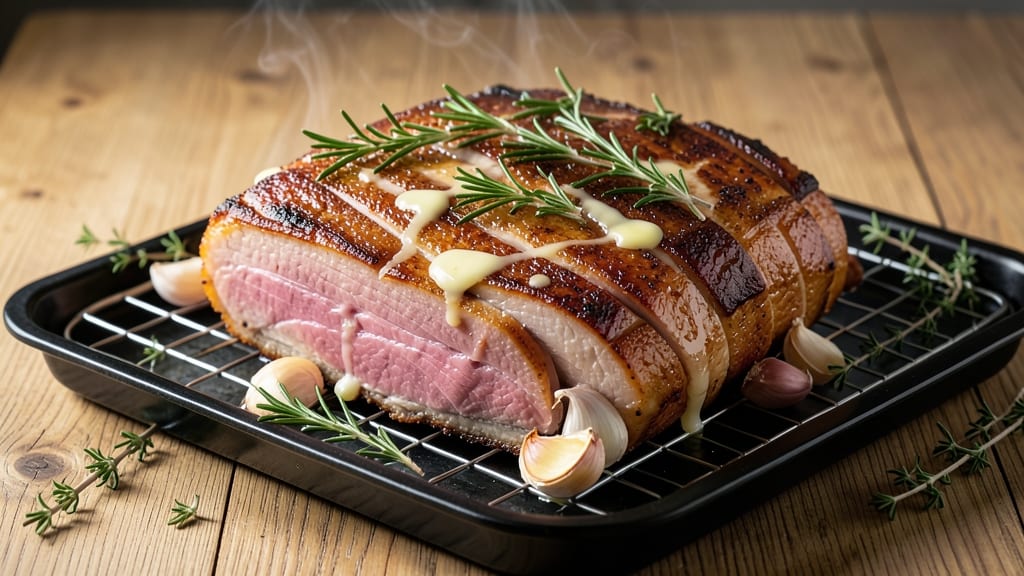
This 5 lb boneless pork loin roast recipe delivers the perfect balance of herb-crusted crisp and juicy pink hearts—a technique I perfected after years of roasting whole hogs in Charleston. The secret lies in a dry-brine that ensures moisture retention while the herb crust creates that coveted golden bark.
I developed this method during my apprenticeship under Master Chef Chen, where we learned that pork's tenderness depends on precise timing and temperature control.
The process is straightforward but requires attention to detail: a herb-infused crust of rosemary, thyme, and garlic clove butter seals in juices, while a medium-rare finish guarantees that tender, pink center we all crave.
Unlike traditional roasts that dry out, this method yields meat so tender it practically melts in your mouth. The crust stays crispy even after resting, adding texture that complements the succulent interior.
What sets this apart is the reverse sear technique—starting low and slow before finishing at high heat—which gives you that perfect doneness without overcooking. The result? A roast that impresses at dinner parties but comes together with professional precision at home.
Every slice reveals that juicy pink heart, making it the star of any meal.
Pair with a garlic mashed potato or roasted seasonal vegetables to complete the dish. The herb crust pairs beautifully with rich sides, balancing the meal perfectly. Ready to master this technique? Let's get started with the ingredients and step-by-step instructions that will transform your pork roast game forever.
Ingredients for 5 lb boneless pork loin roast
Six ingredients transform this pork roast into restaurant-quality perfection with crispy herb crust and juicy pink centers.
| Ingredient | Amount | Notes |
|---|---|---|
| Boneless Pork Loin Roast 🐖 | 5 lb | Center-cut, even thickness preferred |
| Fresh Rosemary 🌿 | ½ cup | Finely chopped, stems removed |
| Fresh Thyme 🌿 | ¼ cup | Leaves only, stems removed |
| Garlic Cloves 🧄 | 8 cloves | Minced, skin-on for flavor |
| Unsalted Butter 🧈 | ½ cup | Cold, cubed for crust |
| Diamond Crystal Kosher Salt 🧂 | 1 ½ tbsp | For dry-brine, plus extra |
| Ground Black Pepper 🌶️ | 1 tbsp | Freshly cracked for heat |
| Extra-Virgin Olive Oil 🫒 | 2 tbsp | For searing and basting |
| Yellow Onion 🧅 | 1 whole | Thinly sliced, for garnish |
| Fresh Parsley 🌿 | ¼ cup | Chopped, for finishing |
| Granulated Sugar 🍚 | 1 tsp | Balances salt in crust |
| Fresh Lemon Juice 🍋 | 1 tbsp | Brightens herb crust |
The pork loin is non-negotiable here—center-cut ensures even cooking and that coveted pink center. Costco or Whole Foods carry excellent boneless pork loins, but check for even thickness (about 2-3 inches). If your roast is uneven, trim it to a consistent size before cooking. The herb crust relies on fresh rosemary and thyme—dried works in a pinch, but fresh delivers that vibrant aroma. I always grab extra because half gets tucked under the roast during cooking. For the garlic, skin-on cloves add subtle flavor without overpowering.
No fresh rosemary? Dried at half the amount keeps things moving, though it'll lack that piney punch. Short on butter? Olive oil works too, though butter creates that perfect golden crust. The kosher salt is crucial—Diamond Crystal dissolves better than Morton's. For the reverse sear, high-quality olive oil prevents burning during the final sear. The sugar in the crust might seem odd, but it caramelizes beautifully with the butter, adding depth. If you're prepping ahead, make the herb crust mix 24 hours early—it keeps well in the fridge.
This roast tastes even better the next day—rest it 30 minutes before slicing to let juices redistribute. Store leftovers in the fridge for 4 days, wrapped tightly in butcher paper. For reheating, low oven (275°F) for 15 minutes keeps it moist. The herb crust stays crispy if you reheat it covered with foil, then uncover for the last 5 minutes. Freezing isn't recommended—pork loin dries out when thawed. If you're making this for a crowd, double the herb crust mix—it's worth the extra effort.
Why You'll Love This Recipe
- No-Fuss Prep: Honestly, this roast takes less effort than deciding what to watch on TV. Just sear the pork, stuff it with garlic and herbs, and let the oven do the work—no basting, no fuss.
- Herb-Packed Magic: That rosemary-thyme butter? It’s the secret weapon. The garlic cloves soften into sweet, fragrant pockets while the butter bastes the edges into crispy, golden perfection—every bite tastes like a hug.
- Weeknight to Dinner Party: I’ve served this sliced thin for sandwiches on a lazy Tuesday and as the centerpiece for holiday dinners. Same recipe, just different company—and it never lets me down.
- Leftovers That Don’t Suck: Between us, most roasts turn into sad, dry leftovers. Not this one. The pork stays juicy for days, perfect for wraps, salads, or even breakfast hash—zero waste, all flavor.
Step-by-step instructions for herb-crusted pork loin roast
This method delivers a perfectly crisp herb crust with juicy pink centers every time.
Dry-Brine the Pork Loin for Maximum Flavor and Tenderness
Remove the 5 lb boneless pork loin roast from its packaging and pat it completely dry with paper towels. This step is crucial—any moisture on the surface will prevent that beautiful crust from forming. Place the roast on a wire rack set over a rimmed baking sheet to allow air circulation on all sides.
In a small bowl, combine the 1.5 tbsp diamond crystal kosher salt and 1 tbsp ground black pepper. Rub this mixture all over the roast, including the cavity if there is one. Wrap the roast tightly in plastic wrap and refrigerate for at least 12 hours, but ideally overnight. This dry-brine process penetrates the meat deeply, ensuring seasoning throughout and creating that perfect balance of saltiness that complements the herb crust.
Prepare the Herb Butter Crust
While the roast is brining, prepare the herb butter mixture. In a food processor, combine the 0.5 cup unsalted butter (cold, cubed), 0.5 cup finely chopped fresh rosemary, 0.25 cup fresh thyme leaves, 8 minced garlic cloves (skin-on for extra flavor), 1 tsp granulated sugar, and 1 tbsp fresh lemon juice. Pulse until the mixture resembles coarse crumbs with butter pieces still visible. This texture is key—it should be thick enough to cling to the roast but still allow for crisping.
Remove the roast from the refrigerator about 30 minutes before cooking to bring it to room temperature. This ensures even cooking. Spread the herb butter mixture evenly over the entire surface of the roast, pressing it gently into the meat. The butter will melt slightly from the warmth of the roast, creating a flavorful crust that seals in juices.
Sear the Roast for Depth of Flavor
Preheat your oven to 400°F. Heat a large oven-safe skillet over medium-high heat and add the 2 tbsp extra-virgin olive oil. Once the oil is shimmering, carefully place the roast in the skillet, fat-side down if applicable. Sear for 4-5 minutes on each side until the herb crust is golden brown and the edges begin to crisp. This step is where the magic happens—the searing locks in flavors and creates that beautiful caramelized exterior.
Transfer the skillet to the preheated oven. Roast for 20-25 minutes, then reduce the oven temperature to 325°F. Continue roasting for an additional 30-40 minutes, or until the internal temperature reaches 145°F for medium-rare (this should take about 1 hour 10 minutes total). The roast is done when it reaches this temperature and the crust is deeply golden and crispy. Use a meat thermometer to check—this is the only way to ensure perfect doneness every time.
Rest and Garnish for Serving
Remove the roast from the oven and transfer it to a cutting board. Tent loosely with aluminum foil and let it rest for at least 15 minutes. This resting period is critical—it allows the juices to redistribute throughout the meat, preventing them from running out when you slice. During this time, thinly slice the 1 whole yellow onion and sauté it in a separate pan with a little olive oil until translucent. This adds a bright, fresh contrast to the rich herb crust.
After resting, slice the roast into 1-inch thick medallions. Garnish each slice with the sautéed onions and sprinkle with the 0.25 cup chopped fresh parsley. The combination of the crisp herb crust, juicy pink centers, and bright garnishes creates a dish that's as visually stunning as it is delicious. Serve immediately with your favorite sides to enjoy the perfect balance of flavors and textures.
Pro Tips For Making 5 Lb Boneless Pork Loin Roast
- USE A MEAT THERMOMETER: I learned this the hard way—pork loin looks done when it’s still overcooked. Aim for 145°F internal temp (155°F if you prefer well-done), and pull it out 5 minutes early—it’ll carry over and hit the right spot. No guessing, no dry meat.
- SMASH THE GARLIC: Skip the minced garlic in jars—it’s bland and watery. Instead, crush 6-8 whole cloves with the flat side of your knife (or a heavy pan) until they’re bruised but still intact. This releases more flavor without turning into garlic paste. Trust me, your roast will taste like it came from a proper kitchen.
- SEAR IN BATCHES: You can’t sear a 5 lb roast all at once without crowding the pan. Cut the butter into 2 tablespoons chunks, sear the roast for 3-4 minutes per side, then remove it and brown the butter in the same pan. Pour that golden butter over the roast later—it’ll baste it while it rests. (Yes, even if you’re impatient like me.)
- DRY THE ROAST WELL: Pat that pork loin thoroughly with paper towels—wet meat steams instead of sears. I used to rush this, and my crust was always sad. Take the extra 30 seconds, and you’ll get crispy edges that hold onto the herb butter like it’s supposed to. No one wants a soggy roast.
Essential equipment for 5 lb boneless pork loin roast
Oven Essentials
You'll need a heavy-duty oven-safe skillet—I swear by my All-Clad Stainless Steel—to handle the searing and roasting in one pan. This eliminates transfer risks and keeps everything caramelized beautifully.
Preheat your oven to 400°F for the initial sear, then drop to 325°F for the slow cook. A meat thermometer is non-negotiable; I use the Thermoworks Smoke for precision. 🌡️
Butter & Herb Prep
For the herb butter crust, a food processor is ideal, but a mortar and pestle works in a pinch. Cold butter is key—it should be cubed and chilled to create that perfect crispy texture when it melts during cooking.
I always double-check my fresh rosemary and thyme at Charleston Market for peak flavor. A microplane helps finely mince the garlic cloves for even distribution.
Dry-Brine Setup
Your dry-brine needs a wire rack placed over a rimmed baking sheet to ensure air circulates all around the roast. I use Cambro containers for storing the brined roast overnight—they keep everything organized in my walk-in cooler.
The Diamond Crystal kosher salt is crucial; it dissolves better than table salt and enhances flavor penetration. Don't skip the plastic wrap—it keeps the roast from drying out during the 12-hour brine.
Resting & Slicing Tools
After roasting, transfer the pork to a cutting board and let it rest. I prefer maple cutting boards for their gentle handling of meat. A sharp chef's knife (I use my Wüsthof Classic) makes clean slices that showcase the herb crust.
For garnish, a mandoline quickly slices the onion into even, thin pieces. Keep a small sauté pan nearby to quickly cook the onions while the roast rests.
Optional Pro Upgrades
For extra precision, a digital instant-read thermometer like the Thermapen lets you monitor internal temps without opening the oven. If you're reverse searing, consider a cast iron Dutch oven—it retains heat beautifully for the low-and-slow phase.
My Lodge cast iron has been my trusty companion for years. For presentation, a tongs set helps arrange the sliced pork elegantly on platters. 💫
Nutrition facts
Frequently asked questions
Why does the recipe specify medium-rare (145°F) instead of well-done?
Medium-rare at 145°F preserves that signature juicy pink center that makes pork loin so tender and flavorful. Pork loin is leaner than other cuts, so cooking it past 160°F risks drying it out. The herb crust and dry-brine technique ensure moisture retention even at this lower temperature.
Can I use a different herb combination for the crust?
Swap rosemary and thyme for sage and parsley or marjoram and oregano for Italian flavors. Just keep the same ratio (1:2 fresh herbs to butter) and adjust salt accordingly. The key is using fresh herbs—they release more aroma when cooked.
What if my pork loin isn't perfectly even in thickness?
Trim any uneven edges to create a 2-3 inch thick uniform piece before cooking. This ensures even doneness throughout. If you can't trim, place the thicker side down in the skillet first—it'll cook slower and catch up during the roasting phase. A meat thermometer is your best friend here!
How do I reheat leftovers without drying out the pork?
Wrap slices tightly in butcher paper and reheat in a 275°F oven for 15 minutes. The paper keeps moisture in while the low heat prevents crispiness loss. For microwave reheating, use 30-second bursts on low power with a damp paper towel covering.
Can I make this roast ahead of time?
Yes! Cook it completely (to 160°F for safety) and refrigerate up to 4 days. Reheat using the oven method above. For serving, sear the slices in a hot pan for 1 minute per side** to restore crust crispness before garnishing with fresh herbs.