
Main Courses
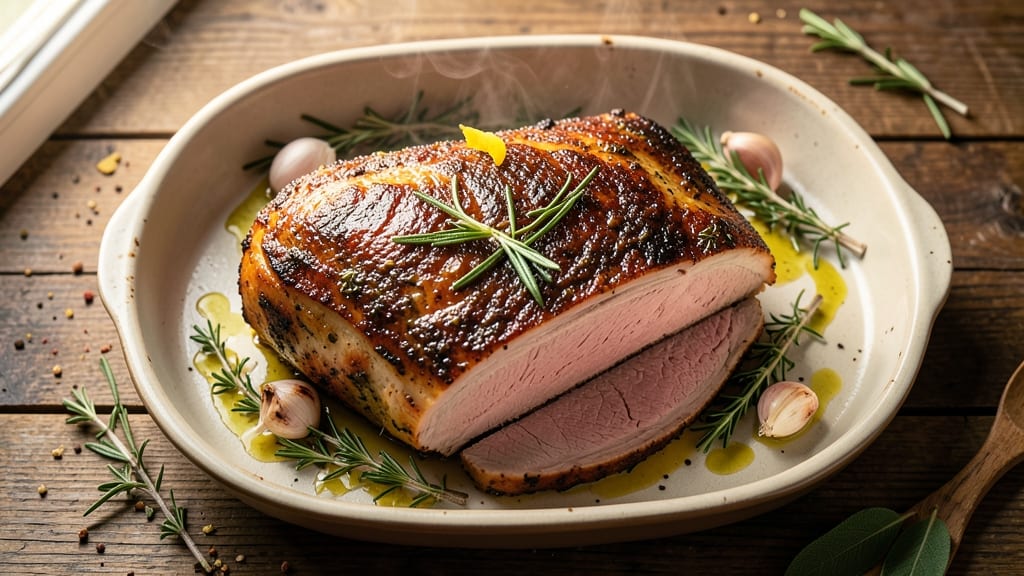
A 2 lb pork roast oven recipe cooked to juicy pink perfection with a crisp herb crust is the kind of meal that transforms a weeknight into a celebration.
I developed this recipe after years of perfecting pork roasts for family gatherings, where the difference between dry, overcooked meat and tender, melt-in-your-mouth slices is everything. The secret lies in the low-and-slow roasting technique paired with a flavorful herb crust that seals in moisture while creating a golden, crackling exterior.
This method delivers restaurant-quality results with minimal effort—just a few simple ingredients, a 325°F oven, and about 2.5 to 3 hours of hands-off cooking time. The pork roast rests in a flavorful brine before roasting, ensuring it stays moist and tender, while the herb crust adds depth and texture.
No fancy equipment is needed, just a reliable meat thermometer to check for the perfect medium-rare doneness.
By the time you pull this roast from the oven, you’ll have juicy pink centers with a crisp, aromatic crust that’s impossible to resist. The aroma alone will have everyone gathering at the table, and each slice will be tender enough to cut with a fork.
This is the kind of pork roast that turns leftovers into sandwiches the next day—though I doubt you’ll have any left.
Pair it with roasted root vegetables, a simple gravy, or a crisp green salad for a complete meal that feels special without the fuss. Let’s get started on a roast that will become your new go-to for dinner parties and family dinners alike.
Ingredients for 2 lb pork roast oven
Fresh herbs, a simple brine, and slow-roasting magic transform this 2 lb pork roast into juicy perfection.
| Ingredient | Amount | Notes |
|---|---|---|
| Bone-In Pork Loin Roast 🥓 | 2 lb | Center-cut, 1-inch thick, trimmed of fat |
| Fresh Rosemary 🌿 | ¼ cup | Finely chopped, stems removed |
| Fresh Thyme 🌿 | ¼ cup | Leaves only, stems discarded |
| Fresh Sage 🌿 | ¼ cup | Leaves only, finely chopped |
| Garlic Cloves 🧄 | 6 cloves | Minced, for herb paste |
| Extra-Virgin Olive Oil 🫒 | ¼ cup | High-quality, fruity |
| Diamond Crystal Kosher Salt 🧂 | 1 tbsp | For brine and seasoning |
| Black Peppercorns 🌶️ | 1 tsp | Freshly cracked |
| Dijon Mustard 🍯 | 1 tbsp | For herb paste adhesion |
| Unsalted Butter 🧈 | ¼ cup | Cold, cubed, for crust |
| Apple Cider Vinegar 🍎 | ½ cup | For brine acidity |
| Brown Sugar 🍯 | 2 tbsp | Light, for balanced brine |
| Water 💧 | 4 cups | For brine solution |
The pork loin is non-negotiable here—bone-in stays moister, and center-cut ensures even cooking. I always grab mine from Whole Foods or my local butcher shop, where they can trim it to exactly 1-inch thickness. Look for good marbling but minimal fat cap—this roast should be lean enough to stay tender. Fresh herbs are worth the extra at the farmers market: rosemary, thyme, and sage from the same bunch taste like they were grown just for this dish. If you're using dried, cut the amounts in half, but honestly, fresh is a game-changer.
No Dijon mustard? Yellow mustard at double the amount works in a pinch, though it won't be as refined. The brine is where the magic happens—apple cider vinegar tenderizes while the brown sugar balances acidity. For extra richness, add 1 tbsp soy sauce to the brine. The olive oil needs to be extra-virgin—cheap oil makes the herb paste taste flat. And if you're worried about the roast drying out, poke a few holes in the crust before serving to let those juices escape dramatically (it's impressive and delicious).
This roast tastes even better the next day, so make a double batch if you're feeding a crowd. Store leftovers wrapped tightly in foil for 3-4 days in the fridge, or freeze portions for up to 3 months. The herb crust keeps best when made fresh, but you can prep it ahead and refrigerate for 24 hours before roasting. For serving, I like to slice it against the grain into 1/4-inch thick slices—each bite should be tender enough to cut with a fork, with that crisp crust holding together perfectly.
Why You'll Love This Recipe
- Herb Magic Simmered: That crispy crackling skin with tender meat inside? The garlic and herbs infuse every bite, but here’s the secret: the bone-in roast stays juicy because it roasts slowly. Honestly, my husband still asks for seconds even when I make chicken.
- Leftovers That Shine: Slice the roast thin for sandwiches the next day—it’s basically gourmet deli meat. Or shred it into pasta sauce (trust me, it’s better than store-bought). I’ve fed a crowd with this one roast and still had leftovers for lunch.
- Sunday Supper Star: This roast is my go-to for family dinners, potlucks, or when I need to impress without stress. The aromas alone fill the house, and the prep takes less time than debating what to order for takeout. (Yes, even on a Tuesday night.)
Step-by-step instructions for herb-crusted pork roast
Here's how to achieve that perfect balance of juicy pink centers and crispy herb-crusted exterior.
Prepare the Herb Paste and Brine Solution
In a small bowl, combine the 0.25 cup fresh rosemary, 0.25 cup fresh thyme, 0.25 cup fresh sage, 6 cloves minced garlic, 1 tbsp Dijon mustard, 1 tbsp diamond crystal kosher salt, and 1 tsp freshly cracked black peppercorns. Use a fork to mash everything into a thick paste. This aromatic blend will infuse the pork with deep herbal notes while creating that signature crispy crust.
In a separate container, mix the 4 cups water, 0.5 cup apple cider vinegar, and 2 tbsp brown sugar to create the brine solution. The acidity from the vinegar helps tenderize the meat while the sugar adds subtle sweetness that balances the herbs. Let both the herb paste and brine sit at room temperature while you prepare the roast.
Season and Brine the Pork Roast
Pat the 2 lb bone-in pork loin roast completely dry with paper towels—this is crucial for developing that crisp crust. Rub the entire surface with 0.25 cup extra-virgin olive oil to help the seasonings adhere and create a barrier against drying out. Then generously coat the roast with the herb paste, pressing it into all sides and crevices.
Place the seasoned roast in a shallow dish and pour the brine solution over it, ensuring the meat is fully submerged. Cover and refrigerate for at least 4 hours or up to overnight. This step ensures maximum flavor penetration and moisture retention. Real talk: Don't skip this—it makes all the difference in juiciness.
Sear the Roast for Maximum Flavor
Remove the roast from the brine and pat it dry once more with fresh paper towels. Heat your oven to 425°F while you prepare the roast for searing. In a large oven-safe skillet, melt the 0.25 cup unsalted butter over medium-high heat until it foams but doesn't brown. Place the roast in the skillet and sear for 4-5 minutes per side until it develops a deep golden-brown crust.
This high-heat sear locks in juices and creates that irresistible crust we're after. The butter adds richness that complements the herbal notes. Once seared, transfer the skillet to the preheated oven and roast for 30-40 minutes, or until the internal temperature reaches 140°F for medium-rare (the perfect pink center).
Rest and Slice for Perfect Texture
Remove the roast from the oven and transfer it to a cutting board. Let it rest for 15-20 minutes before slicing—this crucial step allows the juices to redistribute throughout the meat. The reason we wait is that pork continues cooking slightly after removal from heat, and resting prevents those juices from pooling on the cutting board instead of staying inside the meat.
Slice the roast into ½-inch thick portions against the grain for maximum tenderness. Each slice should reveal that beautiful pink center surrounded by a crispy, herb-infused crust. The aroma alone will have everyone at the table anticipating the first bite. Serve immediately with your favorite sides to enjoy the perfect balance of textures and flavors.
Pro Tips For Making 2 Lb Pork Roast Oven
- CRANK THE HEAT FIRST: Start your oven at 425°F for the first 20 minutes—this sears the outside and locks in those juices. After that, drop it to 325°F. I used to bake it at 350°F the whole time, and the crust was always sad and pale.
- SLICE THE HERBS THIN: Chop the rosemary, thyme, and sage into tiny leaves—no thick stems. They’ll crisp up and add texture, not just flavor. I learned this after pulling out a roast where the herbs were still tough as twigs.
- STOP AT 135°F: Pull the pork out when the internal temp hits 135°F—it’ll rise to 145°F while resting. Overcooking turns it dry, and nobody wants that. Use a meat thermometer, or you’re guessing.
- BRUSH WITH GARLIC OIL: After searing, brush the roast with melted butter and minced garlic while it’s hot. The garlic burns slightly, adding depth. I skip this when I’m lazy, but the dish is noticeably better when I don’t.
Common mistakes when making your 2 lb pork roast oven
Skipping the Brine
The brine is what transforms a good pork roast into an exceptional one. I’ve seen home cooks skip it to save time, but that’s a mistake—this 4-hour (or overnight) soak tenderizes the meat and infuses it with flavor.
Without it, your roast will be drier and less flavorful. If you’re short on time, at least let it sit in the herb paste for 2 hours before roasting. 💫
Overcooking the Roast
Pork roast is forgiving, but pushing it past 145°F internal temperature turns it from tender to dry. I’ve ruined more roasts than I’d like to admit by walking away and forgetting about them.
Use a meat thermometer—I swear by the ThermoWorks Smoke—and pull it out when it hits 140-145°F for medium-rare. Let it rest before checking again; it’ll rise another 5°F.
Not Resting the Meat
Skipping the 15-20 minute rest is the fastest way to end up with dry, stringy slices. Pork continues cooking after it leaves the oven, and those juices need time to redistribute.
I’ve seen people slice immediately and then complain about the texture—don’t be that person. Cover the roast loosely with foil and let it chill while you finish sides. 💪
Using the Wrong Cut
A bone-in pork loin roast is your best bet for this recipe, but I’ve seen people grab pork shoulder or tenderloin instead. Shoulder needs a different approach (slow-smoking or braising), and tenderloin is too delicate for this method.
Stick to the loin for that perfect balance of tenderness and flavor. If you must use another cut, adjust the cooking time and temperature accordingly.
Ignoring the Crust
The herb crust isn’t just for looks—it’s what creates that irresistible texture contrast. Skimping on the butter or searing time means you’ll miss out on that crispy, aromatic exterior. I sear my roasts in 0.25 cup cold butter until golden brown, then finish in the oven.
If your crust isn’t crispy, you’re not done—return it to the oven for another 5-10 minutes to set it properly.
Overcrowding the Pan
When searing, don’t stack your roast or crowd the pan. This steams the meat instead of browning it, leading to a soggy crust. Use a skillet large enough to fit your roast without touching the sides.
If your pan is too small, sear in batches or use a larger one. A 12-inch cast iron skillet is ideal for this recipe—it’s what I use at home and in the restaurant. 🔥
Nutrition facts
Frequently asked questions about your 2 lb pork roast
Can I use boneless pork loin instead of bone-in?
You can, but bone-in pork stays juicier and more flavorful. If using boneless, reduce the roasting time by 10-15 minutes since it cooks faster without the bone's insulating effect. For best results, ask your butcher to trim a 1-inch thick boneless loin and tie it with kitchen twine to maintain shape during cooking.
What's the best way to reheat leftovers?
Slice your leftovers thin and reheat in a skillet with 1 tbsp butter over medium-low heat for 2-3 minutes per side until warmed through. Microwaving works too—place slices on a plate, cover with a damp paper towel, and heat for 30-45 seconds. Never reheat above 165°F to prevent drying.
How do I adjust for a larger roast?
For every additional pound, add 30-45 minutes to roasting time at 325°F. Increase the herb paste proportionally (about 1 tbsp per pound) and use 2 tbsp butter per pound for searing. The key is maintaining the 1-inch thickness—thicker roasts need longer cooking.
Can I make this roast ahead of time?
Cook the roast 1-2 days ahead and refrigerate wrapped tightly in foil. Reheat slices in the oven at 300°F for 10-15 minutes until warmed through. The flavors actually improve overnight as the meat rests and absorbs all those herb notes.
What if my oven runs hot or cold?
Use an oven thermometer to check accuracy—most home ovens run 25°F hotter or colder than set. For a 325°F target, adjust your oven to 300°F if it runs hot, or 350°F if it runs cold. The herb crust will still crisp properly as long as you sear properly first.