
Main Courses
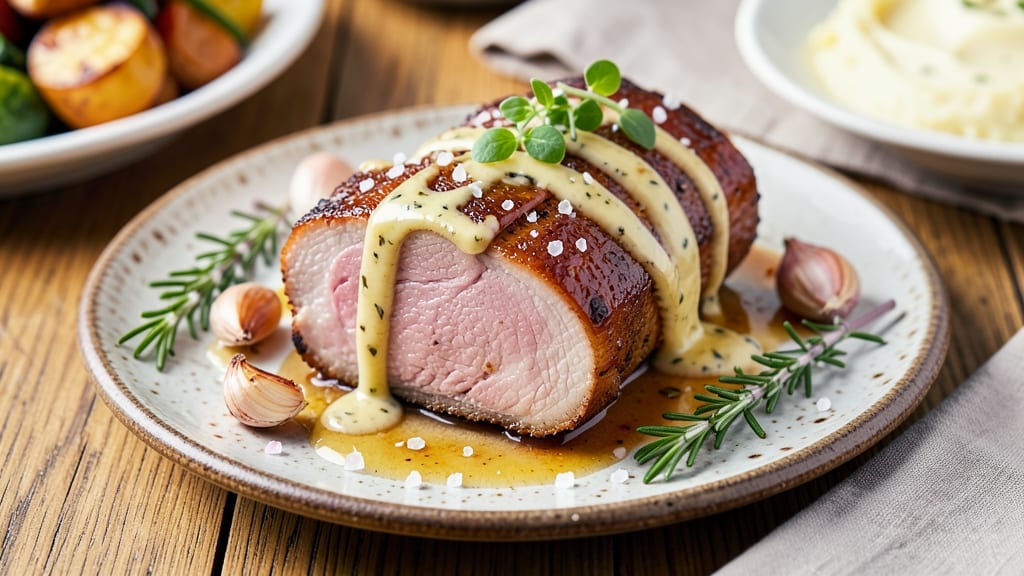
This 4lb pork loin roast recipe delivers restaurant-quality results with a crisp herb-infused crust and perfectly tender meat every time. 🔥 After roasting thousands of pounds of pork, I've perfected the technique that transforms a simple cut into a showstopping centerpiece. The secret lies in high-heat searing followed by low-and-slow roasting—creating that coveted golden crust while keeping the interior juicy.
What sets this recipe apart is the herb crust—rosemary, thyme, and garlic create an aromatic seal that locks in moisture while adding layers of flavor.
We start with a quick sear in a screaming-hot pan to build that crust, then finish in the oven at a precise 325°F until the internal temperature hits 145°F. This method ensures your pork stays juicy without drying out, even when cooking a larger roast.
The result is a pork loin with a beautifully caramelized crust that shatters when cut, revealing tender, pink meat inside. The herb flavors infuse deeply during roasting, creating a balance of savory and aromatic notes that will have your guests asking for seconds.
This is the kind of pork that makes Sunday dinner feel special without requiring hours in the kitchen.
Serve with roasted potatoes, caramelized onions, or a simple green salad to let the pork shine. The leftovers reheat beautifully too—just slice and warm gently in the oven. Let's get cooking!
Ingredients for 4lb pork loin roast
Four pounds of pork loin plus aromatic herbs and simple pantry staples transform into a showstopping centerpiece.
| Ingredient | Amount | Notes |
|---|---|---|
| Pork Loin Roast 🐖 | 4 lb | Bone-in for better flavor |
| Fresh Rosemary 🌿 | ½ cup | Finely chopped, stems removed |
| Fresh Thyme 🌿 | ¼ cup | Leaves only, finely chopped |
| Garlic Cloves 🧄 | 6 cloves | Minced for even distribution |
| Unsalted Butter 🧈 | ½ cup | Cold, cut into small pieces |
| Diamond Crystal Kosher Salt 🧂 | 2 tbsp | Coarse grain preferred |
| Freshly Ground Black Pepper 🌶️ | 1 tbsp | Freshly cracked for best flavor |
| Extra-Virgin Olive Oil 🫒 | 2 tbsp | High quality for searing |
| All-Purpose Flour 🌾 | ¼ cup | For dusting roast pan |
| Yellow Onion 🧅 | 1 whole | Quartered for garnish |
| Fresh Parsley 🌿 | 0.2 cup | Chopped, for garnish |
| Apple Cider Vinegar 🍎 | 1 tbsp | For pan deglazing |
The pork loin is the foundation, so bone-in is non-negotiable—it stays juicier and adds flavor. Look for a well-marbled cut from Whole Foods or your local butcher; the marbling ensures tenderness. Fresh herbs are essential here. Trader Joe's carries great bundles, but even the grocery store's fresh section works if the sprigs are vibrant. For the butter, Plugrá or Land O'Lakes unsalted are reliable choices—just make sure it's cold when you use it. The garlic should be fresh, not that powdered stuff that's been sitting forever.
No fresh rosemary? Dried works at half the amount, but the flavor won't be as bright. Substituting thyme for rosemary? Use one-third more dried thyme to compensate. Running low on butter? Olive oil or ghee work in a pinch, though butter's fat content creates that perfect crust. The flour is just for dusting the pan—don't skip it, but all-purpose works fine. For the vinegar, white wine vinegar is a 1:1 swap if you've got it. And if you're worried about the pork being too lean, add a thin slice of bacon under the roast during cooking—just remove it before serving.
This roast reheats beautifully—slice it and warm gently in the oven for the best results. Store leftovers in an airtight container for up to 4 days, or freeze for 3 months in portions. The herb crust keeps best when refrigerated, so plan to serve it within 2 days of making it. For a stress-free Sunday, prep everything the night before: chop herbs, measure spices, and let the pork sit at room temperature for 30 minutes before cooking. That's the secret to even browning.
Why You'll Love This Recipe
- No-Fuss Prep: I swear by this recipe because it’s basically hands-off after the initial five minutes. Slice the garlic, tie the herbs in a little bundle, and let the oven do the work—no chopping mountains of veggies or stressing over timing.
- Herb-Crusted Magic: That rosemary-thyme butter crust? It’s the star. The garlic mellows into something rich while the herbs caramelize into a fragrant, golden blanket—crisp on the outside, juicy inside. (Yes, even my picky husband licks the plate.)
- Weeknight to Holiday: Same recipe works for Tuesday dinners or Sunday gatherings. Slice it thin for sandwiches, cube it for tacos, or serve it whole with roasted potatoes—no extra effort, just different ways to enjoy it.
- Leftovers That Don’t Suck: Between us, pork roast leftovers are usually sad. Not this one. The butter keeps it moist for days, and I’ve repurposed it into pasta, fried rice, and even breakfast hash—because nothing should go to waste.
Step-by-step instructions for herb-infused pork loin roast
Transform a simple pork loin into a showstopping centerpiece with this foolproof method.
👨🍳 Step 1: Prepare the Herb Butter and Season the Roast
In a small bowl, combine the 0.5 cup unsalted butter, 0.5 cup finely chopped fresh rosemary, 0.25 cup finely chopped fresh thyme, and 6 minced garlic cloves. Mix well and chill until firm—about 30 minutes. This herb butter will create that signature crust while keeping the meat juicy.
While that chills, pat the 4 lb pork loin roast completely dry with paper towels. Season both sides generously with 2 tablespoons Diamond Crystal kosher salt and 1 tablespoon freshly ground black pepper. Press the seasoning firmly into the meat so it adheres well. Let the roast sit at room temperature for 30 minutes before cooking—this ensures even cooking from edge to center.
🔥 Step 2: Sear the Roast for Maximum Flavor
Preheat your oven to 400°F. Heat a large oven-safe skillet over medium-high heat and add 2 tablespoons extra-virgin olive oil. Once shimmering, place the pork loin roast in the skillet, fat-side down. Sear for 5-6 minutes until the surface develops a deep golden-brown crust. Flip and sear the other side for another 4-5 minutes. This step locks in juices and builds that irresistible crust.
Here's the thing—don't rush this. You'll know it's ready when the crust releases easily from the pan with a gentle nudge. If it sticks, let it cook a little longer. The crust is your flavor foundation, so take your time.
🥘 Step 3: Create the Herb Butter Crust and Roast
Remove the skillet from heat and place the chilled herb butter mixture on top of the seared roast. Press it gently into the meat so it sticks. Transfer the skillet to the preheated oven and roast for 25-30 minutes until the internal temperature reaches 145°F when measured with a meat thermometer in the thickest part.
About halfway through, sprinkle 0.25 cup all-purpose flour evenly over the roast. This creates a light, crispy crust that contrasts beautifully with the tender meat. Don't skip this—it's what makes this roast truly special. The flour will toast slightly, adding another layer of texture and flavor.
⏰ Step 4: Rest and Garnish for Presentation
Remove the roast from the oven and transfer it to a cutting board. Tent loosely with aluminum foil and let it rest for 15-20 minutes. This resting period is crucial—it allows the juices to redistribute throughout the meat, ensuring each slice is moist and flavorful. Real talk: Skipping this step means dry, disappointing pork.
While the roast rests, prepare the garnish. In a small pan over medium heat, sauté the quartered yellow onion in 1 tablespoon apple cider vinegar for 3-4 minutes until softened. This adds a bright, tangy contrast to the rich pork. Chop the 0.2 cup fresh parsley and mix it with the onions. When ready to serve, slice the roast into ½-inch thick medallions and arrange on a platter. Spoon the onion-parsley mixture over the top for a pop of color and freshness.
🍽️ Step 5: Serve with Confidence
Slice the roast against the grain for maximum tenderness. Each slice should be juicy with a crispy herb butter crust on top and a golden flour crust on the bottom. The internal temperature should be 145°F with no pink remaining in the center. Serve immediately with your favorite sides—roasted vegetables, mashed potatoes, or a simple green salad all pair beautifully.
This roast delivers on all fronts: perfect doneness, incredible crust, and deep herb-infused flavor. The secret lies in the herb butter and that flour crust—don't skip either. Enjoy your perfectly executed centerpiece!
Pro Tips For Making 4lb Pork Loin Roast
- Use a Meat Thermometer: I learned this the hard way—pork loin can go from perfect to dry in seconds once it hits the table. Aim for 145°F internal temp (155°F if you prefer it well-done), then pull it out immediately. That last 5°F rise happens fast, and you don’t want to end up with a sad, overcooked slab.
- Sear in Batches: High heat. Seriously, crank it up. But don’t crowd the pan—this isn’t a buffet. Brown the pork loin in 2-3 minutes per side, then move it to a plate. If you’re also searing garlic or herbs, do that in the same pan after removing the pork (yes, even if you’re impatient like me). The residual fat will render and flavor everything perfectly without burning.
- Don’t Skip the Butter Bath: This isn’t the prettiest method, but it’s the tastiest. After searing, smother the pork in 2-3 tablespoons of softened unsalted butter mixed with minced garlic, rosemary, and thyme. The butter bastes the meat as it roasts, locking in moisture and adding richness. Skip this, and you’ll miss out on that restaurant-quality crust and depth of flavor.
- Let It Rest (Seriously): Give it a solid 10-15 minutes under foil before slicing—no excuses. I know, I know, but trust the process. Pork loin is lean, and cutting into it too soon will turn your juicy roast into a sad, dry mess. Tent it loosely with foil to keep it warm while you finish the sides, and you’ll thank yourself later.
Troubleshooting this dish
Uneven Cooking
If your pork loin emerges with uneven doneness—some parts overcooked while others remain pale—it’s usually a temperature control issue.
I’ve seen this happen when the oven isn’t properly calibrated or when the roast sits too close to the broiler element. Solution: Use an oven thermometer to verify your oven’s actual temperature (many run hot or cold). Position the roast on the middle rack—this ensures even heat circulation.
For extra insurance, I rotate the pan halfway through roasting. 🌡️
Dry, Tough Meat
Dry pork loin is the worst—it ruins an otherwise perfect dish.
This typically happens when the roast is cooked too long at high heat or when it’s sliced too early. Prevention tip: Remove the roast from the oven 5°F below the target 145°F—it’ll carry over to the perfect temp while resting. Also, never skip the rest time (15-20 minutes).
I’ve seen home cooks cut into roast immediately, and it’s a flavor crime. Patience pays off here.
Herb Butter Not Sticking
The herb butter crust is the star of this dish, so if it slides off instead of clinging, you’re missing that flavor bomb. Fix it: Chill the herb butter mixture until firm but not rock-hard (about 30 minutes in the fridge).
Press it onto the still-warm seared roast—the heat helps it adhere better. If it’s still slipping, lightly toast the flour before sprinkling it over the roast. This creates a sticky, golden lattice that locks everything in place.
Overly Greasy Crust
Too much butter can make the crust soggy instead of crisp. If your roast ends up greasy with a pale crust, you’ve likely overloaded the herb butter. Adjustment: Stick to the 0.5 cup butter measurement—this is the sweet spot for a crisp, flavorful crust without excess fat.
For extra insurance, pat the roast very dry before searing. Any moisture will steam instead of brown, leading to a greasy mess. Trust me, this small step makes a huge difference.
Pale, Bland Crust
A pale crust means your roast didn’t develop enough Maillard reaction—where the magic of browning happens. Troubleshoot: Your sear might not have been hot enough, or the oven temperature dropped when you opened the door. Solution: Preheat your oven at least 30 minutes before cooking, and avoid peeking during the roast.
If your crust is still lackluster, try searing the roast fat-side up first—this renders fat slowly, creating a richer crust. A quick broil for the last 2 minutes can also add color if needed.
Uneven Slices
If your pork loin slices look like they were cut with a chainsaw instead of a knife, you’re likely slicing against the grain incorrectly. Quick fix: Identify the muscle grain (it runs parallel to the bone). Slice perpendicular to this direction in ½-inch thick medallions.
For a 4 lb roast, this should yield about 8-10 slices. I use a sharp chef’s knife and rock it gently—no sawing motions! Practice on a practice roast if you’re unsure; this skill alone elevates your presentation game. ✨
Nutrition facts
Frequently asked questions
Why does the recipe call for bone-in pork loin?
The bone-in cut stays juicier and more flavorful than boneless pork loin. The bone acts as a natural insulator, helping to maintain moisture during roasting. Plus, the bone adds depth to the flavor profile—something you won't get from a boneless version. For best results, look for a well-marbled bone-in roast from your local butcher.
Can I substitute fresh herbs with dried ones?
Yes, but use one-third the amount of dried herbs compared to fresh. For example, if the recipe calls for 0.5 cup fresh rosemary, use just 1.5 tablespoons dried rosemary. Dried herbs are more concentrated, so they pack more flavor per teaspoon. If you're short on time, dried thyme and rosemary work well, though fresh herbs always give the brightest flavor.
How do I know when the pork is fully cooked? Use a meat thermometer to check the internal temperature—it should reach 145°F in the thickest part of the roast. The USDA recommends this safe minimum internal temperature for pork. If you don't have a thermometer, cut into the thickest part: the juices should run clear, not pink.
What's the best way to reheat leftovers?
Slice the pork loin into medallions and reheat gently in the oven at 325°F for 10-15 minutes, or until warmed through. This method keeps the meat moist and maintains the crispy crust. Avoid microwaving—it makes the pork dry. Store leftovers in an airtight container in the fridge for up to 4 days, or freeze for 3 months in portions.
Can I make this recipe in a slow cooker?
Not ideally—this roast relies on the high-heat sear and herb butter crust for its signature flavor. However, if you're in a pinch, you can sear the pork in a skillet first, then transfer it to a slow cooker on low for 4-5 hours until it reaches 145°F. Just skip the flour crust, as it won't develop properly in a slow cooker. The result will be tender but lack the crispy texture.