
Main Courses
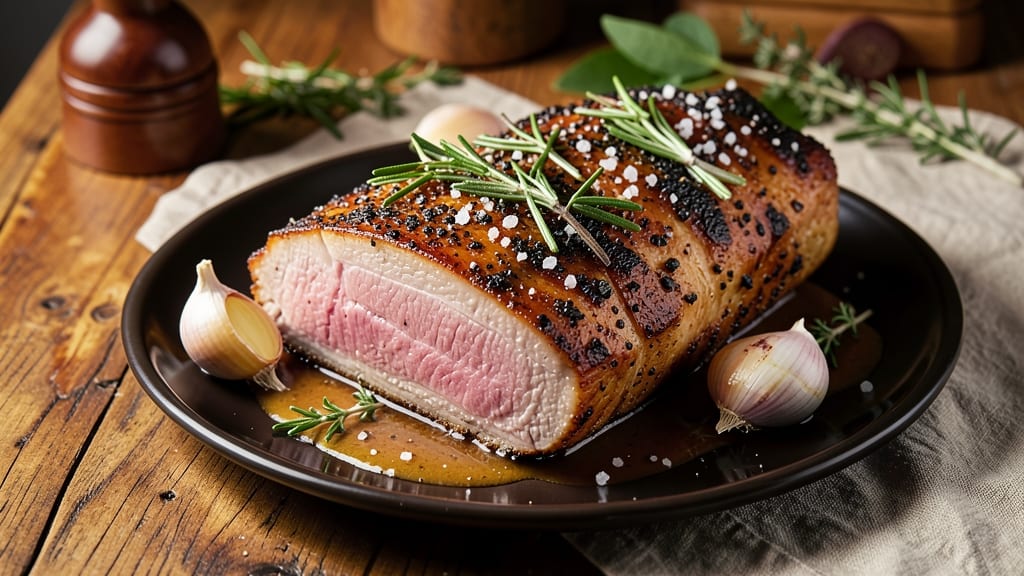
Roasting a 10-pound pork loin requires precision to balance juicy pink centers with a golden crust—something I perfected after years of handling whole hogs at The Smoky Pig. 🔥 The secret lies in low-and-slow cooking with strategic basting, ensuring every slice delivers that tender, melt-in-your-mouth texture without drying out.
This herb-infused method transforms a massive cut into a showstopping centerpiece that feeds a crowd while keeping prep manageable.
What sets this recipe apart is the foolproof temperature control—starting at 325°F to gently render fat, then cranking to 450°F for the final 15 minutes to create a crispy exterior.
I use a blend of rosemary, thyme, and garlic rubbed directly onto the meat, which infuses flavor without overpowering the pork's natural richness. The key? A meat thermometer and patience—rushing this cut will leave you with tough, dry results.
By the time you carve into this roast, you'll have perfectly pink centers (140°F internal temp) surrounded by a caramelized crust that holds together beautifully. The herbs release their aromatic oils during the roast, creating layers of flavor in every bite.
This isn't just a pork loin—it's a centerpiece that elevates any holiday table or family gathering.
For handling the size, I recommend trussing the loin to maintain shape and using a roasting rack to allow air circulation. Let it rest for 20 minutes before slicing—this crucial step ensures juices redistribute, preventing dryness.
Pair with my herb butter (available in the tips section) for dipping, and serve alongside roasted root vegetables or a crisp apple salad to complete the meal.
Ingredients for 10 lb pork loin
Ten ingredients, one massive centerpiece—this herb-crusted pork delivers melt-in-your-mouth perfection for any crowd.
| Ingredient | Amount | Notes |
|---|---|---|
| Bone-In Pork Loin 🐖 | 10 lb | Center-cut, 1.5-inch thick |
| Fresh Rosemary 🌿 | ½ cup | Chopped sprigs, stems removed |
| Fresh Thyme 🌿 | ¼ cup | Leaves only, stems discarded |
| Garlic Cloves 🧄 | 10 cloves | Minced, skin-on for flavor |
| Kosher Salt 🧂 | 2 tbsp | Diamond Crystal preferred |
| Freshly Ground Black Pepper 🌶️ | 1 ½ tbsp | Coarse grind for texture |
| Extra-Virgin Olive Oil 🫒 | ¼ cup | For basting, fruity variety |
| Apple Cider Vinegar 🍎 | 2 tbsp | For basting liquid |
| Butter 🧈 | ½ cup | Unsalted, softened for basting |
| Roasting Rack 🔥 | 1 whole | For even air circulation |
| Kitchen Twine 🧵 | 1 package | For trussing pork |
| Meat Thermometer 🌡️ | 1 whole | Instant-read preferred |
The pork loin makes this recipe—bone-in, center-cut is non-negotiable for juicy results. Local butchers or specialty stores like Whole Foods carry the best cuts, but check for good marbling and even thickness. I always ask for a 1.5-inch thickness to ensure even cooking. The herbs? Fresh is essential—dried won't infuse the same aromatic oils. For the garlic, I use skin-on cloves because the papery skin adds subtle flavor during the roast. If you can't find fresh rosemary or thyme, Penzeys Spices sells high-quality dried versions, but fresh is worth the hunt at farmers markets.
No fresh rosemary? Dried at half the amount works in a pinch, but you'll miss that piney aroma. Short on time? Pre-chopped herb blends from Trader Joe's save steps—just add extra garlic for depth. The apple cider vinegar in the basting liquid cuts through the richness and adds brightness. For the butter, full-fat is a must—low-fat versions won't create that golden crust. If you're prepping ahead, trim the pork and mix your dry rub up to 24 hours in advance, storing it in an airtight container in the fridge. The meat thermometer? Invest in a good one—I swear by the Thermoworks model for accuracy.
This roast tastes even better the next day—plan ahead. Wrap tightly in foil and refrigerate for up to 3 days, or freeze portions for 3 months. For serving, I always slice against the grain into 1-inch thick pieces. The basting liquid left in the pan makes an amazing gravy—just deglaze with a splash of beef broth. Leftovers reheat beautifully in a 350°F oven with a splash of water or broth to keep them moist. Store sliced pork in the fridge for 4 days or freeze for 3 months—it reheats like a dream.
Why You'll Love This Recipe
- One-Pan Magic: I swear by this recipe for lazy Sundays—just slap the pork on a sheet pan with whole garlic cloves, sprigs of rosemary and thyme, and a sprinkle of salt. No basting, no flipping, no stress. The bone-in cut renders its own juices, and the herbs infuse effortlessly while it roasts.
- Herb-Crusted Perfection: That crispy, golden crust? Pure satisfaction. The rosemary and thyme cling to the pork like a fragrant hug, while the garlic cloves burst open, releasing their sweetness into every bite. It’s the kind of flavor that makes people pause mid-chew and ask, “What’s in this?”
- Feeds a Crowd: Between us, this is my go-to for gatherings—birthdays, game days, or just because. A 10 lb loin feeds eight to ten with seconds, and the leftovers? Even better the next day. Slice it thin for sandwiches or toss it into a pasta the day after, and no one will complain.
- Budget-Friendly Feast: Honestly, pork loin is one of the most economical ways to feed a houseful. The bone-in cut stretches further, and the simple seasoning (salt, herbs, garlic) costs pennies. Plus, the leftovers turn into meals for days—no wasted money, just pure value. My wallet thanks me every time.
Step-by-step instructions for herb-infused pork loin roast
Here's how to transform your 10 lb pork loin into a showstopping centerpiece with aromatic herbs and melt-in-your-mouth tenderness.
👨🍳 Step 1: Create the Herb Butter and Season the Pork
In a small bowl, combine the 0.5 cup softened butter, 0.5 cup fresh rosemary, 0.25 cup fresh thyme, 10 cloves minced garlic, 2 tbsp kosher salt, and 1.5 tbsp freshly ground black pepper. Mix until fully incorporated, creating a fragrant herb butter paste. This aromatic blend will infuse every bite with flavor.
Pat the 10 lb bone-in pork loin completely dry with paper towels—this is critical for crispy skin. Rub the herb butter mixture all over the pork, pressing firmly so it adheres to every crevice. Pay special attention to the fat cap and bone areas where flavor tends to hide. Let the pork sit at room temperature for 30 minutes while you preheat your oven.
🔥 Step 2: Truss and Preheat for Perfect Cooking
Place the pork loin on the roasting rack (fat-side up) in a rimmed baking sheet. Secure it with kitchen twine, tying the legs together and tucking the wings under the body. This shape ensures even cooking and prevents the meat from drying out. Preheat your oven to 325°F—this lower temperature gives you time to develop that beautiful crust without overcooking the center.
While the oven heats, create a basting mixture by whisking together the 0.25 cup extra-virgin olive oil and 2 tbsp apple cider vinegar in a small bowl. This combination will keep the pork moist and add a subtle tangy brightness to the crust. Once the oven reaches temperature, place the pork in the center rack for even heat circulation.
🔪 Step 3: Roast and Baste for Juicy Perfection
Roast the pork for 2 hours, basting with the olive oil-vinegar mixture every 30 minutes. The basting helps create a golden-brown crust while keeping the interior moist. After 2 hours, check the internal temperature using your meat thermometer—it should read 145°F for medium-rare (the perfect balance of pink center and slightly warm edges).
If the temperature hasn't reached 145°F, continue roasting in 10-minute increments, basting each time. Here's the thing—bone-in pork cooks more slowly than boneless, so patience is key. The bone acts as an insulator, protecting the meat from drying out. Once it hits 145°F, remove from the oven immediately to prevent overcooking.
⏰ Step 4: Rest for Maximum Juiciness
Transfer the pork to a cutting board and tent loosely with aluminum foil. Let it rest for 30-45 minutes—this is where the magic happens. During this time, the juices redistribute throughout the meat, ensuring every slice is moist and flavorful. Don't skip this step (I learned the hard way that cutting into pork too soon results in dry, disappointing slices).
While the pork rests, preheat your carving knife by running it under hot water and wiping it dry. This makes slicing through the crispy exterior effortlessly. After resting, slice the pork against the grain into ½-inch thick portions. Each slice should reveal a beautiful pink center with a golden-brown crust, and the herb butter should be visible in every bite.
Pro Tips For Making 10 Lb Pork Loin
- USE A MEAT THERMOMETER: I learned this the hard way—bone-in pork loin can hide doneness. Bury the probe in the thickest part (avoid bone) and pull it at 140°F for medium-rare (145°F for medium). No guessing, no dry meat.
- SALT THE LOIN 24 HOURS EARLY: This isn’t just about flavor—it’s about tenderness. Generously coat the pork with 1.5–2 tsp kosher salt per pound (so ~15–20 tsp total) and let it sit uncovered in the fridge. The salt breaks down proteins, and the crust forms before you even cook it.
- SKIP THE CROWDED PAN: Bone-in pork loin needs space to sear, not steam. Pat it very dry, then sear it bone-side down first in a cold pan over medium-high heat. Wait 5 minutes before flipping—this builds the crust without boiling off the juices.
- STUFF GARLIC CLOVES IN: Peeling and mincing garlic is fine, but whole cloves stuffed into slits along the fat cap? That’s where the magic happens. Use 10–12 cloves, spaced evenly, and add a sprig of thyme tied with kitchen twine. The fat renders, and the aromatics infuse the meat directly.
Storing and reheating this 10 lb pork loin
Refrigerator Storage
After roasting, let your 10 lb pork loin cool completely before storing—this prevents condensation that can make the meat soggy. Wrap it tightly in butcher paper (not plastic) and place it in an airtight container with a lid.
Store in the fridge for up to 4 days, but I find the flavor actually deepens after 24 hours as the herbs meld further. 🌿
For leftovers, slice the pork and store portions separately in glass containers—this keeps the meat from sticking and makes reheating easier. I like to portion 1-inch thick slices into containers so guests can grab just what they need without thawing the whole roast.
Label with the date to track freshness.
Freezer Preservation
For long-term storage, wrap the whole roast in plastic wrap first (to prevent freezer burn), then place it in a heavy-duty freezer bag with all air squeezed out. This method preserves moisture and flavor for up to 3 months.
I mark the bag with the date and cooking instructions—because let's be honest, we all forget these things! 🧊
If you prefer freezing sliced pork, portion it into quart-sized freezer bags with parchment paper between layers to prevent sticking. Thaw overnight in the fridge before reheating—never at room temperature, as this creates a breeding ground for bacteria. A 10 lb roast will yield about 8-10 servings after freezing.
Reheating Methods
My go-to method is reheating in a 350°F oven with a splash of beef broth or apple cider vinegar (from the original basting liquid). Place sliced pork on a wire rack over a baking sheet to allow air circulation—this prevents sogginess.
Heat for 10-15 minutes until reaching 165°F internal temperature. 🔥
For quick reheats, use the microwave on 50% power in 1-minute intervals, stirring between each interval. Add 1-2 tablespoons of water or broth to keep the slices moist.
I avoid the microwave for whole roasts—it creates uneven heating and can dry out the edges. Always check the temperature to ensure food safety.
Gravy Magic
The drippings left in your roasting pan are pure gold—don't pour them down the drain! After removing the pork, place the pan on the stovetop over medium heat and add 1 cup beef broth.
Scrape up any browned bits with a wooden spoon, then simmer for 3-5 minutes until slightly thickened. This herb-infused gravy is the perfect finishing touch for serving. 🍲
For extra richness, stir in 2 tablespoons of the original herb butter while heating. The melted butter blends seamlessly with the drippings, adding another layer of flavor.
Store gravy in a separate container and reheat gently before serving—never boil, as this can make it separate. This trick transforms simple leftovers into a restaurant-worthy experience.
Nutrition facts
Frequently asked questions
How do I know if my 10 lb pork loin is cooked perfectly?
Use a meat thermometer to check the internal temperature—140°F for medium-rare (juicy pink center) or 145°F for medium (warmer edges). The bone-in cut cooks slower, so be patient! A crispy exterior with golden-brown crust is another sign of perfection.
Can I cook a 10 lb pork loin in a slow cooker?
While possible, I don’t recommend it—slow cookers lack the high-heat finish needed for a crispy crust. For tender results, sear the pork first (in a skillet) before transferring to the slow cooker on low for 6-8 hours until 145°F internal temp. Finish under the broiler for 5 minutes to crisp the skin.
What’s the best way to carve a 10 lb pork loin?
Slice against the grain (perpendicular to the muscle fibers) into ½-inch thick pieces for maximum tenderness. Use a sharp knife and cut through the bone first if needed. For presentation, fan the slices slightly on a platter. The herb butter will ooze out—savor that flavor!
How many servings does a 10 lb pork loin actually yield?
With ½-inch thick slices, you’ll get about 12-14 servings (assuming 4-6 oz per person). For a crowd, plan for 1 lb of pork per 2 people. Leftovers reheat beautifully—store in glass containers for up to 4 days.
Why did my pork loin turn out dry?
Overcooking is the #1 culprit—pork dries out quickly after 145°F. Always rest for 30-45 minutes before slicing, and avoid cutting into it too soon. For extra moisture, baste frequently with the olive oil-vinegar mix. Bone-in pork is more forgiving, but boneless cuts need even closer monitoring.