
Main Courses
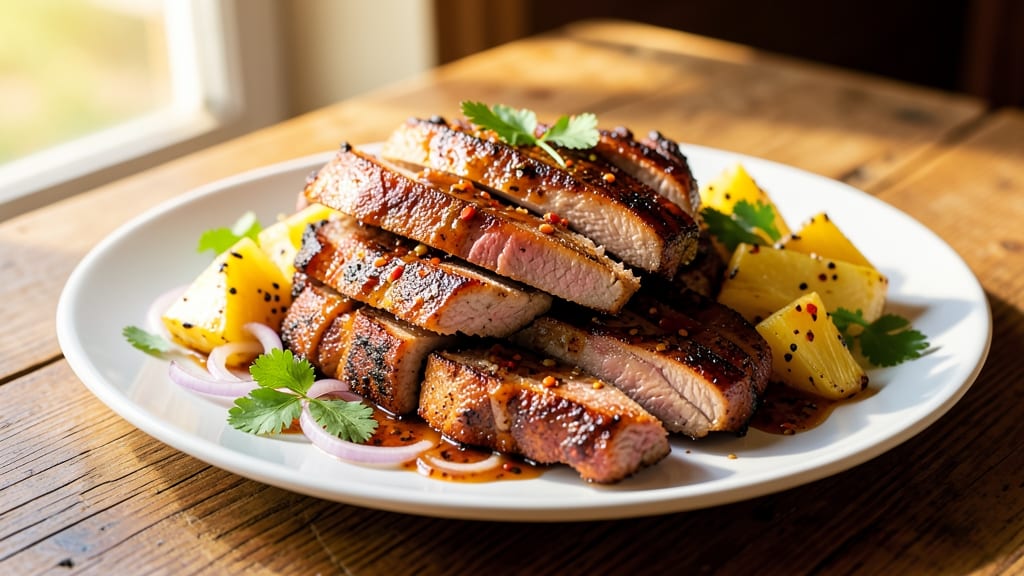
This al pastor marinated pork recipe transforms simple pork shoulder into smoky, pineapple-kissed shreds that taste like Mexico's most beloved street food. 🔥 The secret lies in the achiote-chili marinade and pineapple's natural tenderizing power—no fancy equipment needed, just patience and a cast iron skillet.
I perfected this version after years of testing, blending traditional techniques with my Southern pitmaster background to create something approachable yet authentic.
The process begins with a vibrant marinade of guajillo and ancho chiles, achiote paste, and fresh pineapple juice—this isn't just flavor, it's the foundation that keeps the meat tender while developing deep smoky notes.
We'll cook it low and slow, then finish with high heat for that signature char, creating perfectly shreddable meat that falls apart at the touch. The key is patience; letting the flavors meld over hours transforms ordinary pork into something extraordinary.
By the time you're done, you'll have restaurant-quality al pastor that's ready to serve on warm corn tortillas with fresh pineapple, onion, and cilantro. The pork will be rich with smoky-sweet flavors, the tortillas will be perfectly toasted, and every bite will transport you to Mexico City's bustling taquerías.
This isn't just a recipe—it's an experience you can recreate in your own kitchen.
Whether you're feeding a crowd or treating yourself to a special meal, this method delivers consistent results. The pineapple in the marinade isn't just for flavor—it keeps the meat moist and adds that signature tangy brightness. Let's get started on creating al pastor that'll have everyone asking for seconds.
Ingredients for al pastor marinated pork
Pork shoulder, chiles, and pineapple—simple ingredients that create Mexico's most iconic street food flavor.
| Ingredient | Amount | Notes |
|---|---|---|
| Pork Shoulder (Boston Butt) 🥓 | 4 lb | Bone-in for best flavor |
| Guajillo Chiles 🌶️ | 4 whole | Stems/seeds removed |
| Ancho Chiles 🌶️ | 2 whole | Stems/seeds removed |
| Achiote Paste 🧂 | 2 tbsp | Natural or store-bought |
| Fresh Pineapple Juice 🍍 | 1 cup | From 1 small pineapple |
| Garlic Cloves 🧄 | 8 cloves | Peeled, roughly chopped |
| White Vinegar 💧 | ¼ cup | For acid balance |
| Ground Cumin 🌿 | 1 tbsp | Toasted for depth |
| Bay Leaves 🍃 | 2 whole | Fresh preferred, dried works |
| Mexican Oregano 🍃 | 1 tbsp | Not regular oregano |
| Salt 🧂 | 1 ½ tbsp | Kosher or sea salt |
| Black Peppercorns 🌶️ | 1 tsp | Freshly cracked |
| Vegetable Oil 🫒 | ½ cup | For cooking |
| Fresh Cilantro 🌿 | ¼ cup | Chopped, for serving |
| White Onion 🧅 | 1 whole | Thinly sliced, for serving |
The pork shoulder is non-negotiable here. Bone-in stays juicier, and you can find it pre-cut at most Latin markets or the butcher counter. Costco sells it in bulk if you're feeding a crowd. For the chiles, La Costeña or Goya brands are reliable, but if you can find dried guajillo and ancho at a Mexican market, they'll have more depth. The achiote paste gives that signature red color—if you can't find it, annatto seeds soaked in oil work too. Fresh pineapple is best, but canned in juice (no syrup!) is a pinch-friendly backup.
No guajillo chiles? Ancho chiles alone at double the amount will work, though the flavor will be less complex. Substituting Mexican oregano for regular oregano is a must—it has a distinct citrusy note. Running short on pineapple juice? Lime juice plus a pinch of sugar mimics the tang. The garlic can be roasted for a sweeter profile (wrap whole cloves in foil with the chiles), but raw works fine. For the vinegar, white vinegar is traditional, but apple cider adds subtle sweetness. Toast your cumin seeds in a dry pan for 30 seconds—they'll smell amazing and add depth.
This marinade keeps for 5 days in the fridge, so make extra. The pork itself reheats beautifully—just warm in the oven with a splash of broth. For serving, toast your corn tortillas on a dry skillet until they smell toasty. The pork will keep 3 days in the fridge, but it's even better the next day as the flavors meld. Freeze portions for up to 3 months—thaw overnight in the fridge before reheating.
Why You'll Love This Recipe
- Marinade in Minutes: I swear by this—just toss the pork in a blender with the dried chiles, achiote paste, and pineapple juice. No chopping, no fuss, and the flavors meld overnight (or even just a few hours). That’s the magic: hands-off prep that still delivers.
- Sweet Heat Magic: The guajillo and ancho chiles give it that smoky depth, but the pineapple juice cuts through it with bright tang. It’s not just flavor—it’s balance, like a perfect tango of richness and acidity that’ll have you licking the bowl.
- Taco Night Every Night: Between us, this marinated pork is my lazy-day secret weapon. Use it for tacos, burritos, or even a quick stir-fry. I’ve even thrown it on toast with a fried egg—yes, even on a Tuesday night. The marination does all the work, so you’re free to improvise.
- Budget-Friendly Feast: Pork shoulder is cheap, and a single batch of this marinade stretches across multiple meals. I make a big batch, freeze half, and still have leftovers for days. Honestly, it’s the kind of recipe that makes grocery day feel like a win.
Step-by-step instructions for al pastor marinated pork
Here's how to transform tough pork shoulder into tender, smoky shreds with authentic Mexican flavors.
👨🍳 Step 1: Prepare the Chiles and Achiote Paste
Toast the 4 whole Guajillo Chiles and 2 whole Ancho Chiles in a dry skillet over medium heat for 30 seconds per side until fragrant and slightly puffed. Watch closely—they burn fast! Transfer to a bowl and cover with 1 cup hot water from the kettle. Let soak for 15 minutes while you work.
While the chiles soak, combine the 2 tbsp Achiote Paste, 1 cup Fresh Pineapple Juice, 8 cloves Garlic Cloves, 0.25 cup White Vinegar, 1 tbsp Ground Cumin, 2 whole Bay Leaves, 1 tbsp Mexican Oregano, 1.5 tbsp Salt, and 1 tsp Black Peppercorns in a blender. Blend until completely smooth, scraping down the sides as needed. This vibrant marinade is the soul of al pastor—don't skip blending thoroughly.
🍳 Step 2: Marinate the Pork Shoulder
Strain the soaked chiles through a fine-mesh sieve, pressing hard to extract every last bit of liquid. Add this to your blender mixture along with the 0.5 cup Vegetable Oil. Blend again for 10 seconds to emulsify. The marinade should be thick but pourable—like a rich, smoky syrup.
Place the 4 lb Pork Shoulder (Boston Butt) in a large resealable plastic bag. Pour the marinade over the meat, massaging it between your fingers to ensure complete coverage. Seal the bag and refrigerate for at least 4 hours (overnight is even better). Turn the bag occasionally to distribute the marinade evenly. The acidity from the pineapple and vinegar will begin breaking down the tough fibers, promising tender shreds.
🔥 Step 3: Sear the Pork for Maximum Flavor
Remove the pork from the refrigerator 30 minutes before cooking to bring it to room temperature. Pat it dry with paper towels—this ensures a proper sear. Heat 0.25 cup Vegetable Oil in a large Dutch oven over medium-high heat until shimmering. Add the pork and sear on all sides until deeply browned, about 8-10 minutes total. This step develops the Maillard reaction, creating that irresistible crust.
Transfer the seared pork to a plate and tent loosely with foil. Pour any remaining marinade from the bag into the Dutch oven, scraping up all the browned bits from the bottom. Bring to a simmer and reduce by half, about 5 minutes. This concentrated marinade will infuse the pork during cooking.
⏰ Step 4: Slow Cook Until Fork-Tender
Return the pork to the Dutch oven, adding enough water to come about halfway up the meat (approximately 2 cups). Bring to a boil, then reduce heat to low, cover, and simmer for 2.5-3 hours. You're looking for 205°F internal temperature and meat that falls apart easily when pulled with two forks. The pork should be fork-tender with just a hint of resistance.
Here's the thing—don't peek! Every time you lift the lid, you lose heat and moisture. Let the pork cook undisturbed. The steam created by the liquid will gently cook the meat while the marinade infuses every fiber. If the liquid reduces too much, add a splash of water, but avoid over-diluting the flavors.
🥘 Step 5: Shred and Prepare for Serving
Once the pork reaches 205°F, remove it from the pot and let it rest for 15 minutes. Use two forks to shred the meat against the grain into ¼-inch thick strands. Discard the bay leaves and any large fat pieces from the cooking liquid. The remaining liquid is your al pastor consommé—rich, smoky, and perfect for serving.
For serving, thinly slice the 1 whole White Onion and chop the 0.25 cup Fresh Cilantro. The shredded pork is now ready for tacos, burritos, or tostadas. The marinade's sweet-savory-smoky profile will shine through in every bite, making this one of the most versatile pork preparations you'll ever master.
Pro Tips For Making Al Pastor Marinated Pork
- Toast Chiles Properly: I learned this the hard way—dry-roasting guajillo and ancho chiles over a gas flame (not broiling) until they smell like smoky campfire. That’s when they release their depth. If they’re just wilted, your marinade will taste flat. Use a clean kitchen towel to smother the flames after 2 minutes—charred chiles ruin everything.
- Trim Fat in Layers: Pork shoulder has stubborn fat layers that don’t render evenly. Use kitchen shears to snip through the thickest fat caps before marinating—this lets spices penetrate deeper and keeps the meat juicier. Skip this, and you’ll end up with greasy, unevenly seasoned chunks.
- Marinate Overnight (No Exceptions): The pineapple juice and achiote paste need at least 12 hours to break down the pork’s toughness. I used to rush it, and the meat turned out chewy. Wrap it tightly in plastic and refrigerate—yes, even if you’re impatient like me.
- Sear in Batches: Crowd the pan, and your pork will steam instead of develop that caramelized crust. Work in 2-inch-thick layers over medium-high heat, and resist the urge to move it too soon—wait for a deep golden crust (3-4 minutes per side). This isn’t the prettiest method, but it’s the tastiest.
Dietary considerations for this al pastor marinated pork
Gluten-Free Adaptations
Al pastor is naturally gluten-free, but watch the serving components. Use corn tortillas instead of flour tortillas—they're traditional and gluten-free. I recommend Mission brand corn tortillas for their perfect texture.
For the consommé, ensure your broth (if used) is certified gluten-free. The marinade itself is safe, but always check labels on achiote paste and spices for hidden gluten. 🌱
Dairy-Free Considerations
This recipe is inherently dairy-free, but the serving style often includes cheese. Skip the queso fresco or substitute with dairy-free cotija or nutritional yeast for a cheesy flavor without dairy. The pineapple and chile marinade provide enough richness that you won't miss dairy in the meat itself.
Just ensure your tortillas are made in a dairy-free facility if you're highly sensitive.
Spice Level Control
Guajillo and ancho chiles provide moderate heat, but you can adjust the spice level. For a milder version, remove the seeds and membranes from the chiles before blending. I've tested this with 2 tbsp of the blended chile mixture removed for a family with kids—it's still flavorful but less fiery.
For extra heat, add 1 tsp cayenne pepper to the marinade or serve with hot sauce on the side. 🌶️
Vegetarian Options
While traditional al pastor uses pork, you can create a vegetarian version using portobello mushrooms or jackfruit as the base. Marinate them in the same chile-pineapple blend, then roast until tender. The mushrooms absorb the marinade beautifully, though they won't shred like meat.
For jackfruit, use young green jackfruit in brine—it mimics pulled pork texture when cooked properly. The flavor profile remains authentic while accommodating dietary needs.
Allergen Safety
This recipe contains common allergens like pineapple and tree nuts (if using achiote paste with nut oils). Always check labels on store-bought achiote paste—some brands include almond oil. For nut-free kitchens, make your own achiote paste by soaking annatto seeds in vegetable oil instead.
Keep pineapple separate if serving guests with fruit allergies, though the marinade's pineapple juice is typically well-tolerated in small amounts. Cross-contamination is the bigger risk with shared cooking spaces.
Low-Sodium Version
Reduce the salt in the marinade by half (0.75 tbsp instead of 1.5 tbsp) while keeping the flavor balanced. Boost umami with an extra 1 tbsp of white vinegar and 1 tsp of fish sauce (ensure it's gluten-free if needed).
The pineapple and chiles already provide enough natural saltiness. For serving, offer a lime wedge on the side—its acidity enhances perceived saltiness without adding sodium. The meat will still be flavorful, just with more control over sodium intake. 💡
Nutrition facts
Frequently asked questions about al pastor marinated pork
Can I use pork tenderloin instead of pork shoulder?
Pork tenderloin works but won't give you the same rich, shredded texture. The fat in pork shoulder keeps it moist during slow cooking, while tenderloin can dry out. If you must use it, reduce cooking time to 1.5-2 hours and slice it thinly against the grain after cooking.
How do I make this recipe without a blender?
Toast and soak the chiles as directed, then finely chop them by hand. Mix the chopped chiles with all other marinade ingredients in a bowl, mashing with a potato masher until smooth. You'll lose some emulsification, but the flavor will still be delicious. Strain through a fine-mesh sieve to remove any large pieces before using.
What's the best way to reheat leftover al pastor?
Reheat gently in a skillet with 1 tbsp oil over low heat for 5-7 minutes, adding a splash of water or consommé to prevent drying. For oven reheating, cover with foil and bake at 300°F for 15 minutes. Never microwave—it makes the meat rubbery. The best method is to warm it in the consommé on the stovetop.
Can I grill this instead of using a Dutch oven?
After searing, transfer the pork to a grill over indirect heat. Maintain 250-275°F and cook for 2.5-3 hours, turning occasionally. Keep the pork moist by spraying with apple juice or wrapping in foil with marinade. The smoky grill flavor pairs beautifully with the al pastor marinade.
Why does my al pastor taste bitter?
Over-toasted chiles or using too much vinegar can cause bitterness. For next time, toast chiles just until fragrant (30 seconds) and reduce vinegar to 2 tbsp. If it happens, balance the flavor by adding 1 tbsp of honey or brown sugar to the marinade during cooking. The pineapple's natural sweetness should counter any bitterness.