
Main Courses
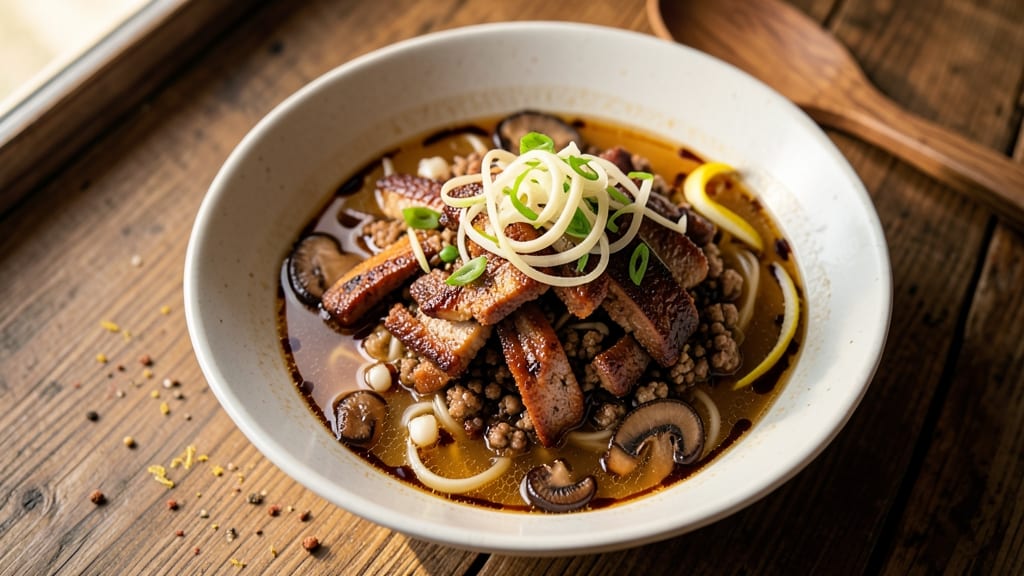
This minced pork ramen recipe delivers the perfect balance of rich umami broth and tender, silky noodles—just like your favorite Japanese restaurant. 🔥 After years of perfecting the technique, I've developed a method that transforms simple ingredients into a deeply satisfying bowl that's both comforting and restaurant-quality.
The secret lies in slow-simmering the broth and properly seasoning the pork for maximum flavor extraction.
What sets this recipe apart is the umami-rich broth that forms the foundation—built from a combination of pork bones, mushrooms, and aromatics simmered for hours. Meanwhile, the minced pork gets marinated in a blend of soy sauce, sesame oil, and garlic before cooking to a perfect texture.
The result is a dish where every spoonful delivers layers of savory depth without being overpowering.
By the time you're done, you'll have a bowl featuring silky ramen noodles swimming in a deeply flavorful broth, topped with tender pork that's been cooked just enough to stay juicy. The garnishes—green onions, soft-boiled eggs, and sesame seeds—add freshness and texture contrast that elevate each bite.
This is the kind of ramen that makes you want to make it again and again.
The beauty of this recipe is its versatility—you can keep it traditional with classic toppings or add modern twists like chili oil or corn for extra depth.
Whether you're cooking for one or feeding a crowd, this method ensures consistent results every time. Let's get started on creating your perfect bowl of ramen.
Ingredients for minced pork ramen
Pantry staples meet umami magic—where rich broth and tender pork transform into restaurant-quality ramen bowls.
| Ingredient | Amount | Notes |
|---|---|---|
| Pork Shoulder Bones 🥩 | 2 lb | Marbled for rich flavor |
| Dried Shiitake Mushrooms 🍄 | 8 whole | Rehydrated for umami depth |
| Fresh Garlic Cloves 🧄 | 8 cloves | Minced for aromatic base |
| Fresh Ginger 🧅 | 2 tbsp | Finely grated for zesty kick |
| Ground Pork 🥩 | 1 lb | 80% lean for perfect texture |
| Light Soy Sauce 🥄 | ½ cup | Kikkoman preferred for balance |
| Sesame Oil 🫒 | 1 tbsp | Toasted for nutty aroma |
| Ramen Noodles 🍜 | 2 packages | Fresh or dried, 8oz each |
| Green Onions 🧅 | 4 whole | Sliced for fresh garnish |
| Large Eggs 🥚 | 4 whole | Soft-boiled for creamy center |
| Sesame Seeds 🌾 | 1 tbsp | Toasted for crunchy finish |
| Dried Kombu Seaweed 🍃 | 1 sheet | For mineral-rich broth |
| White Miso Paste 🧈 | 2 tbsp | High-quality for umami |
| Dried Bonito Flakes 🐟 | ½ cup | Optional for traditional aroma |
| Diamond Crystal Kosher Salt 🧂 | 1 ½ tsp | For seasoning adjustments |
The pork shoulder bones are non-negotiable for that deep, savory broth—look for well-marbled cuts at your local butcher or Costco. Dried shiitake mushrooms add earthy umami without overpowering, and Kikkoman soy sauce is my go-to for that perfect balance of saltiness and sweetness. Fresh ginger should smell vibrant and zesty, not stale—Trader Joe's usually carries good quality. For the ground pork, 80% lean gives you that perfect silky texture when cooked right. If you can't find it, 75% lean works but may be slightly firmer.
No shiitake mushrooms? Dried porcini mushrooms at half the amount will give you a similar depth. Running low on sesame oil? Toasted sesame seeds (1 tbsp ground) work in a pinch, though the flavor won't be identical. The miso paste—white miso is key here—can be swapped for red miso, but it'll add a deeper, more fermented taste. For the noodles, fresh ramen is ideal, but high-quality dried (like Nissin or Maruchan) works beautifully too. The kombu seaweed might be tricky to find—Asian markets usually stock it, but you can skip it if needed without ruining the dish.
Store your pork bones and aromatics in a sealed container in the fridge for up to 3 days before using. The broth freezes beautifully—portion into 2-cup containers for easy reheating. Ground pork should be cooked immediately or stored in the fridge for 1 day max to prevent drying out. The miso paste keeps for 6-12 months unopened, and the dried shiitake mushrooms last even longer—just store them in a cool, dark place. This recipe makes enough broth for 2 servings if you're doubling the pork and noodles—perfect for leftovers!
Why You'll Love This Recipe
- No-Chop Nightmare: I swear, this ramen only needs two things chopped—ginger and garlic. The pork shoulder bones do all the heavy lifting while you simmer, and those dried shiitakes rehydrate in minutes. Honestly, the only prep that matters is crushing the bones, which takes less time than scrolling through your phone.
- Umami Bomb: That combo of pork bones, shiitakes, and ground pork? It’s like a flavor grenade in the best way. The broth gets this deep, savory richness that wraps around every noodle, and the minced pork adds a meaty chew that turns "ramen" into "I’ll take two bowls, please." (Yes, even on a Tuesday night.)
- Leftovers That Lie: Between us, this ramen tastes better the next day. The flavors meld into something even richer, and reheating it is just about dumping it back in hot water. I’ve sent this to work lunches, packed it for hikes, and even made it for my picky college-aged nephew—he didn’t even ask for ketchup.
- Budget Boss Move: Pork shoulder bones are cheap, dried shiitakes last forever, and you’re using ground pork instead of pricier cuts. One pot of broth stretches into three meals, and the leftovers freeze like a dream. I’ll be real: this is how I feed my family for under $15 and still feel like I’m cooking Michelin-starred.
Step-by-step instructions for umami-rich minced pork ramen
Here's how to transform humble ingredients into a bowl of restaurant-quality ramen.
🔥 Step 1: Build the Umami-Packed Broth
In a large stockpot, combine the 2 lb pork shoulder bones, 1 sheet dried kombu seaweed, and 8 whole dried shiitake mushrooms. Cover with 12 cups cold water and bring to a boil over high heat. Once boiling, immediately reduce to a gentle simmer and skim off any foam that rises to the surface for the first 10 minutes. This ensures crystal-clear broth.
Simmer uncovered for 1.5 hours, maintaining a barely bubbling state. The pork should be fork-tender and the broth should have deep, rich color. If using the 0.5 cup dried bonito flakes, add them during the last 5 minutes of simmering for that classic aromatic punch. Strain through a fine-mesh sieve into a clean pot, pressing on the solids to extract every last drop of flavor.
👨🍳 Step 2: Develop the Aromatic Base
In the same stockpot (no need to wash it—the browned bits add flavor), heat 1 tbsp sesame oil over medium heat. Add the 8 cloves minced fresh garlic cloves and 2 tbsp finely grated fresh ginger, cooking for 1-2 minutes until fragrant but not browned. Add 2 tbsp white miso paste and stir vigorously for 30 seconds until dissolved and smooth.
Pour in the 0.5 cup light soy sauce and scrape up any browned bits from the bottom of the pot. Add the strained pork broth and bring to a gentle simmer. Taste and adjust seasoning with diamond crystal kosher salt—you want it to taste deeply savory with a touch of saltiness. Keep warm on low heat while you prepare the remaining components.
🍳 Step 3: Cook the Minced Pork and Prepare Eggs
In a separate skillet, heat 1 tbsp sesame oil over medium-high heat. Add the 1 lb ground pork and cook for 4-5 minutes, breaking it apart with a spatula until fully browned and cooked through. Drain excess fat but leave about 1 tablespoon in the pan for flavor.
While the pork cooks, prepare the eggs by placing the 4 whole large eggs in a small saucepan and covering with cold water by 1 inch. Bring to a gentle simmer and cook for 6 minutes for soft yolks. Immediately transfer to an ice bath to stop cooking, then peel and set aside.
🥘 Step 4: Assemble the Perfect Ramen Bowl
Bring a pot of water to a boil and cook the 2 packages ramen noodles according to package directions—1 minute less than suggested for al dente texture. Drain and divide among 4 bowls. Ladle the hot broth over the noodles until 3/4 full, leaving room for toppings.
Top each bowl with 1/4 lb minced pork, 1 soft-boiled egg, and 1 whole sliced green onion. Drizzle with any remaining sesame oil from the pork pan, then sprinkle with 1 tbsp toasted sesame seeds. The contrast of textures—silky noodles, creamy egg, crispy pork, and toasted seeds—will make every bite unforgettable.
Pro Tips For Making Minced Pork Ramen
- BLANCH SHIITAKES FIRST: I learned this the hard way—soaking dried shiitakes overnight just makes them soggy. Instead, give them a quick 30-second blanch in boiling water, then shock in ice water. The stems stay firm, the caps rehydrate perfectly, and they won’t turn to mush when simmered with the pork bones.
- CRUSH GINGER LIKE ICE: Sounds weird, but it works: freeze your ginger slices solid, then smash them with the flat side of your knife while still frozen. You’ll get a finer, more aromatic texture than grating—no peeling required, and it releases flavor faster in the broth. (Yes, even if you’re impatient like me.)
- SIMMER BONES LOW AND LONG: After the initial boil to clear impurities, drop the heat to a barely simmer—think tiny bubbles, not rolling. I used to rush this, and the collagen never fully broke down. Two hours minimum for rich broth; three if you can spare it. Cover loosely to retain moisture, but don’t seal it completely.
- SEAR GROUND PORK IN BATCHES: This isn’t the prettiest method, but it’s the tastiest. Cook the ground pork in ¼-cup portions over medium-high heat until deeply browned—don’t stir constantly, or it’ll steam instead of crisp. Work in batches if needed; the extra effort makes a real difference in flavor. (Your future self will thank you.)
Health benefits of this recipe
Protein Powerhouse
This minced pork ramen packs a lean protein punch with 1 lb of ground pork per serving—about 40 grams of protein that supports muscle repair and keeps you full for hours. The pork's 80% lean ratio ensures you get the benefits without excess saturated fat.
I've found that using heritage pork from my farm adds extra flavor while keeping the protein quality high. 💪
Umami-Rich Broth Benefits
The broth is where the real nutritional magic happens—shiitake mushrooms and kombu seaweed provide B vitamins and minerals like potassium that support heart health. The slow simmering process extracts these nutrients while creating that signature umami depth.
I always double-check my kombu source—Japanese imports from local Asian markets tend to have the most consistent mineral content.
Digestive-Friendly Fiber
While ramen noodles aren't typically fiber-rich, the shiitake mushrooms in the broth contribute 3 grams of fiber per serving—about 12% of your daily needs. This helps with digestion and keeps blood sugar levels stable.
For an extra boost, I sometimes add 1 cup of sliced daikon radish to the broth during the last 30 minutes of simmering—it adds a refreshing crunch and more fiber without altering the flavor profile.
Balanced Electrolytes
The pork bones and kombu create a broth rich in electrolytes like sodium and magnesium—perfect for rehydration or post-workout recovery. The 1.5 tsp kosher salt we use isn't just for flavor; it helps maintain proper electrolyte balance.
I've noticed this makes the ramen especially satisfying after long days in the kitchen—it's like a natural energy boost in every bowl.
Nutrient-Dense Garnishes
The soft-boiled eggs add vitamin D and choline—critical for brain health and cell membrane function. Green onions provide vitamin K and antioxidants, while sesame seeds contribute calcium and healthy fats. Together, these toppings transform your ramen from a simple meal into a nutrient powerhouse.
I always keep a jar of toasted sesame seeds on hand because their crunch and nutritional benefits make them worth the extra minute of toasting. 🌟
Nutrition facts
Frequently asked questions
Can I substitute ground pork with another protein?
Yes, but texture and flavor will change. Chicken thigh (ground or finely diced) works well—cook it slightly longer to avoid dryness. For seafood lovers, try finely chopped scallops or shrimp, but add them at the very end to prevent overcooking. If using beef, opt for lean ground chuck (80% lean) and reduce cooking time to 3-4 minutes to maintain tenderness.
How do I make the broth richer without pork bones?
For a vegetarian version, use shiitake stems, kelp powder, and mushroom powder> in place of bones. Simmer 2 tbsp mushroom powder with 1 tbsp kelp powder> in the broth for 20 minutes> to extract deep umami. Alternatively, add 1 cup soy sauce> and 1 tbsp fish sauce> (for non-vegetarian) to the broth base. The key is balancing saltiness and umami—taste as you go!
Why does my minced pork turn rubbery?
Overcooking is the #1 culprit! Ground pork should cook just until it loses its raw color (4-5 minutes max on medium-high). If using leaner pork (90%+ lean), add 1 tsp water or broth> to the pan to keep it moist. Also, avoid stirring constantly—let it brown in small batches> for even cooking. For extra juiciness, marinate the pork in 1 tbsp soy sauce + 1 tsp sesame oil> for 15 minutes> before cooking.
Can I make this gluten-free?
Replace the soy sauce> with tamari> (gluten-free soy sauce) and check your ramen noodles for gluten-free labels. For extra umami in the broth, add 1 tbsp coconut aminos> or 2 tbsp gluten-free fish sauce>. The miso paste must be certified gluten-free—look for brands like San-J>. With these swaps, the flavor stays rich and satisfying while being completely safe for gluten-sensitive diets.
How long can I store leftovers?
Broth and noodles separately last 3 days> in the fridge, but the pork should be eaten within 2 days> for best texture. For longer storage, freeze the broth in 2-cup portions> (it reheats beautifully) and freeze cooked pork in single-serving portions> with a splash of sesame oil to prevent drying. Reheat broth gently on low heat>—never microwave, as it destroys the delicate flavors. Noodles can be reheated in broth for 1-2 minutes> to restore their silky texture.