
Main Courses
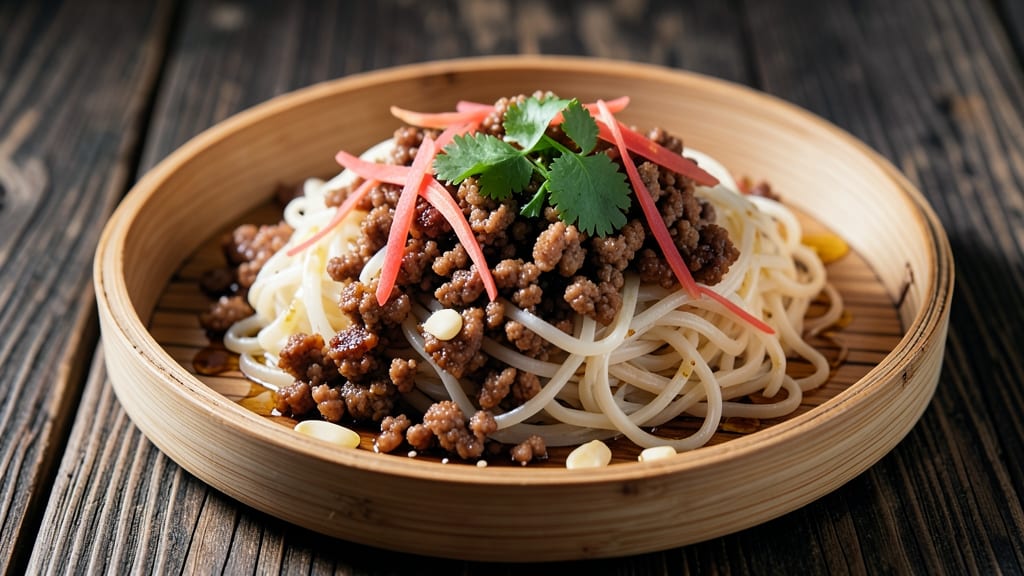
This minced pork dry noodle recipe transforms humble ingredients into a restaurant-worthy dish with silky noodles and umami-rich pork that clings to every strand. 💛 I developed this version after years of perfecting stir-fry techniques in my kitchen—where crispy edges meet tender centers in every bite.
The secret lies in properly cooking the minced pork until just done, then tossing it with perfectly al dente noodles and a sauce that balances sweet, salty, and spicy notes.
The foundation starts with high-quality pork, marinated in a blend of soy sauce, garlic, and ginger to build deep flavor before stir-frying. Rice noodles absorb the aromatic sauce beautifully when cooked just shy of perfect—silky yet still holding shape.
What sets this dish apart is the two-stage cooking method: first searing the pork for maximum flavor, then finishing with a quick wok toss to keep everything vibrant and fresh-tasting.
By the time you plate this dish, you’ll have a golden-brown stir-fry with tender pork, glossy noodles, and bright garnishes like green onions and fresh herbs. The sauce coats every strand without making the noodles soggy, delivering that perfect textural contrast we all crave.
This recipe serves four hungry people or makes generous leftovers—ideal for meal prep.
Whether you're recreating a Vietnamese bún thịt nướng or a Chinese-inspired chow mein, this method adapts beautifully. The key is high heat and quick cooking—no slow simmers here. Let’s get started on a dish that’s equal parts comforting and exciting.
Ingredients for minced pork dry noodle
High-quality pork, aromatic marinade, and perfectly al dente noodles create a restaurant-style stir-fry.
| Ingredient | Amount | Notes |
|---|---|---|
| Ground Pork 🥩 | 1 lb | Freshly ground, lean fat ratio preferred |
| Rice Noodles 🍜 | 8 oz | Stir-fry variety, uncooked |
| Soy Sauce 🍶 | ½ cup | Light or dark, for marinade |
| Garlic Cloves 🧄 | 6 cloves | Minced, fresh preferred |
| Fresh Ginger 🌿 | 2 tbsp | Grated, peeled |
| Sesame Oil 🫒 | 1 tbsp | Toasted, for aroma |
| Neutral Oil 🫒 | 2 tbsp | Vegetable or canola |
| Sugar 🍯 | 1 tbsp | White or brown |
| Chili Garlic Sauce 🌶️ | 1 tbsp | Adjustable heat level |
| Green Onions 🧅 | ¼ cup | Thinly sliced, white and green parts |
| Fresh Cilantro 🌿 | ¼ cup | Chopped, stems removed |
| Lime Juice 🍋 | 1 tbsp | Freshly squeezed |
| Salt 🧂 | 1 tsp | Kosher or sea salt |
| Black Pepper 🌶️ | ½ tsp | Freshly ground |
The ground pork is the heart of this dish, so look for freshly ground pork with good marbling—it makes all the difference in texture. Asian markets or butcher counters often have the best quality, but most grocery stores carry suitable options. For extra flavor, consider adding a pinch of white pepper to the marinade. The rice noodles should be stir-fry variety, not the thick vermicelli—these break easily and soak up sauce beautifully. Soak them in warm water for 10 minutes before cooking, then drain and toss with a bit of oil to prevent sticking.
No fresh ginger? Powdered ginger at half the amount works in a pinch, though fresh is ideal for that bright, zesty kick. Running short on sesame oil? Toasted peanut oil adds a similar nutty depth. The chili garlic sauce can be swapped for sriracha or sambal oelek, but adjust the heat level to your preference. For a deeper umami profile, add 1 tsp fish sauce to the marinade (omit if vegetarian). The green onions and cilantro are purely for garnish—skip them if you prefer a cleaner look, but they add freshness that balances the richness of the pork.
This dish reheats beautifully—just toss with a splash of water or oil to revive texture. Store leftovers in an airtight container for up to 3 days, or freeze for up to 2 months in a sealed bag. For meal prep, portion into containers with a thin layer of oil on top to preserve freshness. The noodles will soften slightly when reheated, so cook them slightly underdone initially. If making ahead, marinate the pork and prep the sauce separately, then combine just before stir-frying for peak freshness.
Why You'll Love This Recipe
- No-Chop Nightmare: I swear, this is the only minced pork dish where I don’t even miss my knife. Ground pork sizzles in minutes, garlic and ginger get minced in seconds with a spoon, and the noodles? Just soak while you stir. That’s it—no julienne peeling, no finicky prep.
- Umami Bomb: The moment soy sauce meets seared pork? Pure magic. That deep, savory punch from the pork fat renders into crispy bits while the ginger keeps it bright—no heavy sauce needed. It’s the kind of flavor that makes you inhale your second bowl.
- Lunchbox Hero: Between us, this is my go-to for packed lunches. The noodles stay firm when cold (no soggy disasters), and the pork mixture reheats like a dream. Toss in a fried egg or quick-pickled veggies, and suddenly you’ve got a meal that’s actually worth bringing to work.
- Pantry Stretch: Honestly, this recipe uses stuff I always have lying around. A block of ginger, a jar of soy sauce, a bag of rice noodles—no specialty ingredients, just smart combos. And leftovers? They taste just as good cold the next day, so it’s basically free money for future lunches.
Step-by-step instructions for umami-packed stir-fry with silky noodles
Master this technique and you'll achieve perfectly tender pork with chewy, flavorful noodles every time.
🍳 Step 1: Prepare the Pork and Noodles
In a medium bowl, combine the 1 lb ground pork with 0.5 cup soy sauce, 1 tbsp sugar, 1 tbsp chili garlic sauce, 1 tsp salt, and 0.5 tsp black pepper. Mix thoroughly with your hands until the pork is fully coated and slightly sticky—this ensures maximum flavor absorption. Let the mixture marinate for 15 minutes at room temperature while you prep the remaining ingredients.
Meanwhile, soak the 8 oz rice noodles in warm water for 10-15 minutes until pliable but still slightly firm to the touch. Drain and set aside, tossing gently with 1 tbsp sesame oil to prevent sticking. The noodles should be silky but not mushy—this texture is key for the perfect stir-fry consistency.
🔥 Step 2: Sear the Pork for Maximum Flavor
Heat a large wok or skillet over high heat until a drop of water sizzles violently. Add 2 tbsp neutral oil and swirl to coat the pan. Working in batches if needed, add the marinated pork and spread it evenly across the surface. Let it sear undisturbed for 2-3 minutes until the edges begin to brown and the pork releases easily from the pan.
Stir-fry the pork for an additional 3-4 minutes until fully cooked through and the edges are crispy. Remove the pork from the wok and set aside on a plate. The residual heat will carry the pork to a perfect doneness while keeping it juicy. If the pork releases too much fat during cooking, carefully pour off the excess—you want to maintain a clean pan for the next steps.
🍳 Step 3: Build the Aromatic Base
In the same wok, reduce the heat to medium-high and add the 6 cloves minced garlic and 2 tbsp grated fresh ginger. Cook for 30-45 seconds until the garlic turns golden and the ginger becomes fragrant—this should happen quickly, so keep a close eye to avoid burning. The aroma should be intense and inviting, signaling that the foundation of your stir-fry is ready.
Add the drained rice noodles to the wok and toss gently to coat them in the garlic-ginger oil. Stir-fry for 1-2 minutes until the noodles are heated through and begin to soften slightly. This step ensures the noodles absorb the aromatic flavors before the final sauce is added. If the noodles start to stick, add a splash of warm water to loosen them.
🥘 Step 4: Combine and Finish with Fresh Herbs
Return the seared pork to the wok and combine everything with the noodles. Drizzle in 1 tbsp lime juice and toss vigorously for 1-2 minutes until the pork and noodles are evenly coated and heated through. The lime juice brightens the dish and balances the richness of the pork and soy sauce.
Remove the wok from heat and stir in the 0.25 cup thinly sliced green onions and 0.25 cup chopped fresh cilantro. The herbs add a fresh contrast to the umami-packed stir-fry and a pop of color. Taste and adjust seasoning if needed—you may want to add a splash more soy sauce or a pinch of sugar to achieve the perfect balance of sweet, spicy, and savory flavors.
🍽️ Step 5: Serve Immediately for Maximum Enjoyment
Transfer the stir-fry to serving plates and garnish with additional green onions and cilantro if desired. Serve immediately while the noodles are still warm and the pork retains its juiciness. The dish should be vibrant, aromatic, and packed with layers of flavor in every bite.
For an extra touch, serve with a side of steamed vegetables or a simple cucumber salad to complement the rich, umami-forward stir-fry. The contrast of textures and temperatures makes this dish even more satisfying. Enjoy the perfect harmony of tender pork, chewy noodles, and bold flavors!
Pro Tips For Making Minced Pork Dry Noodle
- STIR FAST, STOP LATE: I learned this the hard way—minced pork dries out if you keep stirring after it’s cooked. Once the meat turns opaque and releases its juices (usually 3-4 minutes on high heat), push it to one side of the pan and let it sit. The residual heat will finish cooking it evenly while you prep the rest.
- GRATE GINGER FINE: Pre-chopped ginger from the jar won’t cut it here. Use a microplane or the smallest holes on a box grater—you want it almost paste-like so it melts into the pork instead of sitting as chunks. Trust me, your noodles will taste deeper.
- SOAK NOODLES JUST ENOUGH: Dry noodles need to be pliable but not mushy. Soak them in hot water for 2-3 minutes max, then drain and toss with a splash of cold water to stop cooking. Over-soaking turns them into a gluey mess—no one wants that texture.
- SALT THE PORK FIRST: Season the minced pork with a teaspoon of salt before cooking—it helps break down the proteins and keeps the meat tender. I used to skip this, and the final dish always felt a little dense. Do it early, even if it seems counterintuitive.
Essential equipment for great minced pork dry noodle
Wok Essentials
You absolutely need a carbon steel wok for this recipe—it heats up faster and retains heat better than any other pan. I swear by my De Buyer 14-inch wok, which I’ve used for thousands of stir-fries.
If you’re on a budget, a 12-inch wok from Made In works perfectly. Preheat your wok until it’s smoking hot before adding oil—this ensures proper browning and flavor development. 🔥
High-Heat Tools
A tongs set with long handles is non-negotiable for tossing noodles and pork without overcrowding the pan. I use J. Kenji López-Alt’s favorite tongs from Amazon—they’re heat-resistant and give me the control I need.
For stirring, a wooden spoon works well for the aromatic base, but avoid metal utensils after adding the noodles to prevent sticking.
Precision Thermometer
Invest in a laser thermometer like the ThermoWorks IR Thermometer to monitor your wok’s temperature instantly. The ideal range is 500-550°F—any lower and you’ll get soggy noodles.
I also keep a meat thermometer handy to check the pork’s internal temperature (160°F for safety). This small tool eliminates guesswork and ensures perfect results every time.
Marinade Tools
For the pork marinade, use food-safe plastic wrap or a glass bowl to contain any splatters. I like to mix the marinade with my hands—it helps distribute the flavors evenly.
A microplane is perfect for grating fresh ginger, and a garlic press speeds up mincing. Keep these tools handy to streamline prep time.
Storage Solutions
Store your cooked stir-fry in glass airtight containers to maintain freshness. I recommend Pyrex with snap-on lids—they’re durable and stackable. For meal prep, portion the noodles and pork separately, then combine when reheating. A bento box with compartments is great for keeping ingredients organized and preventing sogginess. ❄️
Nutrition facts
Frequently asked questions
Can I substitute ground pork with another meat?
Yes, but texture and flavor will change. Ground chicken works well for a lighter version, while beef (like ground sirloin) adds richness but may release more fat. For authenticity, use freshly ground pork—it stays juicier during stir-frying. If using chicken, reduce cooking time by 1-2 minutes to prevent drying.
How do I prevent the noodles from turning mushy?
Noodles absorb liquid quickly, so drain them well after soaking and toss with 1 tbsp sesame oil before cooking. Use high heat and stir-fry for only 1-2 minutes after adding them to the wok. If they stick, add a splash of warm water to loosen. The key is al dente texture—slightly firm when served.
What’s the best way to adjust the spice level?
Start with 1 tbsp chili garlic sauce for mild heat. For more kick, add 1 tsp red pepper flakes or 1 tbsp sambal oelek. If you love spicy, mix in 1 tsp gochujang (Korean chili paste) with the marinade. Always taste before serving—you can reduce heat by adding 1 tsp sugar or 1 tbsp lime juice to balance.
Can I make this ahead of time?
Yes, but cook the pork and noodles separately, then combine when reheating. Store components in airtight containers for up to 3 days in the fridge. To reheat, stir-fry in a hot wok with 1 tsp oil for 2-3 minutes. For freezing, portion into single servings and freeze for up to 2 months. Thaw overnight in the fridge before reheating.
Why is my pork dry instead of juicy?
Overcooking is the most common cause. Use a meat thermometer to ensure pork reaches 160°F but remove it as soon as it’s done—residual heat will finish cooking it. Another trick: Don’t overcrowd the pan—cook in batches if needed. Also, let the pork rest for 2 minutes** after cooking before combining with noodles to retain moisture.