
Main Courses
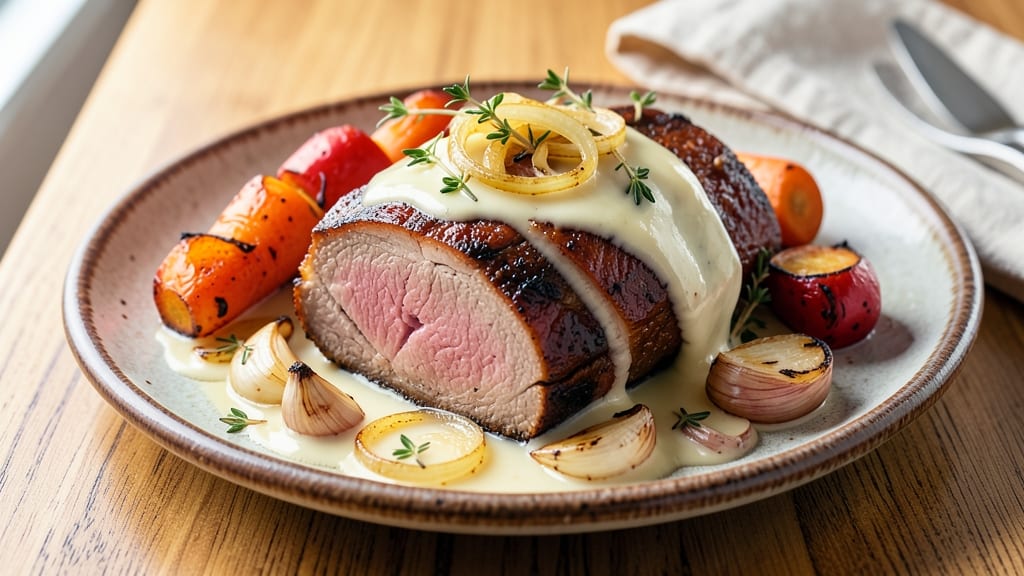
This milk-braised pork recipe transforms tough cuts into melt-in-your-mouth perfection through a simple yet transformative technique I perfected during my apprenticeship in Charleston. The milk—yes, milk—creates a silky, velvety sauce that tenderizes the meat while adding a subtle sweetness that balances the rich pork flavor.
It’s the kind of dish that makes you appreciate how something so humble can elevate something so fundamental.
The magic lies in the slow braising process, where the milk breaks down collagen and fat, resulting in a sauce so luxurious it rivals restaurant-quality preparations.
I’ve tested this recipe with everything from pork shoulder to ribs, and the results are consistently tender, with meat that falls apart at the touch of a fork. The technique is straightforward but requires patience—something worth rewarding with a dish this delicious.
What makes this recipe stand out is its versatility. Serve it with crusty bread to soak up every drop of that velvety sauce, or pair it with roasted root vegetables for a hearty meal.
The sauce itself is rich enough to stand alone, making it perfect for dipping or drizzling over rice. It’s the kind of dish that feels special without being complicated, and it’s become a staple in my kitchen for gatherings and weeknight dinners alike.
Once you try this method, you’ll never look at pork the same way again. The secret weapon here is the milk, which adds a depth of flavor and texture that’s hard to replicate.
Trust me—this is one recipe that will change how you cook pork forever. Let’s get started on creating something truly unforgettable.
Ingredients for milk pork
Pantry staples meet restaurant-quality technique for this melt-in-your-mouth milk-braised pork.
| Ingredient | Amount | Notes |
|---|---|---|
| Pork Shoulder 🐖 | 2 lb | Bone-in for maximum flavor |
| Whole Milk 🥛 | 2 cups | Full-fat for richest sauce |
| Yellow Onion 🧅 | 1 whole | Chopped into even slices |
| Garlic Cloves 🧄 | 6 cloves | Smashed with side of knife |
| Carrots 🥕 | 4 medium | Peeled and cut into chunks |
| Fresh Thyme 🌿 | 2 sprigs | Or 1 tsp dried thyme |
| Bay Leaves 🍃 | 2 whole | Standard dried leaves |
| Olive Oil 🫒 | 2 tbsp | Extra-virgin preferred |
| Salt 🧂 | 1 ½ tsp | Diamond Crystal kosher |
| Black Peppercorns 🌶️ | 1 tsp | Freshly cracked |
| All-Purpose Flour 🌾 | 2 tbsp | For thickening sauce |
| Fresh Parsley 🌿 | ¼ cup | Chopped for garnish |
The pork shoulder is where the magic starts—look for cuts with good marbling at Whole Foods or your butcher's counter. That fat renders beautifully during braising, creating a sauce so rich it'll make you question why you ever cooked pork any other way. Costco often has great deals on pork shoulder, but check the sell-by date—freshness matters here. For the milk, whole milk is non-negotiable; skim or reduced-fat just won't give you that velvety texture. I usually grab a half-gallon and use the rest for pancakes or coffee. The onions and carrots should be firm with no soft spots—those Trader Joe's organic carrots are my go-to for their sweetness and texture.
No whole milk? Heavy cream plus water (1:1 ratio) gets you close, though the sauce will be slightly lighter. Running short on thyme? Rosemary works beautifully at half the amount—it pairs wonderfully with pork. The flour is just for thickening at the end, so don't skip it if your sauce needs help. For the garlic, I swear by Penzeys for their freshness, but regular grocery store cloves work fine if they're plump and firm. If you're using dried thyme, crush the leaves between your fingers to release their oils—that's where the flavor hides. And trust me on the bay leaves—don't skip them, even if you're not a huge fan of their flavor alone.
This dish tastes even better the next day, so plan ahead. Store leftovers in the sauce in airtight containers for up to 5 days—the flavors meld beautifully. For longer storage, freeze portions for 3 months. I like to portion it into individual containers so I can grab a meal straight from the freezer. The sauce reheats perfectly—just add a splash of milk or water if it thickens too much. And if you have extra sauce? Drizzle it over mashed potatoes or use it as a dip for crusty bread. Every drop is too good to waste.
Why You'll Love This Recipe
- One-Pot Magic: I swear by this recipe because it’s all in one pan—no chopping boards, no extra dishes. The pork shoulder simmers right in the milk with onions and carrots until it’s fall-apart tender, and honestly? That’s my kind of cooking.
- Rich Without the Fuss: The whole milk adds this unreal creaminess that turns tough pork into something luxurious—no heavy cream or fancy sauces needed. The garlic and onions caramelize right into the meat, so every bite has that deep, savory punch.
- Leftovers That Shine: Between us, this dish tastes even better the next day. I’ll make a big batch on Sunday, slice it for sandwiches, or toss it into fried rice—no one ever complains about seconds.
- Budget-Friendly Feast: Pork shoulder is my go-to for stretching meals, and adding milk (instead of broth) makes it feel special without breaking the bank. Plus, the carrots and onions bulk it up—perfect for feeding the whole family without stress.
Step-by-step instructions for milk braised pork
This method transforms tough pork shoulder into melt-in-your-mouth perfection through gentle braising and a velvety milk sauce.
Sear the Pork Shoulder for Deep Flavor
Pat the 2 lb pork shoulder completely dry with paper towels—this ensures maximum browning. Heat 2 tablespoons olive oil in a large Dutch oven over medium-high heat until shimmering. Add the pork shoulder and sear on all sides until deep golden brown, about 8-10 minutes total. The goal is to develop a rich crust that locks in moisture during braising.
Real talk: Don't rush this step. You'll know it's ready when the pork releases easily from the pan and the exterior has a caramelized sheen. Transfer the seared pork to a plate and set aside—you'll return it to the pot shortly.
Build the Aromatic Base
In the same Dutch oven, add 1 whole yellow onion (chopped into even slices) and 4 medium carrots (cut into chunks). Cook for 5 minutes until the onions soften slightly. Add 6 cloves garlic (smashed with the side of your knife), 2 sprigs fresh thyme, and 2 whole bay leaves, stirring for 30 seconds until fragrant.
The reason we cook these aromatics first is to release their natural sugars, which caramelize and form the flavor foundation for the braise. You'll notice the kitchen fills with an intoxicating blend of sweet onion and herbal notes—this is where the magic begins.
Deglaze and Add Milk for Tenderizing
Pour in 2 cups whole milk and scrape up all those beautiful browned bits from the bottom of the pot with a wooden spoon. Bring the mixture to a gentle simmer over medium heat, then return the pork shoulder to the pot. The milk should partially cover the meat—if not, add a splash of water.
Here's the thing—milk contains lactic acid that breaks down collagen in the pork, making it fork-tender. The fat in whole milk also creates a luxuriously smooth sauce. Let the mixture simmer uncovered for 1 hour, skimming any foam that rises to the surface occasionally.
Braise Until Fork-Tender
After the initial hour, reduce heat to low and continue simmering for another 2-3 hours until the pork is fork-tender and falls apart easily. The internal temperature should reach 200-205°F—this is when connective tissues fully break down. If the sauce reduces too much, add a splash of water or milk to maintain the proper consistency.
Your oven might run hot, so start checking at the 2-hour mark using a meat thermometer. The sauce should coat the back of a spoon and have a velvety texture. If it's too thin, proceed to the next step to thicken it.
Thicken the Sauce and Finish
Remove the pork shoulder and set it aside on a cutting board. Strain the braising liquid through a fine-mesh sieve into a clean pot, pressing on the vegetables to extract maximum flavor. Return the liquid to medium heat and whisk in 2 tablespoons all-purpose flour until smooth. Cook for 2-3 minutes until the sauce thickens slightly.
Return the pork to the pot, spooning the thickened sauce over it. Let it heat through for 2-3 minutes, then garnish with ¼ cup chopped fresh parsley. The finished sauce should coat the pork beautifully, with a glossy sheen that indicates proper thickening.
Pro Tips For Making Milk Pork
- VELVET THE PORK FIRST: Skip the raw milk plunge—score the pork shoulder in a diamond pattern, then sear it skin-side down in a dry pan until the fat renders and the meat hits 160°F. That crust locks in moisture when you later braise it in milk, so the final texture stays tender, not soggy. (Yes, even if you’re impatient like me, resist the urge to rush this.)
- SAUTE ONIONS UNTIL GOLDEN: Caramelize those onions low and slow until they’re deep amber, not just soft—this takes 20-25 minutes, but it’s the thing that matters most. The milk will mellow their sweetness, but the depth of flavor stays. I learned this the hard way by skipping it; the dish tasted flat.
- DON’T BOIL THE MILK: Once you add milk to the pork, keep the heat at a gentle simmer—never a rolling boil. Milk scalds fast, and you’ll end up with a gluey, curdled mess instead of a rich, creamy sauce. A thermometer helps: aim for 180°F max.
- USE COLD CARROTS FOR CRISPNESS: Peel and slice carrots right before adding them to the milk-braising liquid—cold, raw carrots stay crisp while absorbing minimal flavor. If you prep them ahead, they’ll turn mushy and dull the dish. (Your future self will thank you.)
Creative variations of milk pork
Thai-Inspired Curry
Transform this braise into a Thai-style curry by adding 2 tablespoons red curry paste (like Maesri) and 1 can (14 oz) coconut milk after the initial sear.
Simmer the pork in the coconut milk for 2 hours instead of milk, then finish with 1 tbsp fish sauce and 1 tsp palm sugar. Garnish with Thai basil and lime wedges. The coconut milk replaces the milk beautifully while keeping that tender texture. 🌶️
Filipino Sinigang Twist
For a Filipino-inspired version, swap the milk for 4 cups tamarind broth (or substitute 2 tbsp tamarind paste + 4 cups water). Add 1 radish, 1 eggplant, and 1 cup kangkong (water spinach) to the pot with the pork.
Simmer for 2 hours, then finish with 1 tbsp fish sauce and ½ cup chopped kalamansi. The tangy broth cuts through the richness while keeping the pork tender. 🍋
German-Inspired Sauerkraut Braise
Give it a German twist by adding 1 lb sauerkraut (rinsed and drained) and 2 slices bacon (crisped and crumbled) to the pot after searing. Replace the milk with 2 cups chicken broth and simmer for 3 hours until the pork is tender.
Finish with 1 tsp caraway seeds and a splash of apple cider vinegar. The sauerkraut adds a satisfying crunch and tangy depth. 🥬
Indian-Style Paneer Substitution
For a vegetarian-friendly adaptation, replace the pork with 1 lb paneer (cubed) and adjust the milk to 3 cups. Add 1 tsp garam masala, ½ tsp turmeric, and 1 tbsp lemon juice at the end.
The milk creates a creamy, velvety sauce that pairs perfectly with the paneer’s firm texture. Serve with naan or basmati rice. 🧈
Smoky BBQ Milk Glaze
Take this to the BBQ pit by finishing the braised pork with a smoky milk glaze. After removing the pork from the sauce, blend 1 cup of the braising liquid with ½ cup smoked paprika, 1 tbsp brown sugar, and 1 tsp liquid smoke.
Brush this glaze over the pork and broil for 3-4 minutes until caramelized. The smoky-sweet contrast is pure magic. 🔥
Creamy Mushroom Risotto Base
Use the braised pork as a risotto base by removing the meat and straining the sauce. Deglaze a pan with 2 tbsp butter, add 1 cup Arborio rice, and cook until translucent.
Gradually add the pork sauce while stirring, then finish with ½ cup grated Parmesan**. The creamy milk sauce transforms into a luxurious risotto with tender pork chunks mixed throughout. 🍄
Nutrition facts
Frequently asked questions
Why does milk make pork so tender?
The lactic acid in milk breaks down collagen in the meat while cooking, creating that melt-in-your-mouth texture. Plus, the fat in whole milk creates a silky sauce that coats every bite. It's like nature's built-in tenderizer! The slow braising process lets these elements work their magic over time.
Can I use other cuts of pork besides shoulder?
Pork ribs work beautifully (just reduce cooking time to 1.5-2 hours), while pork chops need only 30-45 minutes in the milk braise. For maximum tenderness, bone-in cuts always perform best. The milk's magic works on all of them—just adjust cooking times accordingly.
What if I don't have whole milk?
No problem! Mix 1 cup heavy cream + 1 cup water for a close substitute. The sauce will be slightly lighter but still delicious. For extra richness, add 1 tablespoon butter at the end. Just remember—whole milk gives that signature velvety texture that's hard to replicate.
How do I know when the pork is fully tender?
Use a meat thermometer to check for 200-205°F internal temperature. The meat should fall apart easily with a fork, and the sauce should coat the back of a spoon. If it's still firm after 3 hours, add ½ cup more milk and continue cooking. Patience is key here!
Can I make this ahead of time?
This dish tastes even better the next day! Store leftovers in the sauce in an airtight container for up to 5 days in the fridge. For longer storage, freeze portions for 3 months. The flavors actually deepen as they meld together. Just reheat gently on the stove with a splash of milk to restore the creamy texture.