
Main Courses
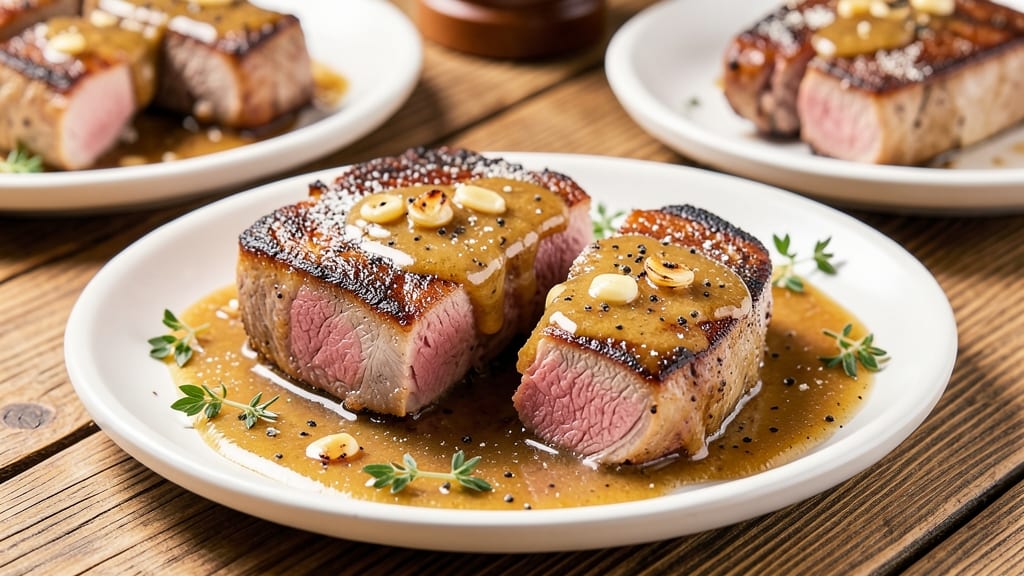
This medium rare pork chop recipe delivers the perfect balance of buttery sear and juicy pink centers every time—no guesswork, no overcooking.
After years of perfecting this technique in my Atlanta kitchen, I've cracked the code for restaurant-quality results at home, using just a cast iron skillet and a meat thermometer.
The secret lies in high-heat searing followed by precise temperature control, ensuring tender meat with a caramelized crust that locks in every drop of flavor.
What sets this recipe apart is the foolproof method that guarantees medium-rare doneness (130–135°F internal temperature) without drying out the chops. We start with bone-in chops for better flavor retention, season simply with salt and pepper, then sear in clarified butter until golden brown.
The key is letting the chops rest for 5 minutes after cooking—this critical step prevents juices from escaping, keeping every bite impossibly tender. No fancy equipment needed, just patience and attention to temperature.
By the time you're done, you'll have pork chops with crispy edges that shatter when cut and succulent pink centers that melt in your mouth. The buttery sear adds depth of flavor, while the resting period ensures maximum juiciness.
This is the kind of dish that transforms an ordinary weeknight dinner into something special—elegant enough for guests but simple enough for any night of the week.
Pair with roasted apples, a creamy mashed potato topping, or a crisp arugula salad to round out the meal. The technique works equally well with bone-in or boneless chops, so adjust based on your preference. Let's get cooking—your taste buds will thank you.
Ingredients for medium rare pork chop
Four simple ingredients transform ordinary pork chops into restaurant-quality perfection—crispy edges and juicy pink centers guaranteed.
| Ingredient | Amount | Notes |
|---|---|---|
| Bone-In Pork Chops 🐖 | 4 pieces | 1-inch thick, rib or loin cut |
| Unsalted Butter 🧈 | ½ cup | Clarified butter preferred |
| Kosher Salt 🧂 | 1 ½ tsp | Diamond Crystal preferred |
| Freshly Ground Black Pepper 🌶️ | ½ tsp | Freshly cracked preferred |
| All-Purpose Flour 🌾 | 2 tbsp | For dredging if desired |
| Garlic Cloves 🧄 | 2 cloves | Minced for optional garnish |
| Fresh Parsley 🌿 | ¼ cup | Chopped, for garnish |
| Olive Oil 🫒 | 1 tbsp | For skillet preheating |
| Meat Thermometer 🌡️ | 1 whole | Digital preferred |
The pork chops make all the difference here. Bone-in chops from the butcher section—ask for 1-inch thick cuts—give you that perfect balance of flavor and tenderness. I always grab mine from Whole Foods or my local Kroger butcher counter because they cut them fresh. Look for chops with good marbling—those little white streaks of fat mean more flavor. If you can't find bone-in, boneless chops work too, but they'll cook faster so watch them closely. Pat them dry before seasoning—this helps the crust form better, so don't skip it (trust me on this).
No clarified butter? Regular unsalted butter works fine—just let it melt in the skillet first. The flour is optional, but it adds a nice light crust if you like that texture. Fresh parsley is ideal for garnish, but dried parsley at one-third the amount will do in a pinch. The olive oil is just for preheating the skillet—no fancy stuff needed. If you don't have a meat thermometer, cut into one chop after cooking to check doneness. It should look pink in the middle with a slight red juicy center. For extra flavor, add the minced garlic to the butter while it melts—simple but makes a difference.
Pork chops are best served immediately, but they'll keep for 2 days in the fridge if wrapped tightly in foil. The crispy crust gets softer when reheated, so plan to cook fresh if possible. For leftovers, store in an airtight container and reheat gently in a skillet with a splash of butter. These chops reheat beautifully—just don't overdo it or they'll dry out. I always make a double batch because they disappear fast around here. Pair with roasted apples or mashed potatoes for the full experience.
Why You'll Love This Recipe
- Here’s what sold me: the crust from the flour-butter sear crackles like a campfire, while the inside stays juicy and pink. The bone-in version? Even better—it stays moist longer, and you get that marrow flavor without extra effort.
- Five-Ingredient Magic: I swear by this combo—just flour, butter, salt, pepper, and pork. That’s it. No fancy gadgets or 10-step processes. The butter basting alone turns the pork into something restaurant-worthy while I’m still chopping veggies for the side.
- Crispy-Creamy Perfection: Here’s what sold me: the crust from the flour-butter sear crackles like a campfire, while the inside stays juicy and pink. The bone-in version? Even better—it stays moist longer, and you get that marrow flavor without extra effort.
- Weeknight to Dinner Party: Between us, this recipe works for anything. Toss it on the table for a lazy Tuesday with mashed potatoes, or serve it at a dinner party with roasted asparagus. Same method, different vibes. Plus, the leftovers reheat like a dream—just a quick pan sear to revive that crust.
Step-by-step instructions for perfectly cooked medium rare pork chops
Here's how to achieve juicy pink centers and crispy edges every time—no guesswork involved.
Season and Rest the Pork Chops
Take the 4 pieces bone-in pork chops out of the refrigerator and let them sit at room temperature for 15-20 minutes. This ensures even cooking and prevents cold spots in the center. While they rest, season both sides generously with 1.5 teaspoons kosher salt and 0.5 teaspoon freshly ground black pepper. Press the seasoning into the meat so it adheres well—this creates a flavorful crust during searing.
I like to season immediately before cooking to prevent the salt from drawing out too much moisture. The kosher salt's coarse texture also helps create those beautiful crusty edges. If you're using the 2 tablespoons all-purpose flour, lightly dredge each chop now by shaking off any excess. This optional step adds extra texture but isn't required for juicy results.
Sear the Pork Chops in Butter
Heat a large skillet over medium-high heat until it's very hot. Add 1 tablespoon olive oil and let it shimmer for 30 seconds. Place the pork chops in the skillet, bone-side down first. I press down gently on each fillet during the first minute—this prevents curling and ensures even contact with the pan.
After 2 minutes, carefully flip the chops and add 0.5 cup unsalted butter to the pan. The butter will foam and bubble as it melts, basting the meat with rich, flavorful liquid. Cook for another 2-3 minutes on the second side until the exterior reaches 130°F on your meat thermometer—this is the perfect starting point for medium rare.
Finish Cooking to Exact Doneness
Remove the pork chops from the skillet and let them rest on a plate or cutting board for 5 minutes. While they rest, use the same skillet to quickly sauté the 2 minced garlic cloves in the remaining butter for 30 seconds until fragrant. This creates a simple pan sauce to serve with your chops.
Check the internal temperature again before serving—it should read 140-145°F for medium rare. If you're using the meat thermometer, insert it into the thickest part of the chop, avoiding the bone. The center should still feel slightly springy to the touch, with a warm pink hue. This resting period is crucial—it allows the juices to redistribute throughout the meat instead of pooling and running out when you cut in.
Garnish and Serve
Spoon the garlic butter sauce over the pork chops and garnish with 0.25 cup chopped fresh parsley. The parsley adds a bright, fresh contrast to the rich, buttery meat. Serve immediately with your choice of sides—roasted vegetables, mashed potatoes, or a simple arugula salad all work beautifully.
Each chop should have a deep golden crust on the outside and a juicy, pink center that practically melts in your mouth. If you cut into one and it's too pink (under 140°F), simply return it to the skillet for 30-60 seconds to carry over to the perfect doneness. The butter basting ensures every bite is rich and flavorful, while the bone adds extra depth to the meat's natural juices.
Pro Tips For Making Medium Rare Pork Chop
- Use a Meat Thermometer: DESCRIPTION: Bone-in pork chops are tricky—no one wants to cut into a dry chop or overcook it. Hit 130°F internal temp for medium rare (140°F if you prefer slightly warmer). I learned this the hard way after guessing and ending up with tough, gray centers that tasted like regret.
- Salt Before Browning: DESCRIPTION: Don’t wait until the last minute—season the chops generously with kosher salt at least 40 minutes before cooking. This lets the salt work its magic, penetrating the meat for maximum flavor. (Yes, even if you’re impatient like me.)
- Don’t Crowd the Pan: DESCRIPTION: If you’re searing in a skillet, give those chops space—they need room to brown, not steam. Cook them one at a time if needed, or risk ending up with sad, pale chops that taste like they were microwaved.
- Finish with Butter Low: DESCRIPTION: After searing, lower the heat to medium and toss in the unsalted butter and flour (for a quick pan sauce). This keeps the butter from burning while still giving you that rich, glossy finish. I used to blast it on high and ended up with a bitter, charred mess.
Essential equipment for this recipe
Cast Iron Skillet
My go-to tool for perfect pork chops is a 10-inch Lodge cast iron skillet—it's heavy enough to handle high heat without warping and retains heat beautifully. The natural non-stick surface develops over time, so season it regularly with flaxseed oil to keep it in prime condition.
I've had my current skillet since my apprenticeship days in Charleston, and it's still going strong after years of heavy use. 🔥
Digital Meat Thermometer
A Thermoworks Smoke or Meater thermometer is non-negotiable for medium-rare precision. These probes give instant, accurate readings that let you pull your chops at exactly 130-135°F internal temperature.
I keep one permanently attached to my skillet handle so it's always within reach. The 1-second response time means no more guessing—just perfect results every time.
Butter Clarifier
For restaurant-quality flavor, I use a butter clarifier to separate the milk solids from the pure butterfat. This creates a silky, high-heat cooking medium that won't burn while basting your chops.
If you don't have one, simply melt ½ cup unsalted butter in a saucepan over low heat, then carefully pour off the clear liquid through a fine-mesh strainer. The leftover solids make great compound butter for serving.
Tongs for Safe Handling
I swear by OXO Good Grips tongs for flipping pork chops—they provide excellent grip without slipping, which is crucial when dealing with hot skillets. The silicon-coated tips protect your meat from tearing while giving you the control needed for perfect searing.
I keep a pair dedicated solely to meat handling to maintain hygiene standards in my kitchen.
Resting Rack
A simple wire cooling rack placed over a plate is my secret weapon for resting meat. It allows air circulation underneath while keeping the chops elevated, which prevents them from steaming in their own juices.
I use a stainless steel rack from Amazon that fits perfectly in my skillet—it's a game-changer for maintaining that perfect medium-rare texture during the crucial 5-minute rest.
Optional Flour Dredge Kit
For that extra crispy texture, I keep a small bowl of all-purpose flour and a fine-mesh sieve nearby. Lightly dredging the chops before searing creates a delicate crust that enhances the buttery flavor. I use King Arthur flour because it's finely milled and creates a consistent texture.
The sieve helps remove excess flour, ensuring you don't get a heavy coating that would mask the pork's natural flavor. ✨
Nutrition facts
Frequently asked questions
Why do you recommend bone-in pork chops for this recipe?
Bone-in chops stay juicier longer because the bone acts as a natural insulator, helping retain heat and moisture. The bone also adds depth of flavor as it renders during cooking. If you prefer boneless, just reduce cooking time by 1-2 minutes since they cook faster without the bone's insulating effect.
What's the absolute best way to check doneness without a thermometer?
Cut into the thickest part of the chop—medium rare should show a pink center with a slightly springy texture when pressed gently. For bone-in chops, avoid the bone area. If it's too pink (under 140°F), return to the skillet for 30 seconds to carry over to perfect doneness.
Can I use regular butter instead of clarified butter?
Yes! Regular unsalted butter works perfectly—just melt it first in the skillet to avoid burning. The milk solids will brown slightly, adding extra flavor. Clarified butter prevents burning at high heat, but regular butter still creates a delicious crust when used properly.
How do I fix pork chops that turned out too dry?
If your chops are dry, they likely overcooked. Next time, remove them at 130°F internal temp and rest for 5 minutes—the carryover cooking will bring them to 140-145°F. For dry chops now, try reheating them in a skillet with 2 tablespoons butter and 1 tablespoon cream over low heat for 1-2 minutes to restore moisture.
What sides pair best with these medium-rare pork chops?
Roasted apples with cinnamon and butter complement the richness perfectly, or try creamy mashed potatoes with roasted garlic. For a lighter option, a crisp arugula salad with lemon vinaigrette balances the richness. The key is contrasting textures—something crisp or creamy works best.