
Sauces & Condiments
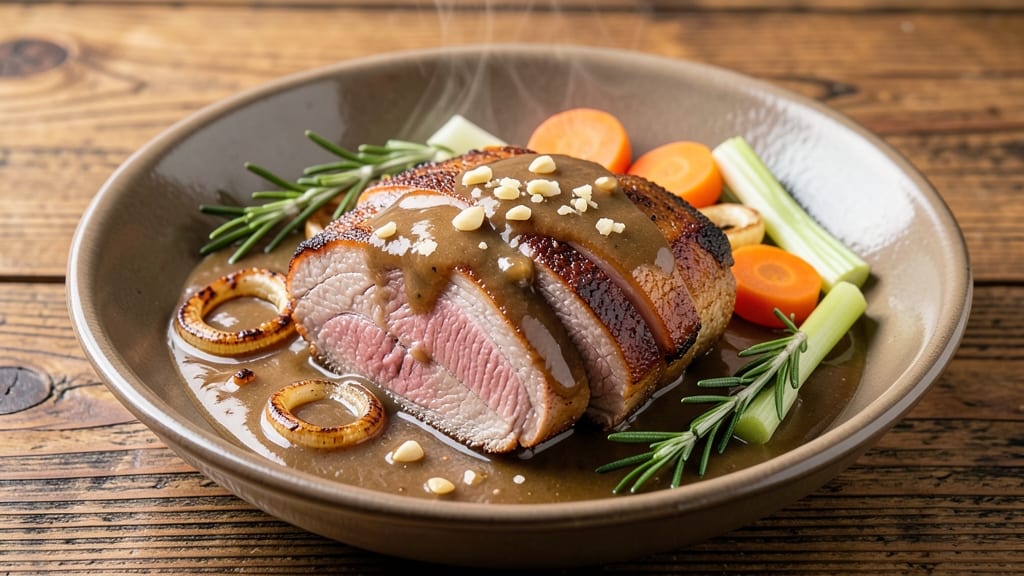
This crock pot pork roast gravy recipe transforms a simple pork roast into a luxurious, slow-braised centerpiece with restaurant-quality velouté—all while requiring minimal effort.
The secret lies in slow-cooking the pork until it practically falls apart, then using those rich drippings to create a velvety gravy that elevates every bite. After years of perfecting this method, I’ve finally cracked the code for achieving deep, caramelized flavors without standing over a hot stove.
The beauty of this approach is its simplicity: a pork roast, aromatic vegetables, and basic seasonings simmer together in the crock pot for hours, developing layers of flavor that most stovetop methods can’t match.
The key technique involves deglazing the pot after removing the pork, then reducing the fond (browned bits) into a rich, glossy sauce that clings to the meat like a second skin. This isn’t just gravy—it’s the foundation of a complete meal that tastes like it came from a family-style dinner.
By the time you’re done, you’ll have tender, fall-apart pork served alongside a velvety gravy that’s thick enough to coat each forkful but light enough to enhance, not overpower.
The slow cooking process infuses the meat with natural juices, while the gravy captures every bit of flavor from the roasting vegetables and herbs. This is comfort food at its finest—warm, inviting, and perfect for feeding a crowd or enjoying a cozy weeknight dinner.
The best part? Leftovers reheat beautifully, and the gravy can be thickened or thinned to suit your preference. Serve with roasted potatoes, crusty bread, or fresh vegetables for a meal that feels special without the fuss. Here’s how to make it happen—step by step.
Ingredients for crock pot pork roast gravy
Six aromatic vegetables, a pork roast, and simple pantry staples transform into luxurious velouté.
| Ingredient | Amount | Notes |
|---|---|---|
| Pork Roast 🥩 | 3 lb | Bone-in, center-cut preferred |
| Yellow Onion 🧅 | 1 whole | Peeled, quartered lengthwise |
| Carrots 🥕 | 4 medium | Whole, scrubbed clean |
| Celery Stalks 🧅 | 4 whole | Trimmed, cut into 2-inch pieces |
| Garlic Cloves 🧄 | 6 cloves | Peeled, smashed slightly |
| Fresh Rosemary 🌿 | ½ ounce | Sprigs, stems removed |
| Fresh Thyme 🌿 | ¼ ounce | Sprigs, leaves stripped |
| Beef Broth 💧 | 2 cups | Low-sodium preferred |
| Red Wine 🍷 | ½ cup | Dry, bold variety |
| All-Purpose Flour 🌾 | 2 tbsp | For thickening gravy |
| Unsalted Butter 🧈 | 2 tbsp | Cold, cubed for fond |
| Diamond Crystal Kosher Salt 🧂 | 1 ½ tsp | Adjust to taste |
| Freshly Ground Black Pepper 🌶️ | ½ tsp | Freshly cracked |
The pork roast is non-negotiable here—bone-in, center-cut gives you the best flavor and texture. Costco or your butcher shop will have the best cuts, but any grocery store pork roast works in a pinch. Look for good marbling, not too much fat. The vegetables? Fresh is best, but frozen carrots and celery will work if you're in a hurry. I always buy extra carrots—they keep forever in the fridge and add natural sweetness to the gravy. For the herbs, fresh sprigs infuse better than dried, but if you're short on time, dried rosemary and thyme work at half the amount.
No red wine? Extra beef broth with a splash of balsamic vinegar does the trick. The flour for thickening should be Diamond Crystal kosher salt—it dissolves better than table salt. Want to skip the wine entirely? Mushroom broth adds depth without alcohol. The butter for the fond? Cold cubed butter browns better than melted—trust me on this. If you're worried about the pork being too fatty, pat it dry with paper towels before searing to get a better crust. The gravy will be rich enough without extra fat.
This reheats beautifully—honestly tastes better the next day once everything melds. Keeps 4-5 days in the fridge, freezes for 3 months. I portion the gravy separately so I can reheat just what I need. The pork? Shreds perfectly for sandwiches or tacos the next day. Store the roast and gravy in airtight containers with parchment paper between layers to prevent sogginess. Leftovers make amazing pork pot pie filling—just add a biscuit crust and bake until golden.
Why You'll Love This Recipe
- Deep Umami Magic: Here’s what sold me—the way the carrots and celery break down into the gravy, turning it into this rich, savory sauce. The garlic? Oh, it’s there, but not overpowering—just enough to make every bite taste like a hug from your grandma’s kitchen. (Yes, even on a Tuesday night.)
- Leftovers That Don’t Suck: Between us, most pork roast leftovers turn into sad, dry slices. Not this. The crock pot keeps it moist, and the gravy? It’s the star—drizzled over mashed potatoes or dumped over rice, it turns yesterday’s dinner into today’s lunch without a second thought.
- Budget-Friendly Crowd-Pleaser: Honestly, this recipe uses the cheapest cuts of pork and veggies you’ll find, but it feeds six for under $15. My college roommates and I lived on this—simple, filling, and no one ever complained. (Not even my picky brother, who claims he hates carrots.)
Step-by-step instructions for slow-cooked pork roast gravy
Here's how to transform simple ingredients into a velvety gravy using the rich fond from your slow-cooked pork roast.
Sear the Pork Roast for Deep Flavor
Pat the 3 lb pork roast dry with paper towels—this ensures a perfect sear. Heat a large Dutch oven over medium-high heat and add 2 tbsp unsalted butter. Once melted and foaming, place the pork roast in the pan, fat-side down. Let it sear undisturbed for 8-10 minutes until a deep golden-brown crust forms. Flip and sear the other side for another 5-6 minutes. This step develops the Maillard reaction, creating the flavor foundation for your gravy.
Remove the pork roast and set it aside. Don't wipe the pan—those browned bits (fond) are pure flavor. Add the 1 whole yellow onion, 4 medium carrots, 4 whole celery stalks, and 6 cloves garlic cloves to the same pan. Cook for 5 minutes, stirring occasionally, until the vegetables soften slightly. This builds another layer of flavor into your future gravy.
Slow-Cook the Pork and Vegetables
Transfer the seared pork roast and vegetables to a 6-quart slow cooker. Add the 2 cups beef broth, 0.5 cup red wine, 0.5 ounce fresh rosemary, 0.25 ounce fresh thyme, 1.5 tsp diamond crystal kosher salt, and 0.5 tsp freshly ground black pepper. Stir gently to combine. Cover and cook on low heat for 8 hours or high heat for 4-5 hours, until the pork is fork-tender and the vegetables are completely soft. The long cook time allows all the flavors to meld beautifully.
Here's the thing—don't skip the slow cook. The low-and-slow method breaks down the connective tissue in the pork, creating a fork-tender texture while allowing the vegetables to dissolve into the broth, enriching it naturally. You'll know it's done when the pork pulls apart easily and the broth has reduced slightly, intensifying its flavor.
Create the Fond for Rich Gravy
Once the pork is fully cooked, carefully remove it from the slow cooker and place it on a cutting board to rest. Strain the cooking liquid through a fine-mesh sieve into a large measuring cup or bowl, pressing on the vegetables to extract all their juices. You should have about 2-2½ cups of rich, flavorful liquid. This is your base for the gravy.
Return the strained liquid to the slow cooker and place it on medium-high heat. Add 2 tbsp unsalted butter and 2 tbsp all-purpose flour, whisking constantly for 1-2 minutes until the mixture thickens slightly. This roux will form the body of your gravy. If the mixture looks too thick, add 1-2 tablespoons of water to loosen it. The goal is a smooth, velvety consistency that coats the back of a spoon.
Finish and Thicken the Gravy
Reduce the heat to low and let the gravy simmer gently for 10-15 minutes, stirring occasionally. This slow simmer allows the flavors to meld and the gravy to thicken naturally. Taste and adjust the seasoning with additional kosher salt or black pepper as needed. The gravy should be rich, velvety, and deeply flavorful—almost like a velouté. If it's too thick, whisk in more beef broth or water until it reaches your desired consistency.
For the final touch, skim off any excess fat that rises to the surface. The gravy should coat a spoon smoothly without being gluey. Serve immediately over slices of your tender pork roast, allowing the diners to experience the full depth of flavor in every bite. This gravy isn't just a side—it's the star of the show, transforming a simple pork roast into a restaurant-quality meal.
Pro Tips For Making Crock Pot Pork Roast Gravy
- Sear the Pork First: Skip the slow start—brown the pork roast in a hot pan before dumping it into the crock pot. That crust locks in flavor and prevents the meat from turning into gray, mushy sadness. (Yes, even if you’re impatient like me.)
- Chop Veggies Small: Dice onions, carrots, and celery into ¼-inch pieces—they’ll cook faster and break down into the gravy instead of sitting as tough, undercooked chunks. I used to leave them in big hunks, and they’d just sit there like stubborn guests at a dinner party.
- Deglaze the Pot: After removing the pork, scrape up all the browned bits from the bottom of the crock pot with a spoon and stir them into the veggies. That’s where half the flavor hides—don’t let it go to waste. (Your future self will notice the difference.)
- Strain for Smooth Gravy: If you want a silky gravy, strain the finished mixture through a fine-mesh sieve before serving. The veggies add depth, but sometimes you just want that clean, rich sauce without chewing. (I skip this when I’m lazy, but the dish is noticeably better when I don’t.)
Serving suggestions for this recipe
Classic Pairings
Serve your crock pot pork roast with creamy mashed potatoes—their buttery texture contrasts perfectly with the rich gravy. I like to make them with roasted garlic and a splash of whole milk for extra depth.
For a heartier option, try crispy roasted potatoes tossed in rosemary and olive oil—they hold up well to the juicy pork. 🥔
Bread Basket Essentials
A warm baguette or sourdough loaf is non-negotiable for soaking up that velvety gravy. I always toast slices lightly and serve them in a basket with extra butter. For a gourmet touch, try garlic-herb focaccia—its crispy crust and soft interior make every bite worth it.
Keep the basket on the table so guests can serve themselves.
Vegetable Sides
Bright, fresh vegetables balance the richness of the pork. Buttered green beans with slivered almonds add a satisfying crunch, while roasted Brussels sprouts with balsamic glaze bring a tangy contrast.
For a seasonal twist, sautéed mushrooms in garlic butter complement the gravy beautifully. I often roast them alongside the pork for convenience.
Gravy as a Dipper
Don’t limit the gravy to just the pork—it’s the star of the show! Serve it in a small gravy boat alongside buttered dinner rolls for dipping. The velvety texture pairs surprisingly well with pickled vegetables like red onions or jalapeños—the acidity cuts through the richness.
For a fun twist, offer crudité sticks (carrots, celery, bell peppers) on the side.
Dessert Pairings
End the meal with something light to balance the richness. Vanilla bean ice cream with a drizzle of caramel sauce is a classic choice. For a simpler option, warm apple crisp with vanilla ice cream complements the savory flavors.
If you want to keep it seasonal, pumpkin pie with whipped cream works beautifully—especially during fall gatherings.
Holiday Feast Upgrades
Transform this into a full holiday centerpiece by adding stuffing made with sourdough bread, celery, and herbs. Serve it in a cast-iron skillet alongside the pork. For a festive touch, garnish the table with rosemary sprigs and cranberry sauce on the side.
The gravy’s depth makes it perfect for Thanksgiving or Christmas dinners—it feels special without the fuss. 🎄
Nutrition facts
Frequently asked questions
Can I use a smaller pork roast for this recipe?
Yes, but adjust the cooking time accordingly. A 2 lb pork roast will cook faster—about 3-4 hours on high instead of 4-5 hours. The gravy quantity will also be smaller, so you may need to add 1/2 cup extra beef broth to maintain consistency. The flavor remains the same, just scaled down!
What if I don't have red wine for the gravy?
No problem! Substitute with 1/2 cup extra beef broth plus 1 tablespoon balsamic vinegar for depth. Alternatively, use 1/4 cup apple cider for a subtle sweetness. The key is maintaining the same liquid volume—just adjust seasoning to taste after cooking.
Why is my gravy too thin or too thick?
For thin gravy, whisk in 1 tablespoon cold water or broth at a time until smooth. For thick gravy, mix 1 teaspoon cornstarch with 1 tablespoon cold water, stir into the gravy, and simmer for 2 minutes. The ideal consistency should coat the back of a spoon but still be pourable. Pro tip: Simmer uncovered for 5 extra minutes to reduce naturally.
Can I make this gravy ahead of time?
Gravy reheats beautifully. Store it in an airtight container in the fridge for up to 5 days or freeze for 3 months. To reheat, warm over low heat on the stovetop, stirring frequently. For best results, add 1 tablespoon cold water before reheating to prevent scorching. The flavors actually deepen overnight!
What's the best way to serve leftover pork roast?
Shred the pork and use it for pork pot pie, tacos, or sliders. The gravy makes an amazing dipping sauce! For a quick meal, mix shredded pork with 1/2 cup gravy, 1/4 cup cream cheese, and 1 teaspoon Dijon mustard—then serve on toasted baguette slices. The gravy also freezes well for future use in soups or casseroles.