
Main Courses
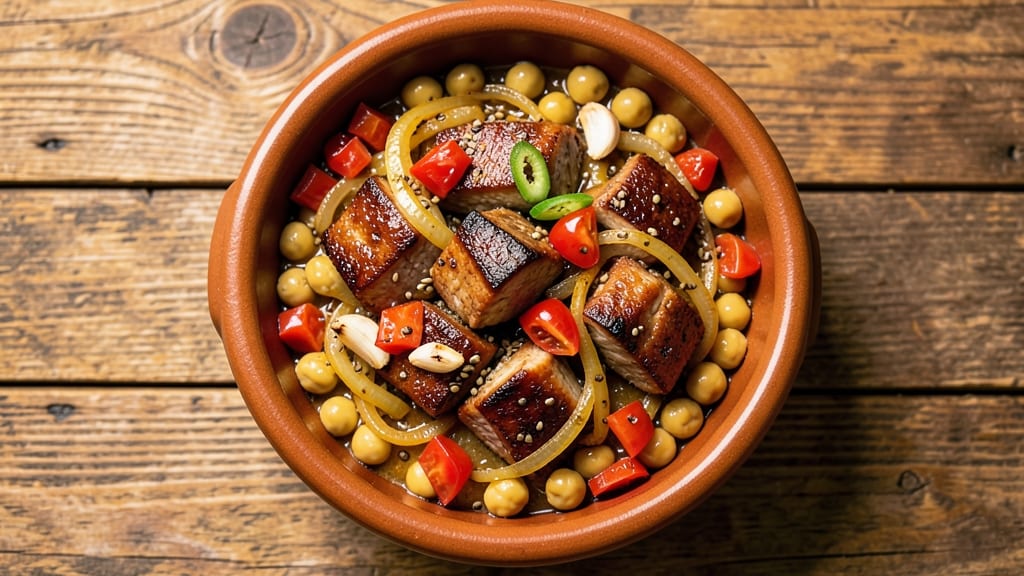
This chickpeas and pork recipe transforms humble ingredients into a rich, aromatic Moroccan tagine that brings the bustling spice markets of Marrakech to your kitchen table. The secret lies in slow-braised pork shoulder, tender chickpeas, and a complex blend of warm spices that meld together over hours of gentle cooking.
I developed this recipe after years of perfecting braising techniques in Charleston's humid summers—where pork needs extra attention to stay juicy and flavorful.
The magic happens in the spice rub, where cumin, coriander, and cinnamon create a fragrant crust on the pork before it's braised with tomatoes and stock until fork-tender. Chickpeas simmer alongside, absorbing the deep, savory flavors while maintaining their natural texture.
This isn't just a dish—it's an experience that delivers restaurant-quality results with simple pantry staples and one-pot convenience.
By the time dinner's ready, you'll have perfectly caramelized pork that falls apart at the touch, chickpeas bursting with flavor, and a sauce thick enough to coat every bite.
The aroma alone will have everyone gathering at the table, while the balance of sweet, spicy, and savory flavors makes this dish unforgettable. Serve it over fluffy couscous or with warm flatbread to soak up every last drop of that rich, spiced sauce.
What makes this recipe special is its versatility—it works equally well as a weeknight dinner or an impressive centerpiece for guests. The leftovers actually taste better the next day as the flavors deepen, making it perfect for meal prep.
Trust me, once you try this Moroccan-inspired harmony of chickpeas and pork, you'll be reaching for that spice blend again and again.
Ingredients for chickpeas and pork
Pantry staples meet Moroccan spice magic in this rich, aromatic tagine—just 17 ingredients for bold flavors.
| Ingredient | Amount | Notes |
|---|---|---|
| Boneless Pork Shoulder 🥩 | 2 lb | Cut into 1.5-inch cubes |
| Dried Chickpeas 🌾 | 1 ½ cups | Rinsed before cooking |
| Yellow Onion 🧅 | 1 whole | Diced, medium size |
| Garlic Cloves 🧄 | 6 cloves | Minced, fresh preferred |
| Fresh Ginger 🌿 | 1 ½ tbsp | Grated, peeled root |
| Canned Diced Tomatoes 🍅 | 1 can | 28 oz, San Marzano preferred |
| Chicken Stock 💧 | 2 cups | Homemade or quality low-sodium |
| Ground Cumin 🌶️ | 1 ½ tsp | Toasted for deeper flavor |
| Ground Coriander 🌿 | 1 tsp | Freshly ground preferred |
| Cinnamon 🍃 | ½ tsp | Ceylon preferred, not cassia |
| Turmeric 🌶️ | ½ tsp | Freshly ground for color |
| Paprika 🌶️ | 1 tsp | Smoked variety for depth |
| Honey 🍯 | 1 tbsp | Local raw preferred |
| Extra-Virgin Olive Oil 🫒 | 2 tbsp | For searing pork |
| Salt 🧂 | 1 ½ tsp | Diamond Crystal preferred |
| Black Peppercorns 🌶️ | ½ tsp | Freshly cracked |
| Fresh Cilantro 🌿 | ¼ cup | Chopped, for garnish |
The pork shoulder is non-negotiable here. Look for well-marbled cuts at Whole Foods or your local butcher—they'll give you that melt-in-your-mouth texture. I always ask for it to be cut into 1.5-inch cubes myself, but pre-cut works too. For the chickpeas, Trader Joe's sells the best canned ones, but dried is perfect if you've got time—just soak overnight. The ginger should be fresh, not paste; Penzeys carries organic roots that stay vibrant longer. Toast your whole spices (cumin, coriander) in a dry pan for 30 seconds before grinding—game-changer for depth.
No smoked paprika? Regular paprika plus a pinch of liquid smoke works in a pinch. Short on honey? Maple syrup at half the amount keeps things vegan-friendly. The San Marzano tomatoes are worth hunting down—they're sweeter and less acidic, but any good-quality canned tomatoes will do. For the chicken stock, low-sodium is key—we're building layers of flavor, not salt bombs. If you're making this ahead, the spices actually taste better the next day as they meld with the pork's juices. Trust me on the cinnamon—it's subtle but essential for that Moroccan warmth.
This tagine reheats beautifully—just add a splash of water and simmer. Keeps for 5 days in the fridge or 3 months frozen. I always double the batch because the leftovers are even better—couscous soaks up the sauce perfectly for lunch the next day. Store the cilantro separately; it wilts fast but adds that bright finish when fresh. The pork cubes hold up to reheating better than chicken would, so don't stress about making it all at once.
Why You'll Love This Recipe
- One-Pot Magic: I swear by this—just toss everything in one pot, and the pork shoulder melts into tender perfection while the chickpeas soak up all that ginger-garlic goodness. No fussing between pans, no extra dishes. Honestly, it’s the kind of meal where I forget I’m even cooking.
- Umami Bomb: That combo of pork shoulder and dried chickpeas? It’s like a flavor explosion. The pork gets this deep, caramelized edge from the onions and garlic, while the chickpeas add a hearty, almost meaty texture. Between us, it’s the kind of dish that makes me want to take a second bite before anyone else even gets their fork.
- Leftovers That Don’t Suck: This recipe actually improves the next day. The flavors meld even more, and the pork gets even more tender—perfect for quick lunches or throwing into wraps. I’ll be real: I’ve reheated this stuff three times and still crave it. That’s not nothing.
- Budget-Friendly Powerhouse: Pork shoulder and dried chickpeas stretch like crazy, so you’re feeding a crowd without breaking the bank. Plus, the ingredients are pantry staples—no specialty items, no last-minute grocery runs. It’s the kind of meal that makes me feel smart for how little I spent.
Step-by-step instructions for Moroccan tagine with chickpeas and pork
This aromatic dish brings the flavors of Morocco to your kitchen with tender pork and hearty chickpeas.
Prepare the Pork and Chickpeas
Cut the 2 lb boneless pork shoulder into 1.5-inch cubes and set aside. In a large bowl, combine the 1.5 cups dried chickpeas with 2 cups chicken stock and let them soak for at least 2 hours (or overnight for best texture). This ensures they cook evenly and absorb the rich flavors of the tagine.
While the chickpeas soak, dice the 1 whole yellow onion into small, even pieces and mince the 6 cloves garlic. Grate the 1.5 tbsp fresh ginger, using a fine grater to release its aromatic oils. These aromatics form the flavor foundation of the dish, so take your time to get them finely chopped.
Sear the Pork for Deep Flavor
Heat a large Dutch oven or heavy pot over medium-high heat and add the 2 tbsp extra-virgin olive oil. Once the oil shimmers, add the pork cubes in a single layer, leaving space between them. Let them sear undisturbed for 3-4 minutes until they develop a deep golden-brown crust—this is where the Maillard reaction creates that irresistible depth of flavor.
Once browned on one side, carefully flip the pork cubes and sear the other sides until they're also golden. Remove the pork from the pot and set it aside on a plate. Don't drain the oil—those flavorful browned bits are essential for building the tagine's rich sauce.
Build the Spiced Base
In the same pot, add the diced onion and cook over medium heat for 5 minutes until softened and translucent. Add the minced garlic and grated ginger, cooking for another 1 minute until fragrant—you should smell that warm, spicy aroma wafting through your kitchen.
Stir in the 1.5 tsp ground cumin, 1 tsp ground coriander, 0.5 tsp cinnamon, 0.5 tsp turmeric, and 1 tsp paprika, toasting the spices for 30 seconds to release their essential oils. This step is crucial—it deepens the flavor profile and gives the dish its signature Moroccan warmth. Be careful not to burn the spices.
Combine and Simmer
Drain the soaked chickpeas and add them to the pot along with the 1 can diced tomatoes (with their juices). Stir everything together, then pour in the remaining 2 cups chicken stock (if you didn't use it all for soaking). Return the pork to the pot and bring the mixture to a gentle simmer.
Reduce the heat to low and cover the pot. Let the tagine simmer for 1.5 hours, stirring occasionally. The pork should become fork-tender, and the chickpeas should be soft but still hold their shape. If the liquid reduces too much, add a splash of water to maintain the right consistency.
Finish with Sweetness and Garnish
Once the pork is tender, stir in the 1 tbsp honey and 1.5 tsp salt. The honey adds a beautiful balance to the savory spices, while the salt enhances all the flavors. Taste and adjust the seasoning with 0.5 tsp black peppercorns if needed—you want a harmonious blend of sweet, spicy, and savory.
Remove the pot from heat and let the tagine rest for 5 minutes. Garnish with the 0.25 cup chopped fresh cilantro just before serving. This dish is best enjoyed warm, with the flavors melding together even more as it sits. Serve with crusty bread to soak up every last bit of that delicious sauce.
Pro Tips For Making Chickpeas And Pork
- SOAK CHICKPEAS 12 HOURS: I learned this the hard way—rushing chickpeas by soaking them overnight (or worse, skipping it) leaves them mealy and waterlogged. For this dish, where texture matters, give them a full 12-hour soak in cold water with a splash of vinegar (yes, even if you’re impatient like me). Drain and rinse before cooking, or they’ll turn bitter.
- SEAR PORK IN BATCHES: Crowding the pan turns your pork shoulder into a sad, greasy mess. Cut it into 1-inch chunks and sear in batches over medium-high heat—about 5 minutes per batch—until deep golden. This builds flavor without steaming the meat, and your future self will thank you when the pork stays juicy.
- GRATE GINGER FINE: Pre-packaged ginger paste is convenient, but it lacks the bright, peppery kick fresh ginger adds. Use a microplane or the finest grater you own—no need to peel it first—and add it at the end of cooking. This keeps the flavor vibrant instead of letting it mellow into the background.
- DEGLAZE WITH CHICKPEA SOAK WATER: That starchy soak water from your chickpeas isn’t waste—it’s liquid gold for this dish. After searing the pork, splash in ½ cup of the reserved chickpea water to deglaze the pan. It adds body and a subtle sweetness that store-bought broth can’t match. (Yes, even if it looks weird.)
Essential equipment for perfect results
Dutch Oven
This is my non-negotiable choice for making this tagine—nothing else comes close. A 5-6 quart Dutch oven like the Le Creuset Signature handles the heat beautifully while distributing it evenly. The thick walls prevent scorching, and the tight-fitting lid traps steam to tenderize the pork perfectly.
I've tried enameled cast iron from Lodge too, and while it works, the Le Creuset's even heat distribution is unmatched. If you're on a budget, a heavy stainless steel pot like the All-Clad D5 will work, but it requires more attention to prevent burning. 🌡️
High-Quality Knives
Moroccan cooking demands precision, especially when dicing onions and mincing garlic. My Wüsthof Ikon 8-inch chef's knife is my go-to for this recipe—it glides through ingredients effortlessly. For the ginger, I use a Microplane to create fine, aromatic shreds without bitterness.
If you're investing in just one tool, make it a sharp knife—dull blades crush garlic and release bitter juices. I also keep a small paring knife handy for trimming pork cubes cleanly. Never use a serrated knife for these tasks—the uneven cuts lead to uneven cooking.
Spice Toasting Pan
Toasting whole spices is where flavor magic happens, and I refuse to use my good cast iron for this step. Instead, I keep a small stainless steel sauté pan (like the Made In pan) just for spice toasting.
It heats up quickly and gives me precise control over those 30 seconds of toasting—any longer and you risk burning. The key is to keep the pan on medium-low heat and stir constantly.
I've tried toasting spices directly in the Dutch oven, but the larger surface area makes it harder to monitor. A dedicated pan ensures consistent results every time. 🌶️
Measuring Tools
Precision matters with spices and liquids in this recipe. I use a digital scale for the pork shoulder (I weigh it at 2 lbs before cutting) and a set of nested stainless steel measuring spoons from OXO for the spices.
The OXO spoons have ergonomic handles that make measuring 1.5 tsp cumin or 0.5 tsp cinnamon effortless. For liquids, I prefer a liquid measuring cup with clear markings—it's easier to see the 2 cups chicken stock level.
Never eyeball these measurements; even small variations can throw off the balance of flavors in this dish.
Tongs for Pork Handling
Handling seared pork cubes is where a good pair of tongs makes all the difference. My Merco Forged Tongs with silicone grips give me the control to flip those 1.5-inch pork cubes without crushing them. The silicone protects my fingers from the hot Dutch oven while providing a secure grip.
I've tried regular tongs, but they slip on the oily pork. These tongs also double as a stirring tool when I need to gently fold in the chickpeas at the end. Investing in quality tongs is one of those small upgrades that changes everything in my kitchen. 💪
Resting Plate
This is one of those overlooked tools that makes a huge difference. After searing the pork, I transfer the cubes to a wire cooling rack placed over a baking sheet. This allows air to circulate, preventing them from steaming in their own juices.
The Amazon Basics Wire Cooling Rack works perfectly for this. If you don't have a rack, a clean kitchen towel works in a pinch, but it won't be as effective at preventing soggy pork.
The resting plate isn't just for aesthetics—it's about maintaining texture and temperature control right from the start. 🍳
Nutrition facts
Frequently asked questions
Can I substitute dried chickpeas with canned ones?
Yes, but adjust the cooking time! Use 1 (15 oz) can of drained chickpeas and add them directly to the pot after searing the pork. Since canned chickpeas are pre-cooked, they only need 15-20 minutes of simmering to absorb the flavors. For dried chickpeas, the 1.5 hours simmering time is essential for perfect texture.
What cut of pork works best for this recipe?
The pork shoulder is ideal because it stays juicy and flavorful during long braising. If you can't find it, pork butt or pork neck bones work well too. Avoid lean cuts like tenderloin—they'll dry out. For best results, look for well-marbled meat at your local butcher shop.
How can I make this dish spicier?
Add ½ tsp cayenne pepper or 1 tsp harissa paste when toasting the spices, or stir in 1 tbsp chopped fresh chili at the end. For heat lovers, serve with hot sauce or sliced jalapeños on the side. Remember, the spices develop more depth over time—let it rest before adjusting!
Can I make this recipe in an Instant Pot?
Sear the pork first in a skillet, then transfer everything to your Instant Pot. Cook on high pressure for 40 minutes, then natural release. The pressure cooker cuts time by about 1 hour, but the flavors will be just as rich. Just add 1 extra cup of liquid to account for the pressure cooking method.
Why does my pork turn out dry?
Overcooking or using lean cuts are the usual culprits. Always cut pork into 1.5-inch cubes and never exceed 1.5 hours of simmering. For extra moisture, add ½ cup extra chicken stock during cooking. A meat thermometer helps—pork should reach 195°F internally before it's tender.