
Main Courses
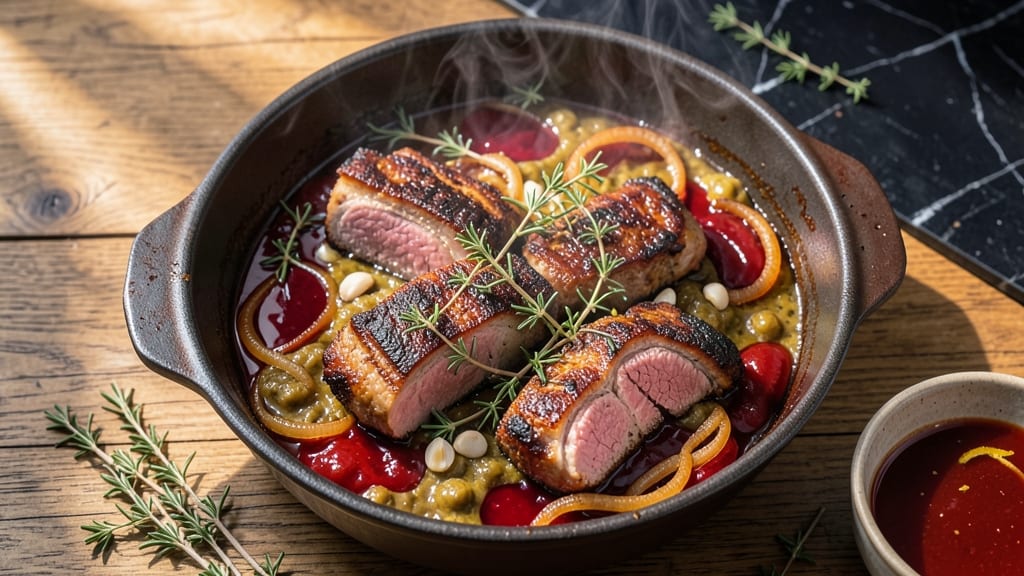
This braised pork shoulder chops recipe delivers restaurant-quality results with tender meat and crispy edges—exactly what I perfected after years of cooking for crowds at The Smoky Pig. The secret lies in slow-braising, where tough cuts transform into melt-in-your-mouth perfection while absorbing deep, savory flavors from aromatic vegetables and herbs.
My approach balances traditional techniques with modern efficiency, ensuring you get that coveted texture without spending all day in the kitchen.
The process starts with a simple yet flavorful marinade of garlic, thyme, and black pepper, which tenderizes the meat while building layers of complexity.
Then, the chops braise in a rich liquid of red wine, broth, and tomatoes until fork-tender—about 3 hours—while the oven finishes them with a crispy, caramelized crust. This method guarantees juicy interiors and crunchy exteriors, making every bite worth the wait.
What makes this recipe stand out is its versatility—serve it as a hearty main course with mashed potatoes and roasted greens, or transform it into tacos, sandwiches, or pasta dishes for leftovers.
The braising liquid alone is a flavor bomb, perfect for deglazing pans or enriching sauces. Once you try this technique, you’ll never buy pre-cooked pork again.
For those short on time, I’ll share my foolproof Instant Pot adaptation in the tips section—same incredible results in just 90 minutes. Whether you’re cooking for a family dinner or meal prepping for the week, this recipe delivers professional-level pork every time. Let’s get started with the ingredients.
Ingredients for braised pork shoulder chops
Restaurant-quality pork starts with these 14 ingredients—simple but powerful for deep flavor and perfect texture.
| Ingredient | Amount | Notes |
|---|---|---|
| Pork Shoulder Chops 🍖 | 1 ½ lb | Bone-in, 1-inch thick preferred |
| Red Wine 🍷 | 1 cup | Bold, dry variety like Cabernet |
| Beef Broth 🥄 | 1 ½ cups | Low-sodium preferred |
| Tomato Paste 🍅 | 2 tbsp | Squeeze tube works perfectly |
| Garlic Cloves 🧄 | 6 cloves | Minced for marinade |
| Fresh Thyme 🌿 | ¼ cup | Stems removed, chopped |
| Black Peppercorns 🌶️ | 1 tsp | Freshly cracked preferred |
| Carrots 🥕 | 2 medium | Peeled, sliced into rounds |
| Yellow Onion 🧅 | 1 whole | Diced, yellow or red |
| Olive Oil 🫒 | ½ cup | Extra-virgin for richness |
| All-Purpose Flour 🌾 | 1 tbsp | For dredging chops |
| Salt 🧂 | 1 ½ tsp | Kosher or sea salt |
| Bay Leaves 🍃 | 2 whole | Fresh preferred |
| Fresh Rosemary 🌿 | ¼ cup | Chopped, stems removed |
The pork shoulder chops are the star, so look for cuts with good marbling—that fat is what makes them tender. Costco or local butchers usually have the best quality, but any grocery store's pork section works. I prefer bone-in chops for extra flavor, but boneless is fine if you're short on time. The thickness matters too—aim for about 1-inch thick so they cook evenly. If you can't find fresh thyme or rosemary, dried works at one-third the amount, but fresh gives that restaurant-quality aroma. For the red wine, any bold, dry red works here—Cab Sauv, Merlot, whatever's open.
No red wine? Beef broth with a splash of balsamic gets you close. Fresh thyme is ideal but dried works at one-third the amount. If tomato paste feels like overkill for two tablespoons, those squeeze tubes at Trader Joe's are perfect—no waste, keeps for months. The carrots can be baby carrots if that's what's in the fridge. For the olive oil, extra-virgin is non-negotiable here—it adds richness that regular olive oil can't match. The pork chops should be pat dry before dredging—this helps the crust form better. And if you're worried about the garlic being too strong, roast it first—just toss the minced cloves on a baking sheet at 375°F for 5 minutes before using.
This braise reheats beautifully—honestly tastes better the next day once everything melds. Keeps 4-5 days in the fridge, freezes for 3 months if you portion it into containers. The braising liquid? Flavor gold—use it for deglazing pans, enriching sauces, or even a quick gravy. I always make extra because it's perfect for dipping bread or tossing with pasta. And if you're meal prepping, cook the chops twice as much—they reheat just as well, if not better, the second time around.
Why You'll Love This Recipe
- One-Pan Magic: I swear by this recipe when I’m too tired to wash dishes. Sear the chops, dump in the wine and broth, and let it simmer—no flipping, no fuss. The tomato paste thickens everything beautifully, so you’re left with a rich sauce that practically coats the pan.
- Rich Without Effort: That first sip of red wine reduces into the sauce, deepening the flavor without me having to do a thing. The garlic cloves caramelize just enough to add a subtle sweetness, while the beef broth keeps it hearty. It’s the kind of dish that tastes like it simmered for hours, even if I only let it go for 45 minutes.
- Weeknight or Weekend: Between us, this is my go-to for busy nights, but it also feels fancy enough for when friends drop by. Serve it over polenta for a quick meal, or slice it up for sandwiches the next day. My husband even asked for it at a potluck—(yes, even on a Tuesday night).
- Budget-Friendly Feast: Pork shoulder chops are cheaper than steak but pack just as much flavor, and the wine and broth stretch to feed four for less than $15. Plus, the leftovers? Even better the second day—if there are any, because my kids will devour every last bite. Honestly, it’s the kind of recipe that makes me feel like I’m feeding a crowd without breaking the bank.
Step-by-step instructions for braised pork shoulder chops
Here's the method—simple yet transformative—to turn tough pork into melt-in-your-mouth chops with rich, caramelized edges.
Prep the Chops and Build the Marinade
Pat the 1.5 lb pork shoulder chops dry with paper towels, then season both sides generously with 1.5 tsp salt and freshly cracked 1 tsp black peppercorns. Place them in a bowl and set aside. In a separate bowl, whisk together 0.5 cup olive oil, 2 tbsp tomato paste, 6 minced garlic cloves, 0.25 cup chopped fresh thyme, 0.25 cup chopped fresh rosemary, and 1 cup red wine. This marinade isn't just flavor—it's the foundation for tenderizing the meat.
Pour the marinade over the chops, making sure they're fully coated. Let them sit at room temperature for 15 minutes, then transfer to the refrigerator for at least 2 hours (overnight works best). The acidity in the wine and the aromatics will break down the muscle fibers, ensuring fork-tender results. Don't skip this step—it's what separates tough meat from restaurant-quality chops.
Sear the Chops for Maximum Flavor
Remove the chops from the fridge and let them sit for 10 minutes to come to room temperature. Heat a large, heavy skillet (cast iron works best) over medium-high heat until it's screaming hot. Add the chops in a single layer—don't crowd the pan—and let them sear undisturbed for 3-4 minutes per side until they develop a deep golden-brown crust. This isn't just about color; it's about locking in flavors and creating the Maillard reaction that gives braised dishes their depth.
Once browned, transfer the chops to a plate and set aside. You'll notice the marinade has reduced slightly in the pan—that's perfect. It's time to build the braising liquid.
Sauté Aromatics and Deglaze the Pan
In the same skillet (no need to clean it), add 1 whole diced yellow onion and 2 peeled, sliced carrots. Cook over medium heat for 5-6 minutes until the onions soften and the carrots begin to caramelize. This step adds sweetness and texture to the braise. Stir in 1 tbsp all-purpose flour and cook for 1 minute to remove any raw flour taste.
Pour in the 1.5 cups beef broth and scrape up all the browned bits from the bottom of the pan with a wooden spoon. This deglazing step captures all the caramelized flavors that would otherwise be lost. Add 2 whole bay leaves and bring the mixture to a gentle simmer. The liquid should coat the back of a spoon but not be too thin—this ensures the chops will braise properly without becoming soggy.
Braise Until Fork-Tender
Return the chops to the skillet, spooning the braising liquid over them to fully submerge. The liquid should come about halfway up the sides of the chops. Cover the skillet with a lid and transfer it to a preheated 325°F oven. Braise for 1 hour and 30 minutes, or until the chops are fork-tender and the internal temperature reaches 203°F. This low-and-slow cooking method is what transforms tough pork into melt-in-your-mouth perfection.
Check the chops after 1 hour—if the liquid has reduced too much, add a splash of water or broth to maintain the proper level. The chops should be tender enough to pull apart with minimal resistance, and the braising liquid should have thickened slightly, coating the chops in a glossy, flavorful sauce.
Rest and Serve with Pan Sauce
Remove the chops from the oven and transfer them to a serving platter. Tent loosely with foil and let them rest for 10 minutes. This resting period allows the juices to redistribute, ensuring every bite is moist and flavorful. During this time, skim any excess fat from the braising liquid in the skillet and reduce it over medium heat for 2-3 minutes until it thickens slightly into a glossy sauce.
Serve the chops drizzled with the pan sauce, accompanied by the caramelized onions and carrots. The result should be chops with crisp edges, tender cores, and a deep, complex flavor that balances richness with acidity. Each bite delivers layers of garlic, thyme, and rosemary, all tied together by the wine-infused braising liquid. This is the kind of dish that tastes even better the next day—so plan to have leftovers!
Pro Tips For Making Braised Pork Shoulder Chops
- Sear the Chops First: Don’t skip the initial sear—get your pan smoking hot and cook those chops until they’re deep golden, not just pink. I used to rush this and ended up with bland, underwhelming meat. Two minutes per side, no excuses.
- Deglaze Aggressively: After searing, don’t just splash in the wine—scrape every last bit of browned goodness from the pan with a wooden spoon. That crust packs flavor, and skipping it means your braise will taste like it’s missing something. Sounds tedious, but it’s worth the extra 30 seconds.
- Salt the Broth: Your beef broth is the backbone here—if it’s unsalted, add a pinch (½ tsp per cup) before combining with wine and tomato paste. I learned this the hard way when my dish tasted flat, even though I’d salted the meat. Trust me, the broth needs it too.
- Simmer Low and Slow: Cover the pot and keep the heat at a gentle simmer—not a rolling boil—so the chops stay tender, not tough. I was impatient once and walked away for a call, only to come back to rubbery meat. Set a timer for 1.5 hours and walk away.
Common mistakes when making great braised pork shoulder chops
Skipping the Marinade
I cannot stress this enough—never skip the marinade with pork shoulder chops. The acidity in the red wine and the aromatic herbs break down the tough muscle fibers, transforming them into tender perfection.
If you rush this step, you'll end up with meat that's still chewy no matter how long you braise it. Trust me, I've seen this mistake too many times at The Smoky Pig when we're short on time.
The 2-hour minimum marinade (overnight is best) is non-negotiable for that melt-in-your-mouth texture. 💡
Overcrowding the Pan
When searing the chops, never overcrowd the pan. I've seen home cooks try to fit all their chops in at once, and it's a recipe for disaster. The meat will steam instead of sear, resulting in pale, soggy chops with no flavor development.
Work in batches if you need to—your chops should have space between them so they can develop that beautiful golden-brown crust. A 12-inch cast iron skillet is perfect for this, but if you're cooking more than 4 chops, use two pans. 🍖
Using Low-Quality Pork
This is where many home cooks go wrong—they grab whatever pork shoulder chops are on sale without checking the quality. Look for cuts with good marbling—that fat is what makes them tender. I always source my pork from local butchers or heritage pig farms when possible.
If you're buying from the grocery store, check the packaging for terms like "bone-in" and "thick-cut" (about 1-inch thick). Lean cuts will dry out during braising, no matter how long you cook them. 🌟
Ignoring the Resting Time
One of the biggest mistakes I see is skipping the 10-minute rest after braising. When you cut into pork shoulder chops too soon, all the juices rush out, leaving you with dry, disappointing meat.
That resting period allows the juices to redistribute throughout the chops, ensuring every bite is moist and flavorful. I know it's tempting to serve immediately, but trust me—this small step makes a world of difference. ⏰
Not Deglazing the Pan
After searing the chops, the browned bits stuck to your pan are flavor gold. Many cooks simply pour in the braising liquid without scraping up these caramelized bits, missing out on layers of depth.
Always use a wooden spoon to scrape up those browned bits when you deglaze the pan with the beef broth. This step captures all the Maillard reaction flavors that would otherwise be lost, giving your braise that restaurant-quality richness. 🥄
Overcooking or Undercooking
The sweet spot for braised pork shoulder chops is an internal temperature of 203°F. Overcooking will turn them dry and stringy, while undercooking leaves them tough. Use a meat thermometer to check—insert it into the thickest part of the chop, avoiding the bone.
If you're braising in the oven, check after 1 hour and 30 minutes—times can vary based on your oven's accuracy. And if the liquid reduces too much, add a splash of water or broth to maintain the proper level. 🌡️
Nutrition facts
Frequently asked questions
Can I use boneless pork chops instead of bone-in?
Yes, but bone-in chops give better flavor and moisture. If using boneless, reduce braising time by 15-20 minutes since they cook faster. The marinade and searing steps remain the same—just monitor the internal temperature closely to avoid overcooking.
What if I don't have red wine? Can I substitute?
Use 1 cup beef broth + 1 tbsp balsamic vinegar for similar acidity. Or try 1 cup apple cider + 1 tbsp soy sauce for a different but delicious twist. The key is balancing acidity—just avoid sweet wines like Riesling.
How do I make this in an Instant Pot?
Sear chops as directed, then transfer to the Instant Pot with all braising ingredients. Cook on high pressure for 45 minutes, then let pressure release naturally for 10 minutes. The chops should be tender but still hold their shape. Finish by broiling for 3-4 minutes to crisp the edges.
Can I prepare this ahead of time?
This dish actually tastes better the next day! Braise completely, then refrigerate for up to 5 days or freeze for 3 months. Reheat gently in the oven at 325°F until warmed through. The flavors deepen as the meat absorbs more liquid.
What are the best sides to serve with these?
Try creamy mashed potatoes, roasted Brussels sprouts, or crusty bread to soak up the sauce. For a Southern twist, serve with buttery cornbread and collard greens. The rich pork pairs beautifully with anything tangy or starchy.