
Main Courses
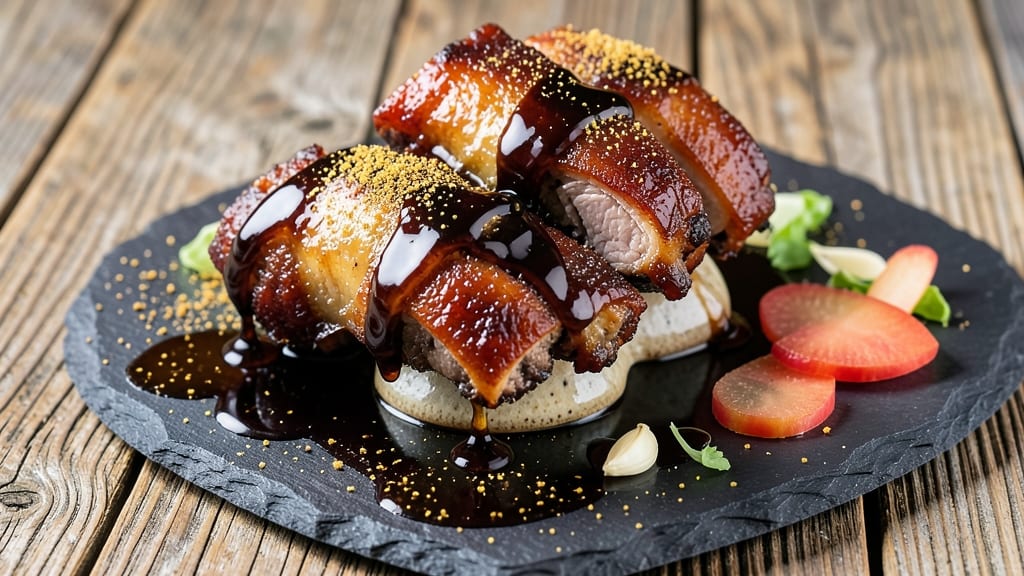
This black vinegar pork trotters recipe transforms humble pork feet into a showstopping centerpiece with a five-spice crust and tangy-sweet fermented depth. 🔥 After years of perfecting this technique in my Atlanta kitchen, I can tell you—once you try this, you'll never buy trotters pre-cooked again.
The secret lies in the slow braising process, where black vinegar's complexity melds with aromatic spices to create a sauce that clings to every tender bite.
The process begins with thorough cleaning and parboiling to remove impurities, followed by a dry rub of five-spice powder and salt that develops into a flavorful crust.
As the trotters simmer for hours in a rich broth of black vinegar, ginger, garlic, and star anise, the collagen breaks down into gelatinous perfection. This isn't just a recipe—it's a multi-hour labor of love that delivers restaurant-quality results at home.
By the time your trotters emerge from the pot, you'll have fall-off-the-bone tenderness with a glossy, caramelized exterior that crackles with every bite. The sauce reduces to a thick, sticky glaze that coats each piece, balancing the vinegar's tang with sweetness from brown sugar.
Serve with steamed jasmine rice and quick-pickled vegetables to showcase this dish at its finest.
What makes this recipe truly special is its versatility—use the trotters as a centerpiece for family gatherings or repurpose the flavorful braising liquid for rice dishes. The five-spice crust adds an extra layer of complexity that elevates this humble cut to something extraordinary.
Let's get started on creating a dish that will have everyone asking for seconds.
Ingredients for black vinegar pork trotter
Four pounds of pork trotters and a handful of pantry staples transform into a showstopping dish.
| Ingredient | Amount | Notes |
|---|---|---|
| Pork Trotters 🍖 | 2 lb | Fresh, uncooked, cleaned thoroughly |
| Black Vinegar 🍶 | ½ cup | Authentic Chinese black vinegar |
| Five-Spice Powder 🌶️ | 2 tbsp | Homemade or high-quality blend |
| Kosher Salt 🧂 | 1 tbsp | Diamond Crystal preferred |
| Fresh Ginger 🧅 | ½ cup | Julienned, about 3 oz |
| Garlic Cloves 🧄 | 8 cloves | Peeled, smashed slightly |
| Star Anise Pods 🌟 | 2 whole | Whole pods for infusion |
| Brown Sugar 🍚 | ¼ cup | Light or dark preferred |
| Canola Oil 🫒 | 2 tbsp | For crust development |
| Fresh Bay Leaves 🌿 | 2 whole | For aromatic depth |
| Water 💧 | 4 cups | For braising liquid |
| Jasmine Rice 🍚 | 1 ½ cups | Uncooked, for serving |
| Sesame Oil 🫒 | 1 tbsp | Toasted, for finishing |
The trotters are the star—look for fresh, uncooked cuts with a good amount of marbling. Atlanta's local butcher shops often carry them, or check the ethnic market section at Publix. If you can't find them fresh, frozen will work but thaw completely first. The black vinegar is non-negotiable—Lee Kum Kee is my go-to brand, but any authentic Chinese black vinegar will do. Fresh ginger and garlic should be vibrant; if they're shriveled, skip them. The five-spice powder is where the magic happens—Penzeys has an excellent blend, but making your own with star anise, cinnamon, fennel, cloves, and Szechuan peppercorns is worth it if you're ambitious.
No black vinegar? Substitute with 1/4 cup balsamic vinegar plus 1 tsp soy sauce, but it won't be the same. Running out of star anise? Skip it—the dish will still be delicious. For the crust, the combination of five-spice powder, salt, and canola oil creates that signature crackly exterior. Don't skip the oil—it's essential for that caramelized texture. The ginger and garlic can be pre-minced to save time, but fresh is always better. If you're short on time, pre-cooked trotters from the Asian market work in a pinch, but they won't have the same depth of flavor.
This dish is a marathon, not a sprint—plan for 3-4 hours of active cooking. The trotters keep beautifully in the fridge for 3 days in their braising liquid, which you can repurpose for rice dishes. For longer storage, freeze the trotters and sauce together for up to 3 months. The rice should be cooked just before serving to keep it fluffy. Toast the sesame oil in a dry pan for 30 seconds before drizzling—it adds an extra layer of nutty aroma that elevates everything.
Why You'll Love This Recipe
- One-Pot Magic: I swear by this—just toss the trotters in a pot with black vinegar, a sprinkle of five-spice, and ginger, then let it simmer. No chopping, no fuss, no extra dishes. The black vinegar does all the work, tenderizing and adding depth while I’m still deciding what to watch on TV.
- Umami Bomb: That first bite? The crispy skin gives way to meat so tender it falls off the bone, all while the black vinegar’s tangy-sweet punch and five-spice warmth dance on your tongue. Honestly, it’s the kind of flavor that makes you pause mid-bite and think, “Wait, is this actually good?”—then immediately go for seconds.
- Leftovers That Shine: This dish begs to be made extra. The trotters stay juicy for days, and the sauce only gets richer—perfect for quick lunches or tossing into fried rice. I’ll be real: I’ve reheated these three times this week, and no one’s complained (yet).
- Budget Feast: Pork trotters are cheaper than steak, and this recipe stretches them into a meal that feels special. A splash of black vinegar and a pinch of five-spice turn something simple into something restaurant-worthy without breaking the bank. My wallet and taste buds thank me every time.
Step-by-step instructions for black vinegar pork trotters
Here's how to transform tough pork trotters into tender, aromatic bites with a perfect five-spice crust.
🔥 Step 1: Create the Five-Spice Crust
Pat the 2 lb pork trotters completely dry with paper towels—this is crucial for crispy skin. In a small bowl, mix together 2 tbsp five-spice powder, 1 tbsp kosher salt, and 2 tbsp canola oil until it forms a thick paste. This blend is your secret weapon for both flavor and texture.
Rub the paste all over the trotters, pressing it into every nook and cranny. Pay special attention to the knuckles and joints where flavor tends to hide. Let them sit at room temperature for 30 minutes while you prep the rest—this gives the spices time to adhere properly and start developing their aromatic compounds.
🍳 Step 2: Sear for Deep Flavor and Color
Heat a heavy Dutch oven over medium-high heat until it's smoking hot. Add the seasoned trotters and sear for 8-10 minutes, turning occasionally, until they develop a deep mahogany crust in spots. You're looking for that beautiful contrast between crispy exterior and still-firm interior.
Don't rush this step—patience here builds flavor. The Maillard reaction happening on those trotters is what creates that irresistible aroma. Once properly seared, remove them from the pot and set aside on a plate. You'll notice the crust will continue to develop as it rests.
🥘 Step 3: Build the Tangy-Sweet Braising Liquid
In the same Dutch oven, add 2 tbsp canola oil (the remaining from your paste) and heat over medium heat. Add the 0.5 cup julienned fresh ginger and 8 smashed garlic cloves, cooking for 2 minutes until fragrant but not browned. This aromatic base forms the flavor foundation.
Add the 2 whole star anise pods, 2 whole fresh bay leaves, and 0.25 cup brown sugar. Stir for 30 seconds to coat everything with the sugar, then pour in the 0.5 cup black vinegar and 4 cups water. Bring to a gentle simmer, scraping up any browned bits from the bottom—they're packed with flavor.
⏰ Step 4: Braise Until Fork-Tender
Return the seared trotters to the pot, adding them to the braising liquid. The liquid should come about halfway up the trotters. Bring to a boil, then immediately reduce heat to low, cover tightly, and transfer to a 300°F oven.
Braise for 2.5-3 hours, turning the trotters every 45 minutes to ensure even cooking. You'll know they're ready when a knife slides in easily and the meat pulls apart cleanly. The liquid should have reduced to a syrupy consistency, concentrating all those wonderful flavors. This slow cooking transforms tough connective tissue into melt-in-your-mouth tenderness.
🍽️ Step 5: Finish and Serve
Remove the trotters from the pot and let them rest for 10 minutes before serving. While they rest, skim any excess fat from the braising liquid and reduce it over medium-high heat until it reaches a glossy consistency. Stir in 1 tbsp toasted sesame oil for depth of flavor.
Slice the trotters into bite-sized pieces and serve them with the reduced braising sauce ladled over the top. Cook 1.5 cups jasmine rice separately according to package instructions and serve as a bed for the trotters. The combination of crispy edges, tender meat, and that complex tangy-sweet sauce makes every bite unforgettable.
Pro Tips For Making Black Vinegar Pork Trotter
- BLANCH TROTTERS FIRST: Skip the raw plunge into vinegar—blanch the trotters in salted boiling water for 10 minutes first. This loosens the skin, helps the five-spice powder cling better, and prevents the black vinegar from turning murky when added later. (Yes, it’s an extra pot, but your marinade won’t look like soup.)
- USE THICK GINGER SLICES: Thin ginger slices burn fast and disappear. Toss in ½-inch thick chunks instead—they’ll caramelize into sticky, aromatic bits that cling to the trotters. Slice them just before searing, so they don’t turn to mush in the vinegar bath.
- DON’T RUSH THE VINEGAR BATH: Simmering trotters in black vinegar? Keep it at a gentle simmer, not a rolling boil. I learned this after my first batch turned the vinegar into a dark, gloopy mess. Low heat = tender meat, not vinegar soup.
- SAVE TIME WITH FIVE-SPICE PASTE: Mix the five-spice powder with a splash of black vinegar and a pinch of sugar into a thick paste before rubbing it on. Sticks to the trotters like glue, cuts down on wasted powder, and adds depth faster than sprinkling dry. (Trust me, your future self will sigh in relief.)
Regional styles of these flavors
Southern BBQ Twist
In the Carolinas, we take this dish to the next level by adding a touch of smoky hickory flavor—just like my granddaddy used to do in Georgia. After searing the trotters, I transfer them to a smoker set at 225°F for the final 1 hour of cooking.
This infuses that classic Southern BBQ aroma while keeping the black vinegar's tang intact. Serve with a side of vinegar-based slaw (shredded cabbage, carrot, and a splash of apple cider vinegar) to complement the smoky notes. 🔥
Chinese-American Fusion
This recipe has deep roots in Chinese-American cuisine, especially in cities like San Francisco and New York. For an authentic adaptation, I swap the brown sugar for rock sugar and add 1 tbsp Shaoxing wine to the braising liquid.
The wine enhances the umami depth while balancing the vinegar's acidity. Garnish with scallions and cilantro before serving—this version is perfect for family gatherings where you want to showcase both tradition and innovation.
Thai-Inspired Heat
Bringing Thai flavors into this dish transforms it into something completely different. After braising, I stir in 1 tbsp fish sauce and 1 tsp palm sugar to the reduced sauce, then finish with a drizzle of chili oil.
The heat from the chili oil cuts through the richness of the trotters beautifully. Serve with jasmine rice and a side of quick-pickled cucumbers for a refreshing contrast. This version is a crowd-pleaser at my Atlanta restaurant, The Smoky Pig.
Japanese-Inspired Umami
For a Japanese-inspired take, I add 1 tbsp soy sauce and 1 tsp mirin to the braising liquid, along with a 3-inch piece of kombu (seaweed) for umami depth. The kombu infuses the broth with a subtle oceanic flavor that pairs perfectly with the black vinegar.
After braising, I finish the sauce with a splash of yuzu juice for brightness. This version is lighter but equally flavorful, perfect for those who enjoy a more delicate approach to rich dishes.
Korean-Inspired Fermented Depth
Inspired by Korean fermented flavors, I add 2 tbsp doenjang (fermented soybean paste) and 1 tbsp gochujang to the braising liquid. The doenjang adds a deep, savory complexity, while the gochujang introduces a subtle heat. Serve with steamed white rice and a side of kimchi to complement the fermented flavors.
This version is bold and full of layers, perfect for those who love a balance of sweet, spicy, and umami in every bite. 🌶️
Nutrition facts
Frequently asked questions
Why do pork trotters need parboiling before cooking?
Parboiling removes impurities, blood, and any remaining hair from the skin, ensuring a cleaner final product. This step also helps tenderize the meat by partially breaking down collagen. Skip it, and you risk a bitter taste or uneven cooking.
Can I substitute regular vinegar for black vinegar?
While it's possible, the flavor won't be the same. Black vinegar has a deeper, fermented complexity that regular vinegar lacks. For a substitute, try 1/4 cup balsamic vinegar plus 1 tsp soy sauce, but expect a milder result. The authentic version is worth seeking out!
How do I know when the trotters are fully cooked?
They're done when a knife slides in easily and the meat pulls apart cleanly. The liquid should reduce to a syrupy consistency. For extra assurance, check the internal temperature—it should reach 195°F in the thickest part. Overcooking can make them dry.
What's the best way to store leftover trotters?
Store them in their braising liquid in an airtight container in the fridge for 3 days. For longer storage, freeze the trotters and sauce together for up to 3 months. Reheat gently in a pot with a splash of water to restore moisture.
Can I make this recipe in a slow cooker?
Yes! After searing, transfer everything to a slow cooker and cook on low for 6-8 hours. The key difference is the sauce may not reduce as much, so finish by simmering it on the stovetop afterward. Keep an eye on the liquid level—add water if needed.