
Main Courses
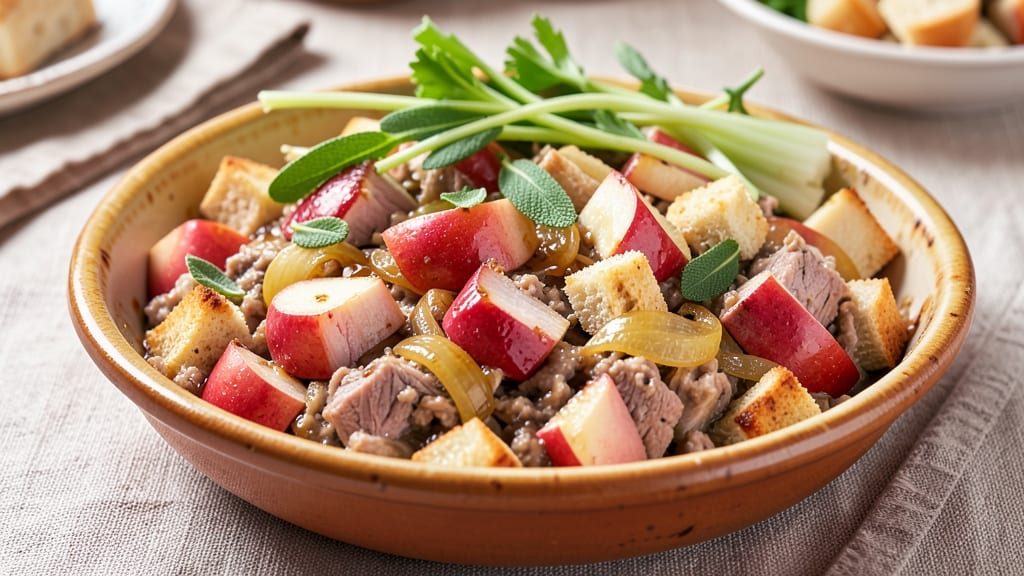
This apple and pork stuffing recipe transforms a holiday staple into a savory-meaty masterpiece that steals the show every time. 🔥 Growing up in Georgia, I learned that pork fat and apples create a harmony of textures—crispy edges, tender meat, and sweet-tart fruit—that elevates stuffing from side dish to centerpiece.
The secret lies in slow-cooking pork until it's fall-apart tender, then mixing it with caramelized apples and crusty bread cubes for a dish that's rich but never heavy.
The method is straightforward but packed with professional techniques: first sear the pork until deeply flavorful, then simmer it in broth until it practically melts. Meanwhile, the apples soften into a jammy consistency that adds natural sweetness without overpowering the savory pork.
Sage and thyme infuse the mixture with classic holiday aromas, while celery crowns add a satisfying crunch that cuts through the richness. It's the kind of stuffing that makes guests ask for seconds—and thirds.
What you'll end up with is a golden-brown stuffing with layers of texture: crispy bread edges, tender pork, and caramelized apple pieces that burst with flavor. The pork adds depth that traditional stuffing lacks, while the apples prevent it from becoming too dense.
This version works beautifully as a Thanksgiving centerpiece or a weeknight dinner when you want something special but not overly complicated. The best part? Leftovers reheat perfectly, making it ideal for meal prep.
For maximum impact, serve this stuffing alongside roasted pork tenderloin or a hearty braised pork shoulder—double the pork goodness. The stuffing also pairs wonderfully with cranberry sauce or a sharp mustard glaze. Once you try this version, you'll never go back to plain bread-and-broth stuffing again. Let's get cooking!
Ingredients for apple and pork stuffing
Six ingredients make this pork stuffing richer than traditional recipes—no dry crumbs here.
| Ingredient | Amount | Notes |
|---|---|---|
| Pork Shoulder 🐖 | 1 ½ lb | Bone-in for maximum flavor |
| Honeycrisp Apples 🍎 | 3 medium | Peeled, cored, diced small |
| Day-Old French Bread 🍞 | 1 loaf | Crusts removed, cubed small |
| Yellow Onion 🧅 | 1 medium | Diced small, about 1 cup |
| Celery Crowns 🧅 | 3 whole | Diced small, about 1 cup |
| Fresh Sage Leaves 🌿 | ½ cup | Chopped finely, stems removed |
| Fresh Thyme Leaves 🌿 | 1 tbsp | Chopped finely, stems removed |
| Chicken Broth 💧 | 2 cups | Low-sodium preferred |
| Unsalted Butter 🧈 | ½ cup | Cold, cubed for browning |
| Diamond Crystal Kosher Salt 🧂 | 1 ½ tsp | For seasoning, adjust to taste |
| Freshly Ground Black Pepper 🌶️ | ½ tsp | Freshly cracked for best flavor |
| Granulated Garlic 🧄 | 1 tsp | For extra depth of flavor |
| Toasted Walnuts 🥜 | ¼ cup | Optional for extra crunch |
Pork shoulder is the secret weapon here—bone-in, skin-on delivers maximum flavor when slow-cooked. Costco or local butchers usually have it pre-cut, but if buying whole, ask for a 1.5 lb piece. The apples should be firm but not rock-hard—Honeycrisp or Fuji are perfect. For the bread, day-old French loaves from the bakery section stay crispy when toasted. If you can't find Honeycrisp, Gala or Braeburn work in a pinch. The celery crowns add that signature crunch—organic celery from the produce section stays fresher longer.
No pork shoulder? Pork tenderloin works but loses some fat for moisture—just add an extra 1/4 cup broth. Subbing apples? Pears or dried cranberries add sweetness, but apples are ideal. For the herbs, dried sage and thyme at half the amount work if fresh isn't available. The chicken broth should be low-sodium or homemade—store-bought brands often have hidden salt. If you're avoiding nuts, skip the walnuts—the celery crowns already provide plenty of texture. For extra richness, swap half the butter for duck fat if you've got it.
This stuffing reheats beautifully—350°F for 20 minutes until piping hot. Store leftovers in an airtight container for 4 days in the fridge or freeze for 3 months. I always make a double batch—one for Thanksgiving, one for sandwiches the next week. The celery crowns soften when reheated, so add fresh diced celery to the top before baking if you want that signature crunch back. For meal prep, portion into 8x8-inch pans and freeze unbaked—just add fresh herbs and bake straight from frozen.
Why You'll Love This Recipe
- No Chopping Chaos: I’ll be real—this stuffing only needs one knife for the apples and onions. The celery crowns? Just pull the leaves apart with your hands. That’s it. No tiny dice, no crying over onions—just clean, satisfying prep.
- Sweet-Savory Magic: The Honeycrisp apples add this burst of juicy sweetness that cuts through the rich pork, while the slow-cooked shoulder stays tender and smoky. Honestly, the first bite makes me pause—I didn’t even taste the celery, and that’s a win.
- Leftovers? More Like Leftovers: Between us, this stuffing begs for seconds. Make a double batch, and you’ve got sandwiches for lunch or a hearty side for days. The pork keeps its texture, and the apples stay fresh—no sad, dry leftovers here.
- Budget-Friendly Feast: Pork shoulder and day-old bread? That’s a steal. No specialty ingredients, no last-minute grocery runs. I’ve fed six people for under $15, and everyone’s still asking for the recipe. Not bad for a dish that feels fancy.
Step-by-Step instructions for apple and pork stuffing
Here's how to transform humble ingredients into a stuffing so rich and textured it steals the show.
🍳 Step 1: Brown the Pork Shoulder for Deep Flavor
Pat the 1.5 lb pork shoulder dry with paper towels and cut into 1-inch cubes. Heat 2 tablespoons olive oil in a large skillet over medium-high heat until shimmering. Add the pork in a single layer and sear undisturbed for 4-5 minutes until deeply browned on all sides.
Here's the thing—this browning creates the Maillard reaction that builds complex flavors. Don't rush it; you want that caramelized crust. Once browned, transfer the pork to a plate and set aside. The rendered fat in the pan will become the flavor base for your stuffing.
👨🍳 Step 2: Sauté the Vegetable Base
In the same skillet (no need to wipe it clean), add 2 tablespoons unsalted butter and let it melt completely. Add the diced yellow onion and diced celery crowns (about 2 cups total when chopped) and cook over medium heat for 6-8 minutes until softened and just beginning to caramelize.
Add the diced honeycrisp apples and cook for another 3-4 minutes until they release their juices. The apples should be tender but still hold their shape—you're not making applesauce here. Stir in the 1 tsp granulated garlic and cook for 30 seconds until fragrant. Remove from heat and set aside.
🥘 Step 3: Prepare the Bread Mixture
Tear the 1 loaf day-old French bread into 1-inch cubes (no need to be precise—rustic is good). In a large mixing bowl, combine the bread cubes with the sautéed vegetable mixture. Add the 0.5 cup fresh sage leaves and 1 tbsp fresh thyme leaves, breaking them up between your fingers to release their aromatic oils.
In a small bowl, whisk together 2 cups chicken broth, 1.5 tsp diamond crystal kosher salt, and 0.5 tsp freshly ground black pepper. Pour this mixture over the bread and vegetable combination. Let it sit for 10 minutes while you finish preparing the remaining ingredients.
🍳 Step 4: Finish with Butter and Walnuts
Return the skillet with the pork to medium heat and add the remaining 0.33 cup unsalted butter (about 6 tablespoons). Melt the butter completely, then add the browned pork back to the skillet. Cook for another 2-3 minutes to reheat gently.
Add the pork mixture to the bread mixture along with the 0.25 cup toasted walnuts. Using your hands, gently fold everything together until the bread is evenly moistened but still holds its structure. The stuffing should be damp but not soggy—if it feels too dry, add 1-2 tablespoons more broth.
🔥 Step 5: Bake to Golden Perfection
Transfer the stuffing to a greased 9x13-inch baking dish and spread it evenly. Bake in a preheated 375°F oven for 35-40 minutes until the top is golden brown and the edges are crispy. For extra browning, broil for 2-3 minutes at the end, watching closely to prevent burning.
Let the stuffing rest for 5 minutes before serving—this allows the juices to redistribute and makes each bite more flavorful. The texture should be crispy on the outside, tender in the middle, with pockets of juicy pork and sweet apple throughout. Serve warm with your favorite holiday meal!
Pro Tips For Making Apple And Pork Stuffing
- COOK THE PORK LOW AND SLOW: I learned this the hard way—rushing the pork shoulder in stuffing turns it rubbery. Aim for an internal temp of 195°F (yes, it’ll look sad and stringy at first), then shred it against the grain while still warm. The fat renders perfectly, and the texture stays tender.
- DICE THE APPLES SMALL: Honeycrisp stays crisp longer than you’d think, but big chunks turn mushy by the end. Cut them into ¼-inch pieces—small enough to melt into the bread but not so fine they disappear. A mandoline makes this faster, but a sharp knife works too.
- DRY THE BREAD THOROUGHLY: Day-old French bread is already dry, but skip the toaster—it bakes unevenly. Instead, tear it into 1-inch cubes, spread them on a baking sheet, and let them sit uncovered for 30 minutes. This prevents a gummy center, no matter how much broth you add.
- SAUTE THE AROMATICS FIRST: Don’t just toss onion and celery into the pan with everything else. Cook them in butter over medium heat until the onion is translucent and celery softens (about 8 minutes). This builds flavor before the pork and apples even hit the pot—trust me, it matters.
Troubleshooting this recipe
Pork Too Dry
If your pork ends up dry after cooking, you likely overcooked it or didn't use enough fat. I've found that trimming excess fat from the pork shoulder before browning helps create a better sear without sacrificing moisture.
For extra juiciness, add 1/4 cup chicken broth to the pan when reheating the pork in Step 4. Also, make sure your pork cubes are 1-inch thick—thinner pieces dry out faster. 💫
Bread Too Soggy
Soggy stuffing usually means too much liquid was added. The bread should absorb the broth but still hold its shape.
If your mixture feels overly wet, spread it in a single layer on a baking sheet and bake at 300°F for 10 minutes to dry it out before transferring to the baking dish. I also recommend using day-old bread—it's drier than fresh bread and holds up better.
For extra insurance, toast your bread cubes in the oven at 350°F for 5 minutes before mixing with other ingredients.
Apples Too Soft
Overcooked apples turn mushy and lose their texture. The key is to cook them just until tender—about 3-4 minutes in Step 2. If your apples are turning to mush, reduce the cooking time by 1 minute and add them to the stuffing mixture earlier in the process.
For extra stability, I sometimes add 1 tsp lemon juice to the apples when dicing them—it helps preserve their shape during cooking. 🍎
Stuffing Not Crispy
Achieving that perfect crispy crust requires proper baking technique. First, make sure your baking dish is well-greased or parchment-lined to prevent sticking. For extra browning, brush the top of the stuffing with 1 tablespoon melted butter before baking, then sprinkle with 1/4 cup breadcrumbs.
Bake uncovered for the final 5 minutes to let the top crisp up. If your oven runs hot, reduce the temperature to 350°F and bake for 5-10 minutes longer to avoid burning.
Flavor Too Mild
Mild flavor usually means the pork wasn't browned enough or the herbs weren't incorporated properly. For deeper flavor, increase the searing time to 6-7 minutes per side for the pork. Also,
Uneven Cooking
Uneven cooking often happens when the stuffing is packed too tightly or the oven temperature fluctuates. For even cooking, spread the stuffing in a single layer in your baking dish—don't press it down. If your oven has hot spots, rotate the dish halfway through baking. For extra insurance, place a baking sheet under the dish to reflect heat upward. I've also found that using a light-colored baking dish helps distribute heat more evenly than dark dishes. 🔥
Nutrition facts
Frequently asked questions
Can I make this stuffing ahead of time?
This stuffing actually tastes better when made a day ahead. Store it in an airtight container in the refrigerator for up to 24 hours before baking. Reheat covered at 350°F for 20 minutes before serving. For meal prep, you can even assemble it completely (without baking) and refrigerate for 3 days or freeze for 3 months—just add fresh herbs before baking.
What's the best bread for this recipe?
Day-old French bread is ideal because it stays crispy when baked, but you can use other sturdy breads like challah, brioche, or even crusty sourdough. Avoid soft breads like white sandwich bread—they'll turn mushy. Pro tip: Toast your bread cubes at 350°F for 5 minutes before mixing to ensure extra crunch. For gluten-free versions, use a sturdy gluten-free bread or sub with quinoa or cauliflower rice.
Can I substitute pork with another meat?
While pork shoulder gives this stuffing its signature richness, you can substitute with chicken thighs (for lighter flavor) or ground sausage (for extra heartiness). If using chicken, increase the cooking time by 5 minutes to ensure tenderness. For a vegetarian version, swap the pork with mushrooms or lentils sautéed with the vegetables. Just remember—pork fat is what creates that melt-in-your-mouth texture!
How do I keep the celery crowns crispy?
The secret is adding fresh celery crowns right before baking. Sprinkle 1/2 cup diced celery over the top of the stuffing during the last 10 minutes of baking. For extra insurance, toss the celery with 1 teaspoon olive oil before adding. This ensures they stay crispy instead of softening during the long bake. You can also add a sprinkle of toasted breadcrumbs on top for additional crunch.
What's the best way to reheat leftovers?
For perfect texture, cover leftovers with foil and reheat at 350°F for 20-25 minutes until piping hot. To revive crispiness, place the stuffing under the broiler for 2-3 minutes at the end. For microwave reheating, sprinkle 1 tablespoon broth over the stuffing and cover for 1-2 minutes on medium-high. Never microwave without moisture—it makes the bread rubbery!