
Main Courses
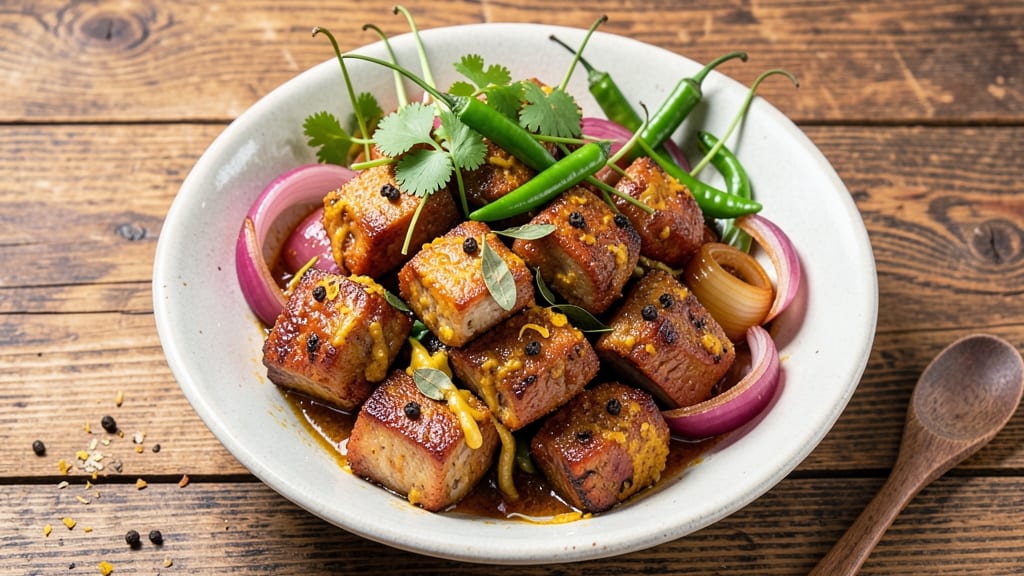
The Angamaly pork fry recipe brings Kerala's bold flavors to your kitchen with its signature crispy texture and aromatic spices. This dish, a staple from the Angamaly region, transforms tender pork into golden, shatteringly crisp pieces that balance heat and coconut richness perfectly.
I've perfected this technique over years of cooking, ensuring the pork stays juicy inside while achieving that coveted crunch—no shortcuts, just authentic results.
What sets this recipe apart is the traditional tempering process, where coconut and mustard seeds sizzle in hot oil to create a fragrant base. The marinade, packed with turmeric, black pepper, and curry leaves, infuses the pork with layers of flavor before it's shallow-fried to golden perfection.
This method delivers restaurant-quality texture every time, with a crispy exterior that gives way to tender, flavorful meat.
By the time you're done, you'll have a dish that's as visually impressive as it is delicious—golden-brown pork pieces with a glossy sheen, ready to be served with steamed rice, appam, or a tangy Kerala-style stew.
The spices sing in harmony, balancing the heat with the creamy richness of coconut, making this a complete meal in itself. This is the kind of dish that brings people together, whether it's a family gathering or a special occasion.
The beauty of Angamaly pork fry lies in its versatility—it's perfect for weeknight dinners or festive feasts. The recipe scales easily, so you can make it for two or a crowd.
Once you try this authentic version, you'll never settle for anything less. Let's get started on this crispy, spicy delight that captures the heart of Kerala cuisine.
Ingredients for angamaly pork fry
Pork shoulder, coconut, and mustard seeds—Kerala's crispy secret in your kitchen.
| Ingredient | Amount | Notes |
|---|---|---|
| Pork Shoulder 🥩 | 1 ½ lb | Cut into 1-inch cubes, boneless |
| Unsalted Butter 🧈 | ½ cup | For marinade, melted |
| Fresh Curry Leaves 🌿 | ¼ cup | Packed, finely chopped |
| Turmeric Powder 🌶️ | 1 tsp | Freshly ground preferred |
| Black Peppercorns 🌶️ | 1 ½ tsp | Coarsely crushed |
| Ginger Garlic Paste 🧄 | 2 tbsp | Homemade or store-bought |
| Vegetable Oil 🫒 | 2 cups | For shallow frying |
| Shallots 🧅 | 4 whole | Finely chopped |
| Unsweetened Grated Coconut 🥥 | ½ cup | Freshly grated |
| Mustard Seeds 🌱 | 1 tbsp | Whole, for tempering |
| Red Chili Powder 🌶️ | 1 ½ tsp | Adjust for heat preference |
| Salt 🧂 | 1 ½ tsp | Kosher or sea salt |
| Lemon Juice 🍋 | 1 tbsp | Freshly squeezed |
| Cilantro Leaves 🌿 | ¼ cup | Chopped, for garnish |
The pork shoulder is non-negotiable here—bone-in, skin-on gives the best flavor, but boneless works too if that's what you find. Look for good marbling at Indian grocery stores or the butcher section; Whole Foods or Trader Joe's often carry it pre-cut. If you can't find pork shoulder, pork loin cut into cubes is your next best bet, but it'll be slightly less juicy. The curry leaves are the soul of this dish—fresh from an Indian market is ideal, but dried works at half the amount if you're in a pinch.
No fresh curry leaves? Dried curry powder at one-third the amount gets you close, though it won't have that same aromatic punch. The ginger garlic paste can be homemade (just blend fresh ginger and garlic with a splash of water) or store-bought—Trader Joe's has a great one. Want to cut the heat? Swap red chili powder for cayenne at half the amount. The coconut should be freshly grated (pre-shredded gets soggy), and if you can't find unsweetened, toasted coconut flakes work in a bind. The mustard seeds? Black mustard seeds are traditional, but regular yellow seeds are fine too.
Marinate the pork for at least 2 hours (overnight is even better)—the flavors meld beautifully. Keep the marinade in an airtight container in the fridge. The fried pork stays crispy for about 2 days if stored in a sealed container, but honestly, it's best eaten fresh. For leftovers, reheat in a dry skillet over medium heat to restore that crispy texture. Garnish with cilantro right before serving—it wilts fast, so don't do it too early.
Why You'll Love This Recipe
- Fry-Up Magic: The pork shoulder gets tender and crispy in one pan—no fancy techniques, just a hot skillet and a little patience. Honestly, the way the butter sizzles with curry leaves? That aroma alone makes it worth it.
- Turmeric-Kissed Richness: That golden turmeric powder and cracked peppercorns work together like a dream—earthy, warm, and just a little spicy without overpowering. It’s the kind of flavor that lingers, making every bite feel like a hug.
- Leftover Reinvention: Cold pork fry the next day? Even better. Slice it into sandwiches, toss it into fried rice, or just eat it straight with rice—it’s that versatile. My lunchbox never looks the same twice.
- Budget-Friendly Feast: Pork shoulder stretches far, and butter (yes, real butter) keeps costs down while adding insane flavor. Between us, this is the kind of dish that makes grocery day feel like a win—especially when it feeds four for the price of two.
Step-by-step instructions for Angamaly pork fry
Here's how to create that signature Kerala crunch and spice—simple steps for restaurant-quality results.
Marinate the Pork for Maximum Flavor
Cut the 1.5 lb pork shoulder into 1-inch cubes and place them in a large bowl. Melt the 0.5 cup unsalted butter and let it cool slightly before adding it to the pork. This butter will create a flavorful crust during frying.
Add the 2 tbsp ginger garlic paste, 1 tsp turmeric powder, 1.5 tsp coarsely crushed black peppercorns, 1.5 tsp red chili powder, and 1.5 tsp salt to the bowl. Mix everything thoroughly until the pork pieces are evenly coated. Cover and refrigerate for at least 4 hours—overnight works best. This long marinade ensures tender meat and deep flavor penetration.
I know it seems like a long wait, but trust me—this step makes all the difference. The spices will infuse the meat completely, giving you that authentic Angamaly taste.
Shallow Fry Until Perfectly Crispy
Heat 2 cups vegetable oil in a deep, heavy-bottomed pan over medium heat until it reaches 350°F. You'll know it's ready when a small piece of pork sizzles vigorously when dropped in. This precise temperature is crucial for achieving that signature crispy exterior without making the meat greasy.
Working in batches to avoid overcrowding, carefully add the marinated pork to the hot oil. Fry for 8-10 minutes, turning occasionally, until the pork is golden brown and fully cooked through. The pieces should float to the surface when they're ready. Use a slotted spoon to remove them and drain on paper towels.
Don't rush this step—patience is key. If you cook too quickly, the pork won't develop that perfect crunch. The oil should be hot enough to sizzle but not smoke excessively.
Prepare the Spiced Coconut Tempering
In the same pan (after reducing heat to medium-low), add the 4 finely chopped shallots and sauté for 2 minutes until they turn golden. This adds another layer of flavor to your dish.
Add the 1 tbsp whole mustard seeds and let them splutter for 30 seconds—this is what creates that signature tempering flavor. Then add the 0.5 cup freshly grated coconut and stir continuously for 1 minute until it turns a beautiful golden color. The coconut should smell toasty and nutty.
Here's the thing—this tempering step is what makes Angamaly pork fry special. The mustard seeds release their oils, and the coconut adds that perfect balance of richness and crunch.
Combine and Finish with Fresh Herbs
Add the crispy pork back to the pan with the tempered coconut mixture. Toss everything together gently for 1 minute to coat the pork evenly. The residual heat will help the flavors meld perfectly.
Remove from heat and stir in the 1 tbsp freshly squeezed lemon juice and 0.25 cup chopped cilantro leaves. The lemon juice brightens up all the rich flavors, while the cilantro adds a fresh finish. Taste and adjust seasoning if needed—you want a perfect balance of spicy, savory, and tangy.
Serve immediately while the pork is still crispy. The contrast between the crunchy exterior and tender interior is what makes this dish so special. Pair with steamed rice and a cooling raita for the perfect Kerala meal.
Pro Tips For Making Angamaly Pork Fry
- SEAR THE PORK HARD: Angamaly pork fry needs that deep, caramelized crust to cut through the richness of the butter. I used to think medium heat was enough—until I realized the pork was just steaming instead of browning. Crank the pan to medium-high, let it sit for 30 seconds until smoking, then add the pork. Don’t move it for 2 full minutes, even if it looks uneven. That’s when the Maillard reaction starts working its magic.
- CRUSH THE PEPPERCORNS: Whole peppercorns in this dish? Skip it. I was skeptical until I tried grinding them fresh with a mortar and pestle (or just a few pulses in a spice grinder) right before adding them to the butter. The oil in the butter will cling to the freshly ground pepper, releasing flavor with every bite. Store-bought pre-ground pepper loses its punch fast—this makes a real difference.
- DON’T OVERCROWD THE PAN: I learned this the hard way—adding all the pork at once just turns your fry into a sad, greasy stew. Work in batches: fry half the pork until golden, then pull it out and repeat. The pan needs room to breathe, or you’ll end up with soggy meat and a pan full of butter that won’t brown. Two batches max, even if it takes an extra 5 minutes.
- USE COLD BUTTER: Sounds weird, but it works: take the unsalted butter straight from the fridge and cut it into chunks. Add it to the hot pan after the pork has seared—it’ll sizzle and foam, creating a luscious, emulsified sauce that clings to the meat. Melted butter poured in too early just pools at the bottom. This isn’t the prettiest method, but it’s the tastiest.
Pro cooking tips for this dish
Oil Temperature Control
This is where most home cooks go wrong—using oil that's too cool or too hot. For Angamaly pork fry, you need 350°F oil measured with an instant-read thermometer. I use a Taylor Precision Kitchen Thermometer because it's reliable and affordable.
If the oil isn't hot enough, your pork will absorb oil and lose crispiness. If it's too hot, the exterior burns before the interior cooks. Test with a small piece of pork—it should sizzle immediately and float within 30 seconds. 🌡️
Batch Frying Secret
Never overcrowd your pan! Fry in 2 batches maximum to maintain oil temperature. I've seen people try to fry all the pork at once, and it turns out greasy and sad.
Use a slotted spoon to remove cooked pieces immediately—they'll stay crispy if they don't sit in hot oil too long. The pork should be golden brown in 8-10 minutes, not pale or dark brown. Pro tip: Keep cooked pork on a wire rack over paper towels to prevent sogginess.
Mustard Seed Splutter
The 30-second splutter of mustard seeds is non-negotiable for authentic flavor. Use whole black mustard seeds (available at Indian grocery stores) for maximum aroma. If your seeds don't splutter, your oil isn't hot enough—reduce heat slightly and try again.
The sound and aroma are what make this dish sing. I like to add a pinch of asafetida (hing) here too—it deepens the umami. Just ⅛ tsp is enough to transform the dish. 💫
Coconut Toasting Trick
Freshly grated coconut should turn golden brown in 1 minute of stirring. If it stays pale, your heat is too low. Use a heavy-bottomed pan (like my Lodge cast iron) to maintain even heat.
The coconut should smell toasty and nutty—this is the flavor bridge between the crispy pork and the spice blend. For extra richness, add 1 tbsp coconut milk with the coconut—it creates a beautiful sheen when tossed with the pork.
Lemon Juice Timing
Add lemon juice off the heat—this prevents the acid from cooking off and turning bitter. The juice brightens all the rich flavors while adding a refreshing tang. I like to squeeze it directly over the dish at the table too—it's a crowd-pleaser.
For extra zing, add ½ tsp chaat masala with the lemon juice. This spice blend adds a salty, tangy kick that balances the heat perfectly. 🍋
Resting for Crispiness
Let the fried pork rest on a wire rack for 5 minutes before adding to the tempering. This prevents the coconut mixture from steaming the pork and making it soggy. The residual heat will finish cooking any underdone spots while maintaining that crispy exterior.
I also like to sprinkle the pork with ½ tsp salt right before serving—it enhances all the flavors and makes the crispiness pop even more. Trust me, this little step makes a world of difference.
Nutrition facts
Frequently asked questions
What makes Angamaly pork fry different from other Kerala pork dishes?
This dish stands out for its signature crispy exterior achieved through shallow frying in hot oil, combined with a spiced coconut tempering that gives it a unique nutty aroma. Unlike other Kerala pork dishes that might use curry or stew methods, Angamaly pork fry focuses on that perfect crunch while keeping the meat tender inside. The mustard seed splutter and fresh curry leaves also create a distinct flavor profile that's hard to replicate in other preparations.
Can I substitute pork shoulder with another cut?
Yes, but with adjustments. Pork loin works well but will be slightly less juicy. For best results, cut it into 1-inch cubes and marinate for at least 4 hours. Avoid lean cuts like tenderloin—they'll dry out during frying. If using pork belly, reduce frying time to 6-8 minutes as the fat renders quickly. The key is maintaining that perfect crispy-tender balance.
How do I adjust the spice level? For milder heat, reduce red chili powder to ½ tsp and add ¼ tsp garam masala instead. For extra spice, increase chili powder to 2 tsp and add ½ tsp cayenne pepper to the marinade.
What's the best way to reheat leftovers?
Reheat in a dry skillet over medium heat for 2-3 minutes to restore crispiness. Avoid microwaving—it makes the pork rubbery. For extra crunch, sprinkle with 1 tsp cornstarch before reheating. Store in an airtight container for up to 2 days, but it's best enjoyed fresh. The coconut tempering loses its crispy texture when reheated, so consider making a fresh batch for serving.
What sides pair well with Angamaly pork fry?
Traditional pairings include steamed basmati rice and avial (Kerala's coconut vegetable stew). For a complete meal, serve with appam (fermented rice hoppers) or parotta. The crispy pork also works well with cooling sides like cucumber raita or a simple mango salad. The contrast of textures and temperatures makes every bite perfect.