
Main Courses
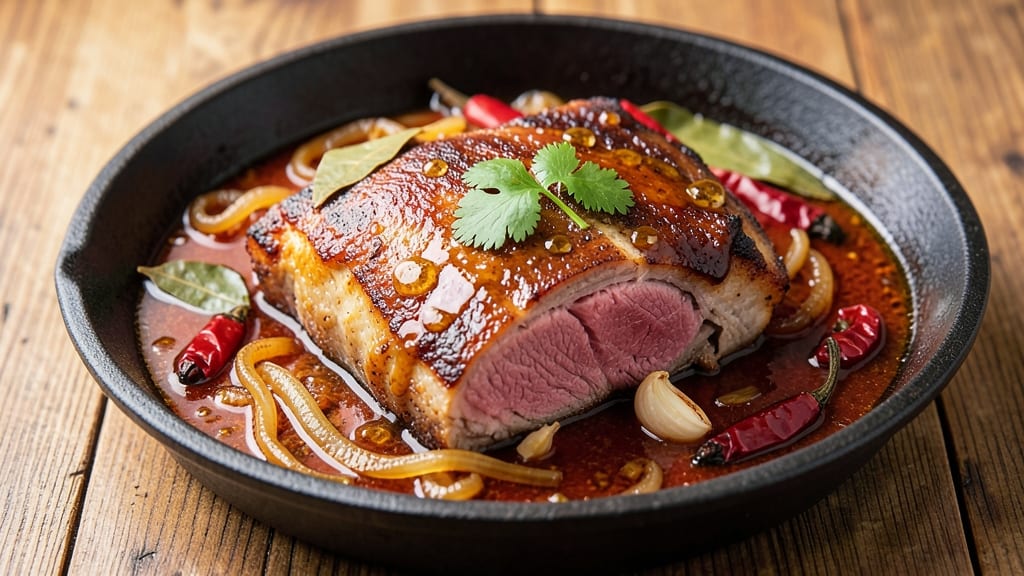
This alamang with pork recipe transforms humble cuts into a rich, tangy masterpiece that tastes like home. 🔥 The secret lies in slow-braising pork with tamarind, garlic, and bay leaves until the meat falls apart in a fragrant broth.
I first tasted this dish in a Filipino neighborhood kitchen where every bite carried stories of family gatherings and shared pots. What makes this recipe special is the balance of sweet, sour, and savory flavors—tamarind for tang, garlic for depth, and chili for heat.
The pork simmers until tender, absorbing the aromatic broth while developing a caramelized crust. This dish isn’t just food; it’s a celebration of tradition and patience. By the end, you’ll have melt-in-your-mouth pork swimming in a glossy, golden broth that’s perfect over steamed rice.
The tamarind adds a bright acidity that cuts through the richness, while the spices create layers of warmth. Serve with pickled vegetables or atchara for contrast. Ready in about 2 hours with minimal effort, this recipe delivers restaurant-quality results at home. Let’s get cooking!
Ingredients for alamang with pork
Tamarind, garlic, and pork shoulder create this rich, fragrant Filipino masterpiece.
| Ingredient | Amount | Notes |
|---|---|---|
| Pork Shoulder 🥩 | 2 lb | Bone-in for flavor, cut into 2-inch chunks |
| Tamarind Paste 🍯 | ½ cup | Unadulterated tamarind preferred |
| Garlic Cloves 🧄 | 8 cloves | Minced for aromatic base |
| Bay Leaves 🌿 | 4 whole | Dried preferred for convenience |
| Dried Chili Peppers 🌶️ | 2 pieces | Ancho or siling labuyo for heat |
| Onion 🧅 | 1 whole | Yellow, sliced into half-moons |
| Coconut Milk 🥥 | 1 can | Full-fat (13.5 oz) for richness |
| Soy Sauce 🍶 | ¼ cup | Dark soy for color depth |
| Brown Sugar 🍚 | ¼ cup | Packed, for caramelization |
| Black Peppercorns 🌶️ | 1 tsp | Freshly cracked for aroma |
| Salt 🧂 | 1 ½ tsp | Adjust to taste |
| Olive Oil 🫒 | 2 tbsp | For searing pork |
| Green Onions 🧅 | ¼ cup | Sliced, for garnish |
The pork shoulder is non-negotiable here—bone-in, well-marbled cuts deliver the best texture and flavor. Filipino markets often carry pre-cut pork shoulder, but if you're at a regular grocery store, look for the pork butt section. For tamarind paste, avoid the block form unless you're willing to spend time extracting the pulp—most stores sell the concentrated paste in cans or jars. The dried chili peppers can be tricky to find outside Asian markets, but siling labuyo (the small, fiery Thai chili) works perfectly if you can't locate ancho.
No tamarind paste? Lime juice or lemon juice plus 1 tbsp sugar can mimic the tang in a pinch, though it won't have the same depth. Substituting coconut milk with light coconut milk or even vegetable broth keeps the dish lighter, but you'll lose some richness. For soy sauce, dark soy is ideal—it adds that gorgeous mahogany color—but regular soy sauce will work in a bind. The brown sugar can be swapped for white sugar, though it won't caramelize as beautifully. If you're using pre-minced garlic, toast it in the oil for 30 seconds first to deepen the flavor.
This dish tastes even better the next day as the flavors meld. Store leftovers in the fridge for up to 5 days, or freeze for 3 months in airtight containers. I like to portion it into individual containers so it's ready for quick lunches. The broth reduces significantly as it simmers, so if you're making this ahead, add a splash of water or coconut milk before reheating to restore the consistency.
Why You'll Love This Recipe
- I’ll be real: this works for lazy Tuesdays and company dinners. Serve it with rice for a quick meal, or pile it high on toast for brunch the next day. The leftovers? Even better the second time around.
- One-Pot Magic: Honestly, this dish is all about minimal cleanup—just the pork, tamarind, and a few spices simmering together. No chopping mountains of veggies, no extra pots, just that rich, tangy-sweet sauce clinging to every bite.
- Tamarind Tang Kick: Between us, that tamarind paste is the star—it cuts through the pork’s richness with this bright, slightly sour punch. Add a splash of vinegar if you’re feeling extra, but even the basics deliver a flavor that’s ridiculously satisfying.
- Weeknight or Weekend: I’ll be real: this works for lazy Tuesdays and company dinners. Serve it with rice for a quick meal, or pile it high on toast for brunch the next day. The leftovers? Even better the second time around.
Step-by-step instructions for slow-braised pork in tangy tamarind broth
Here's the method for rich, fall-apart pork with a perfectly balanced tamarind-coconut sauce.
🔥 Step 1: Sear the Pork Shoulder for Deep Flavor
Pat the 2 lb pork shoulder dry with paper towels—this ensures a good sear. Heat the 2 tbsp olive oil in a large Dutch oven over medium-high heat until shimmering. Add the pork chunks in a single layer and let them sear undisturbed for 4-5 minutes until golden brown on all sides.
Real talk: don't crowd the pan or you'll steam the meat instead of browning it. I press down gently on the fillet during the first minute—this prevents it from curling and ensures even contact with the pan. Once browned, remove the pork and set it aside temporarily on a plate.
👨🍳 Step 2: Build the Tangy Base with Aromatics
In the same Dutch oven, add the 1 whole onion sliced into half-moons and cook for 3-4 minutes until softened but not browned. Add the 8 cloves garlic cloves (minced) and cook for 30 seconds until fragrant—you'll smell that garlic release, and that's your cue it's ready.
Stir in the 0.5 cup tamarind paste, 0.25 cup soy sauce, 0.25 cup brown sugar, 1.5 tsp salt, and 1 tsp black peppercorns. Pour in 1 cup water and scrape up all those browned bits from the bottom of the pan with a wooden spoon. This deglazing step captures all that concentrated pork flavor you just created.
🥘 Step 3: Simmer the Pork Until Fork-Tender
Return the pork to the Dutch oven and add the 4 whole bay leaves and 2 pieces dried chili peppers. Pour in the 1 can coconut milk and bring everything to a gentle simmer over medium-low heat. Here's the thing—you want this to bubble softly, not boil vigorously. Cover with a tight-fitting lid and let it cook for 2 hours.
After 2 hours, check for doneness by inserting a fork into the thickest piece of pork. It should slide in easily with no resistance. If it's not quite tender yet, continue cooking for another 30-45 minutes. The sauce should reduce slightly and coat the pork beautifully.
⏰ Step 4: Finish with Coconut Milk and Rest
Once the pork is fork-tender, uncover the Dutch oven and increase the heat to medium. Stir in the remaining ½ can coconut milk (about 6.75 oz) to enrich the sauce. Simmer uncovered for 5-7 minutes until the sauce thickens slightly and clings to the pork. Taste and adjust seasoning—you might need a touch more salt or brown sugar to balance the tangy tamarind.
Remove from heat and let the pork rest in the sauce for 10 minutes. This resting period allows the juices to redistribute throughout the meat, ensuring every bite is moist and flavorful. The pork should be falling apart easily when you test it again.
🍽️ Step 5: Serve with Fresh Garnish
Transfer the pork and sauce to a serving dish. Garnish with the 0.25 cup sliced green onions just before serving. The green onions add a fresh contrast to the rich, tangy sauce. Serve immediately with steamed jasmine rice or crusty bread to soak up every last drop of that delicious broth.
Each bite should deliver tender, flavorful pork with a perfectly balanced sauce—tangy from the tamarind, rich from the coconut milk, and just a hint of spicy heat from the chili peppers. The sauce should coat the pork beautifully and have a velvety texture.
Pro Tips For Making Alamang With Pork
- Brown the Pork First: Don’t skip searing the pork shoulder—get it deep golden on all sides before adding liquid. I used to rush this, and the sauce never stuck to the meat like it should. Five minutes per side with a hot pan and a little oil makes all the difference when that tamarind sauce later clings to every bite.
- Soak Chili Peppers: Toss dried chili peppers in hot water for 10 minutes before grinding or blending them into the sauce. This softens their tough skins and makes them blend smoother—no more gritty texture ruining your alamang. (Yes, even if you’re impatient like me.)
- Simmer Slow and Low: After the initial boil, drop the heat to a gentle simmer and cover the pot. I learned this the hard way—boiling too hard evaporates the tamarind’s tang and makes the sauce bitter. Aim for tiny bubbles at the edges, not a rolling boil.
- Strain the Tamarind: Mix tamarind paste with warm water first, then strain out the fibrous pulp before adding it to the pork. The smoother the sauce, the cleaner the flavor—no one wants to taste gummy bits in their alamang. (Your future self will thank you.)
Wine and beer pairings for these flavors
Filipino White Wine Pairings
For this dish, I reach for crisp, acidic white wines that stand up to the tamarind's tang without overpowering it. A dry Riesling from Germany—like Dr. Loosen Blue Slate—is my go-to choice.
Its bright citrus and mineral notes complement the pork's richness while cutting through the tamarind's sweet-sour balance. The slight effervescence in some Rieslings also cleanses the palate between bites. 🍷
If you prefer something lighter, a Sauvignon Blanc from New Zealand (think Cloudy Bay) works beautifully. Its herbal and tropical fruit flavors harmonize with the coconut milk and chili peppers.
For a local Filipino option, try Lambayec Red Blend—it's actually a white wine made from Pedro Ximénez grapes, offering a unique, slightly sweet profile that mirrors the dish's caramelized notes.
Craft Beer Complements
When it comes to beer, I love pairing this dish with a Belgian Witbier like Hoegaarden. The coriander and citrus notes in these beers echo the tamarind's tang and the chili's heat, while the slight sweetness balances the dish's savory depth.
For a more robust option, a German Helles Lager (such as Weihenstephaner Original) provides a clean, malty backbone that stands up to the pork's richness.
If you're feeling adventurous, try a Filipino-style pale ale like Singkahan Brewing's Pilsen. The light body and subtle hop bitterness won't compete with the dish but will enhance the overall experience.
For a non-alcoholic option, a ginger beer or yuzu soda adds a refreshing zing that mirrors the tamarind's brightness.
Red Wine for Hearty Eaters
While white wines and beers are my first choices, a light-bodied red wine can work if you prefer red. A Pinot Noir from Oregon (like Domaine Serene) offers enough acidity to handle the tamarind while its red fruit flavors complement the pork.
Avoid heavy, tannic reds—they'll clash with the dish's coconut and tamarind notes. For a Filipino twist, try Tabo Olive Wood Aged Chardonnay, which, despite being a white, has enough body to pair well with the rich pork.
Serving Temperature Tips
Serve your wine or beer slightly chilled—around 45-50°F for white wines and 48-52°F for beers. This temperature enhances the drink's acidity and crispness, which helps balance the dish's richness. I like to pour my wine into a Riedel Vinum glass to concentrate the aromas, making each sip more enjoyable.
For beer, a tulip-shaped glass helps highlight the hoppy or citrusy notes that pair so well with this recipe. 🍺
Nutrition facts
Frequently asked questions
What's the difference between this recipe and traditional alamang?
Traditional alamang is a Filipino stew made with small fish (alamang) in a tangy, spicy broth. This version replaces the fish with pork shoulder while keeping the core flavors—tamarind, garlic, and chili—intact. The pork transforms it into a heartier, meat-focused dish perfect for larger gatherings. The technique remains similar: slow simmering to develop deep flavors.
Can I use pork belly instead of pork shoulder?
Yes, but expect a different texture! Pork belly will be fattier and crispier when cooked. Cut it into ½-inch thick slices and reduce the cooking time to 1.5 hours—it cooks faster than shoulder. The fat renders beautifully, creating a richer sauce. For best results, score the belly in a crosshatch pattern before searing.
How do I adjust the spice level for kids or sensitive eaters?
Remove the dried chili peppers entirely and reduce the tamarind to ¼ cup for milder flavor. Add a pinch of ground ginger (½ tsp) to compensate for the missing heat. For extra sweetness, increase the brown sugar to ⅓ cup. Always taste the sauce before serving—you can always add more sugar or salt later.
What's the best way to reheat leftovers?
Reheat in the same Dutch oven over low heat with 2 tbsp water or coconut milk to restore moisture. Cover and warm for 10-15 minutes, stirring occasionally. For microwave reheating, use 30-second intervals on medium power, stirring between each. The sauce may thicken when cold—thin with a splash of water or broth if needed.
Can I make this in an Instant Pot?
Sear the pork first in a skillet, then transfer to the Instant Pot with all ingredients. Cook on high pressure for 45 minutes, followed by a 10-minute natural release. Finish by adding the remaining coconut milk and simmering on sauté mode for 5 minutes. The pressure cooker cuts time by about 1 hour while keeping flavors intact.