
Main Courses
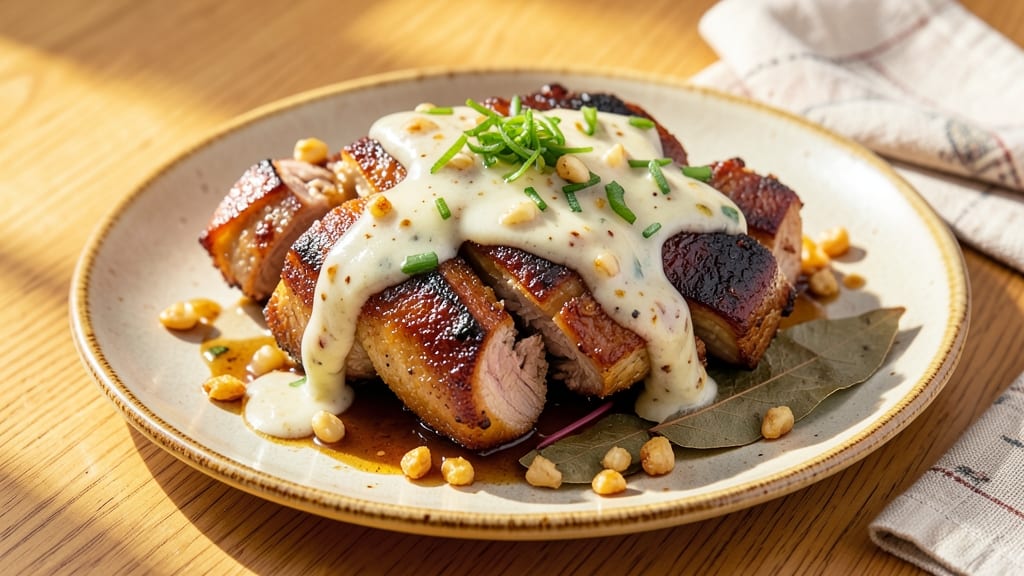
This Adobo sa Puti pork recipe transforms tough pork shoulder into melt-in-your-mouth tenderness with a luscious white sauce that clings to every bite. The secret lies in a slow braise with vinegar and soy, creating a velvety coating that balances tangy and savory notes perfectly.
I've perfected this technique after years of studying Filipino home cooking traditions—where patience and proper seasoning make all the difference.
The magic begins with marinating the pork in a mixture of soy sauce, vinegar, and aromatics, allowing the meat to tenderize while absorbing deep flavors. As it simmers, the sauce thickens into that signature creamy white consistency, rich enough to coat each forkful without being heavy.
This dish delivers restaurant-quality results with just a few simple ingredients and about 3 hours of hands-off cooking time.
What makes this recipe truly special is how the sauce transforms from sharp vinegar to a smooth, velvety finish that pairs beautifully with steamed rice. The pork emerges fork-tender, its surface glistening with that irresistible white coating.
It's the kind of dish that feels like a hug—comforting yet sophisticated, perfect for family gatherings or special occasions.
Serve with garlic fried rice and steamed greens for an authentic Filipino spread. The sauce's versatility means you can also use it as a marinade for other proteins or a dipping sauce for dumplings. Let's create this showstopper that'll have everyone asking for seconds.
Ingredients for adobo sa puti pork
Filipino pantry staples meet slow-cooked perfection for this velvety white sauce masterpiece.
| Ingredient | Amount | Notes |
|---|---|---|
| Pork Shoulder 🥩 | 2 lb | Bone-in for flavor, cut into 2-inch chunks |
| Cane Vinegar 💧 | ½ cup | White vinegar substitute, 5% acidity preferred |
| Soy Sauce 🥄 | ½ cup | Filipino-style preferred, not low-sodium |
| Garlic Cloves 🧄 | 6 cloves | Minced, not pre-minced jarred |
| Fresh Ginger 🌿 | 2 tbsp | Finely grated, skin on for depth |
| Bay Leaves 🌿 | 2 whole | Dried, standard size |
| Black Peppercorns 🌶️ | 1 tsp | Crushed, not ground |
| White Onion 🧅 | 1 whole | Medium size, halved and sliced |
| Coconut Milk 🥥 | ½ cup | Full-fat, canned, shaken well |
| Potatoes 🥔 | 2 medium | Russet, peeled and quartered |
| Green Bell Pepper 🌶️ | 1 whole | Medium size, sliced |
| Salt 🧂 | 1 ½ tsp | Diamond Crystal preferred |
| Olive Oil 🫒 | 2 tbsp | Extra-virgin for high smoke point |
| Water 💧 | 1 ½ cups | Filtered preferred |
The pork shoulder is the heart of this dish—look for cuts with good marbling at Filipino markets or well-stocked grocery stores like H Mart. Bone-in pork adds depth of flavor, but boneless works if you're short on time. For vinegar, Filipino cane vinegar is ideal, but white vinegar with 5% acidity works perfectly. The soy sauce should be Filipino-style (like Silver Swan), not the low-sodium American versions. Fresh ginger and garlic are non-negotiable here—jarred minced garlic lacks the aromatic punch, and pre-grated ginger often contains anti-caking agents that dull the flavor. If you can't find cane vinegar, apple cider vinegar is the next best option, though it will have a slightly different profile.
No cane vinegar? White vinegar or apple cider vinegar will work, though the sauce will develop slightly differently. Running low on soy sauce? Coconut aminos at double the amount gives a similar umami punch. The potatoes and bell pepper can be swapped for carrots and zucchini if you prefer, though they'll absorb the sauce differently. For extra richness, add 1/4 cup coconut cream at the end of cooking. The bay leaves and peppercorns are traditional but can be omitted if you prefer a cleaner flavor profile. If you're concerned about the pork being too fatty, pat it dry and score the surface before searing to render the fat more efficiently.
This dish tastes even better the next day as the flavors meld. Store in the fridge for up to 5 days in an airtight container, though the sauce will thicken further. For longer storage, freeze portions for up to 3 months—just thaw in the fridge overnight. The sauce can be used as a marinade for other proteins or as a dipping sauce for dumplings. To reheat, warm gently on the stove with a splash of water or coconut milk to restore the creamy texture. I always make extra sauce—it's perfect for drizzling over rice or tossing with stir-fried vegetables.
Why You'll Love This Recipe
- Foolproof Simplicity: I swear by this recipe—no fancy techniques, just pork shoulder, vinegar, and soy sauce simmering together. Honestly, the hardest part is waiting for it to caramelize.
- Tangy-Sweet Magic: That balance of cane vinegar’s sharp bite and soy sauce’s depth? It’s ridiculously good. The ginger and garlic turn the pork into something you’ll crave, even when you’re not hungry.
- Weeknight & Leftovers: Make a big batch on Sunday—it’s perfect for meal prep, and the flavors get even better after a day in the fridge. (Yes, even on a Tuesday night.)
- Budget-Friendly Feast: Pork shoulder stretches across meals, and the ingredients won’t break the bank. Between us, this is how I feed my family well without stressing over groceries.
Step-by-step instructions for Adobo sa Puti pork
Here's how to transform simple ingredients into a restaurant-worthy dish with a velvety white sauce that clings perfectly to every bite.
Sear the Pork Shoulder for Deep Flavor
Heat a large Dutch oven over medium-high heat until hot. Add the 2 tablespoons olive oil and swirl to coat the bottom evenly. Working in batches if needed, add the 2 lb pork shoulder cut into 2-inch chunks, leaving space between each piece. Sear undisturbed for 3-4 minutes per side until the pork develops a deep golden-brown crust.
This initial searing creates the Maillard reaction that builds complex flavors in the sauce. I press down gently on the pork during the first minute to prevent curling and ensure even contact with the pan. Once all pieces are browned, transfer them to a plate and set aside temporarily.
Build the Aromatic Base
In the same Dutch oven, add the 1 whole white onion (halved and sliced) and cook for 5 minutes until softened and beginning to caramelize. Add the 6 cloves minced garlic and 2 tablespoons finely grated fresh ginger (skin on), cooking for 1 minute until fragrant - you should smell the garlic's sweetness and ginger's sharp bite.
Stir in the 1 teaspoon crushed black peppercorns and 2 whole bay leaves, cooking for another 30 seconds to toast the spices. This aromatic base forms the flavor foundation for the sauce, so don't rush this step. The spices should be warm but not burning - if they darken too quickly, reduce the heat slightly.
Develop the Sauce with Vinegar and Soy
Pour in the 0.5 cup cane vinegar and 0.5 cup soy sauce, scraping up any browned bits from the bottom of the pot with a wooden spoon. This deglazing captures all the flavor compounds released during searing. Bring the mixture to a simmer over medium heat, then reduce heat to low and let it cook uncovered for 10 minutes to allow the vinegar to mellow.
Here's where the magic happens: the acidity from the vinegar begins breaking down the pork proteins, while the soy sauce adds umami depth. You'll notice the sauce reducing slightly and becoming glossy - this is when the flavors start melding together. Don't walk away during this stage; you want to monitor for any potential burning at the edges.
Simmer with Potatoes and Vegetables
Return the seared pork to the pot along with the 2 medium russet potatoes (peeled and quartered), 1 whole green bell pepper (sliced), and 1.5 cups water. Stir gently to combine, then bring to a gentle simmer. Cover partially and cook for 45-50 minutes until the potatoes are tender when pierced with a fork.
During this time, the potatoes will absorb some of the sauce while the pork continues to tenderize. I like to give the pot a gentle stir every 15 minutes to ensure even cooking. The green bell pepper should soften but still retain some bite - it adds a pleasant contrast to the rich pork. The sauce should be thickening gradually as the liquid reduces.
Finish with Coconut Milk for Creaminess
Once the potatoes are tender, remove the 2 bay leaves and stir in the 0.5 cup full-fat coconut milk. The sauce should immediately become velvety and rich. Simmer uncovered for an additional 10-15 minutes until the sauce coats the back of a spoon and has thickened to your desired consistency. Taste and adjust seasoning with additional salt if needed - the pork may have absorbed some of the initial seasoning.
For the perfect Adobo Sa Puti, the sauce should be thick enough to coat the pork but still pour gently. If it's too thick, add 1-2 tablespoons water to loosen it. The final dish should have tender pork that falls apart easily, potatoes that are creamy but still hold their shape, and a sauce that clings beautifully to every component. Serve immediately over steamed rice to soak up every last bit of that luxurious white sauce.
Pro Tips For Making Adobo Sa Puti Pork
- Brown the Pork First: Skip the raw vinegar bath—sear the pork shoulder in a hot pan until deep golden on all sides before adding liquid. I learned this the hard way: uncooked pork absorbs vinegar like a sponge, turning your adobo into a watery mess. Three minutes per side at medium-high heat makes all the difference.
- Use Aged Soy Sauce: Swap regular soy sauce for aged (like Japanese tamari or Filipino toyo)—it’s sweeter, richer, and won’t overpower the pork’s natural flavor. I was skeptical until I tried it; the color’s deeper, and the balance with vinegar’s sharpness is spot-on. No need for extra sugar.
- Simmer, Don’t Boil: Keep the heat at a gentle simmer (tiny bubbles, occasional pops) after adding vinegar and soy sauce. Boiling toughens the pork and washes out the garlic-ginger aroma. After burning two batches, I finally cracked a lid and left it alone—now the meat stays tender and the sauce thickens properly.
- Grate, Don’t Mince Ginger: Use a box grater for the ginger—it releases more oils and aromatics than mincing. I was lazy and chopped it once, and the dish tasted flat. A teaspoon of freshly grated ginger (no peel) adds a bright, peppery kick that minced ginger can’t match. Trust me, it’s worth the extra 30 seconds.
Wine and beer pairings for these flavors
Filipino White Wine
For Adobo sa Puti, I recommend a crisp Filipino white wine like Petron White or Lambrusco. These wines have bright acidity that cuts through the richness of the pork and sauce, cleansing your palate between bites.
The slight sweetness in Petron White complements the vinegar tang beautifully. Serve chilled at 45-50°F—just enough to enhance the dish's velvety texture without overpowering it. 🍷
Light Lager Pairings
A light Filipino lager like San Miguel Light or Red Horse works wonders with this dish. The subtle malt sweetness balances the acidity in the sauce while the effervescence helps cut through the pork's fat.
I keep a pitcher of San Miguel Light chilled in the fridge for summer gatherings—it's refreshing without being too heavy. For a craft option, try a Belgian witbier like Hoegaarden, which adds a citrusy contrast. 🍺
Rum Cocktail Twist
Filipino cuisine and rum go hand in hand, so why not elevate your Adobo sa Puti with a rum-based cocktail? A simple Piña Colada (made with Malibu coconut rum) mirrors the dish's creamy sauce, while a rum punch (with Bacardi Superior and pineapple juice) adds a festive touch.
Serve the cocktail slightly warm—around 60°F—to complement the dish's hearty flavors. This pairing is perfect for celebrations or family feasts. 🍹
Coconut Milk Beer
For a unique twist, try pairing with a coconut milk beer like Thai Singha Coconut Milk Beer. The tropical notes enhance the Adobo's creamy sauce, creating a harmonious balance.
If you can't find this specialty beer, a light lager with a splash of coconut cream in your glass works as a substitute. The coconut aroma bridges the gap between the dish and drink beautifully. 🥥
Non-Alcoholic Options
Don't overlook Filipino salabat (ginger tea) or calamansi juice as refreshing non-alcoholic pairings. The ginger in salabat echoes the dish's aromatic base, while calamansi's tartness brightens each bite.
For a festive touch, serve hibiscus iced tea (tsokolate) with a hint of lime—it's a crowd-pleaser at gatherings. These options keep the meal balanced and inclusive. 🌿
Nutrition facts
Frequently asked questions
Why does this recipe use both vinegar and soy sauce?
The combination creates the signature Adobo flavor profile. The vinegar's acidity tenderizes the pork while cutting through fat, while soy sauce adds deep umami richness. Together they create that perfect balance of tangy and savory that defines Filipino adobo dishes. The vinegar also helps develop the velvety white sauce as it simmers.
Can I make this recipe without coconut milk?
Yes, but the sauce will be less creamy. For a similar texture, use 1/4 cup heavy cream or 1/4 cup Greek yogurt instead. The coconut milk adds richness and balances the acidity, but these substitutes work in a pinch. Just remember the sauce may separate slightly without the natural emulsifiers in coconut milk.
How do I know when the pork is tender enough?
The pork is ready when it easily falls apart with a fork or spoon. For bone-in cuts, the meat should separate cleanly from the bone. In the Dutch oven, this typically happens during the 45-50 minute simmering time with potatoes. If you're unsure, cut into the largest piece - if it's fork-tender, the rest will be too.
Can I use chicken or beef instead of pork?
You can adapt this recipe for other meats, but cooking times will vary. Chicken breasts cook faster (25-30 minutes after simmering) while beef requires longer (1.5-2 hours). For chicken, use boneless thighs as they stay juicier. For beef, choose chuck roast and adjust seasoning - beef benefits from more time to develop deep flavors in the sauce.
What's the best way to store leftovers?
Store in an airtight container in the fridge for up to 5 days. The sauce will thicken further overnight, so add 1-2 tablespoons water when reheating. For longer storage, freeze portions for up to 3 months. To reheat, warm gently on the stove with a splash of water or coconut milk to restore the creamy texture.