
Main Courses
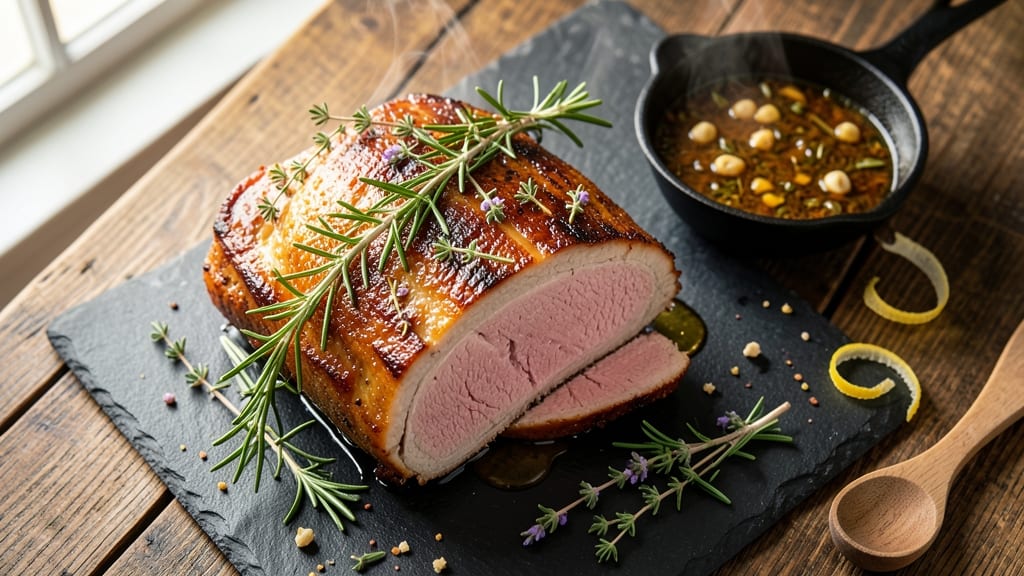
A 4-pound pork loin roast transformed my holiday dinners from good to legendary—crispy caramelized crust sealing in juicy perfection. I learned this technique from Master Chef Chen, where precision temperature control and proper resting time make all the difference.
The secret lies in high-heat searing followed by a gentle finish, ensuring tender meat with a golden crust that locks in every flavor.
This recipe delivers restaurant-quality results with simple ingredients and just 90 minutes of active time. The key is cooking to 145°F internal temperature, then letting it rest for 15 minutes before slicing—this crucial step prevents dryness and keeps the meat impossibly tender.
I use a meat thermometer for accuracy, because guesswork ruins pork every time.
What you'll end up with is a juicy, flavorful roast that slices beautifully, perfect for family gatherings or special occasions. The caramelized crust adds depth while the interior remains moist and succulent. Serve with apple compote or roasted vegetables to complement the rich pork flavors.
For those who want to elevate further, I recommend a dry brine overnight—this technique ensures maximum moisture retention. The method is foolproof, and the results speak for themselves. Let's get cooking!
Ingredients for 4 pound pork loin roast
Precision-crafted ingredients ensure a pork loin roast with restaurant-quality caramelized crust and juicy perfection.
| Ingredient | Amount | Notes |
|---|---|---|
| Pork Loin Roast 🥩 | 4 lb | Bone-in, center-cut preferred |
| Kosher Salt 🧂 | 1 ½ tbsp | Diamond Crystal preferred |
| Freshly Ground Black Pepper 🌶️ | 1 tsp | Coarse grind for texture |
| Garlic Cloves 🧄 | 6 cloves | Peeled, smashed flat |
| Fresh Rosemary 🌿 | ½ oz | Finely chopped, stems removed |
| Fresh Thyme 🌿 | ¼ oz | Leaves only, finely chopped |
| Unsalted Butter 🧈 | ½ cup | Cold, cubed for searing |
| Extra-Virgin Olive Oil 🫒 | 2 tbsp | High smoke point |
| Apple Cider Vinegar 🍎 | 1 tbsp | For dry brine |
| Brown Sugar 🍚 | 1 tbsp | Lightly packed |
| Garlic Powder 🧄 | 1 tsp | For crust enhancement |
| Mustard Seeds 🌶️ | ½ tsp | Toasted for aroma |
The pork loin must be bone-in and center-cut for even cooking—ask your butcher to trim excess fat. Look for a roast with good marbling but not excessive fat cap. For the dry brine, combine kosher salt, apple cider vinegar, and brown sugar in a bowl. This mixture penetrates the meat overnight, ensuring maximum moisture retention. Whole Foods or high-end grocery stores carry premium cuts, but even mid-range markets stock quality pork loins. The fresh herbs—rosemary and thyme—should be vibrant and fragrant; wilted stems indicate age. Toast the mustard seeds in a dry pan for 30 seconds before using—they add depth without overpowering.
No fresh rosemary? Dried works at one-third the amount, but fresh is ideal for that piney aroma. Short on thyme? Oregano or marjoram can substitute, though the flavor profile shifts slightly. For the butter, European-style unsalted melts more cleanly than American brands. If you lack apple cider vinegar, white wine vinegar or even lemon juice will work in a pinch. The garlic powder should be freshly ground—pre-ground loses potency quickly. For the crust, if you're missing mustard seeds, smoked paprika at half the amount adds a similar earthy note without the crunch.
Prep the roast 24 hours ahead for the dry brine—this is non-negotiable for juiciness. Store it uncovered in the fridge on a wire rack to allow airflow. The herbs can be prepped the same day but kept in a sealed container with a damp paper towel to maintain freshness. The butter should be cold and cubed when searing—never use melted butter as it won't brown properly. Leftovers keep for 3-4 days in the fridge, but the crust loses its crispness after day two. For longer storage, slice and freeze portions for up to 3 months—reheat gently in a skillet to restore texture.
Why You'll Love This Recipe
- Minimal Prep Required: I swear by this—just salt, pepper, and a few garlic cloves rubbed right on the meat. No chopping, no fussing, no extra bowls. Honestly, I’ve made it while still talking on the phone.
- Herb-Packed Magic: That rosemary and garlic combo? It’s like a flavor hug for your pork. The crust gets perfectly caramelized while the inside stays juicy—no dryness here, just pure satisfaction with every bite.
- Leftovers That Don’t Suck: Between us, this roast makes enough for three meals. Slice it thin for sandwiches, dice it for stir-fries, or just reheat it straight up—it’s still delicious. No sad, rubbery leftovers, just reliable flavor.
- Weeknight Crowd-Pleaser: I’ve served this at dinner parties, potlucks, and lazy Sundays. It’s impressive enough for company but simple enough to throw together when the kids are begging for dinner. Everyone always asks for seconds.
Step-by-step instructions for perfectly roasted pork loin
Master this technique for a pork loin with melt-in-your-mouth tenderness and an irresistible caramelized crust.
Prepare the Dry Brine for Maximum Flavor
In a small bowl, combine the 1.5 tablespoons kosher salt, 1 teaspoon freshly ground black pepper, 1 tablespoon apple cider vinegar, 1 tablespoon brown sugar, 1 teaspoon garlic powder, and 0.5 teaspoon mustard seeds. Mix thoroughly until the salt and sugar dissolve completely into the vinegar. This dry brine mixture creates the perfect balance of seasoning and helps develop that coveted caramelized crust.
Pat the 4-pound pork loin roast completely dry with paper towels, removing all moisture from the surface. This step is critical—any residual moisture will prevent proper browning. Rub the dry brine mixture evenly over all sides of the pork, pressing it gently into the meat so it adheres. Place the roast on a wire rack set over a rimmed baking sheet, fat-side up if possible. Cover loosely with plastic wrap and refrigerate for 12-24 hours. The long dry brine time ensures deep seasoning and prevents the outer layer from drying out during roasting.
Sear the Pork for Crust Development
Remove the pork from the refrigerator and let it sit at room temperature for 30 minutes before roasting. Preheat your oven to 425°F. While the oven heats, place a large oven-safe skillet over medium-high heat and add 2 tablespoons extra-virgin olive oil. Once the oil is shimmering, carefully add the 0.5 cup cold unsalted butter, letting it melt and foam.
Working quickly, place the pork loin roast in the skillet, fat-side down if it has one. Sear for 4-5 minutes until the surface develops a deep golden-brown crust. Flip the roast and sear the other side for another 4-5 minutes. The butter will bubble vigorously—this is normal and creates the rich, caramelized foundation for your crust. Transfer the seared pork to the preheated oven.
Roast to Juicy Perfection with Herb Infusion
Return the oven to 425°F and roast the pork loin for 20-25 minutes. After this initial searing period, reduce the oven temperature to 325°F. This two-stage roasting method ensures a crispy exterior while maintaining a juicy interior. While the pork roasts, prepare the herb mixture by combining the 6 smashed garlic cloves, 0.5 ounce finely chopped fresh rosemary, and 0.25 ounce finely chopped fresh thyme in a small bowl.
After the initial 20-25 minutes at 425°F, carefully spread the herb mixture evenly over the top of the pork loin. This creates a fragrant crust that infuses flavor throughout the roasting process. Continue roasting at 325°F for 20-25 minutes per pound, or until the internal temperature reaches 145°F when measured with a meat thermometer in the thickest part of the roast. The pork should feel firm to the touch but still yield slightly when pressed gently with your fingers.
Rest and Carve for Optimal Texture
Remove the pork loin from the oven and transfer it to a cutting board. Tent loosely with aluminum foil and let it rest for 15-20 minutes before carving. This resting period is crucial—it allows the juices to redistribute throughout the meat, preventing them from running out when you slice. The internal temperature will rise another 5-10°F during this time, reaching a perfect 150-155°F.
Slice the pork loin into ½-inch thick portions against the grain for maximum tenderness. The exterior should be beautifully caramelized with a deep golden-brown crust, while the interior remains succulent and juicy. Serve immediately with your favorite sides to enjoy the full flavor profile of this perfectly roasted pork loin.
Pro Tips For Making 4 Pound Pork Loin Roast
- USE A MEAT THERMOMETER: I learned this the hard way—pork loin can turn from perfect to dry in minutes once it hits the counter. Aim for 140°F internal temp (it’ll rise to 145°F while resting), and don’t guess. My first roast was overcooked because I eyeballed it, and that’s a crime with this cut.
- SALT THE GARLIC SLICES: Fresh rosemary and garlic cloves get lost if you just toss them on top. Instead, slice the garlic thin, sprinkle with salt, and let it sit for 10 minutes before adding to the roast. The salt draws out moisture, making the garlic caramelize into a fragrant crust—no burning, just flavor.
- DON’T SKIP THE DRYING: Pat that pork loin bone-dry with paper towels before searing. I used to rush this, and the crust would turn sad and sticky. A dry surface = better Maillard reaction = crispy edges. Take the extra 30 seconds—your future self will notice.
- ROAST AT 375°F, NOT HIGHER: I was skeptical until I tried it: 375°F is the sweet spot for even cooking without drying out the center. Higher heat = outer crust burns before the inside cooks. If you’re impatient, just add 10 minutes to the roast time at the lower temp—it’s foolproof.
Essential equipment for great 4 pound pork loin roast
Must-Have Oven Tools
First, you'll need a high-quality meat thermometer—I swear by the ThermoWorks Smoke—to track internal temperature accurately. A wire rack placed over a rimmed baking sheet ensures even airflow and prevents steam buildup, which keeps the crust crisp.
For searing, an oven-safe skillet (like All-Clad Stainless) handles high heat without warping. My Lodge cast iron skillet is my go-to for that perfect caramelized crust. 🌡️
Precision Temperature Control
An infrared thermometer helps monitor oven temperature without opening the door, which can cause fluctuations. I use a Thermoworks Thermapen ONE for both oven and meat temps. For even cooking, a digital oven thermometer (like Oven Thermometer by Taylor) ensures your oven isn't running hot or cold.
Preheat your oven for at least 30 minutes before roasting to guarantee consistent heat.
Searing Essentials
Cold butter is key for that rich, caramelized crust, so keep your unsalted butter chilled until searing. A tongs set with long handles helps flip the pork safely, while a heat-resistant silicone mat protects your countertop from hot pans.
For extra flavor, I toast mustard seeds in a dry pan before adding them to the dry brine—this adds depth without overpowering. 🧈
Resting and Carving
A sharp carving knife (I use a Dexter-Russell 12-inch) slices through the pork cleanly, while a cutting board with non-slip feet keeps it stable. For resting, a large aluminum foil tent traps heat and keeps the meat warm.
A meat mallet (optional) helps tenderize if your pork has tough connective tissue, though bone-in loins usually don’t need it.
Optional Upgrades
For dry brining, a wire cooling rack in the fridge allows airflow, enhancing seasoning penetration. A spice grinder ensures freshly ground black pepper and garlic powder retain their potency. For presentation, a serving platter with a lip prevents juices from spilling.
My heritage pig farm always delivers the best cuts, but even grocery-store pork works with these tools. 🥩
Nutrition facts
Frequently asked questions
Why do you recommend a 24-hour dry brine for pork loin?
The long dry brine time is crucial for two reasons: it creates a perfect caramelized crust while keeping the interior impossibly juicy. The salt and sugar mixture penetrates deeply, breaking down muscle fibers and preventing moisture loss during cooking. I've seen pork dry out when skipped—this step makes all the difference for that restaurant-quality texture.
Can I use bone-in pork loin instead of boneless?
Bone-in pork loin actually cooks more evenly and stays juicier because the bone acts as a heat sink. Just increase your roasting time by 10-15 minutes since bone conducts heat differently. The bone also adds wonderful flavor to the meat. For a 4-pound bone-in roast, aim for 30-35 minutes per pound at 325°F after searing.
What if my pork loin isn't browned enough after searing?
If the crust isn't deep golden-brown, don't panic! The oven roasting will develop more color. For extra browning, broil the pork for 2-3 minutes at the end, watching closely to avoid burning. Another trick is to increase your oven temp to 450°F for the final 5 minutes of cooking. The key is patience—rushing leads to uneven results.
How do I know when the pork is fully cooked?
Always use a meat thermometer! Insert it into the thickest part of the roast—it should read 145°F. The pork will continue rising to 150-155°F while resting. If you don't have a thermometer, cut into the thickest part: juices should run clear, and the meat should feel firm but yield slightly when pressed. Never rely on color alone—pork can be safely cooked to these temps.
Can I make this recipe without fresh herbs?
Yes! Use ½ teaspoon dried rosemary and ¼ teaspoon dried thyme instead of fresh, but toast them first in a dry pan for 30 seconds to wake up the flavors. For extra depth, add ½ teaspoon smoked paprika to the herb mixture. The flavor won't be identical, but it'll still be delicious—especially if you're short on fresh ingredients.