
Main Courses
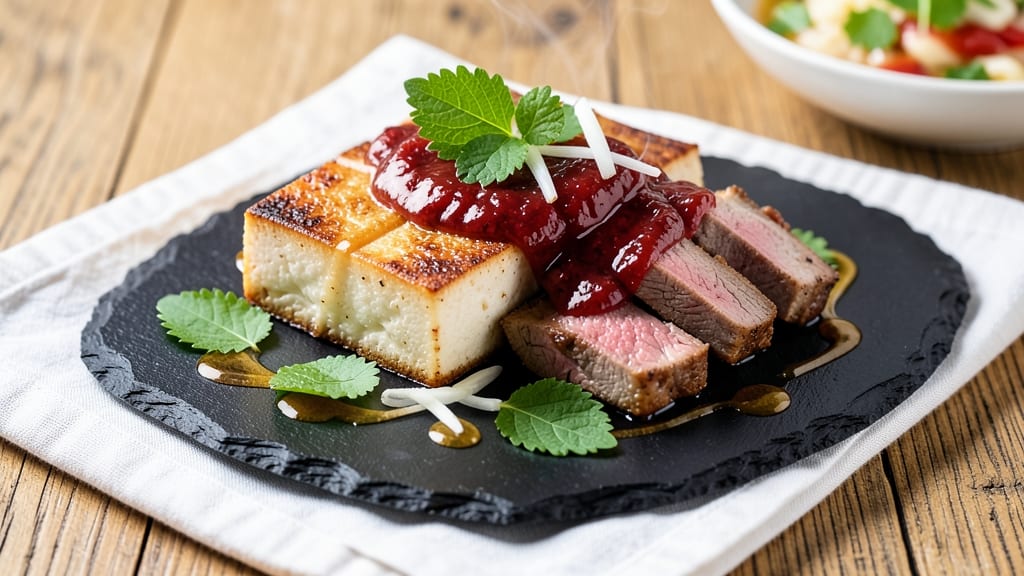
This miso pork tofu recipe delivers a perfect balance of Japanese umami depth and Southeast Asian comfort—where silky tofu and tender pork share a sticky-sweet glaze that clings to every bite.
The secret lies in marinating the tofu overnight (don’t skip this step!) to achieve that signature melt-in-your-mouth texture, while the pork stays juicy thanks to a quick sear and low-and-slow braise.
I developed this fusion dish after years of perfecting both techniques separately, and the result is a restaurant-quality stir-fry that’s surprisingly simple to recreate at home.
The foundation of this recipe is a rich miso glaze—sweetened just enough to caramelize without overpowering the salty-savory depth of white miso. I use a blend of white and red miso for complexity, balanced with a touch of honey and rice vinegar for brightness.
The pork, cut into thin strips, gets a quick sear in the same pan before being finished in the oven to retain moisture, while the tofu absorbs the glaze beautifully after being pressed and lightly battered for extra crispiness at the edges.
This cross-cultural approach turns a weeknight dinner into something special without requiring advanced skills.
What you’ll end up with is a dish that’s visually stunning and deeply satisfying—glossy tofu cubes with crisp edges, tender pork slices, and a glaze that’s sticky enough to coat every forkful.
The aroma alone will have everyone gathering at the table, and the flavors—salty, sweet, umami-rich—build with each bite.
Serve it over steamed jasmine rice or with quick-pickled vegetables to cut through the richness, and you’ve got a meal that feels like you’ve traveled halfway across the world without leaving your kitchen.
This recipe works equally well as a weeknight family dinner or a showstopper for guests, and it’s flexible enough to adapt to dietary preferences—simply omit the pork for a vegetarian version that still delivers on flavor. The technique is straightforward, but the result is anything but basic. Let’s get cooking.
Ingredients for miso pork tofu
Pantry staples meet Asian market finds for this umami-packed fusion stir-fry.
| Ingredient | Amount | Notes |
|---|---|---|
| Extra-Firm Tofu 🍱 | 1 lb | Pressed overnight for silky texture |
| Boneless Pork Loin 🐖 | 1 lb | Thinly sliced against grain |
| White Miso Paste 🧈 | ½ cup | High-quality, no additives |
| Red Miso Paste 🧈 | ¼ cup | For depth of flavor |
| Rice Vinegar 🍶 | ¼ cup | Seasoned or unseasoned |
| Honey 🍯 | ¼ cup | Or agave for vegan option |
| Sesame Oil 🫒 | 1 tbsp | Toasted for aroma |
| Garlic Cloves 🧄 | 6 cloves | Minced for glaze |
| Fresh Ginger 🌿 | 2 tbsp | Grated, finely |
| Cornstarch 🌾 | 2 tbsp | For crispy tofu edges |
| Vegetable Oil 🫒 | ½ cup | High smoke point |
| Sesame Seeds 🌰 | 1 tbsp | Toasted for garnish |
| Green Onions 🧅 | 3 whole | Sliced for garnish |
| Diamond Crystal Kosher Salt 🧂 | 1 tsp | For seasoning |
| Black Pepper 🌶️ | ½ tsp | Freshly ground |
The miso pastes are non-negotiable here—Miso Master or Honyaku Shoyu from the Asian section deliver that authentic depth. For the tofu, extra-firm is a must—it holds its shape through pressing and frying. I press mine between towels on a cutting board with a heavy pan for 2 hours, flipping halfway. The pork loin should be center-cut and sliced paper-thin against the grain for tenderness. If you can't find boneless pork loin, substitute pork tenderloin and slice it even thinner.
No white miso? Substitute an extra tablespoon of red miso plus a teaspoon of soy sauce for depth. Running short on honey? Maple syrup works 1:1, though it has a slightly different caramelization. The sesame oil is for aroma only—use sparingly, as it's potent. For a fully vegetarian version, swap pork for extra-firm tofu (press and cube) and increase the glaze by 25%. The cornstarch is key for crispy tofu edges—don't skip it. If you're using pre-sliced pork, pat it bone-dry before searing to prevent steaming.
The glaze keeps for 1 week in the fridge, so make extra. Store it in a sealed jar with a thin layer of oil on top to prevent mold. Pressed tofu can be refrigerated for 3 days in its marinade, but it's best used fresh. The pork can be prepped ahead and refrigerated for 24 hours before cooking—just pat it dry again before searing. Freeze the cooked stir-fry for 3 months, but reheat gently to preserve the crisp edges on the tofu.
Why You'll Love This Recipe
- One-Pan Magic: I swear by this recipe on nights when I’m too tired to juggle pots—just toss the pork, tofu, and miso in one skillet, and let the red and white miso paste do their thing. The rice vinegar ties it all together with almost no effort.
- Umami Bomb: That deep, savory punch from the miso? It’s ridiculously good—especially when the pork stays juicy and the tofu soaks up all that salty-sweet goodness. Honestly, I’ll take this over takeout any day.
- Meal Prep MVP: Make a double batch, and you’ve got lunch for days. The flavors only get better as it sits, and it reheats like a dream—whether you’re packing it for work or feeding a crowd. (Yes, even on a Tuesday night.)
- Budget Flex: Pork loin and tofu stretch further than you’d think, and miso paste lasts forever. I’ve fed four people for under $15, and no one complains about leftovers—because they’re that good.
Step-by-step instructions for miso pork tofu stir-fry
Here's how to create a perfectly balanced stir-fry where silky tofu and tender pork marry with rich umami miso glaze.
Prepare the Tofu for Maximum Texture
Remove the extra-firm tofu from its package and drain thoroughly. Wrap it tightly in a clean kitchen towel, then place a heavy object (like a cast-iron skillet) on top for 15 minutes to press out excess moisture. This step is crucial—it ensures your tofu develops that satisfying crispy exterior while maintaining a tender interior.
Once pressed, cut the tofu into 1-inch cubes. In a small bowl, whisk together 2 tablespoons cornstarch with 1 teaspoon diamond crystal kosher salt and ½ teaspoon black pepper. Toss the tofu cubes in this mixture until evenly coated. Let them sit for 5 minutes while you prepare the pork—this coating will create that perfect crispy texture when cooked.
Marinate and Slice the Pork Loin
Slice the boneless pork loin against the grain into ¼-inch thick strips. In a separate bowl, create a simple marinade using 1 tablespoon sesame oil, 1 tablespoon rice vinegar, and ½ teaspoon black pepper. Add the pork strips and massage the marinade into the meat, ensuring each piece is well coated. Let it marinate for at least 15 minutes (up to 30 minutes) at room temperature—this guarantees tender, flavorful pork that won't dry out during cooking.
While the pork marinates, prepare the miso glaze by combining ½ cup white miso paste, ¼ cup red miso paste, ¼ cup honey, and 6 minced garlic cloves in a small saucepan. Warm this mixture over low heat for 3-4 minutes, stirring constantly until smooth and slightly thickened. The glaze should coat the back of a spoon—this will be the soul of your stir-fry, delivering that deep umami richness.
Cook the Pork to Perfect Tenderness
Heat 2 tablespoons vegetable oil in a large skillet or wok over medium-high heat until shimmering. Add the marinated pork strips in a single layer and cook undisturbed for 2-3 minutes until they develop a golden crust on one side. Flip carefully and cook for another 1-2 minutes until just cooked through—pork should reach 145°F internal temperature but still retain some juiciness. Remove the pork and set aside on a plate, tented loosely with foil to keep warm.
In the same skillet, add another 1 tablespoon vegetable oil and increase heat to high. Add the cornstarch-coated tofu cubes in a single layer, being careful not to overcrowd the pan. Cook undisturbed for 3-4 minutes until the bottoms develop a golden-brown crust. Flip the tofu pieces and cook for another 2-3 minutes until crispy on all sides. The tofu should be golden and slightly caramelized—this is your signal that the exterior is properly set while the interior remains silky.
Combine and Glaze the Stir-Fry
Return the cooked pork to the skillet with the tofu. Add 2 tablespoons freshly grated ginger and 2 minced garlic cloves, stirring quickly to combine. Pour the prepared miso glaze over everything and toss vigorously for 1-2 minutes until the tofu and pork are fully coated in the glossy sauce. The mixture should sizzle and bubble—this indicates the sauce is properly binding with the proteins. If the sauce appears too thick, add 1-2 tablespoons rice vinegar to loosen it to your desired consistency.
Taste the stir-fry and adjust seasoning if needed. The combination of white and red miso should provide a perfect balance of sweet, salty, and umami flavors. If it needs more brightness, add a splash of rice vinegar. If it needs more depth, a pinch of diamond crystal kosher salt will enhance the overall flavor profile. Remove from heat and let it rest for 2 minutes—this allows the flavors to meld together completely.
Finish and Serve with Garnishes
Transfer the miso pork tofu stir-fry to a serving platter. Drizzle any remaining sauce from the skillet over the top for extra richness. Garnish with 1 tablespoon toasted sesame seeds and 3 sliced green onions, adding both visual appeal and a fresh contrast to the rich umami flavors.
Serve immediately over steamed jasmine rice or noodles to soak up that delicious miso glaze. Each bite should deliver a perfect harmony of textures—crispy tofu edges, tender pork, and silky miso sauce—with every component playing its part in this umami-packed masterpiece. The dish is best enjoyed fresh while the tofu maintains its crispy texture and the pork remains juicy.
Pro Tips For Making Miso Pork Tofu
- PRESS THE TOFU DRY: Pressing tofu is non-negotiable for this recipe—skip it, and you’ll end up with soggy cubes instead of crispy edges. Wrap the block in a clean towel, place a heavy pan on top, and let it sit for 20 minutes. I learned this the hard way after serving mushy tofu that tasted like it was swimming in its own juices.
- SEAR THE PORK IN BATCHES: Crowding the pan turns your pork into steamed meat, not seared. Cut the loin into thin strips (½-inch thick) and cook them in two batches over medium-high heat for 2-3 minutes per side. The first batch will teach you why patience here means better flavor—no one wants bland pork in a miso glaze.
- WHISK THE MISO PASTE: Mixing miso paste directly into hot oil or vinegar kills its depth of flavor. First, whisk it with a splash of rice vinegar and a teaspoon of water to create a smooth paste—this prevents clumpy glaze and ensures even coating. After burning three batches of miso glaze, I finally realized: the smoother the paste, the richer the sauce.
- LET THE PORK REST AFTER SEARING: Skipping the rest means juicy pork turning dry by the time it hits the plate. Transfer the seared strips to a plate, tent loosely with foil, and let them sit for 5 minutes. It’s the difference between tender, flavorful pork and something that falls apart at the first bite—trust me, your knife will thank you.
Common mistakes when making your miso pork tofu
Over-Marinating Pork
I’ve seen this happen more times than I can count—pork left in the marinade for hours (or overnight) becomes mushy and loses its structure. The ideal marinating time for pork strips is 15-30 minutes at room temperature.
Any longer, and the acid in the rice vinegar breaks down the muscle fibers too aggressively. If you’re prepping ahead, marinate for 15 minutes, then refrigerate the pork (still in its marinade) for up to 24 hours. Just bring it to room temperature before cooking. 🌡️
Skipping Tofu Pressing
This is a rookie mistake that ruins texture. Pressing tofu isn’t just about removing water—it’s about achieving that perfect balance of crispy exterior and silky interior. If you skip it, your tofu will absorb the glaze like a sponge and turn soggy.
My trick? Use a cast-iron skillet as your press weight—it’s heavy enough to do the job properly. And for the love of crispy edges, don’t skip the cornstarch coating. That’s what creates that satisfying crunch. 🍱
Cooking Tofu Too Long
Tofu has a delicate window between crispy perfection and rubbery disappointment. Once it hits golden brown on the first side, flip it immediately—don’t wait for it to develop deep color. Overcooking turns tofu into a chewy, unappetizing mess. I time my tofu cooking in 3-4 minute batches, flipping once.
If your pan isn’t hot enough, the tofu will steam instead of sear. Use a wok or cast-iron skillet and keep the heat at high. ⚡
Ignoring Glaze Thickness
The miso glaze should coat the back of a spoon but still flow freely. If you reduce it too much, it becomes a thick paste that won’t cling properly. If it’s too thin, it’ll pool at the bottom of your dish.
The key is to warm the glaze over low heat for 3-4 minutes, stirring constantly. If it thickens too quickly, add 1-2 tablespoons rice vinegar to loosen it. Taste it before combining with the tofu and pork—it should be balanced, not overwhelmingly salty or sweet. 🧈
Overcrowding the Pan
This is a surefire way to steam your food instead of sear it. When cooking either the pork or tofu, work in single layers. If your pan is too crowded, the food will release moisture and cook unevenly. For the pork, cook in two batches if needed.
For the tofu, spread it out so there’s space between each cube. A hot pan needs room to develop that Maillard reaction—the chemical process that creates flavor. Don’t rush it. 🔥
Not Resting the Dish
After combining everything, let the stir-fry rest for 2 minutes before serving. This might seem counterintuitive, but it allows the flavors to meld and the glaze to set slightly. Skipping this step means your first bite will be a rush of sauce, followed by a letdown.
It’s like eating a perfectly seasoned soup without letting it cool for a minute—all the flavors need time to integrate. Trust me, that 2-minute wait makes all the difference. ⏰
Nutrition facts
Frequently asked questions
Can I make this recipe fully vegetarian?
Simply omit the pork and double the tofu portion to 2 pounds of extra-firm tofu. Press and cube the extra tofu exactly as directed, then cook it in batches to maintain crispy edges. The miso glaze will coat the additional tofu beautifully, and the dish will still deliver that rich umami flavor. For extra protein, consider adding 1 cup cooked edamame or ½ cup shiitake mushrooms to the stir-fry.
What's the best way to store leftovers?
Store leftovers in an airtight container in the refrigerator for up to 4 days. The tofu may lose some crispiness over time, but reheating in a skillet with a splash of water or broth for 2-3 minutes will restore moisture. For longer storage, freeze the cooked dish for up to 3 months. Thaw overnight in the fridge and reheat gently on the stovetop to preserve texture.
Can I use a different type of miso?
The recipe calls for both white and red miso to create that perfect balance of sweet and savory flavors. If you only have red miso, add 1 tablespoon soy sauce to compensate for the missing sweetness. For a lighter profile, substitute all white miso and reduce the honey to 2 tablespoons to maintain balance. Avoid awase miso blends—they can alter the depth of flavor.
How do I adjust the heat level?
For a milder flavor, reduce the red miso to ¼ cup and increase white miso to ⅔ cup. For extra heat, add ½ teaspoon gochugaru (Korean chili flakes) or 1 teaspoon sriracha to the glaze. If you prefer spicy pork, marinate it with an extra ½ teaspoon chili flakes before cooking. Always taste the glaze before combining with the proteins.
What sides pair best with this dish?
Steamed jasmine rice is the classic pairing, but you could also serve it over udon noodles or soba noodles for a heartier meal. For freshness, add quick-pickled cucumbers or shredded carrots to cut through the richness. A simple sesame salad with mixed greens and a light dressing would also complement the umami flavors beautifully.