
Main Courses
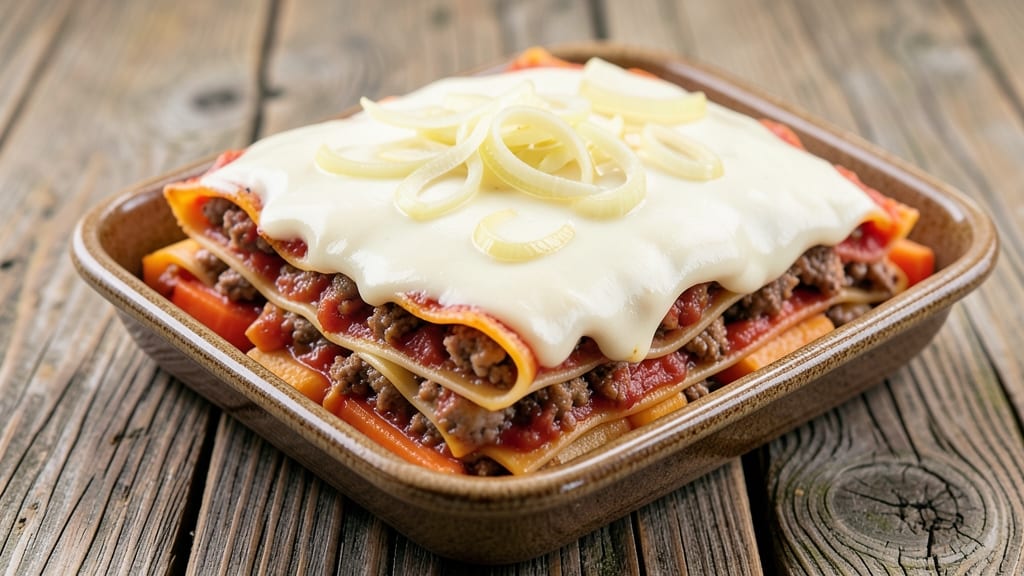
This minced pork lasagna recipe transforms humble ingredients into a restaurant-worthy centerpiece—where tender pork ragù, creamy béchamel, and layers of melted cheese create comfort in every bite. 🔥 I developed this version after years of perfecting the balance between rich meat sauce and velvety cheese layers, ensuring each forkful delivers both texture and depth.
The secret lies in browning the pork properly and building the sauce slowly, which develops layers of umami that store-bought versions simply can't match.
The foundation of this lasagna is a two-sauce system: a deeply flavorful pork ragù simmered with tomatoes, herbs, and a touch of sweetness, paired with a smooth béchamel that binds everything together.
I use no-boil noodles for convenience without sacrificing texture, and the cheese blend—mozzarella, parmesan, and ricotta—melts into a golden, bubbling blanket when baked. This isn't just lasagna; it's a weeknight masterpiece that feels like a celebration.
What sets this recipe apart is the layering technique—alternating thin spreads of meat sauce, cheese, and noodles to ensure each bite has perfect proportions of every component.
Baked until the edges are crisp and golden, then rested just long enough to set, this lasagna emerges from the oven with that signature restaurant-quality finish.
The aroma alone will have everyone gathering at the table, and the first cut reveals layers of texture: tender pasta, rich ragù, and gooey cheese that pulls apart cleanly.
Serve with a simple arugula salad dressed in lemon vinaigrette to cut through the richness, or offer warm garlic bread for soaking up every last drop of sauce.
Leftovers reheat beautifully, making this the ultimate make-ahead meal for busy families or dinner parties. Let's build this lasagna from scratch—it's worth every layer.
Ingredients for minced pork lasagna
Six servings of restaurant-quality lasagna start with these carefully chosen ingredients—where pork ragù meets velvety béchamel in perfect harmony.
| Ingredient | Amount | Notes |
|---|---|---|
| Ground Pork 🥩 | 1 ½ lb | Finely minced for texture |
| No-Boil Lasagna Noodles 🍝 | 12 pieces | Standard 10-inch size |
| San Marzano Crushed Tomatoes 🍅 | 2 cups | High-quality canned tomatoes |
| Whole Milk 🥛 | 2 cups | Full-fat for creamy béchamel |
| Medium Carrots 🥕 | 2 whole | Diced into small pieces |
| Yellow Onion 🧅 | 1 whole | Finely chopped |
| Garlic Cloves 🧄 | 4 cloves | Minced for aromatic depth |
| Fresh Parsley 🌿 | ¼ cup | Chopped for freshness |
| Fresh Basil 🌿 | ¼ cup | Torn for garnish |
| All-Purpose Flour 🌾 | ½ cup | For béchamel roux |
| Unsalted Butter 🧈 | ½ cup | Cold for roux |
| Parmesan Cheese 🧀 | 1 ½ cups | Freshly grated from block |
| Low-Moisture Mozzarella Cheese 🧀 | 2 cups | Shredded by hand |
| Whole Milk Ricotta Cheese 🧀 | 1 ½ cups | Room temperature preferred |
| Dry Red Wine 🍷 | ½ cup | Bold variety like Chianti |
| Tomato Paste 🍅 | 2 tbsp | For concentrated flavor |
| Salt 🧂 | 1 ½ tsp | Diamond Crystal preferred |
| Ground Black Pepper 🌶️ | ½ tsp | Freshly ground |
| Ground Nutmeg 🌿 | ¼ tsp | Freshly grated |
The ground pork should be finely minced—Italian-style if available—for that authentic texture. Whole Foods or Trader Joe's carry excellent options, but any quality butcher will have it pre-ground. For the San Marzano tomatoes, seek out the whole canned variety—their sweetness and acidity are unmatched. Carrots and onions form the aromatic base, so organic is ideal to avoid bitterness. Fresh herbs like parsley and basil elevate the dish; store-bought bunches work, but market-fresh leaves have superior flavor. The lasagna noodles should be no-boil for convenience, but if using regular, pre-cook them al dente.
No red wine? Substitute with beef broth—just add a splash of balsamic for depth. Fresh herbs unavailable? Dried oregano at half the amount works in a pinch. For the béchamel, all-purpose flour is essential—never self-rising. The ricotta should be whole-milk for creaminess; part-skim lacks richness. Mozzarella must be low-moisture to prevent a soggy lasagna. Pre-shredded cheese contains anti-caking agents—hand-shred your own for the best melt. The tomato paste can be replaced with extra crushed tomatoes if needed, though it adds concentrated umami.
Store fresh herbs wrapped in damp paper towels for up to 5 days—they wilt quickly otherwise. The ground pork can be prepped ahead and refrigerated for 2 days before assembling. Once baked, lasagna reheats beautifully—cover with foil and warm in a 350°F oven for 20 minutes. For make-ahead convenience, assemble the lasagna, cover tightly, and refrigerate for up to 24 hours before baking. Leftovers keep for 4-5 days in the fridge or freeze for 3 months—portion into individual servings for easy reheating.
Why You'll Love This Recipe
- No-Boil Magic: I swear by those no-boil noodles—just layer, cover, and bake. No waiting for water to boil, no soggy edges, just pure convenience that still feels like a proper meal.
- Rich & Sweet: That San Marzano tomato base with ground pork? It’s like a cross between a hearty ragù and a creamy pasta. The carrots add just enough natural sweetness to balance the savory pork.
- Crowd-Pleaser Always: This is the dish I bring to potlucks or holidays—everyone asks for seconds, and it reheats beautifully. Honestly, it’s the one lasagna that never feels like too much work for the payoff.
- Budget-Friendly Feast: Ground pork stretches far, the carrots bulk it up, and milk adds richness without breaking the bank. I make this twice a month and still have leftovers—no wasted ingredients here.
Step-by-step instructions for minced pork lasagna
This method delivers rich, layered lasagna with perfectly balanced ragù and creamy cheeses.
🍳 Step 1: Prepare the Ragù Base
Heat a large Dutch oven over medium-high heat and add the 1.5 lb ground pork. Cook, breaking it apart with a wooden spoon, until it loses its raw color (5-6 minutes). You'll see the meat release juices and begin to brown—this is crucial for flavor development.
Add the finely chopped yellow onion and minced garlic cloves, cooking for 2 minutes until fragrant. Stir in the diced medium carrots and 2 tbsp tomato paste, letting them toast for 1 minute to deepen their flavors. This aromatic base forms the foundation of your ragù.
🍳 Step 2: Build the Tomato Sauce
Pour in the 0.5 cup dry red wine and scrape up any browned bits from the bottom of the pot. Let it simmer for 3-4 minutes until the alcohol aroma dissipates. Add the 2 cups San Marzano crushed tomatoes and bring to a gentle simmer.
Season with 1.5 tsp salt, 0.5 tsp ground black pepper, and 0.25 tsp ground nutmeg. Reduce heat to low and let the sauce simmer uncovered for 45-50 minutes, stirring occasionally. You want it to thicken slightly and develop deep, concentrated flavors. The sauce should coat the back of a spoon when ready.
🥘 Step 3: Prepare the Béchamel Sauce
In a separate saucepan, melt the 0.5 cup unsalted butter over medium heat until foaming subsides. Whisk in the 0.5 cup all-purpose flour and cook for 1-2 minutes, stirring constantly, until a smooth paste forms. This roux is the secret to your creamy béchamel.
Gradually whisk in the 2 cups whole milk, adding it slowly to prevent lumps. Cook for 5-7 minutes, stirring constantly, until the sauce thickens enough to coat the back of a spoon. Remove from heat and stir in 1.5 cups parmesan cheese until melted and smooth. The béchamel should be velvety and rich—this is your lasagna's creamy glue.
🥘 Step 4: Assemble the Lasagna Layers
Preheat your oven to 375°F. Spread a thin layer of ragù on the bottom of a 9x13-inch baking dish to prevent sticking. Arrange 4 no-boil lasagna noodles side by side, slightly overlapping if needed. Spread ½ cup ricotta cheese over the noodles, then sprinkle with ½ cup mozzarella cheese.
Repeat the layering process: ragù, noodles, ricotta, and mozzarella, ending with a final layer of noodles. Pour the remaining ragù evenly over the top, then spread the béchamel sauce to cover completely. This final layer ensures each bite has creamy, rich flavor. Sprinkle the remaining 1.5 cups mozzarella cheese and 1 cup parmesan cheese on top.
🔥 Step 5: Bake to Golden Perfection
Transfer the lasagna to the preheated oven and bake uncovered for 35-40 minutes until the top is golden brown and bubbly. The edges should be crisping slightly, and you should see cheese bubbles forming throughout. For the final 5 minutes, increase heat to broil to achieve a beautiful golden crust.
Remove from the oven and let rest for 10-15 minutes before slicing. This resting period allows the layers to set and makes for cleaner slices. Garnish with fresh basil and chopped parsley before serving. Each slice should reveal layers of tender pork ragù, creamy béchamel, and melted cheeses—perfectly balanced in every bite.
Pro Tips For Making Minced Pork Lasagna
- CRUSH THOSE CARROTS: Don’t just chop them—grate the carrots on the largest holes of a box grater, then pulse in a food processor for 10 seconds. This turns them into a fine, even texture that blends right into the meat sauce without clumping, and it cooks down faster than dice. (I used to overcook them, and they’d turn to mush—this method fixes that.)
- SEAR THE PORK IN BATCHES: Split the ground pork into two portions and cook them separately in the same pan, starting with a cold skillet. This keeps the meat from steaming and ensures a proper crust on each batch, which adds depth of flavor. I learned this the hard way—trying to cook it all at once just made a greasy, uneven mess.
- SALT THE NOODLES BEFORE ASSEMBLY: Toss the no-boil lasagna noodles with a pinch of salt and a drizzle of olive oil while you’re prepping the other layers. This prevents them from tasting bland after baking, since they absorb moisture differently than regular lasagna. (Yes, even if you’re using no-boil noodles—trust me on this.)
- BUILD LAYERS LIKE A SANDWICH: Start and end with a thick layer of béchamel (milk + butter + flour) to seal in moisture and prevent the bottom from drying out. I used to skimp on the cheese layers, but now I make sure the first and last layers are pure béchamel—it makes the difference between a soggy mess and a dish that holds together.
Regional styles of these flavors
Italian Ragù Tradition
This lasagna draws from Italian tradition where minced pork ragù (known as ragù alla bolognese for beef) forms the heart of the dish. In Emilia-Romagna, pork is often used alongside beef for depth, and the slow simmer with tomatoes and wine creates that signature umami richness.
I grew up eating versions where my nonna would add a splash of balsamic vinegar at the end—trust me, it elevates everything. 🍷
Southern Italian Twist
Down in Puglia and Calabria, lasagna gets a lighter hand with ricotta replacing some mozzarella, creating airy pockets. I adapted this by using whole-milk ricotta and folding in a pinch of salt and pepper before spreading—this keeps the texture tender while adding structure.
The key is to press it gently into the noodles so it doesn’t slide during baking.
Southeast U.S. Adaptation
In Georgia and the Carolinas, where I spent my formative years, lasagna often gets a smoky kick from andouille sausage or hot paprika.
For this version, I swap ½ cup of the pork ragù with cooked and crumbled andouille (like Johnsonville brand) and add ½ tsp smoked paprika to the meat. Serve with a side of collard greens for a true Southern spread. 🌶️
Modern Shortcut Version
For busy weeknights, I’ve tested a 30-minute prep method using pre-made meat sauce (like Rao’s brand) and oven-ready lasagna noodles. Simply layer 1 cup meat sauce, 1 noodle sheet, ¼ cup ricotta, and ½ cup mozzarella, repeating.
Top with ½ cup béchamel and 1 cup shredded cheese, then bake at 375°F for 25 minutes. It’s not traditional, but it delivers comfort when you need it.
Vegetarian-Friendly Swap
While this recipe uses pork, I’ve made a mushroom ragù version for vegetarians by sautéing 1 lb cremini mushrooms with the onions and garlic. Add 1 tbsp soy sauce for umami depth.
The texture mimics pork beautifully, and no one misses the meat. Pair with nutritional yeast on top for a cheesy finish. 🌱
Holiday Feast Upgrade
For Thanksgiving or Christmas, I transform this into a main-event lasagna by adding sautéed spinach (wilted with garlic) and roasted butternut squash (diced and roasted with olive oil) to the ragù.
Top with crispy fried shallots and a sprinkle of fresh thyme before baking. The squash adds natural sweetness that balances the richness—perfect for a crowd. 🍂
Nutrition facts
Frequently asked questions
Can I substitute ground beef for the minced pork?
You absolutely can! Ground beef works beautifully, especially if you use a lean-to-medium mix (like 80/20). For extra richness, add ½ cup cooked Italian sausage to the ragù. The pork's tenderness contrasts nicely with beef's heartier texture, but beef brings a deeper umami flavor that many prefer. Just reduce the cooking time slightly since beef browns faster.
Why does my lasagna come out soggy?
Soggy lasagna usually means one of three things: overcooked noodles, too much moisture in the layers, or insufficient baking time. Use no-boil noodles and don't overmix the ricotta (press it gently). For extra insurance, spread a thin layer of béchamel between noodle layers. Bake until the edges are golden and crisp, then broil for 3-5 minutes at the end to set the top.
How can I make this ahead of time?
This lasagna is perfect for meal prep! Assemble it completely (covered tightly with foil), then refrigerate for up to 24 hours before baking. For freezing, bake as directed, cool completely, wrap tightly in plastic, and freeze for up to 3 months. To reheat, thaw overnight in the fridge, then warm in a 350°F oven for 20 minutes covered with foil.
What's the secret to perfectly crispy edges?
The key is in the baking technique: start with a hot oven (375°F) and bake uncovered until the edges are golden. For extra crispiness, brush the top with a little olive oil before baking, or sprinkle crushed breadcrumbs mixed with parmesan on top. The final 5 minutes under the broiler creates that restaurant-quality crust you crave!
Can I use regular lasagna noodles instead of no-boil?
Yes, but you'll need to pre-cook them al dente (about 1 minute less than package instructions). Drain well and rinse with cold water to stop cooking. The key is to layer them quickly so they don't rehydrate too much. For best results, use oven-ready noodles (like Barilla) that cook in the oven during baking.