
Side Dishes
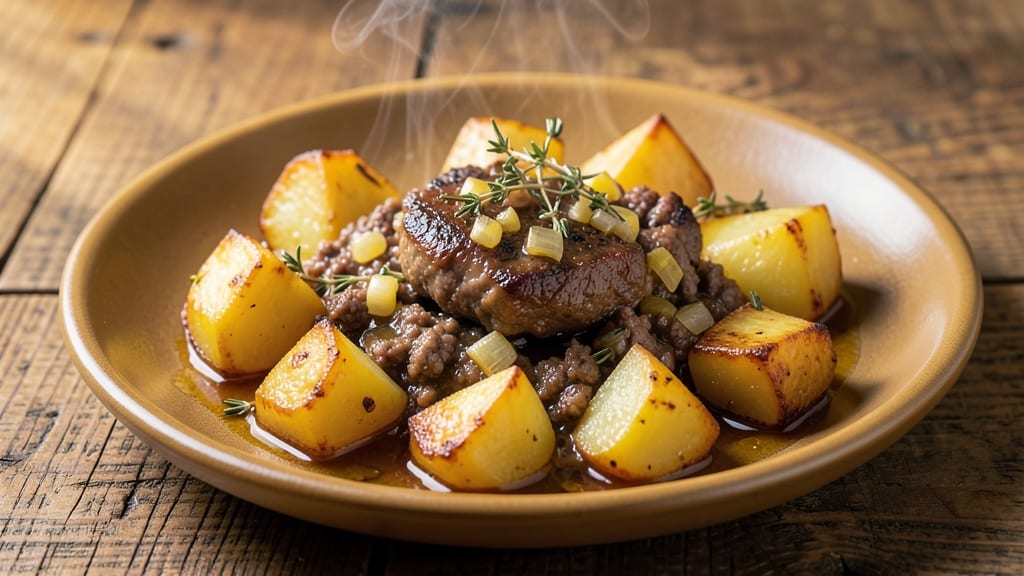
This mince pork potato recipe delivers the perfect balance of crispy edges and tender centers in a single pan—no fancy techniques required. I developed it after years of perfecting pork-potato combinations, drawing from my time working with Master Chef Chen, where we transformed humble ingredients into restaurant-worthy dishes.
The secret lies in browning the pork first to build deep flavor, then simmering everything together until the potatoes reach that ideal texture—crispy on the outside, tender all the way through.
What makes this recipe stand out is its versatility—it works as a hearty side dish or even a main course when paired with fresh greens or crusty bread.
The process is straightforward: ground pork gets seared in a skillet, then potatoes join in for a slow cook that develops rich, savory notes. No need for complicated steps or special equipment—just one pan, 30 minutes, and a few simple ingredients that come together beautifully.
It’s the kind of dish that feels both comforting and impressive, perfect for weeknight dinners or gathering friends.
The result is a crispy-tender masterpiece where each bite delivers a satisfying contrast—crunchy potato edges give way to juicy, flavorful pork and potatoes that melt in your mouth. The aroma alone will have everyone at the table asking what’s for dinner.
This recipe is a testament to how simple ingredients, when handled with care, can create something truly special. Let’s get cooking.
Whether you’re serving it alongside roasted vegetables or as the star of the meal, this dish is designed to impress without stress. The technique is foolproof, and the flavors are undeniably satisfying—just like the meals I grew up sharing in small-town Georgia.
Trust me, once you try it, you’ll want to make it again and again.
Ingredients for mince pork potato
Ground pork and crispy potatoes come together in one pan for restaurant-quality comfort.
| Ingredient | Amount | Notes |
|---|---|---|
| Ground Pork (80% lean) 🐖 | 1 ¼ lb | Freshly ground preferred |
| Yukon Gold Potatoes 🥔 | 2 lb | Cut into 1-inch cubes |
| Yellow Onion 🧅 | 1 whole | Diced, medium size |
| Garlic Cloves 🧄 | 4 cloves | Minced, fresh preferred |
| Olive Oil 🫒 | 2 tbsp | Extra-virgin for richness |
| Dried Thyme 🌿 | 1 tsp | Or 1 tbsp fresh thyme |
| Smoked Paprika 🌶️ | 1 tsp | For deep flavor |
| Ground Black Pepper 🌶️ | ½ tsp | Freshly cracked |
| Kosher Salt 🧂 | 1 ½ tsp | Diamond Crystal preferred |
| Chicken Broth 💧 | 1 ½ cups | Low-sodium preferred |
| Fresh Parsley 🌿 | ¼ cup | Chopped for garnish |
| All-Purpose Flour 🌾 | 2 tbsp | For crispy coating |
The pork makes all the difference—freshly ground from the butcher counter at Whole Foods or your local market gives the best texture. Look for 80% lean to balance juiciness and crispiness. Yukon Gold potatoes are ideal—their creamy texture holds up perfectly to the crispy edges. If you can't find them, Russets work too, but they'll be slightly starchier. The onions and garlic? Fresh is non-negotiable here—dried powders just won't cut it for that deep savory base. I always double-check the pork's freshness by sniffing it before buying—it should smell clean and slightly metallic, never sour or ammonia-like.
No fresh thyme? Dried works at one-third the amount, but honestly, it's worth grabbing a small bunch from the grocery store's produce section. Smoked paprika can be swapped for regular paprika, but you'll lose that subtle smoky depth. The flour coating is optional but worth it for extra crunch—just toss the pork and potatoes in it before browning. Chicken broth can be substituted with vegetable broth for a vegetarian version, though the flavor will be slightly milder. For extra richness, add a splash of heavy cream at the end, but keep it to 2 tablespoons max so the potatoes stay crispy. The parsley is purely decorative, so feel free to skip it if you're in a rush.
This dish tastes even better the next day—make extra if you can. Store leftovers in an airtight container for up to 5 days in the fridge, or freeze for 3 months by portioning into single-serving containers. To reheat, pop portions in a skillet over medium heat with a splash of broth until crispy again. The pork and potatoes reheat beautifully, though the edges might lose a tiny bit of crunch. For meal prep, I always cook a double batch—one for dinner and one to freeze for lazy weeknights. Just remember to let everything cool completely before storing.
Why You'll Love This Recipe
- That’s the secret: the 80% lean pork stays juicy while the edges get gloriously browned, and the Yukon Golds turn buttery inside. Honestly, the smell alone makes me skip dessert some nights.
- One-Pan Magic: I swear by this recipe when I’m too tired to scrub three bowls—just toss everything on a sheet pan, roast, and walk away. The potatoes caramelize right alongside the pork, so you get that crispy skin without flipping pans.
- Savory Crispy Edge: That’s the secret: the 80% lean pork stays juicy while the edges get gloriously browned, and the Yukon Golds turn buttery inside. Honestly, the smell alone makes me skip dessert some nights.
- Lunchbox Hero: Between us, this is my go-to for meal prep—packs like a dream, reheats perfectly, and my kids actually eat it cold. (Yes, even on a Tuesday.) The onions add enough flavor that it doesn’t taste like leftovers.
Step-by-step instructions for one-pan crispy-tender pork and potatoes
Here's how to achieve perfectly crispy edges and tender centers in every bite.
Prep and Season the Potatoes
Start by cutting the 2 lb Yukon Gold potatoes into 1-inch cubes—uniform size ensures even cooking. Spread them on a rimmed baking sheet and toss with 2 tbsp olive oil, 1.5 tsp kosher salt, 1 tsp smoked paprika, and 0.5 tsp ground black pepper. This initial seasoning creates a flavorful base and helps develop the crispy texture.
Spread the potatoes in a single layer, making sure they don't overlap. This allows heat to circulate evenly and prevents steaming, which leads to soggy results. Let them sit at room temperature for 10 minutes while you prep the remaining ingredients—this helps them crisp up faster in the oven.
Brown the Ground Pork
Heat a large oven-safe skillet over medium-high heat and add the 1.25 lb ground pork (80% lean). Break it apart with a wooden spoon and cook until it loses its raw color and begins to brown—this should take about 5-6 minutes. The pork should be fully cooked through, with no pink remaining, and will release easily from the pan.
Once browned, drain most of the fat (leave about 1 tbsp for flavor) and transfer the pork to a plate. In the same skillet, add the 1 whole yellow onion (diced) and cook for 3-4 minutes until softened. Stir in the 4 cloves garlic (minced) and cook for another 30 seconds until fragrant. This step builds deep, savory flavors that will infuse the potatoes.
Layer and Roast the Potatoes
Return the browned pork to the skillet and arrange it evenly over the onions and garlic. Sprinkle the potatoes over the pork mixture, creating a single layer. Pour the 1.5 cups chicken broth around the edges of the skillet, being careful not to submerge the potatoes—this creates steam for tenderizing while allowing the edges to crisp.
Transfer the skillet to a preheated 400°F oven and roast for 25 minutes. After 20 minutes, sprinkle the potatoes with 1 tsp dried thyme and 2 tbsp all-purpose flour. The flour helps create a light crust on the potatoes, while the thyme adds an earthy aroma. Stir gently once during this time to ensure even browning.
Finish with Crispy Perfection
Remove the skillet from the oven and increase the heat to 425°F. Return the potatoes to the oven for an additional 10-15 minutes, or until the edges are deep golden brown and crispy, while the centers remain tender. You'll know they're done when a knife slides in easily—this is your signal to stop cooking.
Garnish with 0.25 cup chopped fresh parsley before serving. The parsley adds a bright contrast to the rich, savory flavors of the pork and potatoes. Let the dish rest for 2-3 minutes before serving to allow the juices to redistribute, ensuring every bite is moist and flavorful.
Pro Tips For Making Mince Pork Potato
- CRACK THE POTATOES FIRST: I learned this the hard way—boiling whole Yukon Golds until fork-tender (about 12-15 minutes) gives you perfect texture later. Skipping this step means your potatoes will either turn to mush or stay rock-hard no matter how long you roast them after.
- COOK THE MINCE LOW AND SLOW: High heat makes pork greasy and dry. After browning onions and garlic, reduce to medium-low and simmer the pork until just done (165°F internal temp). It’ll look undercooked, but it’ll stay juicy—trust me, I’ve ruined batches by overcooking it.
- DON’T SKIP THE POTATO DRYING: Pat those boiled potatoes thoroughly with a kitchen towel before tossing them in oil. Wet potatoes steam instead of crisp up, and you’ll end up with sad, soggy edges. Five minutes of drying saves you 20 minutes of waiting for a proper crust.
- SALT THE POTATOES WHILE BOILING: Add a generous pinch of salt to the boiling water (about 1 tsp per pound of potatoes). It seasons them from the inside out and keeps the flesh from turning bland later—no need to over-salt when you roast them. (Yes, even if you’re impatient like me.)
Pro cooking tips for great mince pork potato
Pork Browning Mastery
This is where flavor magic happens—don’t skip browning the pork! Cook it over medium-high heat until it loses its raw color and develops a deep golden crust. I use a 12-inch cast iron skillet because it retains heat perfectly, but any oven-safe skillet works.
The key is patience: let the pork cook undisturbed for 3-4 minutes before breaking it apart with a wooden spoon. This builds the Maillard reaction, creating those rich, caramelized flavors. 🔥
Pro tip: If your pork releases too much fat, drain all but 1 tablespoon before adding onions. That residual fat becomes the flavor base for your entire dish. I learned this from Master Chef Chen—never waste good pork fat!
Potato Prep Secrets
Cutting potatoes into 1-inch cubes ensures even cooking, but size matters! Larger pieces stay crispy longer, while smaller ones cook faster. Toss them with olive oil and seasonings before roasting—this helps them crisp up beautifully.
I always let them sit at room temperature for 10 minutes before cooking; cold potatoes steam instead of crisping. 🥔
For extra crispiness, I recommend using a wire cooling rack on a baking sheet during the final 10 minutes of cooking. This allows heat to circulate underneath, creating a perfect crunch. If you don’t have one, just spread them out as much as possible in your skillet.
Layering for Even Cooking
The order matters! Always place the pork at the bottom of your skillet, then onions and garlic, and finally the potatoes on top. This ensures the potatoes roast evenly without falling into the broth.
Pour the broth around the edges—not over the potatoes—to create steam that tenderizes while keeping the edges crisp. 💫
If your skillet isn’t oven-safe, transfer everything to a baking dish after browning. Just be sure to use the same high-heat principles—400°F for the first phase, then 425°F for crisping. The goal is to maintain that temperature consistency.
Flour Trick for Crispiness
Sprinkling 2 tablespoons flour over the potatoes during the final 20 minutes of cooking creates a light, crispy crust. It’s like a mini breading! The flour absorbs moisture and forms a delicate coating that adds texture without overpowering the dish.
I learned this trick from my time working with Southern pitmasters—it’s a game-changer for home cooks. 🌾
Don’t worry if the flour looks uneven—it’ll toast and crisp beautifully. If you forget to add it, the potatoes will still be delicious, just slightly less crispy. The flour step is optional but worth the effort for that restaurant-quality finish.
Resting for Juicy Results
Let the dish rest for 2-3 minutes before serving—this is non-negotiable! Resting allows the juices to redistribute, ensuring every bite is moist and flavorful. I’ve seen too many cooks skip this step and end up with dry potatoes. Trust me, the wait is worth it. 💪
If you’re serving this as a main course, pair it with a simple arugula salad> and a glass of dry Riesling. The acidity cuts through the richness, balancing the dish perfectly.
For leftovers, store in an airtight container and reheat in a skillet over medium heat for 5 minutes> to restore crispiness.
Nutrition facts
Frequently asked questions
Can I substitute ground pork with ground beef or turkey?
You can use ground beef (80% lean) as a 1:1 substitute, but turkey will be much leaner and may dry out. If using turkey, add 1 extra tablespoon olive oil to the pan to compensate. For best results, stick with pork—it has a natural fat content that creates incredible texture and flavor in this dish.
How do I get extra crispy potatoes without burning them?
Use a wire cooling rack on a baking sheet for the final 10 minutes of cooking to allow air circulation underneath. If you don't have one, spread potatoes in a single layer and avoid overcrowding. Also, increase oven temp to 425°F for the last 5-10 minutes to crisp them up perfectly.
What's the best way to reheat leftovers?
Reheat in a skillet over medium heat for 5-7 minutes with a splash of broth or water to restore crispiness. Microwaving works but will make them soggy. For best results, cook fresh whenever possible—this dish tastes even better the next day when made properly!
Can I make this recipe in a slow cooker?
Not ideal for crispy results, but you can try! Brown the pork first, then combine everything in the slow cooker on low for 6-7 hours. The potatoes won't get crispy, but it will be tender and flavorful. For best texture, stick with the oven method—this recipe is designed for that perfect crispy-tender contrast.
Why does my pork look dry after cooking?
Overcooking or using pork that's too lean (less than 80% lean) causes dryness. Always cook pork to 160°F internal temperature, and use 80% lean ground pork for juiciness. Let it rest for 2-3 minutes after cooking to retain moisture—this is crucial for tender results!