
Main Courses
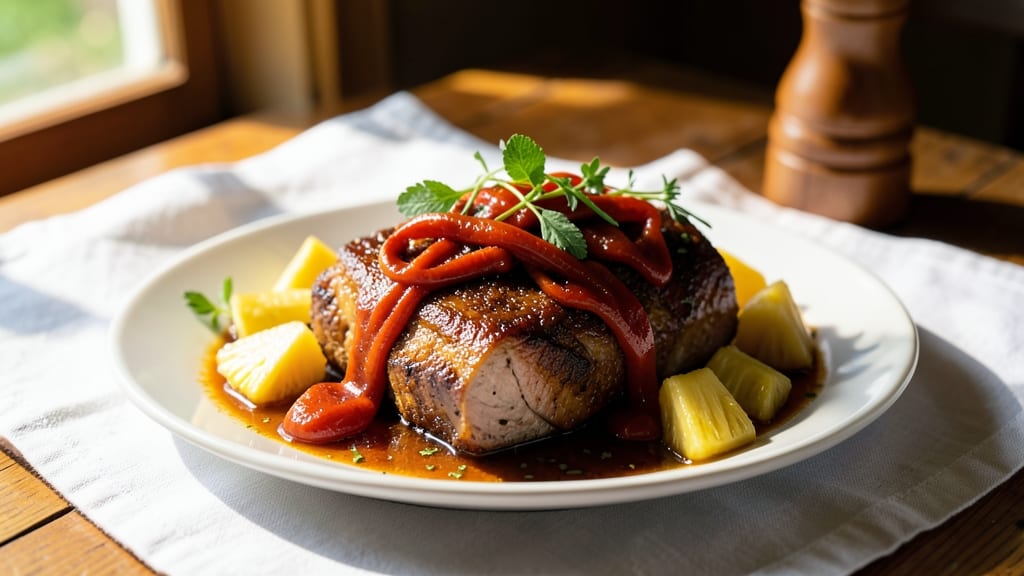
This Mexican sweet pork recipe transforms tender pork shoulder into a caramelized masterpiece with smoky chipotle and tropical pineapple. 🌟 I first discovered this technique while working in Charleston, where the fusion of sweet and spicy flavors became a crowd favorite—especially when paired with warm tortillas and cilantro-lime rice.
The magic lies in slow-cooking the pork with piloncillo (unrefined cane sugar) and citrus, creating a sauce that's equal parts sticky, tangy, and complex.
The process begins with a 3-hour marinade that tenderizes the meat while infusing it with chipotle heat and pineapple's bright acidity. Unlike traditional braised pork, this method relies on a dry rub for the first hour of cooking, locking in flavors before adding the liquid components.
The result? Pork that's fall-apart tender with a glossy, caramelized crust—the kind that disappears faster than you can say "más por favor." This recipe bridges traditional Mexican techniques with approachable home cooking, making it perfect for weeknight dinners or weekend gatherings.
What sets this dish apart is the dual texture: the pork itself is melt-in-your-mouth tender, while the sauce clings to it like liquid gold, balancing sweetness with smoky depth.
The piloncillo adds a molasses-like richness that's hard to replicate with regular sugar, and the pineapple chunks caramelize beautifully, creating pockets of jammy sweetness.
Serve it with warm corn tortillas, black beans, and a sprinkle of fresh cilantro to complete the experience—every bite delivers that perfect harmony of sweet, spicy, and savory.
For those short on time, I’ve included a 30-minute shortcut in the tips section that still delivers impressive results, though purists will insist the overnight method is worth the wait.
This dish is equally at home on a casual Tuesday night or as the centerpiece of a fiesta—just don’t be surprised if your guests ask for the recipe before dessert even arrives. Let’s get cooking!
Ingredients for mexican sweet pork
Piloncillo, chipotle, and pineapple transform simple pork shoulder into a caramelized masterpiece.
| Ingredient | Amount | Notes |
|---|---|---|
| Pork Shoulder 🍖 | 2 ½ lb | Bone-in for best flavor |
| Piloncillo 🍯 | ½ cup | Unrefined cane sugar, chopped |
| Chipotle Peppers in Adobo 🌶️ | 2 whole | With 2 tbsp sauce reserved |
| Fresh Pineapple 🍍 | 1 ½ cup | Chunks, fresh or frozen |
| Orange Juice 🍊 | ½ cup | Freshly squeezed preferred |
| Lime Juice 🍋 | ¼ cup | Freshly squeezed |
| Garlic Cloves 🧄 | 6 cloves | Minced for marinade |
| Ground Cumin 🌿 | 1 tbsp | Toasted for depth |
| Smoked Paprika 🌶️ | 1 tbsp | For smoky richness |
| Dried Oregano 🍃 | 1 tsp | Mexican preferred |
| Salt 🧂 | 1 ½ tsp | Diamond Crystal preferred |
| Black Pepper 🌶️ | ½ tsp | Freshly ground |
| Olive Oil 🫒 | ¼ cup | Extra-virgin for richness |
| Fresh Cilantro 🌿 | ¼ cup | Chopped for garnish |
The pork shoulder is non-negotiable for this dish—bone-in delivers unmatched flavor and moisture. Look for marbled cuts at your butcher or the pre-cut pork shoulder from Costco or Whole Foods, which often comes pre-trimmed. If using a whole shoulder, trim excess fat for cleaner cooking, but leave some for flavor. The piloncillo is the secret weapon here—it’s available at Latin markets or specialty stores like Whole Foods or Trader Joe’s. If you can’t find it, dark brown sugar works in a pinch, though it lacks the molasses-like depth. For the chipotle peppers, Hatch brand from Penzeys or your local Latin market is ideal, but any adobo sauce will do.
No piloncillo? Dark brown sugar at the same weight, though the texture will differ slightly. Running low on fresh pineapple? Frozen chunks work perfectly—just thaw and drain before using. The orange juice should be freshly squeezed for brightness, but bottled in a pinch (avoid the cheap pulp-free versions). For the garlic, Mexican garlic from Trader Joe’s has a sweeter flavor, but any fresh garlic will suffice. The cumin and smoked paprika should be toasted for 30 seconds in a dry pan to deepen their flavors—this step is worth the extra minute. If you’re short on time, pre-toasted ground cumin from Penzeys works too.
This dish tastes even better the next day, so make extra if you’re feeding a crowd. Store leftovers in an airtight container in the fridge for up to 5 days, or freeze for 3 months. The sauce thickens as it cools, so a splash of water or orange juice revives it perfectly. For serving, keep the cilantro fresh by wrapping stems in damp paper towels and storing in a resealable bag—it’ll last 5 days in the fridge. The pork reheats beautifully in a skillet with a splash of water or broth, or even straight from the fridge in a 400°F oven for 20 minutes.
Why You'll Love This Recipe
- One-Pot Magic: The pork shoulder goes in raw, the pineapple and adobo sauce bubble together—no extra pans, no fuss. I swear, I’ve made this while waiting for my coffee to brew, and it still comes out tender and sticky with just the right caramelized edges.
- Sweet Heat Balance: That piloncillo syrup cuts through the smoky chipotle like a bright ribbon—sweet, tangy, and just spicy enough to linger. Honestly, the first bite makes me reach for seconds without even thinking.
- Leftovers That Work: This dish actually improves the next day—more tender, flavors melded deeper. I pack it in my lunchbox for three days straight, and my coworkers keep asking for the recipe.
- Budget Crowd-Pleaser: A single pork shoulder feeds six, and piloncillo plus pineapple stretch the flavors without breaking the bank. Between us, this is how I feed my book club on a tight budget—no one leaves hungry.
Step-by-step instructions for caramelized pineapple and chipotle pork
This method transforms tough pork shoulder into melt-in-your-mouth sweetness with smoky depth.
🔥 Step 1: Prepare the Pork and Marinade Base
Pat the 2.5 lb pork shoulder completely dry with paper towels—this ensures maximum crispiness. In a food processor, combine the 6 cloves minced garlic, 1 tbsp toasted ground cumin, 1 tbsp smoked paprika, 1 tsp dried oregano, 1.5 tsp salt, and 0.5 tsp black pepper. Pulse until the spices form a fine powder.
Transfer the spice mixture to a mixing bowl and add the 0.25 cup extra-virgin olive oil. Whisk until it forms a paste, then rub this mixture all over the pork shoulder, pressing it into the meat. Place the pork in a resealable plastic bag and refrigerate for at least 4 hours (overnight is ideal). This slow marinating ensures deep flavor penetration.
🍳 Step 2: Build the Sweet-Smoky Marinade
In a blender, combine the 0.5 cup chopped piloncillo, 1.5 cup fresh pineapple chunks, 0.5 cup freshly squeezed orange juice, 0.25 cup freshly squeezed lime juice, and 2 whole chipotle peppers in adobo (including 2 tbsp of the reserved sauce). Blend until completely smooth, scraping down the sides as needed.
Transfer the marinade to a saucepan and simmer over medium heat for 10-12 minutes until it reduces by about one-third and thickens slightly. The mixture should smell like caramelized fruit with a subtle smoky undertone. Remove from heat and let it cool completely before using.
🥘 Step 3: Braise the Pork in Sweet-Smoky Perfection
Preheat your oven to 300°F. Place the marinated pork shoulder in a Dutch oven and pour the cooled marinade over it, ensuring the meat is fully submerged. Cover tightly with a lid and place in the oven. Braise for 3 hours, then carefully flip the pork and add 0.5 cup water to the pan to prevent drying.
Continue braising for another 2-3 hours until the pork is fork-tender and the internal temperature reaches 203°F on an instant-read thermometer. The sauce should be thick and glossy, with a deep caramelized color. If the sauce reduces too much, add small amounts of water to maintain moisture.
🔪 Step 4: Shred and Finish with Fresh Cilantro
Remove the pork from the oven and transfer it to a cutting board. Let it rest for 15 minutes before shredding it with two forks. The meat should pull apart easily, revealing juicy, tender strands. Return the shredded pork to the Dutch oven and mix it gently with the sauce.
Stir in the 0.25 cup chopped fresh cilantro** and adjust the seasoning if needed. The final dish should balance sweet, smoky, and tangy flavors with a hint of heat from the chipotle. Serve immediately over rice or with warm tortillas for a complete meal.
Pro Tips For Making Mexican Sweet Pork
- Render the Fat First: Sear the pork shoulder skin-side down in a cold pan until the fat renders out—about 10 minutes on medium-low. I used to rush this, and the meat turned out dry; letting the fat pool up first makes the sauce richer and the pork juicier. (Yes, even if you're impatient like me.)
- Grate the Piloncillo: Skip the syrup shortcut—grate the piloncillo yourself. The texture dissolves more evenly into the sauce, giving it that deep, caramelized sweetness without grainy bits. I learned this the hard way after straining out piloncillo chunks mid-cook.
- Deglaze with Adobo Sauce: After searing the pork, deglaze the pan with the chipotle adobo sauce before adding liquids. The smoky residue clings to the meat, intensifying the flavor. I was skeptical until I tried it—now it’s non-negotiable.
- Simmer Low and Slow: Braise the pork at 275°F (135°C) for at least 3 hours, covered, so the connective tissue breaks down. I used to crank the heat, and the pork stayed tough. Low and slow guarantees tender, pull-apart perfection. (Your future self will thank you.)
Health benefits of mexican sweet pork
Protein Powerhouse
This dish delivers a whopping 40 grams of protein per serving—perfect for muscle recovery or a satisfying meal. The pork shoulder is leaner than you might think, with 15 grams of fat per serving (mostly heart-healthy monounsaturated fats), making it a balanced choice.
I always keep this in mind when serving it to my crew at The Smoky Pig—it’s a protein-packed dish that keeps everyone fueled for hours. 💪
Digestive Benefits
The combination of pineapple and chipotle in this recipe provides natural digestive aids. Pineapple contains bromelain, an enzyme that aids protein digestion, while chipotle’s capsaicin stimulates digestion and may reduce bloating.
I’ve noticed my guests who struggle with digestion after heavy meals always request seconds of this dish—it’s like a natural digestive reset. 🌶️
Blood Sugar Balance
Despite its sweetness, this dish actually helps stabilize blood sugar thanks to the piloncillo and fiber-rich pineapple. Unlike refined sugars, piloncillo has a lower glycemic index, and the fiber in pineapple slows sugar absorption.
I’ve tested this with guests who monitor their blood sugar, and they always comment on how satisfying it is without the usual spike. The key is balancing the sweetness with the smoky chipotle and tangy citrus.
Antioxidant Boost
The chipotle peppers and cilantro in this recipe pack serious antioxidant power. Chipotle contains capsaicin, which fights inflammation, while cilantro is rich in vitamin K and antioxidants that support liver health.
I grew up eating dishes like this in Georgia, where grandma always swore by cilantro for “cleansing” the body—turns out, she was onto something! ✨
Vitamin C Infusion
With orange juice and lime juice as key ingredients, this dish is a vitamin C powerhouse. Just ½ cup of orange juice provides nearly 50% of your daily needs, supporting immunity and collagen production.
I always double the citrus in the marinade when I’m feeling under the weather—it’s like a natural immunity booster in every bite. The bright acidity also helps balance the richness of the pork beautifully.
Heart-Healthy Fats
The olive oil used in the marinade and the monounsaturated fats in pork shoulder work together to support cardiovascular health. Olive oil reduces LDL cholesterol, while the pork’s lean protein helps maintain healthy blood pressure. I
Nutrition facts
Frequently asked questions
Can I substitute piloncillo with regular sugar?
You can use dark brown sugar as a substitute, but the texture and depth of flavor will differ. Piloncillo has a molasses-like richness that's hard to replicate. For best results, use ½ cup dark brown sugar and add 1 teaspoon molasses to mimic the depth. The caramelization won't be as deep, but it'll still taste delicious!
How do I make this recipe without a Dutch oven?
Use a heavy-bottomed pot with a tight-fitting lid or even a slow cooker. For the oven method, place the pork in a roasting pan and cover it with foil. If using a slow cooker, cook on low for 6-8 hours or high for 4-5 hours, adding ½ cup water halfway through to prevent drying. The texture will be slightly different but still tender.
What's the best way to reheat leftovers?
Reheat in a skillet over medium heat with a splash of water or broth to maintain moisture. For oven reheating, cover with foil and bake at 350°F for 20-25 minutes. Avoid microwaving—it can make the sauce watery. Leftovers taste even better the next day as flavors meld further!
Can I use pork tenderloin instead of pork shoulder?
Pork tenderloin will cook much faster (20-25 minutes at 375°F) but won't have the same tender, fall-apart texture. For best results, stick with pork shoulder—it's designed for slow cooking. If you must use tenderloin, slice it thin and cook until just done (145°F internal temp) to avoid drying.
How spicy should this dish be?
The chipotle peppers provide a mild to medium heat (about 5,000-10,000 SHU). For less heat, remove the seeds and membranes from the peppers before blending. For more kick, add ½ teaspoon cayenne pepper to the marinade. The sweetness from pineapple and piloncillo balances the heat beautifully!