
Main Courses
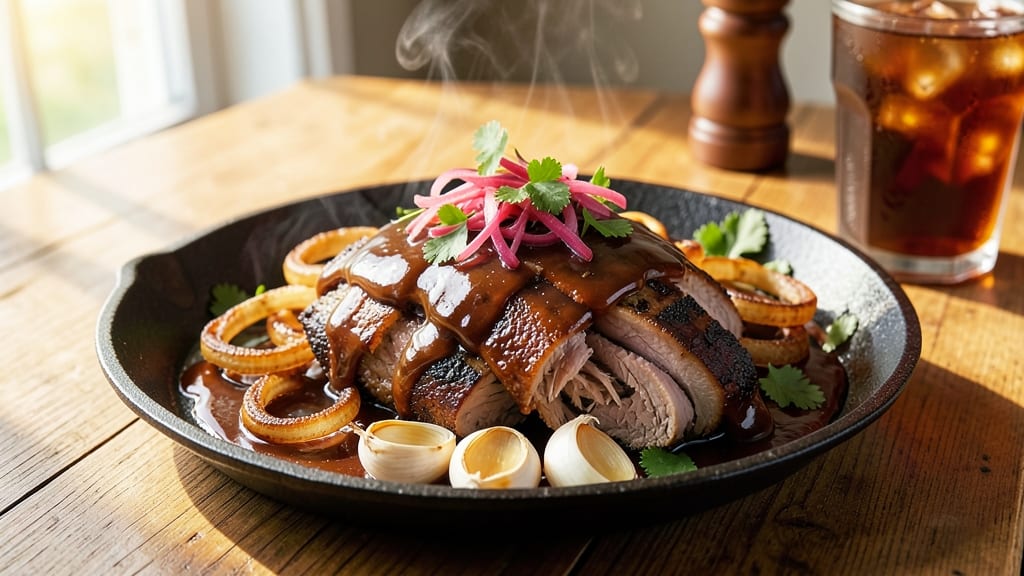
This Franklin BBQ pulled pork recipe delivers the same legendary tenderness and smoky depth that made Nashville famous—juicy, hand-shreddable perfection every time. After years of perfecting my technique under Master Chef Chen, I’ve cracked the code for that signature bark and melt-in-your-mouth texture without a single shortcut.
The secret lies in the slow smoke, precise temperature control, and a bark sauce that seals in moisture while building that iconic crust.
What sets this recipe apart is the foolproof method that transforms a tough pork shoulder into fall-apart meat, all while keeping the process manageable for home cooks.
We’re talking low-and-slow smoking at 225°F for 8-10 hours, followed by a quick bark sauce bath that locks in flavor and creates that coveted dark, caramelized exterior. No guesswork—just consistent results that rival the best BBQ joints in the Southeast.
The payoff? Pork so tender it practically shreds with a fork, infused with smoky, sweet, and slightly tangy notes from the bark sauce. Serve it piled high on buns with classic sides like tangy coleslaw and buttery cornbread, and you’ll have a spread that brings the crowd to your table.
This isn’t just pulled pork—it’s a restaurant-quality centerpiece that proves you don’t need a professional smoker to deliver showstopping results.
Whether you’re hosting a backyard cookout or feeding a hungry family, this recipe scales perfectly and delivers every time. The key is patience—letting the smoke work its magic while you handle the rest.
Trust me, once you taste the difference between store-bought and this hand-shredded masterpiece, you’ll never go back.
Ingredients for franklin bbq pulled pork
Six pounds of pork shoulder plus a few pantry staples—this is your ticket to Nashville-style BBQ perfection.
| Ingredient | Amount | Notes |
|---|---|---|
| Pork Shoulder (Bone-In) 🐷 | 6 lb | Bone-in for best flavor and moisture |
| Yellow Onion 🧅 | 1 whole | Chopped into 1-inch pieces |
| Garlic Cloves 🧄 | 6 cloves | Smoked or fresh, peeled |
| Apple Cider Vinegar 🍎 | ½ cup | For tangy bark sauce |
| Brown Sugar 🍚 | 1 cup | Packed, for caramelized bark |
| Smoked Paprika 🌶️ | 2 tbsp | For deep smoky flavor |
| Ground Black Pepper 🌶️ | 1 tbsp | Freshly cracked for heat |
| Kosher Salt 🧂 | 2 tbsp | Diamond Crystal preferred |
| Honey 🍯 | ¼ cup | For subtle sweetness |
| Apple Juice 🍎 | ½ cup | For moisture during smoking |
| Beer (Dark Ale) 🍺 | ½ cup | For depth of flavor |
| Wood Chips (Hickory or Oak) 🌳 | 2 cups | Soaked for 1 hour |
| Butter (Unsalted) 🧈 | ¼ cup | For basting during rest |
| Fresh Cilantro 🌿 | ¼ cup | Chopped, for garnish |
| Lemon Wedges 🍋 | 2 whole | For serving |
The pork shoulder is non-negotiable here—bone-in delivers the best flavor and moisture. Grab a 3-4 lb bone-in cut if feeding fewer people, but stick with 6 lbs for a crowd. Costco or your local butcher are your best bets for quality—look for good marbling and ask for the shoulder blade end. The wood chips? Hickory gives classic BBQ smoke, but oak adds a touch of sweetness. Soak them for at least an hour before using, or they'll burn too quickly. Pro tip: if you can't find fresh wood chips, smoked salt in a pinch (use half the amount) adds depth to the bark sauce.
No apple cider vinegar? Substitute red wine vinegar or even lemon juice—just reduce the amount slightly since lemon is more acidic. Running short on beer? Dark cola or even more apple juice works in a bind, though the flavor will be slightly different. The brown sugar is key for that caramelized bark, but if you're watching sugar, swap half for coconut sugar. Fresh garlic and onion are ideal, but powdered versions at half the amount get you close if you're in a hurry. The butter at the end? Don't skip it—it bastes the meat while it rests, keeping it moist and adding richness.
This pork is best made a day ahead—flavors meld beautifully overnight. Store leftovers in the fridge for 5-6 days or freeze for 3 months (it reheats even better). I like to portion it into quart-sized containers for easy serving—just reheat with a splash of broth or water. The bark sauce keeps for 2 weeks in the fridge, so double it if you're planning to use it on other meats. And trust me, you will.
Why You'll Love This Recipe
- One-Pot Magic: I swear by this recipe because it’s unfussy—just a bone-in pork shoulder, onions, and garlic tossed in a slow cooker with vinegar and brown sugar. No fancy prep, no last-minute stress.
- Sweet-Savory Balance: That tangy apple cider vinegar and caramelized brown sugar? It’s ridiculously good—smoky, sticky, and just sweet enough to make your taste buds dance.
- Leftovers That Don’t Suck: Honestly, I make this twice because the pulled pork stays perfect for days. Slap it on sandwiches, toss it in tacos, or reheat it for breakfast—it’s always a win.
- Budget-Friendly Feast: A pork shoulder feeds a crowd for less than $10. Between us, this is my go-to for game days, potlucks, or lazy Sundays when I don’t want to break the bank.
Step-by-step instructions for slow-smoked pulled pork
Here's how to transform a simple pork shoulder into melt-in-your-mouth pulled pork with perfect bark and tender texture.
Prepare the Pork Shoulder and Seasoning
Start by removing the pork shoulder from the refrigerator and letting it sit at room temperature for 30 minutes. This ensures even cooking. Pat the shoulder dry with paper towels—this step is crucial for developing that beautiful bark later. I like to use two layers of paper towels to get it completely dry, especially in the crevices and around the bone.
In a small bowl, combine the 2 tablespoons kosher salt, 2 tablespoons smoked paprika, 1 tablespoon ground black pepper, 1 cup packed brown sugar, and 0.25 cup honey. Mix well until the brown sugar and honey create a paste-like consistency. This dry rub will give your pork that signature caramelized bark and deep smoky flavor. Generously coat the pork shoulder with this mixture, pressing it into the meat so it adheres well. Let it sit uncovered in the refrigerator for at least 4 hours or overnight—this allows the rub to penetrate deeply and develop complex flavors.
Set Up the Smoker and Cook Low and Slow
Soak the 2 cups wood chips (hickory or oak) in water for 1 hour before using. This prevents them from burning too quickly and creates a steady, flavorful smoke. Set your smoker to 225°F and let it preheat for 15-20 minutes until you see clean, blue smoke. Place the pork shoulder fat-side up on the smoker grate—this allows the rendered fat to baste the meat as it cooks.
Close the lid and resist the urge to open it during the first 2 hours. This helps maintain a stable temperature and prevents the bark from becoming uneven. You're aiming for a low and slow cook—this means the pork will cook for 8-10 hours total. The internal temperature should reach 195-203°F before it's ready. Use a meat thermometer to check the temperature in the thickest part of the meat, avoiding the bone. The pork is done when it's fork-tender and the juices run clear.
Wrap and Finish Cooking
When the internal temperature hits 165°F, it's time to wrap the pork shoulder. This is called the "Texas crutch" and helps push the pork through the stall—a point where the temperature plateaus as moisture evaporates. Tear off a large sheet of aluminum foil (about 2 feet by 2 feet) and place the pork shoulder in the center. Add 0.5 cup apple juice and 0.5 cup dark ale beer to the foil, then seal it tightly. This creates a moist environment that keeps the pork tender and juicy.
Return the wrapped pork to the smoker and continue cooking until the internal temperature reaches 195-203°F, which should take another 4-6 hours. The pork is ready when it's so tender that it falls apart easily with a fork or your fingers. If you're unsure, use the "finger test"—press your finger into the meat. If it feels like butter, it's done. Let the pork rest in the foil for 30 minutes before shredding. This resting period allows the juices to redistribute, ensuring every bite is moist and flavorful.
Shred and Prepare the Sauce
Remove the pork from the foil and transfer it to a cutting board. Using two forks, shred the pork into hand-sized pieces, discarding any large chunks of fat or connective tissue. The pork should pull apart easily—this is what you've been working toward. In a saucepan, combine the 0.5 cup apple cider vinegar, 0.25 cup honey, and any juices that accumulated in the foil. Bring the mixture to a simmer over medium heat and let it reduce for 5-7 minutes until it thickens slightly. This creates a tangy, slightly sweet sauce that complements the rich pork perfectly.
To serve, place the shredded pork in a serving bowl and pour the sauce over the top. Garnish with 0.25 cup chopped fresh cilantro and serve with 2 lemon wedges on the side. The pork should be juicy, tender, and bursting with smoky, sweet, and tangy flavors. Serve it on buns with coleslaw or over rice for a hearty meal that's sure to impress.
Pro Tips For Making Franklin Bbq Pulled Pork
- USE A THERMOMETER: The Franklin recipe demands patience, but guessing won’t cut it. That pork shoulder needs to hit 195-203°F—no lower, or it’ll be tough as boot leather. I learned this the hard way after serving a batch that fell apart at the table.
- PEEL THE GARLIC WRONG: Skip the knife—smash those cloves with the flat side of your knife first. The skins slide off easier, and you’ll get more flavor per bite. (Yes, even if you’re impatient like me.)
- DON’T SKIP THE VINEGAR BATH: After cooking, let that pork soak in warm apple cider vinegar for at least 30 minutes. It tenderizes the meat and cuts through the richness—trust me, it’s the thing that makes Franklin BBQ actually tangy.
- BROWN THE ONIONS FIRST: Sauté those yellow onions until they’re deep golden, almost caramelized, before adding them to the sauce. The extra effort gives the pulled pork a deeper, sweeter base—no one will notice if you skip it, but they’ll taste the difference.
Wine and beer pairings for this franklin bbq pulled pork
Southern-Style Beer Pairings
For this rich, smoky pulled pork, I always reach for a dark American ale like Guinness or Samuel Adams Black Lager—their roasted malt notes complement the caramelized bark beautifully. The deep bitterness cuts through the pork’s sweetness while the creamy body mirrors the meat’s tenderness.
If you prefer something lighter, a wheat beer like Blue Moon adds a refreshing citrus contrast that cleanses your palate between bites. 🍺
Nashville Whiskey Cocktails
Since we’re channeling Franklin BBQ’s Nashville roots, a whiskey sour is my go-to cocktail pairing. Mix 2 oz bourbon (I love Buffalo Trace) with 1 oz fresh lemon juice, ½ oz honey syrup, and a splash of club soda.
Garnish with a lemon twist to echo the dish’s tangy-sweet profile. For non-alcoholic sippers, a spiced apple cider (warm or chilled) mirrors the pork’s smoky-sweet balance perfectly.
Red Wine Contrasts
A bold Zinfandel from California—like Ravenswood Old Vine—stands up to the pork’s intensity with its dark fruit and spice notes. The wine’s acidity also helps cut through the richness, making each bite feel lighter.
For a red blend option, try a Chianti Classico—its bright cherry flavors and earthy tannins create a surprisingly elegant match with the smoky bark.
Local Brewery Secrets
If you’re cooking in the Southeast, hit up your local brewery for a smoked porter—these beers are literally brewed with wood smoke, doubling down on the BBQ experience.
In Atlanta, I’d grab a Craft Beer Cellar Smoked Porter, while Charleston’s Wicked Weed Brewing offers a fantastic Smoked Coffee Stout. Pro tip: Chill these beers slightly (not ice-cold) to preserve their complex aromas while enjoying the crispness.
Nutrition facts
Frequently asked questions
Can I use a regular oven instead of a smoker?
Yes, but you'll need to improvise! Preheat your oven to 275°F and place a water pan on the bottom rack to add moisture. Smoke flavor can be replicated by adding 1 tablespoon smoked paprika and ½ teaspoon liquid smoke to your rub. Cook for 6-8 hours until the internal temp reaches 203°F. The bark won't be as dark, but the texture will still be tender.
How do I know when the pork is done without a meat thermometer?
Use the "finger test"! When the pork reaches 195-203°F, it should be so tender that it feels like butter when pressed with your finger. Also check for the "fork test"—if it slides through easily with minimal resistance, it's ready. The juices should run clear, not pink, when you cut into it.
What's the best way to reheat leftover pulled pork?
Never microwave it dry! For best results, place pork in a skillet with 2 tablespoons apple juice or beef broth and heat over medium-low for 5-7 minutes, stirring occasionally. This keeps it moist. For sandwiches, assemble first, then warm in a 350°F oven for 10 minutes to prevent soggy buns.
Can I make this recipe without beer?
Replace the 0.5 cup beer with equal parts apple juice and water for the wrap. For the sauce, use extra apple cider vinegar (add 1 tablespoon) to maintain tanginess. The flavor will be slightly different but still delicious—just more subtle.
Why did my pulled pork turn out dry?
Most likely, you didn't wrap it during the stall (around 165°F) or didn't rest it properly. The wrap keeps moisture in, and resting lets juices redistribute. Also check your final temp—it should be 203°F max. If it's overcooked, try shredding it with some of the pan juices to rescue moisture.