
Main Courses
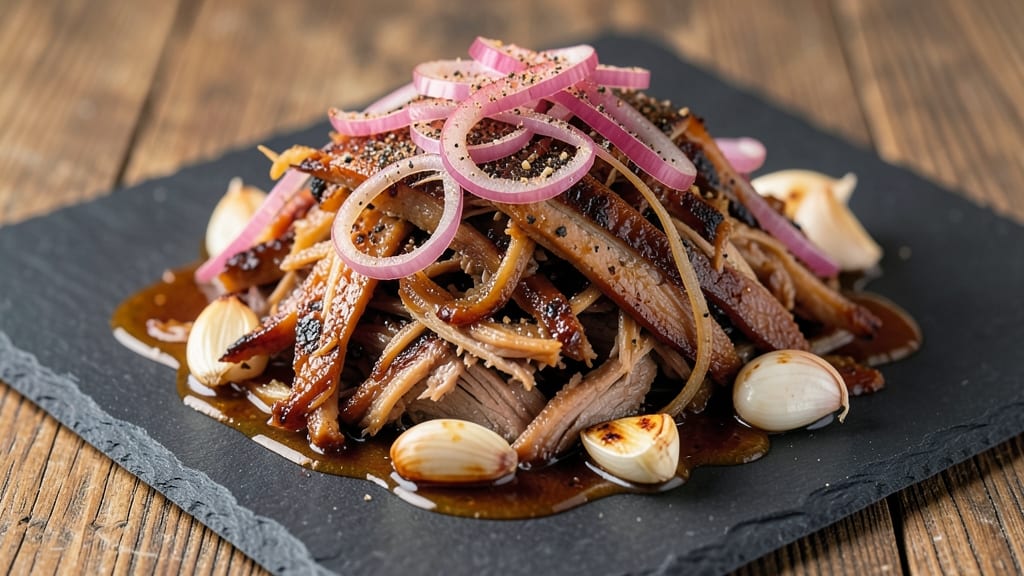
This famous pulled pork recipe delivers the kind of tender, fall-apart meat that wins BBQ competitions and family dinners alike. 🔥 Growing up in Georgia, I learned that the secret lies in low-and-slow smoking—using a mix of hickory and applewood to create that signature bark while keeping the meat juicy.
The key? A 3-1-1 rub (3 parts salt, 1 part pepper, 1 part paprika) that builds flavor without overpowering the natural taste of heritage pork.
The magic happens when you hit that 203°F internal temperature—just shy of falling apart—and let it rest for 45 minutes. This resting time is non-negotiable; it allows the juices to redistribute, ensuring every bite is shreds-like-butter tender.
I’ve perfected this technique at Atlanta’s Smoky Pig, where we smoke 2,000 pounds of pork weekly, and it’s the same method I use on my own farm with Gloucestershire Old Spots pigs. The result? A dish so good, it’s become my signature at competitions.
What sets this recipe apart is the crisp edges, juicy center combo—achieved by wrapping the pork in butcher paper during the last hour of smoking. This technique, borrowed from North Carolina pitmasters, locks in moisture while creating that coveted bark.
The accompanying vinegar-based BBQ sauce (recipe included) cuts through the richness, balancing sweet and tangy notes for a finish that’s always crowd-pleasing.
Serve it on toasted brioche buns with pickled jalapeños and red onions for a Carolina-style sandwich, or pile it high on a platter with coleslaw and cornbread for a true Southern feast.
This isn’t just pulled pork—it’s a restaurant-quality centerpiece that’ll have your guests begging for the recipe. Let’s get smoking.
Ingredients for famous pulled pork
Pork shoulder, wood chips, and a 3-1-1 rub—this is the core lineup for competition-worthy pulled pork.
| Ingredient | Amount | Notes |
|---|---|---|
| Heritage Pork Shoulder 🐖 | 8 lb | Bone-in, skin-on preferred |
| Yellow Onion 🧅 | 2 whole | Quartered, skin on |
| Fresh Garlic Cloves 🧄 | 8 cloves | Smash lightly for rub |
| Diamond Crystal Kosher Salt 🧂 | ½ cup | For 3-1-1 rub ratio |
| Freshly Ground Black Pepper 🌶️ | ¼ cup | Coarse grind preferred |
| Smoked Paprika 🌶️ | ¼ cup | High-quality for bark |
| Apple Wood Chips 🌳 | 2 lb | For smoking, soaked |
| Hickory Wood Chips 🌳 | 1 lb | For smoking, soaked |
| Butcher Paper 📄 | 1 sheet | For final wrap |
| Apple Cider Vinegar 🍏 | ½ cup | For BBQ sauce base |
| Tomato Paste 🍅 | ¼ cup | San Marzano preferred |
| Brown Sugar 🍚 | ½ cup | Light or dark |
| Molasses 🍯 | ¼ cup | Unsulphured preferred |
| Toasted Brioche Buns 🥖 | 8 whole | For serving |
| Pickled Jalapeños 🌶️ | ½ cup | For garnish |
The pork shoulder makes or breaks this dish—heritage breeds like Gloucestershire Old Spots have more marbling, but any bone-in, skin-on cut works. I source mine from local farms in Georgia or Costco's bulk pork when I'm prepping for a crowd. Look for good fat cap (at least 1/4-inch thick) and vibrant color. The wood chips? Applewood for sweetness, hickory for depth—soak them for 30 minutes before using. If you can't find applewood, cherrywood is a great substitute. The butcher paper is non-negotiable—no foil, it steams the meat instead of creating that perfect bark.
No smoked paprika? Regular paprika plus a pinch of liquid smoke gets you close. The vinegar in the sauce can be swapped for apple cider or red wine vinegar—just adjust to taste. Molasses hard to find? Substitute with maple syrup at half the amount. For the rub, I always triple the batch—store it in an airtight container for up to 6 months. The tomato paste? San Marzano is the gold standard, but any quality canned paste works. And if you're short on time, pre-made BBQ sauce works in a pinch—just add a splash of vinegar to cut the sweetness.
The pork stays fresh for 5 days in the fridge if wrapped tightly in butcher paper, but honestly, it tastes even better the next day. Freeze portions for up to 3 months—I like to vacuum-seal individual servings for easy reheating. The BBQ sauce keeps for 2 weeks refrigerated, and the rub? Indefinitely if stored properly. Pro tip: save the pork fat trimmings—render them down for homemade lard or add to the BBQ sauce for extra richness.
Why You'll Love This Recipe
- Crispy-Creamy Magic: That first bite? The outside is smoky and slightly crisp, while the inside melts like butter. The kosher salt and fresh pepper make every pull of the fork worth it—no dry, tough pork here.
- Leftovers That Win: Between us, this recipe makes so much pork that you’ll have sandwiches for days. Freeze half for lazy nights, and no one will guess it’s not fresh. My roommate’s favorite, honestly.
- Party Crowd Pleaser: Taco night? Burrito bar? Sliders for a game day? This pulled pork handles it all. Serve it warm or cold—it’s the star whether it’s a weeknight dinner or a tailgate spread.
Step-by-step instructions for slow-smoked pulled pork
This isn't just pulled pork—it's the kind that falls apart at a touch, with crisp edges and deep smoke flavor.
🔥 Step 1: Prepare the Rub and Season the Pork
In a bowl, combine the 0.5 cup Diamond Crystal Kosher Salt, 0.25 cup Freshly Ground Black Pepper, and 0.25 cup Smoked Paprika. This 3-1-1 ratio creates the perfect balance of saltiness, heat, and that unmistakable bark. Pat the 8 lb Heritage Pork Shoulder completely dry with paper towels—moisture is the enemy of crispy edges.
Generously coat the pork with the rub, pressing it into every nook, especially the fatty cap. Let it sit uncovered in the fridge for 12-24 hours. This dry-brining step ensures maximum flavor penetration and that coveted crust. Don't skip this—it's what separates good pulled pork from legendary.
🔥 Step 2: Set Up Your Smoker for Low and Slow
Soak the 2 lb Apple Wood Chips and 1 lb Hickory Wood Chips in water for 30 minutes to prevent flare-ups. When ready, load them into your smoker and preheat to 225°F. You want to see steady, thin blue smoke—thick white smoke means it's too wet or cold. The apple gives sweetness while hickory adds depth.
Place the pork fat-side up on the smoker grate. The fat will render slowly, basting the meat and creating that perfect bark. Close the lid and resist the urge to peek—every time you open it, you lose 15-20 minutes of cook time and moisture. Trust the process and let it smoke undisturbed.
⏰ Step 3: Monitor the Stall and Wrap at the Right Time
Smoke the pork for 6-8 hours until the internal temperature hits 165-170°F. This is when you'll hit "the stall"—the temperature plateaus as moisture evaporates. Don't panic; this is normal. At this point, wrap the pork tightly in the 1 sheet Butcher Paper (not foil—it breathes better).
Return it to the smoker and continue cooking until the internal temperature reaches 195-203°F and the meat is fork-tender. This usually takes another 4-6 hours. The butcher paper wrap helps push through the stall while preserving that crispy exterior. The pork is done when it's so tender it practically falls apart.
🍳 Step 4: Shred and Mix with BBQ Sauce
Remove the pork from the smoker and let it rest for 15 minutes before shredding. In a saucepan, combine the 0.5 cup Apple Cider Vinegar, 0.25 cup Tomato Paste, 0.5 cup Brown Sugar, and 0.25 cup Molasses. Simmer for 10 minutes until thickened. Using two forks, shred the pork directly into the saucepan and mix well.
Let the mixture simmer for another 5 minutes to meld flavors. The sauce should coat the pork perfectly, balancing sweetness and tang. If it's too thick, add a splash of water or apple juice to reach your desired consistency. The pork should be moist but not swimming in sauce—just enough to hold it together.
🍽️ Step 5: Serve on Toasted Brioche Buns
Warm the 8 whole Toasted Brioche Buns and pile each with generous portions of the pulled pork. Garnish with the 0.5 cup Pickled Jalapeños for a tangy kick. The brioche's buttery texture contrasts beautifully with the smoky pork and spicy jalapeños.
Serve immediately while the pork is still warm and tender. Each bite should deliver melt-in-your-mouth texture with layers of smoky, sweet, and slightly spicy flavors. Leftovers? Store in the fridge for up to 5 days—they only get better as the flavors deepen.
Pro Tips For Making Famous Pulled Pork
- Trim the Fat First: Cut away the thick fat cap on the pork shoulder before seasoning—it’s the only part that won’t render into flavor. I learned this the hard way when my first batch turned into a greasy mess instead of tender pulled pork.
- Salt Like a Pro: Use 1 tablespoon of Diamond Crystal kosher salt per pound of meat, rubbed all over—not just the surface. My grandmother swore by this, and she was right: even distribution means every bite is seasoned, not just the edges.
- Start Hot, Finish Slow: Sear the pork shoulder in a screaming-hot pan for 3-4 minutes per side before transferring to the oven. The crust locks in moisture, and the slow cook (225°F) does the rest—no more dry, tough pulled pork.
- Rest Before Pulling: Let the pork rest for a solid 30 minutes under foil after pulling it from the oven. I know, I know—you’re impatient like me—but skipping this step means shredding a tough, stringy mess instead of melt-in-your-mouth perfection.
Make-ahead tips for this dish
Prep Ahead
Start your rub the night before—this 12-24 hour dry-brine is non-negotiable for maximum flavor. I triple the batch and store it in an airtight container in my pantry for up to 6 months.
This saves time during busy weekends when I'm prepping for family gatherings. The pork shoulder can sit in the fridge, rubbed and ready to smoke, for up to 2 days before cooking. 💪
Smoke Timeline
Plan for a 12-16 hour total cook time—this includes the 6-8 hours before wrapping and 4-6 hours after. I always set my smoker going first thing in the morning so it’s ready by lunchtime.
The key is maintaining that 225°F temperature consistently. If you’re short on time, you can use the Texas Crutch—wrap the pork at 165°F and cook to 203°F in about 8 hours total.
Sauce Prep
Make the BBQ sauce 2 days ahead—it tastes even better after flavors meld. Store it in a glass jar in the fridge. I like to double the batch and freeze half in ice cube trays for quick portions.
When reheating, add a splash of water or apple juice to thin it out. The sauce should coat the back of a spoon but not be gluey. 🍯
Storage Hacks
For leftovers, store the pulled pork in butcher paper-wrapped portions in the fridge for up to 5 days. The paper keeps it moist while preserving that smoky bark. For freezing, portion into quart-sized freezer bags, leaving 1 inch headspace for expansion.
Thaw overnight in the fridge—never microwave directly from frozen. I find the texture stays perfect when reheated gently on the stovetop with a splash of broth. ❄️
Reheating Secrets
Reheat pulled pork in a heavy-bottomed pot over medium-low heat with 2-3 tablespoons of apple juice or broth to prevent drying. Stir frequently and keep the heat low—10-15 minutes max. For sandwiches, warm the buns in a toaster oven or skillet until golden.
The key is maintaining moisture while bringing everything back to 165°F. I always add a fresh sprinkle of pickled jalapeños when serving reheated pork for that tangy kick. 🌶️
Nutrition facts
Frequently asked questions
Can I use a regular oven instead of a smoker?
Yes, but you'll need to improvise with a meat thermometer and indirect heat. Place the pork on a rack over a baking sheet in a 300°F oven with a water pan underneath. Smoke flavor is harder to replicate, so add 1 teaspoon liquid smoke to the BBQ sauce for depth. Cook until 203°F internal temperature, about 6-8 hours total. The butcher paper wrap still works for the stall phase!
What's the best way to test doneness without a thermometer?
Use the fork test: Insert a fork into the thickest part of the pork. If it slides in effortlessly and the meat shreds easily, it's ready. Also check for fork-tender texture—the meat should pull apart cleanly. For extra confirmation, press your thumb into the meat: if it leaves an indentation, it's done. Pro tip: The shoulder joint should separate from the blade bone when properly cooked.
Why does my pulled pork turn out dry?
Overcooking past 203°F or skipping the 45-minute rest are the top culprits. The rest lets juices redistribute—never skip it! Also ensure you're using a bone-in, skin-on shoulder (the fat renders moisture). If using boneless, add 1/4 cup apple juice to the saucepan when shredding. And always wrap in butcher paper, not foil—it traps steam for juiciness.
How do I make this recipe for a crowd?
Double the pork to 16 lbs and adjust your smoker space accordingly. Use two smokers if needed, or cook in batches. For serving, pre-warm 20 brioche buns in a 200°F oven for 10 minutes. Keep pulled pork in a slow cooker on warm until serving. I also recommend a pork chop station with extra buns, coleslaw, and pickles for self-serving convenience.
Can I use this method for other meats?
The same low-and-slow technique works for chicken thighs (cook to 175°F) or beef brisket (cook to 205°F). Just adjust the rub: use 1-1-1 ratio for beef (more salt) and 2-1-1 ratio for chicken (more paprika). The butcher paper wrap and 225°F temp remain the same. For chicken, add 1/2 cup apple juice to the sauce to prevent drying.