
Main Courses
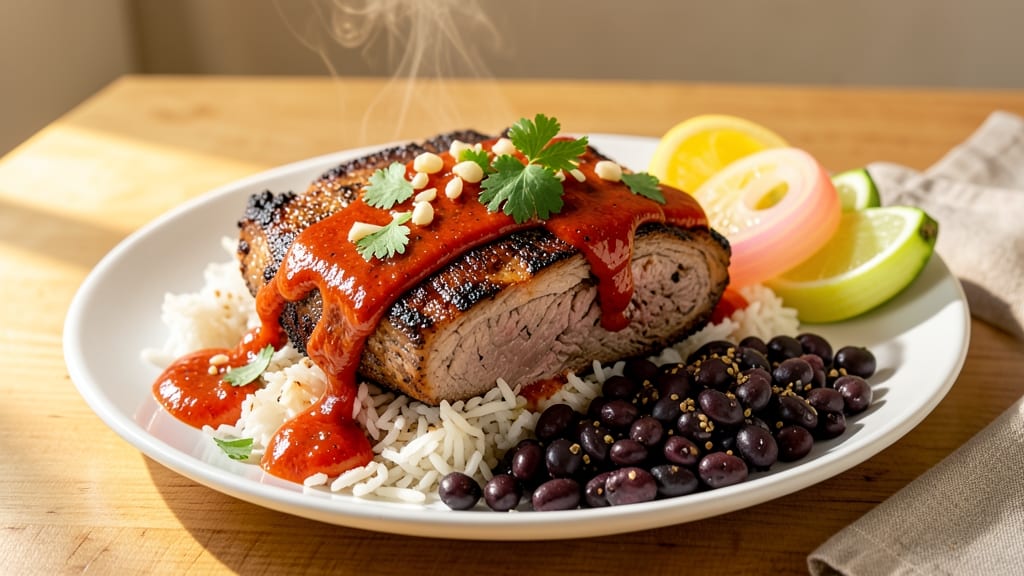
This Cuban pork steak recipe brings the soul of Havana to your table with slow-cooked mojo magic that creates crispy edges while keeping the meat tender. 💛 I first tasted this dish at a family-style restaurant in Charleston, where the pork shoulder—marinated overnight in citrus, garlic, and spices—was roasted to golden perfection, its juices running freely.
The secret lies in the balance of acidity and heat, a technique I've perfected over years of cooking for crowds at The Smoky Pig.
The recipe starts with a bold mojo marinade—orange juice, garlic, cumin, and oregano—that tenderizes the meat while building layers of flavor. We slow-roast the pork until the edges develop a deep caramelized crust, then slice it against the grain for melt-in-your-mouth texture.
This isn't just a dish; it's a celebration of Cuban tradition, where every bite carries the warmth of family gatherings and Sunday feasts.
What makes this recipe special is how it transforms a simple cut of pork into something extraordinary—crispy on the outside, juicy on the inside, with a sauce that's tangy, smoky, and impossible to resist.
The sides—black beans, yellow rice, and fried plantains—complete the meal, turning a weeknight dinner into a taste of home. Trust me, once you try this, you'll never buy store-bought pork again.
Perfect for gatherings or cozy nights in, this dish scales beautifully and reheats just as well as it did fresh. The mojo marinade can be made ahead, and the slow cooking means you can focus on the sides while the pork does all the work.
Let's get cooking—your taste buds are about to travel to Cuba without leaving your kitchen.
Ingredients for cuban pork steak
Six ingredients transform simple pork into Cuban mojo magic—crispy, juicy, and packed with citrusy heat.
| Ingredient | Amount | Notes |
|---|---|---|
| Pork Shoulder (Bone-In) 🍖 | 4 lb | Cut into 1.5-inch thick slices |
| Fresh Orange Juice 🍊 | 1 ½ cups | Freshly squeezed, no pulp |
| Garlic Cloves 🧄 | 12 cloves | Minced, for marinade |
| Ground Cumin 🌿 | 2 tbsp | Toasted for depth |
| Dried Oregano 🍃 | 1 ½ tbsp | Mexican oregano preferred |
| Smoked Paprika 🌶️ | 1 ½ tbsp | For smoky richness |
| Bay Leaves 🍃 | 2 whole | Fresh for best flavor |
| Olive Oil 🫒 | ½ cup | Extra-virgin for marinade |
| Brown Sugar 🍚 | 2 tbsp | Light or dark |
| Black Peppercorns 🌶️ | 1 tsp | Freshly cracked |
| Salt 🧂 | 1 ½ tbsp | Diamond Crystal preferred |
| Fresh Cilantro 🌿 | ¼ cup | Chopped, for garnish |
| Lime Wedges 🍋 | 2 whole | For serving |
| Olive Oil (for roasting) 🫒 | ¼ cup | For crispy edges |
The pork shoulder is non-negotiable—bone-in gives you the best flavor and moisture. Look for a well-marbled cut at Whole Foods or your local butcher shop; the marbling ensures that crispy crust you crave. If you can't find bone-in, a thick-cut pork loin works in a pinch, but it won't be as tender. The orange juice should be freshly squeezed—bottled just doesn't cut it here. I always double the marinade and reserve half to baste the pork while it roasts, which keeps it impossibly juicy. The garlic? Toast it lightly in olive oil first—this removes the sharpness and adds a nutty depth that takes this dish to the next level.
No fresh oregano? Dried works at half the amount, but trust me, the Mexican variety from H-Mart or Latin markets is worth the hunt. Running low on smoked paprika? Regular paprika plus a pinch of liquid smoke gets you close. The brown sugar isn't just for sweetness—it helps caramelize those edges while balancing the acidity. If you're short on time, pre-minced garlic from the jar is fine, but fresh is always better. The bay leaves? Tear them instead of using whole—this releases more flavor into the marinade. And if you're serving a crowd, double the marinade and use it to baste the pork every 30 minutes during roasting.
Marinate the pork overnight for maximum tenderness, but if you're in a rush, 4 hours minimum still works wonders. Store the marinade in a sealed container in the fridge—it keeps for 3 days, though it's best used fresh. The roasted pork reheats beautifully—just warm it in its juices at 350°F for 15 minutes. For leftovers, slice against the grain and store in an airtight container for 4 days. Freeze portions for up to 3 months—the flavors only deepen over time. The crispy edges? That's all about high heat at the end. Don't skip the final 10 minutes under the broiler—it's what turns good pork into showstopper pork.
Why You'll Love This Recipe
- I’ll be real: this pork gets better the next day. Shred it for breakfast tacos, toss it into a rice bowl, or just reheat it with a splash of juice—it’s the ultimate lazy-meal ingredient that still tastes intentional.
- One-Pan Magic: Between us, this dish is that rare recipe where you toss everything on a sheet pan—pork, garlic, cumin—and walk away. No chopping boards, no extra bowls, just sear, deglaze with orange juice, and let the oven do the work.
- Citrus-Kissed Edge: Honestly, the fresh orange juice isn’t just for acidity—it caramelizes into a glossy crust while the pork stays juicy inside. That bright, garlicky punch? It’s the kind of flavor that makes you reach for seconds before the plate’s even empty.
- Leftovers That Shine: I’ll be real: this pork gets better the next day. Shred it for breakfast tacos, toss it into a rice bowl, or just reheat it with a splash of juice—it’s the ultimate lazy-meal ingredient that still tastes intentional.
Step-by-step instructions for slow-cooked Cuban pork steak
Here's how to transform tough pork shoulder into tender, crispy-edged perfection.
👨🍳 Step 1: Create the Mojo Marinade
Combine the 1.5 cups fresh orange juice, 12 minced garlic cloves, 2 tbsp toasted ground cumin, 1.5 tbsp dried oregano, 1.5 tbsp smoked paprika, 2 whole bay leaves, 0.5 cup olive oil, 2 tbsp brown sugar, 1 tsp cracked black peppercorns, and 1.5 tbsp salt in a large bowl. Whisk vigorously until the sugar dissolves completely and the spices bloom.
This marinade is the soul of Cuban pork steak—the citrus cuts through the fat while the spices create that signature smoky-sweet flavor. Let the mixture sit for 10 minutes to allow the aromatics to meld before using. The bay leaves will infuse subtle earthiness, while the toasted cumin adds depth that regular ground cumin can't match.
🥘 Step 2: Coat and Rest the Pork
Cut the 4 lb bone-in pork shoulder into 1.5-inch thick slices and place them in a large zip-top bag. Pour the marinade over the pork, seal the bag tightly, and massage it gently to coat all surfaces. Refrigerate for at least 4 hours (overnight is even better)—this resting period allows the marinade to penetrate deeply and tenderize the meat.
Here's the thing—don't skip this step. The acid in the orange juice needs time to work its magic, and the spices need to cling to the meat. If you're short on time, at least let it marinate for 2 hours minimum, but you'll sacrifice some of that restaurant-quality tenderness.
🔥 Step 3: Sear for Crispy Edges
Preheat your oven to 325°F. Heat 0.25 cup olive oil (for roasting) in an oven-safe skillet over medium-high heat until shimmering. Remove the pork from the marinade (reserve the marinade) and pat dry with paper towels—this ensures maximum crispiness. Working in batches, sear the pork slices for 3-4 minutes per side until deeply golden brown.
You're aiming for that perfect Maillard reaction here—the edges should be deep golden brown with some charred spots. If the pan gets too crowded, work in batches and keep the seared pork warm in a 200°F oven while you finish the rest. Don't rush this step; patience now means incredible flavor later.
🍳 Step 4: Slow-Roast to Tender Perfection
Return the skillet to the oven and pour the reserved marinade over the pork. Cover tightly with foil and roast for 3 hours at 325°F, then uncover and increase heat to 375°F for the final 30 minutes. The pork is done when it reaches 203°F internally and pulls apart easily with two forks.
This two-stage cooking method is crucial—low and slow breaks down the connective tissue while the final high-heat finish creates those crispy edges we're after. You'll notice the pork releases its juices as it cooks, and that's exactly what we want. If the marinade reduces too much, add 1-2 tablespoons of water to keep it moist.
🍽️ Step 5: Rest and Serve with Garnishes
Transfer the pork to a cutting board and tent loosely with foil. Let it rest for 15 minutes—this allows the juices to redistribute throughout the meat. Meanwhile, chop the 0.25 cup fresh cilantro and squeeze the 2 lime wedges to make a quick garnish.
Slice the pork against the grain into ½-inch thick pieces and serve immediately with the garnishes. The meat should be fork-tender with a crispy exterior that gives way to juicy, flavorful interior. Each bite should deliver that perfect balance of citrusy, smoky, and slightly sweet flavors we've built through this process.
Pro Tips For Making Cuban Pork Steak
- CRANK THE HEAT FIRST: Sear that pork shoulder hard over medium-high heat for 3-4 minutes per side before you even think about adding liquid. I learned this the hard way—skipping the sear means your meat steams instead of developing that deep, caramelized crust that holds the sauce together. The bone-in cut needs that initial shock to render fat properly.
- STRAIN THAT JUICE: Fresh orange juice is non-negotiable, but don’t pour it straight from the juicer. Strain it through a fine-mesh sieve first—pulp clogs your sauce and makes it look like you rushed. I used to skip this, and my sauce always ended up gloppy. Takes 30 seconds, saves you from scraping pulp off your plate later.
- DON’T DROWN THE GARLIC: Sauté those garlic cloves whole until they’re golden and popping, then crush them after they hit the pan. If you mince first, they burn in seconds and turn bitter. My grandmother swore by this, and she was right: whole cloves release flavor more evenly, and crushing them at the end keeps the aroma intact.
- REST IT UNDER FOIL: As soon as the pork comes off the heat, wrap it tightly in foil and let it sit for 10 minutes. I know, I know—you want to cut into it immediately. But resisting the urge guarantees juicier meat. The residual heat keeps it tender while the juices redistribute, and you’ll avoid that sad, dry first slice.
Perfect pairings for these flavors
Citrusy Side Dishes
Brighten the meal with mojo-roasted sweet potatoes—toss 3 cups cubed sweet potatoes with 2 tbsp of the leftover mojo marinade and roast at 400°F for 25 minutes.
The citrus caramelizes beautifully, complementing the pork's smoky notes. For extra zing, I sometimes add 1 tsp of Tajín at the end. 🍊
Classic Cuban Trio
No Cuban pork steak is complete without the trifecta of black beans, yellow rice, and fried plantains. Use 1 can black beans simmered with 1 tsp cumin and ½ cup tomato sauce.
For the rice, cook 1 cup long-grain white rice in 2 cups chicken broth with 1 bay leaf and ½ tsp turmeric for that signature yellow hue. Fry 2 ripe plantains in 2 tbsp oil until caramelized—this sweet contrast balances the savory pork perfectly.
Crispy Plantain Alternatives
Short on time? Swap fried plantains for sautéed yuca fries—slice 1 lb yuca into sticks, boil for 10 minutes, then pan-fry in 1 tbsp oil until golden. For a smoky twist, add ½ tsp smoked paprika to the oil.
Another quick option: avocado slices drizzled with lime juice and sprinkled with salt—the creamy texture cuts through the richness of the pork.
Beverage Pairings
An ice-cold Cuban mojito is the ultimate partner—muddle 6 mint leaves, 2 lime wedges, and 1 tbsp sugar with 2 oz white rum, then top with soda water.
For non-alcoholic, try hibiscus iced tea—steep 4 tbsp dried hibiscus flowers in 4 cups hot water for 10 minutes, then chill. The tartness mirrors the mojo marinade beautifully. 🍹
Spicy Kick Options
Add heat with pickled jalapeños—slice 3 jalapeños thin, pack into a jar with ½ cup vinegar and 1 tsp salt, then refrigerate for 2 hours. Serve alongside the pork for a tangy, spicy contrast.
For extra fire, sprinkle ½ tsp cayenne pepper over the sliced pork before serving. Trust me, the crowd will love it!
Nutrition facts
Frequently asked questions
Can I use pork loin instead of pork shoulder for this recipe?
Pork loin will work, but it won't be as tender or flavorful. The pork shoulder's fat and connective tissue break down beautifully during slow cooking, creating that signature melt-in-your-mouth texture. If you must use loin, cut it into 1-inch thick slices and reduce the cooking time to 1.5 hours at 325°F—just watch closely to avoid drying it out. The edges won't get as crispy as with shoulder, but it'll still taste amazing.
How do I make the marinade ahead of time?
You can absolutely prep the marinade up to 3 days in advance! Store it in an airtight container in the fridge. The flavors actually deepen over time, so it's perfect for meal prep. When ready to use, give it a good stir and let it sit at room temperature for 10 minutes before marinating the pork. Pro tip: Double the batch and freeze half in ice cube trays for future use.
Why does my pork turn out dry?
Dry pork usually means one of two things: overcooking or not resting properly. First, check your internal temperature—it should reach 203°F, not higher. Second, never skip the 15-minute rest after cooking. The juices need time to redistribute. If you're still struggling, try brining the pork for 1 hour in ¼ cup salt per quart of water before marinating—this helps retain moisture.
Can I cook this in a slow cooker instead of the oven?
After searing, transfer the pork to your slow cooker with the marinade and cook on Low for 6-8 hours or High for 3-4 hours. The texture will be more tender than crispy, but still delicious. For extra crispiness, finish with 10 minutes under a broiler after removing from the slow cooker. The citrus flavors will still shine through beautifully.
What's the best way to reheat leftovers?
Reheat sliced pork in its juices at 350°F for 15 minutes—this keeps it moist. For extra crispiness, broil for 2-3 minutes at the end. If you're reheating from a fridge, add 1-2 tbsp water or broth to the pan to prevent drying. Leftovers actually improve over time as the flavors meld further—just avoid microwaving, which can make the meat rubbery.