
Soups & Stews
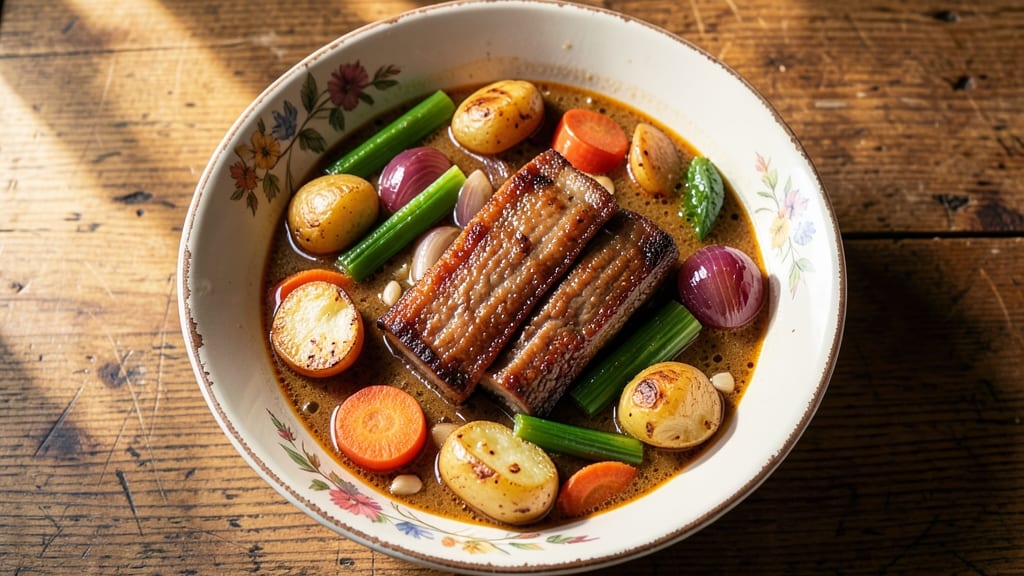
This canned pork stew recipe transforms humble ingredients into a deeply satisfying one-pot meal that tastes like a home-cooked hug. 🔥 The secret lies in slow-simmering canned pork with vegetables until flavors meld into rich, hearty perfection—no fancy techniques required, just time and patience.
I developed this during a particularly cold Georgia winter when I needed comfort food that came together without fuss.
What makes this stew special is the balance of textures and flavors: tender pork, caramelized onions, and vegetables that soften just enough to absorb the savory broth. The key technique is deglazing the pot after browning the pork, which builds layers of depth from the fond at the bottom.
Unlike many canned pork recipes, this version delivers restaurant-quality richness without requiring hours of active cooking.
By the time it's done simmering, you'll have a pot of stew so aromatic your whole house will smell like Sunday dinner. The broth thickens naturally as it cooks, creating a velvety consistency that clings to every bite of pork and vegetable.
This is the kind of meal that gets better with leftovers—perfect for feeding a family or meal prepping for the week.
Serve with crusty bread for soaking up every last drop of that flavorful broth, or pair it with a simple green salad to balance the richness. The beauty of this recipe is its versatility—it works equally well as a weeknight dinner or a centerpiece for a holiday gathering.
Let's get started with this hearty, foolproof stew that proves good food doesn't require complicated methods, just good ingredients and time to develop their flavors.
Ingredients for canned pork stew
These hearty ingredients transform simple canned pork into a rich, comforting stew that tastes like home.
| Ingredient | Amount | Notes |
|---|---|---|
| Canned Pork (Spare Ribs or Shoulder) 🥓 | 2 lbs | Drained, bone-in preferred |
| Yellow Onions 🧅 | 2 whole | Medium size, sliced |
| Carrots 🥕 | 4 medium | Whole, peeled, cut into chunks |
| Russet Potatoes 🥔 | 4 medium | Peeled, cut into 1-inch cubes |
| Celery Stalks 🧅 | 4 whole | Trimmed, cut into 1-inch pieces |
| Garlic Cloves 🧄 | 4 cloves | Minced or finely chopped |
| Tomato Paste 🍅 | ½ cup | No sugar added preferred |
| Chicken Broth 💧 | 4 cups | Low-sodium preferred |
| Apple Cider Vinegar 🍎 | 2 tbsp | For brightness |
| Brown Sugar 🍯 | 2 tbsp | Light or dark |
| Dried Thyme 🌿 | 1 tsp | Or 1 tbsp fresh |
| Ground Black Pepper 🌶️ | 1 tsp | Freshly ground |
| Salt 🧂 | 1 ½ tsp | Kosher or sea salt |
| Olive Oil 🫒 | 2 tbsp | For browning pork |
The canned pork is the star—bone-in spare ribs or shoulder gives the best texture, but any canned pork will work. Look for brands with minimal additives, like Armour or Hormel, which are widely available at grocery stores. Fresh thyme is ideal, but dried works fine if you've got it. The key to depth is caramelizing the onions first—don't rush this step. For a deeper flavor, I often add a bay leaf while simmering, but it's not required.
No apple cider vinegar? White vinegar or lemon juice works in a pinch, though it won't have the same fruity note. Running short on carrots? Substitute parsnips or turnips for a slightly different flavor profile. The tomato paste can be skipped if you prefer, but it adds a nice richness—Trader Joe's sells it in convenient squeeze tubes. For extra heartiness, toss in a handful of frozen peas at the end. The broth matters too—low-sodium is best so you can control the seasoning.
This stew tastes even better the next day as flavors meld. Store leftovers in the fridge for 4-5 days or freeze for 3 months. I like to portion it into containers for easy lunches—just reheat with a splash of water or broth. The broth thickens as it cools, so add a little extra liquid if it seems too thick when reheating. Serve with crusty bread to soak up every last drop of that savory broth.
Why You'll Love This Recipe
- Pantry Rescue: The second I open that can of pork, I’m already halfway to dinner. No thawing, no butchering—just slice the onions, dump in the veggies, and let the broth do the work. My lazy Sundays thank me every time.
- Rich Without Effort: That canned pork? It’s like someone else already braised the meat for you. The onions caramelize into sweetness while the potatoes soak up the savory broth—no fancy techniques, just deep, satisfying flavor in one pot.
- Leftover Magic: Make a double batch, and you’ve got lunch for days. The potatoes get even creamier reheated, and the pork stays tender. I pack it in containers with zero guilt—it’s my go-to for busy mornings.
- Budget-Friendly Feast: A single can of pork stretches into four hearty servings, and the veggies cost pennies. Honestly, it’s the kind of meal that makes grocery day feel like a win, especially when everyone clears their plates.
Step-by-step instructions for slow-simmered canned pork stew
A hearty, one-pot meal that builds flavor layer by layer through simple techniques.
🔥 Step 1: Brown the Pork for Deep Flavor
Heat a large Dutch oven or heavy pot over medium-high heat. Add the 2 tablespoons olive oil and let it warm for 1 minute until shimmering. Add the 2 lbs canned pork (spare ribs or shoulder) in a single layer, working in batches if needed, and sear for 3-4 minutes per side until deep golden brown.
This browning step creates the Maillard reaction that forms rich, caramelized flavors. Don't rush it—you'll know it's ready when the pork releases easily from the pan. Remove the pork and set aside, leaving all the browned bits in the pot. These bits will form the flavor base for your stew.
👨🍳 Step 2: Sauté Vegetables and Aromatics
In the same pot, add the 2 whole yellow onions (sliced), 4 whole celery stalks (cut into 1-inch pieces), and 4 medium carrots (cut into chunks). Cook for 5-6 minutes over medium heat, stirring occasionally, until the vegetables begin to soften and the onions turn translucent.
Add the 4 cloves garlic cloves (minced) and cook for another 30 seconds until fragrant. This step develops the vegetable flavors and removes any raw taste from the garlic. If the vegetables stick, add a splash of chicken broth to deglaze and scrape up those flavorful browned bits from the bottom of the pot.
🍳 Step 3: Build the Stew Base
Stir in the 0.5 cup tomato paste, 2 tablespoons brown sugar, 1.5 teaspoons salt, 1 teaspoon dried thyme, and 1 teaspoon ground black pepper. Cook for 1-2 minutes until the tomato paste darkens slightly and the spices are fragrant. This creates the flavor foundation for your stew.
Return the browned pork to the pot. Pour in the 4 cups chicken broth and 2 tablespoons apple cider vinegar, stirring to combine. Bring the mixture to a gentle boil, then reduce heat to low and add the 4 medium russet potatoes (cut into 1-inch cubes). This is where the magic begins—the slow simmer that develops deep, complex flavors.
⏰ Step 4: Simmer Until Tender
Cover the pot and let the stew simmer gently for 45-50 minutes, stirring occasionally, until the potatoes are fork-tender and the pork is falling off the bone. The stew should reduce slightly, creating a rich, velvety sauce that coats the vegetables and meat.
I check for doneness by piercing a potato with a fork—it should slide in easily with just slight resistance. If the stew looks too thin, uncover and simmer for another 5-10 minutes to thicken slightly. The flavors will continue to meld and deepen during this time, resulting in a truly comforting dish.
🍽️ Step 5: Adjust Seasoning and Serve
Taste the stew and adjust seasoning if needed. You may need to add more salt or a splash of apple cider vinegar for brightness. Let the stew rest for 5 minutes off the heat before serving to allow the flavors to fully develop.
Serve the stew hot, ladling the rich broth and tender meat over crusty bread or with a side of steamed greens. The combination of tender pork, sweet carrots, and earthy potatoes creates a satisfying, comforting meal that's perfect for any occasion. Each bite delivers layers of flavor built through careful technique and patience.
Pro Tips For Making Canned Pork Stew
- CRANK THE HEAT FIRST: Dump your canned pork and veggies into the pot, then blast it on high for 5 minutes straight. I used to simmer gently from the start, and the flavors took forever to meld—high heat breaks down the pork fat faster, giving you that rich base without waiting all day.
- CHOP ONIONS LIKE A CABBAGE: Quarter those yellow onions lengthwise, then slice them into ¼-inch half-moons. Thicker slices turn to mush; thinner ones dissolve into the broth. My grandmother swore by this, and she was right: you’ll taste the onion’s sweetness instead of just texture.
- DON’T SKIP THE POTATO PARCOOK: Cut Russets into 1½-inch chunks and boil them for 3 minutes before adding to the stew. This guarantees they’ll soften evenly without turning to glue—no more mushy potatoes sinking to the bottom like a betrayal.
- SWAP CELERY FOR GARLIC: Toss in 3 smashed garlic cloves when you add the celery. The celery’s job is mostly flavor, and garlic cuts through the pork’s saltiness while adding depth. I was skeptical until I tried it—now it’s non-negotiable.
Dietary considerations for these flavors
Gluten-Free Adaptations
This stew is naturally gluten-free, but always double-check your canned pork label—some brands use gluten-containing marinades or additives. I recommend Armour or Hormel varieties, which are typically gluten-free. For extra assurance, look for labels with the "certified gluten-free" seal.
The recipe as written uses gluten-free ingredients, so no substitutions are needed beyond verifying your pork choice. 🌱
Low-Carb Modifications
Swap the 4 medium russet potatoes for 4 cups cauliflower florets to cut carbs while keeping the hearty texture. The cauliflower will soften beautifully during the 45-50 minute simmer, absorbing all the rich flavors.
You might need to add ½ cup extra broth since cauliflower releases more moisture than potatoes. For even lower carbs, omit the carrots and use celery root instead.
Dairy-Free Considerations
The recipe is already dairy-free, but if you're sensitive to potential cross-contamination, use a dedicated pot and utensils. The chicken broth should be checked for dairy additives—most low-sodium brands are dairy-free, but always verify.
For extra richness, stir in 1 tablespoon nutritional yeast during the final 5 minutes of cooking for a cheesy flavor without dairy.
Allergen-Friendly Swaps
For nut allergies, no changes are needed—the recipe is nut-free as written. If you're avoiding sulfites (common in canned pork), opt for fresh pork shoulder cooked low-and-slow instead of canned.
For FODMAP-sensitive diets, reduce the apple cider vinegar to 1 tablespoon and omit the onions, using 1 cup chopped fennel instead for a milder flavor profile.
Protein Variations
Want to boost protein? Add 1 cup cooked lentils or ½ cup chickpeas during the final 10 minutes of simmering. For a vegetarian version, replace the pork with 2 cups extra-firm tofu (pressed and cubed) or 1 lb mushrooms (sliced and browned first).
The stew's rich broth will complement these alternatives beautifully, though the texture will differ slightly.
Nutrition facts
Frequently asked questions
Can I use fresh pork instead of canned pork in this stew?
For fresh pork, use 2 lbs pork shoulder or spare ribs cut into bite-sized pieces. Brown them first over medium-high heat until deeply caramelized, then proceed with the recipe. The cooking time will increase to 2-2.5 hours on low heat to ensure tenderness. This method actually adds even more depth of flavor through the Maillard reaction.
How do I make this stew thicker if it's too watery?
If your stew is too thin, simmer uncovered for 10-15 minutes to reduce the liquid. For extra thickness, mix 1 tablespoon cornstarch with 2 tablespoons cold water, stir into the stew, and simmer for 2-3 minutes until it thickens. Alternatively, mash ½ cup cooked potatoes directly into the stew to create a creamy consistency.
Can I prepare this stew in a slow cooker?
Yes! Brown the pork and vegetables as directed, then transfer everything to a 6-quart slow cooker. Add all remaining ingredients and cook on low for 6-7 hours or high for 3-4 hours. The slow cooker method actually enhances the tenderness of the pork and vegetables. Stir occasionally to prevent sticking, especially during the first hour.
What's the best way to reheat leftovers?
Reheat gently on the stovetop over low heat with a splash of water or broth to prevent drying. Alternatively, microwave for 2-3 minutes (covered) and stir well. For best results, reheat only until just hot—stews taste best when served at room temperature or slightly warm. The flavors continue developing even after cooking!
Can I freeze this pork stew?
Yes, this stew freezes beautifully for up to 3 months. Let it cool completely, then portion into airtight containers. When ready to eat, thaw overnight in the fridge and reheat gently. The texture remains excellent after freezing, though the broth may thicken slightly—add a little extra liquid when reheating if needed.