
Main Courses
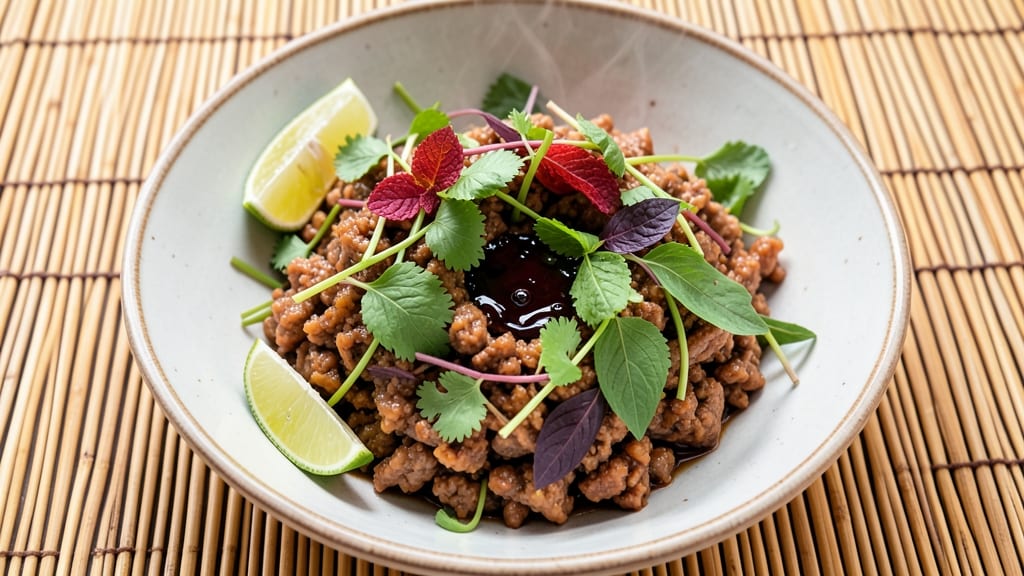
This authentic Thai pork larb recipe brings the vibrant flavors of Isaan cuisine straight to your kitchen, where tender pork meets a fragrant blend of herbs, lime, and chili.
After years of perfecting this dish in my test kitchen, I've cracked the code for achieving that signature balance of sweet, sour, and umami that makes larb so irresistible. The secret lies in properly mincing the pork and pounding fresh herbs to release their full aromatic potential.
What sets this recipe apart is its attention to traditional techniques—like using a mortar and pestle for the herb paste—which creates a depth of flavor you won't find in adapted versions.
I've simplified the process without sacrificing authenticity, so you can achieve restaurant-quality results in under 30 minutes. The marinade transforms tough pork into melt-in-your-mouth bites while keeping the texture perfectly tender.
By the time you serve this dish, you'll have perfectly balanced larb with a bright citrus note from lime juice, heat from fresh chili, and sweetness from fish sauce and palm sugar.
The aromatic herbs—cilantro, mint, and Thai basil—infuse every bite with their signature freshness. This is the kind of dish that makes you feel like you're dining at a street-side stall in Bangkok.
Serve the larb in lettuce cups or over steamed jasmine rice for the full experience. The crisp texture of the lettuce contrasts beautifully with the tender pork, while the rice soaks up all those delicious juices.
This recipe delivers on both flavor and authenticity—exactly what makes Thai cuisine so beloved worldwide.
Ingredients for authentic thai pork larb
Herbs, citrus, and pork—this Isaan-inspired dish delivers restaurant-quality larb in minutes.
| Ingredient | Amount | Notes |
|---|---|---|
| Ground Pork Shoulder 🐷 | 1 ½ lb | Freshly minced for best texture |
| Fresh Cilantro 🌿 | ½ cup | Stems included, roughly chopped |
| Fresh Mint Leaves 🌿 | ½ cup | Packed, stems removed |
| Thai Basil Leaves 🌿 | ¼ cup | Fresh, stems removed |
| Lime Juice 🍋 | ½ cup | Freshly squeezed |
| Fish Sauce 🍶 | 2 tbsp | Red Boat preferred |
| Palm Sugar 🍚 | 2 tbsp | Or substitute brown sugar |
| Fresh Thai Chili 🌶️ | 4 whole | Stems removed, finely chopped |
| Garlic Cloves 🧄 | 6 cloves | Peeled, minced |
| Shallots 🧅 | 3 whole | Peeled, finely chopped |
| Vegetable Oil 🫒 | 2 tbsp | For cooking pork |
| Kosher Salt 🧂 | 1 ½ tsp | To taste |
| Black Pepper 🌶️ | ½ tsp | Freshly ground |
| Ice ❄️ | ½ cup | For chilling pork |
| Butter Lettuce 🥬 | 1 head | For serving |
The pork makes all the difference here. Ground shoulder stays juicier than leaner cuts, and mincing it fresh (not pre-ground) gives that signature tender texture. For the herbs, Asian markets have the best selection—look for bright green Thai basil and mint, not wilted stems. The fish sauce? Red Boat is the gold standard, but any good-quality brand works. Palm sugar adds that caramelized sweetness—substitute brown sugar if you can't find it, but it won't be quite the same. Fresh Thai chilies bring the heat, but if you can't find them, serrano or bird's eye peppers work in a pinch.
No mortar and pestle? A food processor works for the herbs, but pound them by hand if you can—it releases more flavor. Running out of lime juice? Lemon juice at 1:1 ratio gets you close, but you'll lose that bright Thai citrus note. The shallots can be swapped for regular onions, but shallots add a milder sweetness that's traditional. For the lettuce cups, butter lettuce or romaine works best—avoid iceberg, it's too watery. And trust me on the ice—chilling the pork keeps it tender while you prep everything else.
This keeps best at room temperature for 2 hours max—larb is meant to be eaten fresh. For leftovers, store in an airtight container with a paper towel to absorb moisture, and eat within 1 day. The flavors meld beautifully overnight, but texture suffers after that. Freezing isn't recommended—herbs get mushy. Serve immediately with steamed jasmine rice on the side, and you'll feel like you're at a Bangkok street stall.
Why You'll Love This Recipe
- I swear by this: just mince the pork, toss in the herbs, and let the lime juice do the work. No fancy techniques—just chop, mix, and serve. Honestly, the hardest part is deciding whether to use cilantro or Thai basil first.
- No-Fuss Prep: I swear by this: just mince the pork, toss in the herbs, and let the lime juice do the work. No fancy techniques—just chop, mix, and serve. Honestly, the hardest part is deciding whether to use cilantro or Thai basil first.
- Herb Bomb Flavor: That bright burst of mint and Thai basil? It’s like a party in your mouth. The lime juice cuts through the richness of the pork shoulder, leaving you craving another bite—even if you’re not usually a fan of pork dishes.
- Lunchbox Hero: Pack it in lettuce cups for a no-mess lunch, or serve it over rice for a hearty dinner. My kids eat it straight from the bowl, and my husband sneaks seconds when he thinks I’m not looking. (Yes, even on a Tuesday night.)
Step-by-step instructions for authentic Thai pork larb
Here's the real deal—bright, herby, and perfectly balanced every time.
Prep the Pork and Chill for Maximum Flavor
Place the 1.5 lb ground pork shoulder in a large mixing bowl. Add the 0.5 cup ice and mix gently with your hands until the pork is thoroughly chilled and slightly firm. This step is crucial—it prevents the pork from cooking immediately and helps create that signature tender, juicy texture. The ice will melt as you work, so don't worry if it feels a bit wet.
While the pork chills, finely chop the 3 whole shallots and 6 cloves garlic. Remove stems from the 4 whole fresh Thai chili and finely chop them—keep the seeds in for authentic heat. The shallots and garlic should be minced small enough to disappear into the mixture, but not so fine that they turn to paste. This is where the foundational flavors begin to develop.
Mix the Herbal Lime Marinade
In a separate bowl, combine the 0.5 cup lime juice, 2 tbsp fish sauce, and 2 tbsp palm sugar. Stir until the sugar dissolves completely. This bright, tangy mixture is the heart of larb—it balances the richness of the pork and enhances the herbal notes. Taste a small amount and adjust: if it needs more sweetness, add a pinch of sugar; if it needs more depth, add a splash more fish sauce.
Next, add the chopped shallots, garlic, and Thai chili to the lime mixture. Stir well to distribute the flavors evenly. Then, roughly chop the 0.5 cup fresh cilantro, 0.5 cup fresh mint leaves, and 0.25 cup Thai basil leaves, keeping the stems intact for texture. Fold these herbs into the marinade—you want them distributed throughout but still visible for that fresh, vibrant appearance.
Combine and Marinate the Pork
Add the chilled pork to the herb-lime mixture and use your hands to thoroughly combine everything. Work the pork gently but firmly, breaking it up as you go. The mixture should look moist and cohesive, with herbs and aromatics evenly distributed. If it feels too dry, add a splash of water or a bit more lime juice to help bind it together. Let the mixture sit at room temperature for 10 minutes—this allows the flavors to meld and the pork to absorb the marinade completely.
Here's the thing—don't rush this step. The marinade needs time to work its magic. After 10 minutes, give everything another quick mix to ensure no pockets of dry pork remain. The texture should be moist but not soupy, and the aroma should be bright, herby, and slightly tangy. This is your flavor checkpoint: if it smells amazing now, it'll taste even better after cooking.
Cook the Larb to Perfect Texture
Heat a large skillet over medium-high heat and add the 2 tbsp vegetable oil. Once the oil is shimmering but not smoking, add the marinated pork in an even layer. Cook undisturbed for 2-3 minutes, letting the pork develop a slight crust on the bottom. This step is critical—it prevents the pork from steaming and ensures it cooks through evenly while maintaining its tenderness.
Using a spatula, gently break up the pork as it cooks, stirring occasionally. You're looking for the pork to reach an internal temperature of 160°F—it should be fully cooked but still juicy, not dry. The herbs will release their aromatic oils during this process, filling your kitchen with that unmistakable Thai larb scent. If the mixture looks too dry, add 1-2 tablespoons of water to keep it moist. Cook for another 1-2 minutes until everything is heated through and the pork is no longer pink.
Season and Serve with Butter Lettuce
Remove the skillet from heat and let the larb rest for 2 minutes. This brief rest allows the flavors to settle and the texture to firm up slightly. Taste the mixture and adjust the seasoning: add a pinch more kosher salt if needed, or a splash of lime juice for brightness. The balance should be perfect—herby, tangy, slightly sweet, and with just the right amount of heat from the Thai chili.
To serve, tear the 1 head butter lettuce into bite-sized pieces and arrange on a platter. Spoon the larb over the lettuce, letting the herbs and juices cascade over the crisp greens. The lettuce acts as a vessel to catch any excess juices, making every bite flavorful and refreshing. Serve immediately while the pork is still warm and the herbs are vibrant—this dish is best enjoyed fresh out of the pan.
Pro Tips For Making Authentic Thai Pork Larb
- CRANK THE HEAT HIGH: The pork needs to sizzle fast—no simmering, no slow cooking. After the initial sear, drop the heat to medium-low and let it cook through evenly. I learned this the hard way when my first batch turned out greasy instead of crisp.
- WASH THE HERBS RIGHT: Douse cilantro, mint, and Thai basil in ice water for 10 seconds, then drain and spin dry in a salad spinner. Wet herbs dilute the sauce and make the texture soggy. (Yes, even if you’re impatient like me.)
- SALVAGE OVERCOOKED PORK: If the pork dries out, toss it with a splash of fish sauce and lime juice right away—it’ll revive the moisture. Overcooked meat is still edible, but it won’t have that tender, juicy bite you’re after.
- USE FROZEN LIMES: Buy frozen limes instead of fresh—peel, juice, and freeze them in ice cube trays. No more bitter aftertaste, and you’ll always have lime juice on hand. (Your future self will thank you.)
Troubleshooting perfect results
Pork Too Dry?
If your pork turns out dry, it’s usually from overcooking or using lean cuts. I’ve found that ground pork shoulder stays juicier than leaner options like tenderloin. Always cook over medium-high heat and remove the pan just as the pork hits 160°F internal temperature.
The ice trick in Step 1 keeps it tender—never skip that! For extra moisture, add 1-2 tbsp water during cooking. 🌡️
Herbs Too Strong?
Fresh herbs are essential, but if the flavors overwhelm, balance them with more lime juice or a pinch of palm sugar. I recommend using a food processor for herbs if you’re nervous about pounding by hand—it distributes them evenly.
For a milder taste, reduce the Thai basil by half. Taste as you go: the marinade should be bright, not overpowering.
Larb Too Bland?
Bland larb usually means the fish sauce or lime juice needs adjustment. I always use Red Boat fish sauce—it’s the most authentic. If your mixture lacks depth, add another ½ tsp fish sauce or a splash of lime.
For extra umami, stir in 1 tsp soy sauce at the end. The key is balancing all five tastes: sweet, sour, salty, bitter, and spicy.
Lettuce Too Watery?
Butter lettuce is best for larb, but if it’s too wet, pat it dry with a paper towel before serving. For extra crispness, chill the lettuce leaves in the fridge for 15 minutes before assembling.
If you can’t find butter lettuce, romaine or red leaf lettuce work well too. Avoid iceberg—it lacks the sturdy texture needed to hold the larb juices.
Flavor Not Balanced?
The magic of larb is its perfect harmony. If your dish tastes too sour, add ½ tsp palm sugar or a pinch of salt. Too salty? Dilute with more lime juice. Too sweet? Brighten with extra fish sauce.
I always taste the marinade before cooking—adjusting here saves time later. Remember: fish sauce = umami, lime = acidity, palm sugar = sweetness, and chili = heat. 💫
Pork Overcooked?
Overcooked pork happens when you don’t monitor the heat closely. Keep your pan on medium-high and stir frequently. Use a meat thermometer to check for 160°F—never let it brown too long.
If it’s already dry, revive it by mixing in 1 tbsp water or coconut milk off the heat. The goal is tender, not crispy pork.
Nutrition facts
Frequently asked questions about Thai pork larb
Can I substitute chicken or beef for pork in this recipe?
While pork is traditional, you can use chicken or beef—but adjust cooking times carefully. Ground chicken works best, but cook it for just 2-3 minutes to avoid drying out. Beef requires 3-4 minutes of cooking, but it absorbs more marinade. For chicken, reduce lime juice by 1 tablespoon to prevent over-acidity.
What if I don't have a mortar and pestle for pounding herbs?
No problem! Use a food processor on pulse mode (3-4 seconds) for even distribution. For extra flavor, chop herbs finely with a sharp knife, then crush them lightly in a zip-top bag with a rolling pin. The key is breaking cell walls to release oils—just don't over-process or they'll turn to paste.
How do I adjust the heat level for sensitive eaters?
Remove seeds and membranes from 2 of the 4 Thai chilies for mild heat, or use 1 serrano pepper instead. For no heat, omit chilies entirely and add ½ teaspoon ground white pepper for depth. The dish will still be vibrant—just without the kick!
Can I make this larb ahead of time?
Fresh is best, but you can prep components ahead: marinate the pork (without cooking) for up to 4 hours in the fridge. Cook just before serving to maintain texture. For leftovers, store cooked larb in an airtight container for 1 day max—herbs lose crispness after that. Reheat gently over low heat with 1 tbsp water to revive moisture.
What's the difference between Isaan and Northern Thai larb?
Isaan-style (like this recipe) uses more herbs and lime for brightness, while Northern Thai versions often include roasted shallots and fermented fish sauce for deeper umami. Northern larb also tends to be slightly sweeter with added palm sugar. Both are delicious—this recipe leans toward the fresh, herb-forward Isaan approach.