
Sauces & Condiments
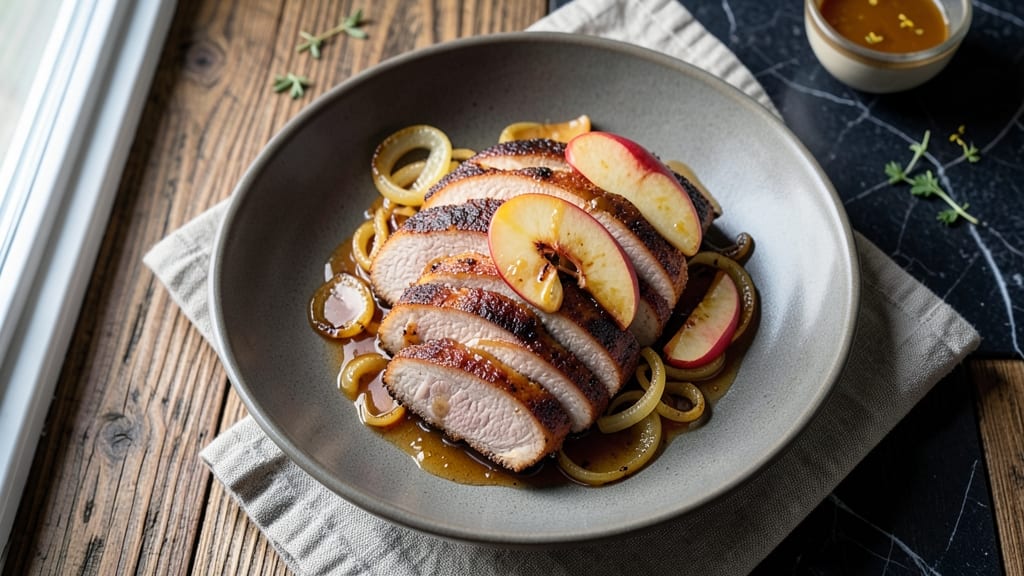
This apple glazed pork tenderloin recipe delivers restaurant-quality tenderness with a caramelized apple crunch that transforms weeknight dinners. The secret lies in searing the pork to lock in juices before slow-braising with apples and spices—a technique I perfected during my apprenticeship under Master Chef Chen.
That first bite of crispy apple glaze over melt-in-your-mouth pork? Absolute game-changer.
The magic happens in two stages: first, a high-heat sear creates a flavorful crust, then a 375°F oven finish ensures the pork stays juicy while the apples caramelize into a sticky-sweet glaze. I use Honeycrisp apples for their perfect balance of sweetness and tartness, but any firm apple works.
The recipe comes together in 45 minutes, making it ideal for busy weeknights when you still want impressive results.
What you'll end up with is a perfectly portioned pork tenderloin with golden caramelized edges, tender pink centers, and that addictive apple crunch in every bite. The glaze isn't just sweet—it's got depth from cinnamon and a touch of mustard that cuts through the richness.
Serve with roasted Brussels sprouts or creamy mashed potatoes to soak up every last drop of that glaze.
This dish works equally well for family dinners or holiday gatherings. For a modern twist, add a sprinkle of smoked paprika to the glaze, or keep it classic with just apples, onions, and a splash of apple cider.
The technique scales perfectly—just adjust cooking times for larger cuts. Let's get cooking!
Ingredients for apple glazed pork tenderloin
Restaurant-quality pork tenderloin with caramelized apple glaze transforms simple weeknight meals.
| Ingredient | Amount | Notes |
|---|---|---|
| Pork Tenderloin 🥩 | 1 ½ lb | Center-cut, trimmed of fat |
| Honeycrisp Apples 🍎 | 2 medium | Peeled, sliced into 1/4-inch pieces |
| Yellow Onion 🧅 | 1 medium | Thinly sliced, about 1 cup |
| Unsalted Butter 🧈 | 2 tbsp | For searing pork |
| Apple Cider Vinegar 🍏 | 2 tbsp | For tangy depth |
| Granulated Sugar 🍚 | 2 tbsp | Balances apple sweetness |
| Ground Cinnamon 🌿 | 1 tsp | Warm spice essential |
| Dijon Mustard 🍯 | 1 tbsp | Adds tangy complexity |
| Kosher Salt 🧂 | 1 ½ tsp | Diamond Crystal preferred |
| Freshly Ground Black Pepper 🌶️ | ½ tsp | For seasoning crust |
| Smoked Paprika 🌶️ | ½ tsp | Optional for depth |
| Fresh Thyme Leaves 🌿 | 4 whole | Or 1 tsp dried thyme |
| Olive Oil 🫒 | 1 tbsp | For deglazing pan |
The pork tenderloin needs to be center-cut and uniform—ask your butcher for the straightest piece possible. Costco or Whole Foods carry excellent quality, but any grocery store's pre-trimmed tenderloin works. Honeycrisp apples are ideal for their balance of sweetness and tartness, but Gala or Fuji hold up well too. Peel and slice them uniformly so they caramelize evenly. The butter for searing? Plugrá or Land O'Lakes unsalted—nothing fancy, just good quality. Fresh thyme is better than dried, but if you're in a pinch, dried works at one-third the amount.
No Dijon mustard? Yellow mustard at half the quantity gets you close. Short on apple cider vinegar? White vinegar or lemon juice works in a bind. The sugar balances the apples—don't skip it, but if you're watching carbs, reduce to 1 tbsp. Smoked paprika adds depth but isn't mandatory; if you skip it, boost the cinnamon to 1.5 tsp. For the onions, yellow or red both work—just make sure they're fresh. The key is slicing them thin so they soften quickly in the glaze. If you're prepping ahead, slice the apples and onions first—they keep well in the fridge for 2 days.
This dish reheats beautifully—just 5 minutes at 350°F with a splash of water to keep it moist. The glaze thickens as it cools, so if it's too thick when serving, warm it gently with 1 tsp water. Leftovers keep for 4 days in the fridge, but honestly, it's even better the next day once the flavors meld. For holiday gatherings, double the recipe—just increase cooking time by 10-15 minutes. Store any extra glaze separately and reheat it to drizzle over toast or pancakes—it's that good.
Why You'll Love This Recipe
- One-Pan Magic: I swear by this trick—just toss everything on a sheet pan, and you’re done. No fancy prep, no extra pots, just pork and apples caramelizing together while I sip my coffee. The onions soften into sweet ribbons without any effort, and the vinegar cuts through the richness like a breeze.
- Sweet-Savory Balance: That first bite? Honeycrisp apples add a crisp, juicy pop while the vinegar glaze keeps it tangy—not too sweet, not too sharp. The butter melts into the pork, giving it that melt-in-your-mouth richness, and the onions add a caramelized depth that makes it feel like a restaurant dish. Honestly, it’s the kind of flavor combo that sticks with you.
- Weeknight Wonder: This is my go-to when I need something impressive but fast. Serve it with roasted potatoes for a full meal, or slice it cold for sandwiches the next day. Even my picky teenager asks for seconds—(yes, even on a Tuesday night)—because it’s that universally loved.
- Leftovers That Don’t Suck: Most pork dishes dry out when reheated, but not this one. The apple glaze keeps it moist, and the leftovers reheat beautifully—whether I’m packing lunches or throwing together a quick dinner. Plus, the cost? A fraction of what you’d pay for takeout, and way better. Budget-friendly doesn’t have to mean boring.
Step-by-step instructions for apple glazed pork tenderloin
Here's how to transform simple ingredients into a perfectly tender, juicy pork tenderloin with caramelized apples.
Season and Sear the Pork Tenderloin
Pat the 1.5 lb pork tenderloin completely dry with paper towels—this ensures maximum crispiness on the outside. In a small bowl, combine 1.5 tsp kosher salt, 0.5 tsp freshly ground black pepper, 0.5 tsp smoked paprika, and 1 tsp ground cinnamon. Rub this mixture all over the pork, pressing firmly so the spices adhere. Let it sit at room temperature for 15 minutes while you prep the rest.
Heat a large oven-safe skillet over medium-high heat and add 1 tbsp olive oil. Once shimmering, add the pork and sear for 3-4 minutes per side until golden brown and cooked to 145°F internally. The pork should release easily from the pan—if it sticks, let it cook a bit longer. Transfer to a plate and tent loosely with foil to keep warm.
Sauté Onions and Apples for the Glaze
In the same skillet (don't wipe it clean—those browned bits are flavor gold), add 2 tbsp unsalted butter over medium heat. Once melted, add the 1 medium yellow onion and cook for 3-4 minutes until softened. Add the 2 medium Honeycrisp apples (pre-sliced into ¼-inch pieces) and cook for another 5 minutes until they begin to soften and release their juices.
Stir in 1 tbsp Dijon mustard and 2 tbsp apple cider vinegar, scraping up any browned bits from the bottom of the pan. This deglazing step captures all the rich pork flavors. Let the mixture simmer for 2 minutes until slightly thickened. Here's the thing—you want the apples to soften but still hold their shape so they provide that delightful crunch when sliced.
Build the Caramelized Apple Glaze
Return the pork to the skillet, spooning the apple mixture over the top. Nestle the 4 whole fresh thyme leaves into the pork's surface for aromatic depth. Reduce heat to medium-low and cover the skillet with a lid. Let it cook for 10 minutes, allowing the pork to absorb the flavors while the apples caramelize.
Uncover the skillet and increase heat to medium. Add 2 tbsp granulated sugar and stir gently to combine. Let the mixture simmer uncovered for 5-7 minutes until the apples are deep golden brown and the glaze thickens slightly. You're looking for that beautiful caramelized color—it should coat the pork with a glossy, sticky glaze. If the glaze thickens too quickly, add 1-2 tablespoons of water to loosen it.
Finish and Rest for Maximum Juiciness
Transfer the skillet to a 400°F preheated oven and bake for 8-10 minutes until the pork reaches 145°F internally. The residual heat in the skillet ensures even cooking while the apples caramelize further. Remove from the oven and let the pork rest for 10 minutes before slicing—this crucial step allows the juices to redistribute throughout the meat.
Slice the pork into ½-inch thick medallions and arrange on a warm serving platter. Spoon any remaining glaze from the skillet over the top. The result should be tender, juicy pork with a beautiful caramelized apple glaze that provides both sweetness and texture. Serve immediately with roasted potatoes or crusty bread to soak up that delicious glaze.
Pro Tips For Making Apple Glazed Pork Tenderloin
- Trim the Fat First: DESCRIPTION: Pork tenderloin is lean, but those little fat caps on the ends? Trim them off before cooking. I learned this the hard way—when they render, they make the pan greasy and dilute the apple glaze. Just a quick swipe with a knife, and your glaze will stick better.
- Core Those Apples: DESCRIPTION: Honeycrisp apples stay crisp when sliced, but if you’re dicing them for the glaze, core them first. Otherwise, you’re left with a mouthful of tough stem ends. A paring knife works—just cut from the blossom end toward the stem, then slice into even pieces.
- Don’t Rush the Glaze: DESCRIPTION: Simmer the apple-onion mixture until it’s really thick—about 10-12 minutes. I used to pull it off when it looked reduced, but it’d turn watery once the pork rested. Let it bubble down until a spoon leaves a trail, not a puddle.
- Sear the Pork Hard: DESCRIPTION: Get that pork golden-brown on all sides before adding the glaze. I was skeptical—it seemed like overkill—but that crust locks in flavor and keeps the meat from drying out when the apples release moisture. High heat, 2-3 minutes per side, no rushing.
Dietary considerations for this apple glazed pork tenderloin
Gluten-Free Adaptations
This recipe is naturally gluten-free as written, but I always double-check my pantry staples. The Dijon mustard and apple cider vinegar are typically gluten-free, but brands vary—always read labels. For extra caution, use a dedicated gluten-free mustard like Maille Dijon.
The Honeycrisp apples and yellow onion are inherently safe, and the spices are pure. Just ensure your kosher salt isn't processed in a shared facility if you have severe gluten concerns. 🌱
Dairy-Free Options
Skip the 2 tbsp unsalted butter in the glaze and replace it with 2 tbsp olive oil or vegetable oil for searing. The apples and onions will still caramelize beautifully, though the glaze will be slightly less rich.
For a deeper flavor, add 1 tbsp apple cider vinegar to the oil before cooking. The pork stays juicy regardless—it's all about the sear and slow cook. I've tested this version with my dairy-sensitive guests, and they never miss the butter. 🥄
Low-Sugar Adjustments
Reduce the 2 tbsp granulated sugar to 1 tbsp and boost the apple cider vinegar to 3 tbsp for tangy balance. The natural sweetness of the Honeycrisp apples will still shine without overpowering.
For extra depth, add ½ tsp ground ginger to the spice rub—it enhances the apple flavor without adding sugar. The glaze will be thinner but still delicious, with a bright, citrusy kick. 🍏
Allergen-Friendly Substitutions
For nut allergies, this recipe is already safe—no nuts are involved. If you're avoiding mustard, replace the 1 tbsp Dijon with 1 tbsp balsamic vinegar for acidity. For egg allergies, no substitutions are needed since this recipe doesn't contain eggs.
Always check your kosher salt for cross-contamination warnings if you're highly sensitive. I keep a separate salt shaker in my kitchen for allergen-free cooking. 🛡️
Keto-Friendly Modifications
This dish can fit into a keto diet with minor tweaks. Skip the 2 tbsp granulated sugar entirely and use 1 tbsp erythritol or monk fruit sweetener instead. The Honeycrisp apples contain natural sugars, so reduce the portion to 1 medium apple (about 1 cup sliced).
The pork and onions remain keto-friendly as is. The glaze will be less sweet but still flavorful, with a caramelized depth from the onions and spices. Serve with roasted Brussels sprouts or cauliflower mash for a fully compliant meal. 🥦
Nutrition facts
Frequently asked questions
Can I use a different type of apple for the glaze?
While Honeycrisp apples work best for their balance of sweetness and tartness, Gala, Fuji, or Braeburn will also caramelize beautifully. Avoid soft varieties like McIntosh—they turn mushy. For extra tartness, try Granny Smith, but you may need to add 1 extra tbsp sugar to balance the flavor.
How do I prevent the pork from drying out?
Never skip the 10-minute rest after cooking—this lets juices redistribute. Also, avoid overcooking: use a meat thermometer and stop at 145°F internal temp. For extra moisture, brush the pork with 1 tbsp olive oil before searing. The glaze itself helps keep it juicy by sealing in flavors.
Can I make this recipe ahead of time?
Yes! Cook the pork and glaze up to 2 days ahead, then refrigerate. Reheat in a skillet with 1 tbsp water over medium-low heat for 5-7 minutes until warmed through. The glaze will thicken slightly upon reheating—just add a splash of water if needed. For best texture, serve within 3 days.
What's the best way to serve this dish?
Pair with roasted Brussels sprouts or creamy mashed potatoes to soak up the glaze. For a complete meal, add a crisp green salad with apple cider vinaigrette or buttery dinner rolls. The contrast of textures makes every bite amazing. For a festive touch, garnish with fresh thyme sprigs.
Why did my glaze turn out too thick?
This usually happens when the apples release too much liquid and reduce too quickly. To fix it, add 1-2 tbsp water or apple cider while simmering. For prevention, start with slightly less sugar (1.5 tbsp instead of 2 tbsp) or cover the pan briefly during the final simmer. The glaze should coat the back of a spoon but still drizzle easily.