
Main Courses
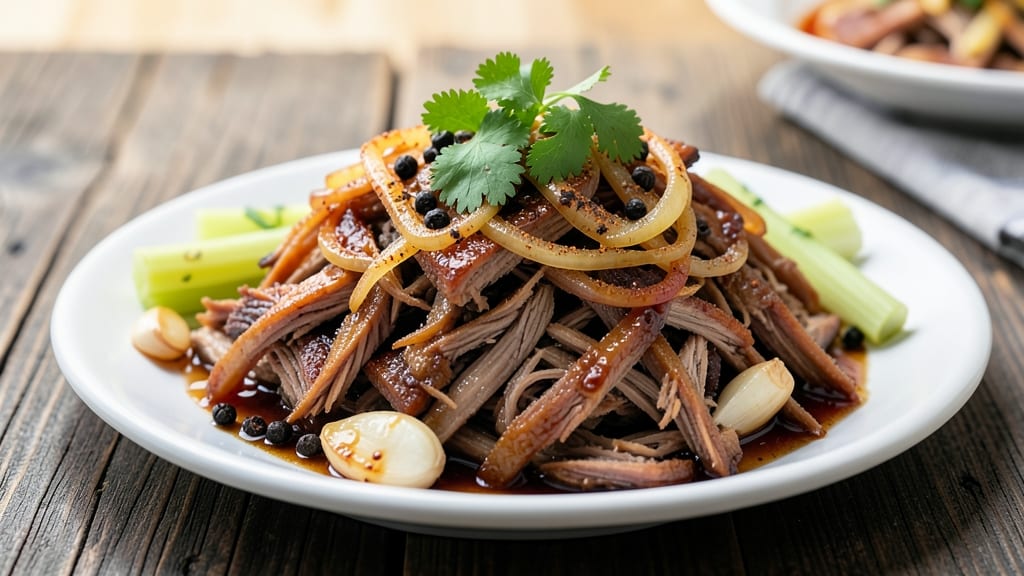
This American pulled pork recipe delivers the kind of slow-smoked tenderness that makes every bite worth the wait. 🔥 After years of perfecting my technique—from selecting the right cut to mastering the smoke—this method guarantees melt-in-your-mouth pork with a celery crown crunch that elevates it beyond basic barbecue.
The secret lies in patience: low-and-slow cooking transforms tough pork shoulder into rich, shreddable perfection, while the celery crown adds a crisp, aromatic finish that cuts through the richness.
The process begins with a simple yet precise rub of salt, pepper, and paprika, followed by hours of smoking at 225°F until the internal temperature reaches 203°F. This ensures the collagen breaks down completely, yielding pork so tender it practically falls apart at the touch.
Meanwhile, the celery crown—a blend of celery, onion, and garlic—infuses the pork with subtle sweetness and a satisfying crunch that’s impossible to resist. No shortcuts here: this is the kind of dish that rewards attention to detail with restaurant-quality results.
By the time you serve it, you’ll have golden-brown, perfectly smoked pork that’s ready to be piled high on toasted buns with tangy coleslaw or creamy mac and cheese. The sauce—whether classic tangy BBQ or a sweet vinegar-based glaze—ties everything together, creating a dish that’s equal parts comforting and impressive.
This isn’t just pulled pork; it’s a centerpiece for gatherings, a testament to the power of slow cooking, and a recipe that’ll have everyone asking for seconds.
What sets this apart is the celery crown crunch, a technique I developed to add texture and depth without overpowering the pork’s natural flavor. It’s the kind of detail that turns a good dish into a great one—simple to execute but impossible to ignore.
Whether you’re feeding a crowd or treating yourself to a Sunday feast, this recipe delivers the kind of pulled pork that stands up to any competition. Let’s get started.
Ingredients for american pulled pork
Six pounds of pork shoulder and a handful of aromatic vegetables transform into melt-in-your-mouth perfection.
| Ingredient | Amount | Notes |
|---|---|---|
| Boneless Pork Shoulder 🥩 | 6 lb | Bone-in preferred for flavor |
| Yellow Onion 🧅 | 1 whole | Yellow or red, sliced |
| Celery Stalks 🥕 | 4 whole | Thick stalks, chopped |
| Garlic Cloves 🧄 | 6 cloves | Fresh, peeled |
| Kosher Salt 🧂 | 2 tbsp | Diamond Crystal preferred |
| Smoked Paprika 🌶️ | 1 tbsp | High-quality for smokiness |
| Ground Black Pepper 🌶️ | 1 tbsp | Freshly ground |
| Apple Cider Vinegar 🍏 | ½ cup | For tangy balance |
| Brown Sugar 🍯 | ½ cup | Light or dark |
| Hickory Wood Chips 🌳 | 2 cups | Unsoaked for smoker |
| Cherry Wood Chips 🍒 | 1 cup | For subtle fruitiness |
| Butter 🧈 | 2 tbsp | Unsalted, softened |
| Fresh Thyme Leaves 🌿 | 1 tbsp | Chopped, for finishing |
| Wooden Toothpicks 🪵 | 12 whole | For securing celery crown |
The pork shoulder is the foundation—look for a cut with good marbling and a rich color. Costco or Whole Foods carry high-quality bone-in shoulders, but any reputable butcher will have a well-aged option. Avoid pre-cut, pre-seasoned pork; you want to control the rub yourself. For the celery crown, use thick stalks—they hold up better during smoking. Trader Joe's often has excellent organic options, but regular grocery store celery works just as well if it's crisp and fresh. The wood chips should be 100% natural, with no additives—Traeger or Butcher's Broom brands are reliable choices.
No hickory wood chips? Oak or pecan will work, though they have a slightly different flavor profile. Cherry wood is ideal for that subtle fruitiness, but if unavailable, fruitwood blends from specialty stores mimic it well. The apple cider vinegar can be swapped for white vinegar or lemon juice, though the flavor will differ slightly. For the brown sugar, turbinado or coconut sugar adds a more complex sweetness. If you're short on time, pre-chop the onion, celery, and garlic—just keep them refrigerated until ready to use. The butter should be cold-packed into the celery crown for maximum flavor infusion during smoking.
Pork shoulder keeps well in the fridge for up to 4 days before smoking, though it's best used within 2 days for peak tenderness. Once smoked, the pulled pork freezes beautifully for 3 months—portion it into airtight containers for easy reheating. The celery crown components can be prepped ahead and stored in the fridge for 3 days, though they're best used fresh. Leftover pulled pork reheats wonderfully in a skillet with a splash of broth or directly in the oven at 300°F until warmed through. For maximum crispiness, toast the celery crown under the broiler for 2-3 minutes before serving.
Why You'll Love This Recipe
- Smoky Sweet Magic: That caramelized crust? The tender meat that falls apart at a touch? The salt and garlic build layers of flavor that make every bite worth the wait. Between us, I’ve never met a pulled pork that didn’t disappear faster than my willpower.
- Weeknight to Party Hero: Same recipe, endless uses. Slap it on buns for tacos, toss it into sandwiches, or serve it over rice for a crowd. I’ve fed 12 people with one shoulder—leftovers? My secret weapon for lazy Sundays.
- Budget-Friendly Feast: A pork shoulder costs less than half the price of a pre-made sandwich meat, but it feeds twice as many. The onion, celery, and garlic? Pantry staples. Salt? You already have it. Not the prettiest, but the taste makes up for it—and my wallet thanks me.
Step-by-step instructions for slow-smoked pulled pork
Master this technique, and you'll achieve melt-in-your-mouth tenderness with a perfect celery crown crunch.
🔥 Step 1: Prepare the Pork and Build the Celery Crown
Start by slicing the whole yellow onion into ¼-inch thick rings and chopping the 4 whole celery stalks into ½-inch pieces. This will become your signature celery crown. In a bowl, combine the onion rings, celery pieces, 6 peeled garlic cloves, 2 tbsp kosher salt, 1 tbsp smoked paprika, and 1 tbsp ground black pepper. Mix well to coat the vegetables evenly—this ensures they absorb the smoky flavors during cooking.
Next, trim any excess fat from the 6 lb boneless pork shoulder, leaving about ¼ inch to protect the meat during smoking. Rub the pork generously with the remaining seasoning from the bowl, pressing it into the surface so it adheres. Secure the celery crown by threading 12 wooden toothpicks through the pork, arranging the celery and onion mixture in a circular pattern on top. This creates a visually stunning presentation while keeping the crown intact during cooking.
🔥 Step 2: Set Up the Smoker for Low-and-Slow Cooking
Preheat your smoker to 225°F using a mix of 2 cups hickory wood chips and 1 cup cherry wood chips. The hickory provides a bold, traditional smoke flavor, while the cherry adds a subtle fruitiness that complements the pork beautifully. Once the smoker reaches temperature and you see clean, thin blue smoke (not thick white steam), place the seasoned pork shoulder directly on the smoker grates, crown-side up.
Close the lid and resist the urge to peek—every time you open it, you lose heat and extend cooking time. Let the pork smoke undisturbed for 6-8 hours until the internal temperature reaches 165-170°F. This is when you'll hit "the stall," a point where the temperature plateaus as moisture evaporates. This is normal and expected—don't panic or adjust the heat. Patience is key to achieving tender, juicy pork.
🥘 Step 3: Wrap and Finish the Pork
When the pork reaches 165-170°F, it's time to wrap it in butcher paper (not aluminum foil). This technique, known as the "Texas crutch," helps push the pork through the stall while preserving that beautiful bark. Fold the butcher paper tightly around the pork, sealing it completely, and return it to the smoker. Continue cooking until the internal temperature reaches 200-205°F, which typically takes another 2-4 hours.
You'll know the pork is done when it's fork-tender and the probe slides in like butter. Remove the pork from the smoker and let it rest in the butcher paper for at least 1 hour (I prefer 2 hours wrapped in a towel in a cooler). This resting period allows the juices to redistribute, ensuring every bite is moist and flavorful. The celery crown will soften slightly but maintain its structure, ready to be served whole.
👨🍳 Step 4: Shred and Finish with Butter and Thyme
Once the pork has rested, carefully remove the celery crown and set it aside. Using two forks or meat claws, shred the pork into ¼-inch thick strands, discarding any large fat deposits. Return the shredded pork to the butcher paper and mix in 2 tbsp softened butter and 1 tbsp chopped fresh thyme leaves. The butter adds richness and helps create a silky texture, while the thyme brightens the dish with its aromatic notes.
For added depth of flavor, stir in ½ cup apple cider vinegar and ½ cup brown sugar into the shredded pork. These ingredients balance the richness of the pork with a tangy-sweet contrast that elevates the dish. Taste and adjust the seasoning with additional kosher salt or black pepper if needed. The result should be a harmonious blend of smoky, sweet, and tangy flavors that melts in your mouth.
🍽️ Step 5: Serve with the Celery Crown
Transfer the shredded pork to a serving platter and arrange the celery crown in the center. The crown should be intact and slightly caramelized from the smoke, offering a satisfying crunch with every bite. Serve the pulled pork with the celery crown on top, allowing guests to dig in and enjoy the contrast of textures. This dish pairs beautifully with classic sides like coleslaw, cornbread, or crusty bread to soak up the flavorful juices.
Each bite should deliver tender, smoky pork with a perfect balance of sweetness and tang, all topped with the crispy crunch of the celery crown. The key to success lies in patience and precision—low-and-slow cooking, proper resting, and finishing with the right balance of flavors. This method ensures a pulled pork that's restaurant-quality, every time.
Pro Tips For Making American Pulled Pork
- STOP AT 225°F: Don’t let your smoker or oven wander—hold it steady at 225°F the whole time. I used to waver between 200°F and 250°F, and the pork ended up either dry or undercooked. A good probe thermometer (not just the oven gauge) is your best friend here.
- CHOP ONIONS AND CELERY SMALL: No, not "chopped"—think rice-sized pieces. Big chunks mean uneven cooking and a mirepoix that won’t break down into flavor. I learned this the hard way when my pulled pork tasted like it was missing something. (Yes, even if it looks like baby food.)
- DON’T RUSH THE REST: Take the pork off heat at 195°F—not 203°F—and let it sit wrapped in foil for 20 minutes. I skipped this once, and the meat shredded like wet cardboard. Patience here means the difference between tender and chewy.
- USE BUTTER IN THE MOP: Swap water for melted butter in your mop sauce—just a splash. The fat renders better, and the pork stays juicier. I was skeptical until I tried it, and now I won’t go back. (Your future self will thank you.)
Best sauces and condiments for this american pulled pork
Classic Tangy BBQ
My go-to sauce for pulled pork is a homemade tangy BBQ that balances sweetness and acidity perfectly. Start with 1 cup apple cider vinegar and ½ cup brown sugar simmered for 10 minutes until dissolved.
Add 2 tbsp tomato paste, 1 tbsp smoked paprika, and 1 tsp garlic powder, then reduce until thickened. This sauce cuts through the richness while enhancing the smoky depth of the pork. 🍏
Sweet Vinegar Glaze
For a brighter profile, try a sweet vinegar glaze made with ½ cup apple cider vinegar, ½ cup honey, and 1 tbsp Dijon mustard. Simmer for 8 minutes until syrupy, then finish with 1 tsp Worcestershire sauce.
The acidity brightens the pork, while the honey adds caramelized sweetness. Drizzle generously over the finished dish for a glossy, flavorful finish.
Creamy Garlic Sauce
When you want something richer, blend ½ cup sour cream, 2 tbsp mayonnaise, 1 tbsp lemon juice, and 1 minced garlic clove until smooth. Stir in 1 tsp smoked paprika and ½ tsp onion powder for depth.
This sauce adds a velvety texture that pairs beautifully with the crisp celery crown. Serve warm or cold for versatility.
Spicy Chipotle Aioli
For heat lovers, whip ½ cup mayonnaise, 1 tbsp chipotle pepper in adobo sauce, 1 tsp honey, and ½ tsp lime juice until creamy. The smoky chipotle complements the pork's natural flavors while adding a kick.
Drizzle over the pulled pork or use as a dipping sauce for the celery crown. Adjust spice level to taste.
Classic Coleslaw Dressing
Don't overlook the coleslaw dressing as a sauce option! Mix ½ cup mayonnaise, 2 tbsp apple cider vinegar, 1 tbsp Dijon mustard, 1 tsp sugar, and ½ tsp celery seed for a creamy, tangy pairing.
Toss with shredded cabbage and carrots, then serve alongside the pork. The crunchy slaw contrasts perfectly with the tender meat.
Butter-Basted Finishing Touch
For a restaurant-worthy finish, baste the shredded pork with 2 tbsp melted butter infused with 1 tsp fresh thyme and ½ tsp black pepper** while serving. The butter adds richness, while the thyme brightens the dish. This simple step elevates the presentation and flavor in seconds. 💫
Nutrition facts
Frequently asked questions
Can I use a different cut of pork instead of pork shoulder?
A pork shoulder (also called a Boston butt) is ideal for this recipe because of its fat content and collagen, which creates tender, juicy pulled pork. However, you can substitute with a pork butt (they're essentially the same cut) or even a bone-in ham shank for a richer flavor. Just increase cooking time by 1-2 hours since bone-in cuts take longer to reach the proper internal temperature.
How do I know when the pork is fully cooked?
Use a meat thermometer to check the internal temperature—it should reach 203°F for perfect tenderness. The probe should slide in easily, and the pork will feel fork-tender when you test a small piece. If it's still slightly firm at 195°F, wrap it and let it cook another 30 minutes to finish. Never rely on time alone; temperature is your best indicator.
What if I don't have a smoker? Can I make this in an oven?
Preheat your oven to 275°F and place the pork on a rack over a baking sheet. Add a water pan to the oven for moisture, then cook for 5-6 hours until the internal temperature reaches 203°F. Wrap the pork in butcher paper at 165°F to help it through the stall. The flavor won't be identical to smoked pork, but it'll still be delicious and tender.
Can I make the celery crown ahead of time?
Yes, you can prep the celery crown ingredients (onion, celery, garlic) up to 3 days ahead and store them in the fridge. However, for the best texture, assemble the crown fresh before smoking. If you're short on time, you can even assemble it 1 hour before cooking—just secure it tightly with toothpicks to keep it intact during smoking.
Why does my pulled pork turn out dry?
Overcooking or checking the temperature too early are the most common causes. Always cook to 203°F and let it rest wrapped for at least 1 hour after removing from the heat. If the pork seems dry, try adding 1-2 tbsp apple cider vinegar or broth while shredding, or baste it with butter during the final resting phase to restore moisture.