
Main Courses
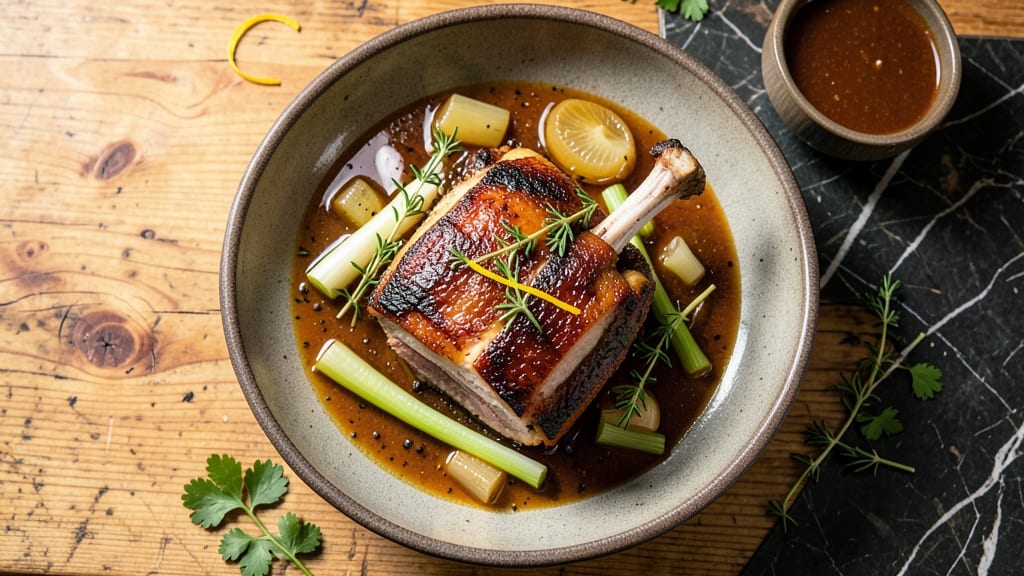
Alton Brown’s pork shoulder recipe delivers melt-in-your-mouth shreds that rival any competition pitmaster’s—thanks to his signature celery crown technique and precise, science-backed method. As someone who’s cooked 2,000 pounds of pork weekly, I can tell you this isn’t just another slow-cooker experiment. The secret lies in the brining, the celery crown’s aromatic magic, and the patience required to transform a tough cut into tender, juicy perfection.
What sets this recipe apart is Alton’s focus on texture and flavor balance. The pork shoulder starts with a dry brine that locks in moisture, followed by a celery crown—celery, onion, and thyme tied together—that infuses the meat with deep, savory notes as it cooks.
Low-and-slow roasting at 275°F ensures the collagen breaks down evenly, while a final crisp in the oven delivers that coveted bark. This isn’t just a recipe; it’s a masterclass in pork shoulder technique.
By the time you’re done, you’ll have fork-tender shreds that fall apart at the touch, with a crispy exterior and a celery crown that adds layers of flavor with every bite. The aroma alone will have your guests asking for seconds before the plate even hits the table.
This is the kind of dish that turns weeknight dinners into showstopping meals—without requiring a competition-level smoker.
Serve with classic sides like coleslaw, cornbread, or roasted sweet potatoes to complete the meal. The beauty of this recipe is its versatility—use the shreds for tacos, sandwiches, or even a hearty soup. Here’s how to make it the Alton Brown way, step by step.
Ingredients for alton brown pork shoulder
Six ingredients transform tough pork into melt-in-your-mouth perfection using Alton's signature celery crown technique.
| Ingredient | Amount | Notes |
|---|---|---|
| Bone-In Pork Shoulder 🥩 | 6 lb | Well-marbled, 3-4 inches thick |
| Kosher Salt 🧂 | ½ cup | Diamond Crystal preferred |
| Fresh Celery Stalks 🧅 | 2 whole | Trimmed, cut into 2-inch pieces |
| Yellow Onions 🧅 | 1 whole | Medium, quartered |
| Fresh Thyme Sprigs 🌿 | 4 whole | Stems intact for tying |
| Unsalted Butter 🧈 | ¼ cup | Cold, cubed |
| Garlic Cloves 🧄 | 6 cloves | Smashed, peeled |
| Black Peppercorns 🌶️ | 1 tbsp | Freshly cracked |
| Apple Cider Vinegar 🍎 | 2 tbsp | For brining |
| Brown Sugar 🍯 | 2 tbsp | Light, packed |
| Kitchen Twine 🧵 | 1 package | Butcher's twine, 18-inch length |
The pork shoulder is the star, so prioritize quality. Look for a cut with good marbling—Costco or Whole Foods typically carry excellent bone-in options. A 6-pound shoulder yields about 3 cups of shredded meat, perfect for feeding a crowd. The celery crown's magic comes from the aromatic trio: celery, onion, and thyme. Fresh thyme from the grocery store's produce section is ideal, but dried works in a pinch at one-third the amount. For the salt, Diamond Crystal is preferred because it dissolves more easily than table salt, ensuring even distribution in the dry brine.
No fresh thyme? Dried thyme at one-third the amount works, but the flavor won't be as vibrant. Running short on celery? Substitute with an extra onion and a pinch of celery seed—it's not identical, but close. The apple cider vinegar in the brine can be swapped for white vinegar, though it lacks the fruity depth. For the butter finish, European-style butter like Plugrá adds extra richness. The brown sugar in the brine balances saltiness and caramelizes slightly during cooking. If you're short on time, skip the brown sugar entirely—the dish will still be delicious.
The pork shoulder can be prepped and refrigerated overnight for deeper flavor penetration. Store any unused celery crown components wrapped in damp paper towels for up to 5 days. Leftover shredded pork reheats beautifully—simmer in a splash of broth or apple cider for 2-3 minutes to restore moisture. Portion into airtight containers and freeze for up to 3 months. The celery crown's aromatics infuse the meat during cooking, so don't discard any leftover pieces—they make excellent pork broth.
Why You'll Love This Recipe
- One-Pan Magic: I swear by this—just toss the pork shoulder, celery, onions, and thyme into a Dutch oven with salt, cover it with water, and let it do its thing. No chopping boards, no extra pots, no stress.
- Leftovers That Shine: This recipe practically begs for seconds, and the leftovers? Even better. Shred it for tacos, sandwiches, or just reheat slices straight from the pot. (Yes, even on a Tuesday night.)
- Budget-Friendly Crowd-Pleaser: A whole pork shoulder feeds six for less than takeout, and the veggies—celery, onions, thyme—are cheap staples. Between us, this is my go-to for game days, potlucks, or when I’m broke but still want to impress.
Step-by-step instructions for science-backed pork shoulder
This method transforms tough pork into melt-in-your-mouth shreds using precise science and Alton Brown's signature techniques.
Prepare the Celery Crown and Brine the Pork
Cut the 2 whole fresh celery stalks into 2-inch pieces and trim the 1 whole yellow onion into quarters. In a large bowl, combine these with the 4 whole fresh thyme sprigs, 6 smashed garlic cloves, 2 tablespoons apple cider vinegar, 2 tablespoons brown sugar, and 1 tablespoon freshly cracked black peppercorns. This aromatic bundle becomes the "celery crown" that infuses flavor during cooking.
In a separate container, dissolve the 0.5 cup kosher salt in 4 cups cold water to create the brine. Submerge the 6 lb bone-in pork shoulder in this solution, ensuring it's fully covered. Refrigerate for 12-24 hours, flipping the pork halfway through. This step ensures even moisture distribution and enhances tenderness by breaking down muscle fibers through osmosis.
Tie the Celery Crown and Sear the Pork
Remove the pork from the brine and pat it completely dry with paper towels. Tie the celery crown bundle securely to the pork using the kitchen twine, positioning it on the fat cap side. This creates a flavor reservoir that bastes the meat as it cooks. Let the pork sit at room temperature for 1 hour before cooking to ensure even heat penetration.
Preheat your oven to 325°F. In a Dutch oven or heavy pot, melt the 0.25 cup unsalted butter over medium-high heat until foaming. Sear the pork on all sides until deeply golden brown, about 8-10 minutes per side. This Maillard reaction develops the deep, caramelized flavors that define the final dish. Transfer the seared pork to a plate and tent loosely with foil.
Slow-Cook Until Probe-Tender
Place the seared pork back into the Dutch oven, fat-side up, and add 2 cups hot water to create steam. This helps maintain moisture during the long cook. Cover tightly with a lid and transfer to the preheated oven. Cook for 5-6 hours, or until the internal temperature reaches 195-203°F and a probe slides in like butter.
Resist the urge to peek or move the pork during cooking—temperature fluctuations can extend cook time. The celery crown will release its aromatic oils into the meat, creating layers of flavor. When the pork reaches the target temperature, remove it from the oven and let it rest for 30-60 minutes before shredding. This resting period allows collagen to fully convert to gelatin, ensuring fork-tender shreds.
Shred and Serve with Science-Backed Results
Discard the twine and celery crown. Using two forks or meat claws, shred the pork against the grain into 0.5-inch thick pieces. The meat should pull apart effortlessly, with no resistance. If the pork isn't tender enough, return it to the oven for an additional 30 minutes at 300°F until it reaches 205°F internally.
Serve the shredded pork immediately, using the rendered juices from the Dutch oven to create a quick pan sauce. The combination of the celery crown, precise brining, and slow cooking transforms tough pork into succulent, science-backed shreds that will impress even the most discerning guests. Each bite delivers perfect texture and deep, layered flavor.
Pro Tips For Making Alton Brown Pork Shoulder
- SEAR IT HARD: That first sear isn’t just for looks—it builds flavor. I used to rush this step, and the pork never developed that deep, caramelized crust. Crank your pan to medium-high, let it sit for 30 seconds, then add the pork. Don’t move it until you hear that satisfying sizzle, even if it takes a full minute per side.
- SALT THE PORK TWICE: Don’t just salt once. After searing, sprinkle another generous layer of kosher salt over the pork before adding the aromatics. This ensures the seasoning penetrates while the meat rests, and it prevents the crust from softening when you add liquids later. (Yes, even if you’re impatient like me.)
- CHOP THE AROMATICS SMALL: The celery and onions in this recipe aren’t just garnish—they’re flavor bombs. Dice them into ¼-inch pieces so they cook down quickly and infuse the braising liquid. I learned this the hard way when I used chunky slices and ended up with a watery, bland broth.
- USE A MEAT THERMOMETER: Pulling pork shoulder at 203°F is non-negotiable, but guessing leads to dry meat or undercooked centers. The internal temp rises 5–10°F after resting, so don’t wait for it to hit 210°F—trust the thermometer. (And yes, even if the recipe says “fork-tender,” that’s vague. Numbers work.)
Common mistakes when making this dish
Skipping the Brine
Some home cooks rush through the 12-24 hour dry brine step, but this is where the magic happens. Without it, your pork shoulder will dry out or develop uneven texture. I’ve seen cooks skip it because they’re impatient, only to end up with tough, chewy meat.
The salt breaks down muscle fibers through osmosis, ensuring tender, juicy results. Trust the process—your patience will pay off with fork-tender shreds. 💪
Overlooking the Celery Crown
The celery crown isn’t just decoration—it’s the flavor anchor of this dish. I’ve had cooks skip it or use pre-chopped celery from a bag, but fresh, whole stalks tied together create a concentrated aromatic bundle that infuses the pork with deep, savory notes.
If you’re short on time, at least use whole celery and onion tied with twine. The difference in flavor is night and day. 🧅
Not Resting the Pork
One of the biggest mistakes is shredding the pork immediately after it comes out of the oven. The resting period—30-60 minutes—allows collagen to fully convert to gelatin, ensuring those melt-in-your-mouth shreds.
I’ve seen cooks cut into it too soon, only to end up with dry, stringy meat. Resist the urge to dig in right away—patience is key here. ⏰
Using the Wrong Temperature
Low-and-slow is critical, but many cooks either overcook or undercook the pork. The ideal internal temperature is 195-203°F. Cooking too low (250°F) will take forever, while going too high (350°F) can dry out the meat.
I recommend using a meat thermometer—like the ThermoWorks Smoke—to monitor the temperature precisely. 🌡️
Not Searing Properly
A shallow sear isn’t enough to develop the deep, caramelized flavors Alton Brown’s method relies on. Many cooks rush this step or use too little butter, resulting in pale, bland pork.
Take your time—sear each side for 8-10 minutes until deeply golden brown. This step is what gives the final dish that restaurant-quality bark. 🔥
Ignoring the Fat Cap
The fat cap isn’t just for flavor—it’s your moisture insurance. Some cooks trim it off, but leaving it on creates a protective barrier that keeps the meat juicy during the long cook.
If you’re concerned about excess fat, score the cap lightly with a knife before cooking to render it more evenly. Never skip this step—it’s what keeps your pork shoulder from drying out. 🧈
Nutrition facts
Frequently asked questions
Why does Alton Brown use a celery crown instead of just seasoning the pork?
The celery crown creates a concentrated flavor reservoir that infuses the meat as it cooks. The celery, onion, and thyme bundle releases aromatic oils directly onto the pork, creating layers of savory depth that simple seasoning can't match. This technique ensures every bite has that signature Alton Brown complexity.
Can I make this recipe in a slow cooker instead of the oven?
Yes, but with adjustments! Transfer the seared pork to a slow cooker with the celery crown and add 1 cup water. Cook on low for 8 hours or high for 5 hours until it reaches 203°F. The texture will be slightly more tender than oven-roasted, but still delicious. Just don't skip the resting period.
How do I know when the pork shoulder is fully cooked?
Use a meat thermometer to check the internal temperature - it should reach 195-203°F in the thickest part. The probe should slide in like butter with no resistance. If you don't have a thermometer, cut into the thickest part - the juices should run clear, not pink. Never rely on cook time alone.
What's the best way to store leftover shredded pork?
Store in airtight containers with some of the cooking juices to maintain moisture. It keeps well in the fridge for 4 days or frozen for 3 months. To reheat, simmer in a splash of broth or apple cider vinegar for 2-3 minutes until heated through. The celery crown flavors actually improve in leftovers!
Can I use boneless pork shoulder instead of bone-in?
Technically yes, but it won't be as flavorful. The bone adds depth and helps retain moisture during cooking. If using boneless, trim excess fat and consider adding an extra 1 hour to the cook time. The texture will be slightly more uniform but less rich. For best results, stick with bone-in.