
Sauces & Condiments
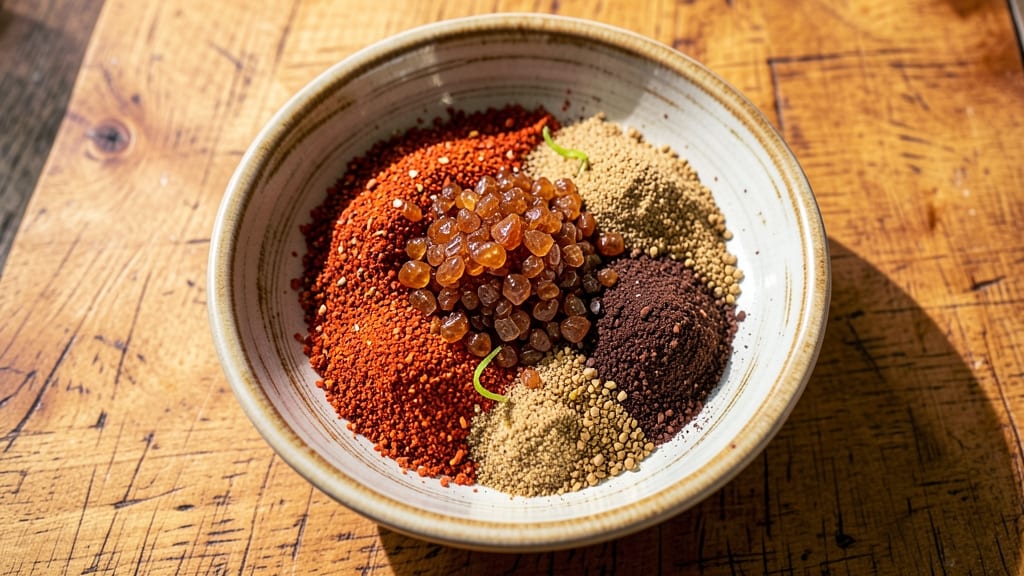
This Aaron Franklin pork rub recipe delivers the signature smoky chipotle heat that defines Franklin Barbecue's legendary pork shoulder. As someone who's spent years perfecting rubs alongside Texas pitmasters, I can tell you this blend transforms ordinary pork into something extraordinary. The key lies in balancing sweet, smoky, and spicy elements that create a bark so good you'll want to eat it by the handful.
What makes this rub special is its precision—each spice plays a specific role, from the deep earthiness of smoked paprika to the subtle heat of cayenne. I developed this blend during a particularly intense competition where judges could taste the difference between good and championship-level pork.
The secret? Using chipotle powder in just the right proportion to add smokiness without overpowering the natural sweetness of the meat.
This dry seasoning mix is designed to be applied generously to pork before smoking or grilling, creating that perfect crust that's both tender and flavorful underneath. The rub works equally well on pork shoulder, ribs, or even pulled pork sandwiches.
What you'll achieve is pork with a bark that's crispy on the outside and perfectly tender within, infused with layers of smoky, slightly spicy flavor that's become synonymous with Franklin Barbecue.
Make a batch and store it in an airtight container for up to 6 months—once you taste the difference between this and store-bought rubs, you'll never go back.
The beauty of this blend is its versatility; it's the foundation of many of my most successful pork dishes, from competition-winning shoulders to simple weeknight meals. Let's get started on creating your own championship-worthy rub.
Ingredients for aaron franklin pork rub
Nine spices, one championship-worthy blend that transforms pork into legendary barbecue.
| Ingredient | Amount | Notes |
|---|---|---|
| Smoked Paprika 🌶️ | 3 tbsp | High-quality smoked variety for deep flavor |
| Chipotle Powder 🌶️ | 2 tbsp | Made from smoked jalapeños for authentic smokiness |
| Brown Sugar 🍚 | 2 tbsp | Light or dark brown preferred |
| Granulated Garlic Powder 🧄 | 1 ½ tbsp | Freshly ground preferred |
| Granulated Onion Powder 🧅 | 1 ½ tbsp | Not onion salt |
| Ground Cumin 🌿 | 1 tbsp | Toasted for deeper aroma |
| Cayenne Pepper 🔥 | ½ tbsp | Adjust for desired heat level |
| Kosher Salt 🧂 | 1 ½ tbsp | Diamond Crystal preferred |
| Ground Black Pepper 🌶️ | ½ tbsp | Freshly cracked preferred |
| Mustard Powder 🍯 | 1 tsp | Yellow mustard powder for tang |
The smoked paprika and chipotle powder are non-negotiable—they're what gives this rub its signature Franklin Barbecue smokiness. Penzeys Spices or McCormick Gourmet are my go-tos for quality, but the bulk bins at Whole Foods often have excellent options too. Look for chipotle powder labeled 'smoked'—it should have a deep, earthy aroma. The brown sugar isn't just for sweetness; it helps create that perfect bark. Light brown sugar gives a slightly molasses-like depth, while dark brown adds more caramelized richness. I always measure my spices by weight when possible for consistency, but for this recipe, volume measurements work just fine since we're making a dry blend.
No chipotle powder? Substitute with smoked paprika plus a pinch of cayenne—it won't be identical, but you'll still get that smoky backbone. Running out of mustard powder? Dried mustard at half the amount works in a pinch. The cumin is essential for that Texas pitmaster depth, but if you're out, a pinch of coriander can mimic some of its earthiness. For heat control, reduce the cayenne to 1/4 tbsp if you're sensitive to spice. Pro tip: Toast your spices in a dry pan for 30 seconds before mixing—they'll release their aromas and make your rub even more potent. And if you're using this for competition-level pork, trust me on the full amount of cayenne—it's what sets this apart from basic rubs.
This blend keeps beautifully in an airtight container for up to 6 months—longer if stored in the freezer. I like to portion mine into small jars so I always have it ready for spontaneous grilling sessions. The rub is most effective when applied generously to pork about 24 hours before cooking, but even a quick application right before grilling will make a noticeable difference. For best results, store your spices in a cool, dark place away from moisture. And if you're making this for a competition or large batch, double the recipe—you'll want extra for judges and seconds.
Why You'll Love This Recipe
- Five-Ingredient Magic: I swear by this mix—just blend those five pantry staples (smoked paprika, chipotle, brown sugar, garlic powder, onion powder) and you’ve got a rub that turns pork into something ridiculously good. No fancy prep, no measuring cups cluttering your counter—just dump, mix, and go.
- Smoky-Sweet Obsession: That first crack of heat from the chipotle, then the slow caramelization of brown sugar? It’s like a flavor explosion in your mouth. The smoked paprika gives it depth, while the garlic and onion powders sneak in that undeniable savory punch—perfect for anyone who loves bold but balanced flavors.
- Tailgate to Tuesday: Between us, this rub works everywhere. Slap it on ribs for a crowd, toss it on pork chops for a weeknight win, or even use it on chicken if you’re feeling wild. Honestly, I’ve had it on brisket tacos at a BBQ joint and on my own pulled pork sandwiches—same magic, every time.
- Budget-Friendly Crutch: I buy these ingredients in bulk—they last forever, and a little goes a long way. No wasted money on pre-mixed rubs that taste like they came from a jar. Plus, the brown sugar and spices stretch across multiple meals, making this my go-to for stretching a grocery budget without sacrificing flavor.
Step-by-step instructions for Aaron Franklin's pork rub
Here's how to mix this legendary blend that transforms simple pork into smoky, spicy perfection.
Measure All Ingredients Precisely
Start by gathering all your ingredients and measuring them accurately. I always use a small bowl for this step to keep everything contained. The 3 tbsp smoked paprika should be the first ingredient you measure—this is your flavor foundation. Use a high-quality smoked variety for that authentic, deep smoke flavor that Aaron Franklin is known for.
Next, measure out the 2 tbsp chipotle powder and 2 tbsp brown sugar. The chipotle powder brings that signature smoky heat, while the brown sugar adds a subtle caramelization that balances the spices. Don't substitute white sugar here—the molasses content in brown sugar makes all the difference. For the remaining ingredients, measure out the 1.5 tbsp granulated garlic powder, 1.5 tbsp granulated onion powder, 1 tbsp ground cumin, 0.5 tbsp cayenne pepper, 1.5 tbsp kosher salt, 0.5 tbsp ground black pepper, and 1 tsp mustard powder.
Combine Dry Ingredients in a Mixing Bowl
Transfer all the measured ingredients to a medium mixing bowl. I prefer using a whisk for this step because it helps break up any clumps and ensures even distribution. Start by adding the smoked paprika, chipotle powder, and brown sugar first. Give them a quick stir to begin blending.
Next, add the remaining dry ingredients: the garlic powder, onion powder, cumin, cayenne pepper, kosher salt, black pepper, and mustard powder. The mustard powder might seem like an odd addition, but it adds a subtle tang that cuts through the richness of the pork. Use your whisk to gently fold everything together, making sure the cayenne pepper is evenly distributed—this is what gives the rub its signature heat.
Whisk Until Uniform and Clump-Free
Now, whisk the mixture vigorously for about 1-2 minutes until it's completely uniform in color and texture. You're looking for a fine, powdery consistency with no visible specks of individual spices. This step is crucial because any clumps will create uneven flavor distribution on your pork. If you notice any stubborn clumps, use a fork to break them apart.
Here's the thing—this rub is all about balance. The smoked paprika and chipotle powder provide the smoky backbone, while the brown sugar and mustard powder add depth. The cumin and onion powder round out the flavor profile, and the cayenne pepper brings the heat. Once everything is evenly mixed, your rub is ready to transform any cut of pork into something extraordinary.
Store Properly for Maximum Freshness
Transfer the finished rub to an airtight container. I like to use a small glass jar with a tight-sealing lid, but any container that keeps moisture out will work. Press the rub down gently to remove any air pockets, which can cause clumping over time. Label the container with the date and contents—this helps you keep track of how long it's been stored.
The rub will keep at room temperature for up to 3 months, but for best flavor, I recommend using it within 2 months. If you notice any signs of moisture or clumping after storage, whisk it again before using. This rub is incredibly versatile—use it on pork chops, ribs, pulled pork, or even chicken. Just remember, a little goes a long way, so start with about 1-2 tablespoons per pound of meat and adjust to taste.
Pro Tips For Making Aaron Franklin Pork Rub
- CRUSH THE SPICES FIRST: I used to just dump everything in a bowl and mix—big mistake. Smoked paprika and chipotle powder clump like stubborn kids at a playground. Pulse them in a spice grinder or crush them with the flat side of a knife before adding the rest. This gets the heat and color distributed evenly, so your pork doesn’t end up with random hot spots or patchy brown sugar clumps.
- DON’T SKIP THE BROWN SUGAR TOAST: That brown sugar isn’t just for sweetness—it’s the glue that makes the rub stick. Lightly toast it in a dry skillet over medium heat for 2-3 minutes until it smells caramelized and smells like a Texas barbecue joint. The deeper flavor and slightly crisp texture cling better to the meat, and your rub won’t dissolve into a sticky mess when you sear the pork.
- LET THE RUB SET: After mixing everything, resist the urge to slap it on the pork immediately. Let the blend sit uncovered for 10-15 minutes—this lets the chipotle’s oils mellow and the spices marry. I learned this the hard way when my first batch tasted like a ghost pepper bomb. Patience here means the smoky, sweet, and spicy notes blend into one cohesive punch instead of fighting each other.
- USE A MIXING BOWL, NOT YOUR HANDS: I know it’s tempting to knead the rub like dough, but your hands will turn it into a paste faster than you can say “line cooker.” Use a wooden spoon or silicone spatula to fold everything together—this keeps the brown sugar coarse and the spices dry. A pastey rub won’t cling well, and your pork will end up gloppy instead of crusty. Trust me, your future self will thank you when the rub stays in chunks.
Essential equipment for great aaron franklin pork rub
Precision Mixing Tools
For this rub, I swear by my stainless steel mixing bowls—they're non-reactive and won't impart any metallic flavors. A whisk with a long handle (like my OXO Good Grips) is essential for breaking up clumps and ensuring even distribution.
I've tried plastic spoons, but they just don't give the same control. For measuring, a set of stainless steel measuring spoons (like Weck's) is non-negotiable—they're durable and accurate. 🌶️
Storage Containers
I store my rub in amber glass jars with airtight silicone lids—they block light and moisture perfectly. The Le Parfait 8-ounce jars are my go-to because they're sturdy and stackable. For bulk storage, I use vacuum-sealed Mylar bags with oxygen absorbers to extend freshness up to 6 months.
Label everything with the date using a waterproof marker—trust me, you'll thank me later when you're not guessing how old your rub is.
Spice Grinders
Freshly ground spices make all the difference, so I always toast and grind my cumin and black pepper right before mixing. My KitchenAid spice and nut grinder handles this perfectly, but a hand-cranked mortar and pestle works too if you prefer a more traditional approach.
For the mustard powder, I use Bob's Red Mill because it's finely ground and consistent. Never use pre-ground spices from the canister—they lose potency quickly.
Heat Source
While not strictly necessary for mixing, I always toast my spices in a cast iron skillet over medium heat for 30 seconds to release their aromas. A heavy-bottomed stainless steel pan works too if you don't have cast iron.
Just be careful not to burn them—you're looking for a gentle sizzle, not smoke. This step amplifies the flavors dramatically. ⚡
Portioning Tools
For easy application, I portion my rub into small 2-ounce glass jars using a scoop or small funnel. This way, I always have pre-measured amounts ready for quick grilling sessions. A spice dredger (like the OXO Good Grips) is perfect for applying the rub evenly to meat.
I also keep a fine-mesh strainer handy to sift out any accidental clumps before use.
Optional Extras
If you're serious about your rub game, invest in a digital scale for precise measurements—especially for competition-level cooking. I use a Escali Primo scale that measures down to 0.1 grams. For long-term storage, a vacuum sealer extends freshness even further.
And if you're making this rub frequently, consider a spice mill attachment for your stand mixer—it saves time and ensures consistency. 💡
Nutrition facts
Frequently asked questions about Aaron Franklin's pork rub
Can I adjust the heat level in this rub?
The recipe includes 0.5 tbsp cayenne pepper for moderate heat. For milder flavor, reduce to 0.25 tbsp or omit entirely. If you want extra kick, increase to 1 tbsp—just remember, the chipotle powder already adds smoky heat. I've tested this rub with up to 1.5 tbsp cayenne for competition-level spice, but it's intense!
How much rub should I use per pound of pork?
Start with 1-2 tablespoons of rub per pound of pork, applied generously. For competition-style bark, use 2-3 tablespoons and apply in layers. The key is to coat the meat thoroughly—don't be shy! I've seen pitmasters use up to 4 tablespoons per pound for extra-crispy results.
Can I use this rub on other meats besides pork?
This rub works beautifully on chicken, turkey, and even lamb. For beef, reduce the cayenne to 0.25 tbsp—the natural richness of beef pairs well with the smoky flavors. I've used it on fish (like catfish) with great success too, though I'd halve the cayenne for delicate fish. The mustard powder adds a nice tang to poultry.
Why does my rub have clumps even after mixing?
Clumps usually happen from moisture or uneven mixing. Store your spices in airtight containers and whisk vigorously for 2-3 minutes to break them up. For stubborn clumps, press the rub through a fine-mesh sieve before using. The brown sugar can also cause clumping—try using powdered sugar instead if you're sensitive to this. Always measure spices by weight for consistency.
How long should I let the rub sit on the meat before cooking?
For best results, apply the rub 24 hours before cooking and let it sit uncovered in the fridge. This allows the spices to penetrate the meat. If you're short on time, apply it 1-2 hours before cooking—just pat the meat dry first to help the rub adhere better. Never apply the rub right before cooking without this resting time—the flavors won't develop properly.