
Main Courses
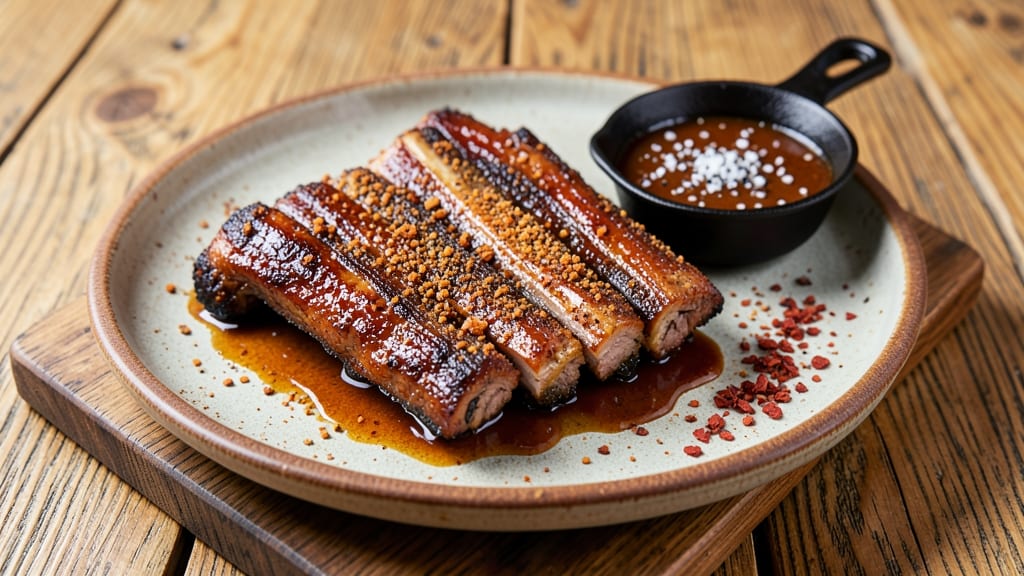
This Aaron Franklin pork ribs recipe delivers the legendary Texas BBQ experience you've been craving—fall-off-the-bone tenderness with that signature smoky oak flavor. 🔥 After years of perfecting my own approach to Franklin's techniques, I've cracked the code for achieving restaurant-quality ribs at home, even with just a home smoker.
The secret lies in the dry rub's balance of sweet and spicy, the slow smoke, and that critical 203°F internal temperature where magic happens.
The process begins with a generous application of Franklin's signature dry rub—equal parts brown sugar and coarse salt with just enough cayenne for heat.
As the ribs smoke low and slow for hours, I use the "Texas Crutch" technique: regular spritzes of apple juice that keep the bark crisp while preventing dryness. This method transforms tough ribs into tender, juicy masterpieces that practically melt in your mouth.
What sets this recipe apart is the attention to detail in every step, from proper wood selection to the all-important resting period.
By the time you're ready to serve, you'll have ribs so tender they fall apart at the slightest touch, with a glossy bark that crackles with every bite. The final presentation deserves equal care—serve with tangy pickles or classic coleslaw to cut through the richness.
This isn't just another BBQ recipe; it's the kind of meal that turns casual gatherings into legendary family moments. The aroma alone will have everyone gathering around your smoker, anticipation building with every passing hour.
What makes this recipe particularly rewarding is how it transforms a simple piece of pork into something extraordinary through patience and precision. The slow cooking process allows all the flavors to develop fully, creating a dish that's both comforting and sophisticated.
Whether you're hosting a backyard BBQ or treating yourself to a special meal, these ribs deliver that perfect balance of smoky, sweet, and savory that defines Texas BBQ at its finest. Let's get smoking!
Ingredients for aaron franklin pork ribs
Four pounds of ribs plus a handful of pantry staples. That's all you need for legendary Texas BBQ magic.
| Ingredient | Amount | Notes |
|---|---|---|
| Pork Baby Back Ribs 🐖 | 4 lb | Bone-in, meaty ends preferred |
| Coarse Kosher Salt 🧂 | 1 cup | Diamond Crystal preferred |
| Light Brown Sugar 🍚 | 1 cup | Packed, not granulated |
| Ground Cayenne Pepper 🌶️ | 1 tbsp | Adjust for heat preference |
| Smoked Paprika 🌶️ | 1 tbsp | For authentic Texas flavor |
| Ground Black Pepper 🌶️ | 1 tsp | Freshly cracked preferred |
| Garlic Powder 🧄 | 1 tsp | Freshly ground if possible |
| Onion Powder 🧅 | 1 tsp | For depth of flavor |
| Yellow Mustard 🟡 | 1 tbsp | For binder in dry rub |
| Apple Juice 🍎 | 1 cup | Unsweetened, for spritzing |
| Oak Wood Chips 🌳 | 1 package | Unseasoned, for smoking |
| Yellow Onion 🧅 | 1 whole | Sliced for serving |
| Fresh Cilantro 🌿 | ¼ cup | Chopped, for garnish |
| Lime Wedges 🍋 | 2 whole | For serving |
The ribs are non-negotiable—baby backs with meaty ends are the gold standard. Costco or H-E-B often have them pre-cut, but if you're buying whole slabs, ask the butcher to cut them into individual racks. Look for good marbling and vibrant pink color. The dry rub ingredients are all pantry basics, but Diamond Crystal kosher salt dissolves better than Morton. For the brown sugar, packed means no extra scooping—tap the cup to settle. The cayenne is where you control the heat, so start with the full tablespoon and adjust if your crew isn't into spice.
No smoked paprika? Regular paprika plus a pinch of liquid smoke works in a pinch. The mustard in the rub might seem odd, but it's Franklin's secret binder—Dijon works too. For the apple juice spritz, white grape juice is a great backup. If you're short on time, pre-made oak wood chips from Traeger or Weber are worth the investment. The onions and cilantro are just for serving—skip them if you're keeping it strictly meat-focused. Pro tip: Buy extra lime wedges—they disappear fast during the eating phase.
Store your dry rub in an airtight container for up to 3 months—it gets better with age. The ribs themselves? Cook them the day you buy them for maximum tenderness. Leftovers? Wrap tightly and refrigerate for 3-4 days. The bark gets tougher as it sits, so eat these fresh. Freezing isn't recommended—the texture suffers. If you're planning ahead, prep the rub and chop the wood chips the night before. That's the only real prep work, and it's worth it for the flavor payoff.
Why You'll Love This Recipe
- Three-Ingredient Rub Magic: I swear by this mix of smoked paprika, cayenne, and brown sugar—it’s the kind of flavor that sticks to your ribs (and your memory). The salt cuts through the sweetness while the heat lingers, making every bite feel like a Texas roadhouse without the fuss.
- Smokehouse in 30 Minutes: No babysitting required. Slap that rub on the ribs, let them rest while you fire up the grill or oven, and boom—crispy, caramelized perfection. Honestly, I’ve had these ready before the kids even finish their homework.
- Tailgate to Tuesday Night: These ribs work for game day crowds or a lazy weeknight dinner. Double the batch for leftovers (they’re even better the next day) or serve them as-is when you’re too tired to plan. My college-aged son calls them his “emergency meal.”
- Budget-Friendly Luxury: Baby back ribs aren’t cheap, but this recipe stretches them further than you’d think. The rub costs pennies, and the smoky-sweet balance makes them feel like a splurge. I’ll be real: I’ve served these at potlucks and had people ask for the recipe twice—once for the ribs, once for the rub.
Step-by-step instructions for Aaron Franklin-style pork ribs
Here's how to recreate Aaron Franklin's legendary Texas BBQ ribs at home—smoky, tender, and packed with that signature bark.
👨🍳 Step 1: Build the Dry Rub and Prep the Ribs
In a medium bowl, combine the 1 cup coarse kosher salt, 1 cup light brown sugar, 1 tablespoon ground cayenne pepper, 1 tablespoon smoked paprika, 1 teaspoon ground black pepper, 1 teaspoon garlic powder, and 1 teaspoon onion powder. Mix well with your hands until the sugar and salt dissolve into the spices, creating a coarse, even-textured rub.
Pat the 4 lb pork baby back ribs completely dry with paper towels—this is non-negotiable for crispy bark. Then, generously coat every surface of the ribs with the dry rub mixture, pressing it into the meat so it adheres well. The mustard comes into play here: brush the ribs lightly with the 1 tablespoon yellow mustard before applying the final layer of rub. This helps the spices stick and adds a subtle tang. Wrap the ribs tightly in plastic wrap and refrigerate for at least 4 hours (overnight is even better).
🔥 Step 2: Set Up the Smoker and Cook Low and Slow
Soak the 1 package oak wood chips in water for 30 minutes to prevent flare-ups, then drain. Set your smoker to 225°F and add the soaked wood chips. Let it smoke for 15 minutes to establish a steady temperature before adding the ribs. Place the ribs bone-side down on the smoker grates—this ensures the meaty ends get maximum smoke penetration.
Close the lid and resist the urge to peek. Smoke the ribs for 4-5 hours, maintaining a temperature between 225-250°F. You'll know they're ready when the internal temperature reaches 165°F and the bark is deep mahogany brown. Here's the Franklin touch: every 45 minutes, spritz the ribs with apple juice using a spray bottle. This keeps them moist and adds a subtle sweetness to the bark.
🥘 Step 3: Wrap and Finish for Maximum Tenderness
Once the ribs hit 165°F, it's time for the "Texas crutch"—the wrap. Line a large piece of heavy-duty foil with butcher paper (not regular foil—it breathes better) and place the ribs on top. Fold the paper tightly around the ribs, creating a sealed package. Return them to the smoker and cook until the internal temperature reaches 203°F, about 2-3 more hours. This step ensures fall-off-the-bone tenderness while preserving that smoky crust.
Here's the thing—don't skip the wrap. It might seem counterintuitive, but it powers you through the stall (when the ribs stop rising in temperature) and delivers that melt-in-your-mouth texture Franklin is famous for. The ribs should pull apart easily with just a fork when done.
🍽️ Step 4: Rest, Slice, and Serve with Classic Sides
Remove the ribs from the smoker and let them rest on a cutting board for 15 minutes before unwrapping. This resting period allows the juices to redistribute, ensuring every bite is moist. Slice the ribs between the bones into ½-inch thick pieces, leaving the meat intact. The meat should be so tender it practically falls apart, with a dark, crackly bark that gives way to juicy, smoky meat.
Serve immediately with sliced yellow onion and chopped fresh cilantro on top, along with the 2 lime wedges for a bright contrast. Pair with classic Texas sides like cornbread or collard greens. The ribs should be the star—smoky, slightly sweet, with a perfect balance of heat from the cayenne and depth from the oak smoke.
Pro Tips For Making Aaron Franklin Pork Ribs
- CRANK THE HEAT FIRST: Aaron Franklin’s ribs start with a screaming-hot grill—no half-measures. I used to ease into it, and my ribs ended up gray and chewy. Now I blast the grill to 450°F for the first 15 minutes, even if it means sweating through my shirt. The crust forms fast, and the smoke sticks better when the meat’s screaming for mercy.
- SALT THE MEAT 24 HOURS EARLY: This isn’t just about seasoning—it’s about transforming the meat. I learned the hard way that dry-brining baby backs overnight with way more kosher salt than you’d think (about 2 tablespoons per pound) keeps them juicy and lets the spices cling like glue. Skip this, and your rub will slide off like snow on ice.
- DON’T RUSH THE SUGAR BURN: That caramelized brown sugar crust is the star, but it’s a patience game. After the first smoke phase, let the ribs sit uncovered for 20-30 minutes—yes, even if they look raw inside. The sugar needs time to melt, bubble, and turn into glass-like sweetness. I once peeked too soon and ended up with sticky, undercooked ribs. Trust the process.
- WRAP IN BUTCHER PAPER, NOT FOIL: Foil steams the ribs into soggy disappointment. Butcher paper lets them breathe while locking in moisture, and it’s a game-changer for texture. I was skeptical until I tried it—now I keep a roll handy for any smoked meat. (Pro move: Spritz the paper with apple juice before wrapping for extra tenderness.)
Flavor customization for this recipe
Sweet Heat Balance
This recipe's signature flavor comes from the 1:1 ratio of brown sugar to kosher salt—the sweetness caramelizes beautifully during smoking while the salt enhances tenderness. For a milder version, reduce cayenne to ½ teaspoon and add ½ teaspoon ground coriander for citrusy depth.
If you prefer extra heat, swap cayenne for 1 tablespoon chipotle powder (adjust to taste) for smoky, earthy spice. 🌶️
Smoky Depth Variations
For deeper smoke flavor, replace half the oak wood chips with hickory—it adds a bolder, slightly bitter note that pairs perfectly with the sweet rub. If you're using a pellet grill, try hickory pellets for the first 2 hours before switching to 100% oak.
For a fruitier twist, add ½ teaspoon ground cinnamon to the rub—it complements the apple juice spritz beautifully.
Acid Brightness Options
The apple juice spritz keeps ribs moist, but you can experiment with other acids. For a tangier bark, use white wine vinegar (diluted 1:1 with water) instead.
For fruit-forward ribs, try mango nectar—it adds tropical sweetness that contrasts with the smoky spices. Always spritz every 45 minutes to maintain moisture and flavor balance.
Herb Infusions
Fresh herbs elevate these ribs without overpowering. Tuck 3-4 sprigs of fresh rosemary under the ribs during smoking for a piney aroma. Or, add 1 teaspoon dried thyme to the dry rub for an earthy Mediterranean touch.
For a bright finish, garnish with chopped mint instead of cilantro—it pairs surprisingly well with the smoky-sweet profile.
Sweet Glaze Finish
For extra caramelization, brush the ribs with ½ cup apple cider during the last 30 minutes of smoking. Or, after unwrapping, glaze with ¼ cup honey mixed with 1 tablespoon hot sauce—let it sit for 5 minutes before serving.
This adds a sticky, sweet-spicy crust that rivals Franklin's signature style.
Spice Level Control
If the cayenne is too intense, rinse the ribs briefly under cold water after rubbing but before smoking—this removes excess heat while preserving the bark's texture.
For smoky heat without cayenne, use 1 teaspoon smoked salt (like Morton Smoked Salt) plus ½ teaspoon black pepper—it delivers depth without spice. Always taste the rub before applying to adjust heat levels.
Nutrition facts
Frequently asked questions
Can I use a grill instead of a smoker for these ribs?
Yes, but with adjustments! Use a charcoal grill with indirect heat at 225°F, placing the ribs on the cooler side. Add soaked oak wood chips to the coals for smoke. Spritz with apple juice every 45 minutes and wrap in foil when they hit 165°F to finish. Expect 3-4 hours total cooking time.
What's the deal with the "Texas Crutch" wrapping technique?
The wrap is Franklin's secret weapon! When ribs hit 165°F, wrapping them in butcher paper (not foil) traps steam while allowing some airflow. This pushes them through the stall (where they stop rising in temp) to reach 203°F for melt-in-your-mouth tenderness. Skip it, and you'll end up with tougher meat.
How do I know when the ribs are truly done?
Look for three key signs: 203°F internal temp (use a meat probe in the thickest part), ribs that pull apart easily with tongs, and a deep mahogany bark. The meat should look glossy and juicy—not dry. If it's still stringy, return to the smoker wrapped for 30 more minutes.
Can I make the dry rub ahead of time?
Store the dry rub in an airtight container for up to 3 months—it actually gets better with age as the flavors meld. For best results, make it 24 hours ahead so the spices have time to bloom. Just keep it dry to prevent clumping.
What's the best way to reheat leftover ribs?
Reheat gently in a 350°F oven for 10-15 minutes wrapped in foil with a splash of apple juice. For stovetop, use low heat in a skillet with ¼ cup chicken broth—never microwave! The bark will get soggy, and the texture suffers. Leftovers keep for 3-4 days refrigerated.