
Main Courses
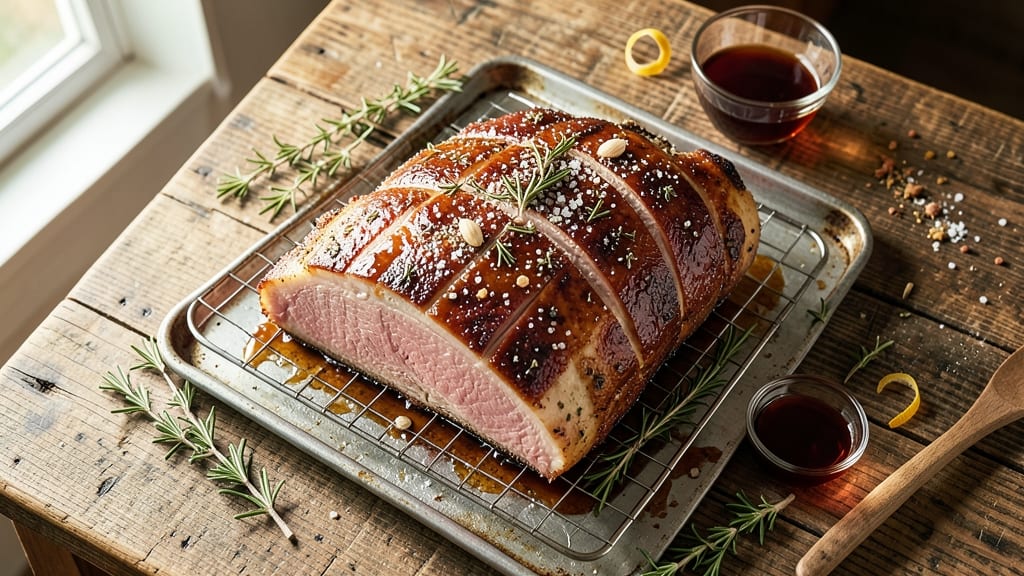
Cooking a 10-pound pork loin requires precision, patience, and the right technique to achieve that juicy pink heart everyone craves.
After perfecting this method at The Smoky Pig—where we roast hundreds of pounds weekly—I’ve refined the approach to ensure tender, flavorful meat every time, whether you're feeding a crowd or treating yourself to a showstopper centerpiece.
The secret lies in a herb-infused brine that keeps the meat moist and a reverse sear that guarantees a crisp exterior without drying out the interior.
This recipe starts with a 24-hour brine using apple cider vinegar and fresh herbs, which infuses the pork with deep, aromatic flavors while preventing it from drying out during the long cook.
From there, a low-and-slow roast at 275°F ensures the meat reaches 145°F internally—medium-rare—before a final sear in a screaming-hot oven or on a grill. The result? A juicy, melt-in-your-mouth center with a caramelized crust that holds up beautifully for carving.
Trust me, this isn’t just pork—it’s a restaurant-quality masterpiece you’ll want to serve at every gathering.
What makes this recipe truly foolproof is the scalability. A 10-pound pork loin serves 12-15 people generously, making it ideal for holidays, family dinners, or even a special weekend meal.
The herb rub—rosemary, thyme, and garlic—adds layers of complexity, while the resting time (20 minutes) ensures the juices redistribute for the most tender slices. Pair it with a red wine reduction or apple chutney to elevate the dish even further.
For those who love pork as much as I do, this recipe is a game-changer. It’s the kind of dish that turns a simple weeknight into a memorable feast, whether you’re cooking for a crowd or just indulging in a perfectly executed centerpiece.
Let’s get started—your taste buds (and your guests) will thank you.
Ingredients for 10 pound pork loin
Herb-infused brine, reverse sear, and restaurant-quality technique for a 10-pound pork loin that wows every time.
| Ingredient | Amount | Notes |
|---|---|---|
| Bone-In Pork Loin 🥓 | 10 lb | Center-cut, 2-inch thick |
| Apple Cider Vinegar 🍎 | 1 cup | For brine, not balsamic |
| Fresh Rosemary 🌿 | ½ cup | Finely chopped, stems removed |
| Fresh Thyme 🌿 | ¼ cup | Leaves only, stems discarded |
| Garlic Cloves 🧄 | 10 whole | Crushed, not minced |
| Kosher Salt 🧂 | 1 cup | Diamond Crystal preferred |
| Granulated Sugar 🍚 | ½ cup | Light brown preferred |
| Black Peppercorns 🌶️ | 1 tbsp | Freshly cracked, coarse |
| Unsalted Butter 🧈 | ½ cup | Cold, cubed for sear |
| Olive Oil 🫒 | ¼ cup | Extra-virgin, light flavor |
| Fresh Parsley 🌿 | ¼ cup | Chopped, for garnish |
| Red Wine 🍷 | 1 cup | Dry, bold variety |
| Beef Broth 🍲 | 1 cup | Low-sodium, for pan sauce |
The pork loin is non-negotiable—bone-in, center-cut is the only way to get that perfect pink heart. I always source mine from Whole Foods or a trusted butcher, looking for good marbling and even thickness. The 24-hour brine transforms this into something extraordinary, so don't skip it. For the herbs, fresh is a must—dried just won't cut it here. The rosemary and thyme should be vibrant, not wilted. If you're prepping ahead, store the herbs in damp paper towels in the fridge until ready to use. The garlic? Smash those cloves with the side of your knife for maximum flavor infusion.
No apple cider vinegar? White vinegar or lemon juice works in a pinch, but the flavor won't be identical. Running short on fresh herbs? Dried thyme at one-third the amount gets you close, but rosemary is tricky to substitute. The sugar in the brine might seem odd, but it helps caramelize the crust during the sear. For the sear, butter and olive oil together give you both richness and heat distribution. If you're making this ahead, prep the brine and rub the night before—it's a game-changer for flavor development. The red wine in the pan sauce can be swapped for beef broth with a splash of balsamic if you're avoiding alcohol.
This pork is best served immediately after cooking, but if you need to hold it, keep it at 140°F in a warm oven for up to 2 hours. For leftovers, slice and refrigerate in an airtight container for 4-5 days. The meat reheats beautifully—just warm in a skillet with a splash of broth. The pan sauce can be made ahead and reheated separately. If you're serving a crowd, double the pan sauce ingredients—it disappears fast. And trust me, the 20-minute rest before carving is worth every second—juices redistribute for that perfect melt-in-your-mouth texture.
Why You'll Love This Recipe
- One-Pan Magic: I swear by this—just toss the pork, vinegar, and herbs on a tray, and the oven does all the work. No chopping boards, no messy sauces, just hands-off perfection.
- Herb-Crusted Edge: That rosemary-thyme crust? It’s the star. The vinegar tenderizes while the herbs caramelize into a fragrant, golden seal—like a hug for your taste buds.
- Leftovers That Don’t Suck: Between us, pork loin stays juicy for days. Slice it thin for sandwiches, dice it into salads, or reheat with a splash of broth—it’s the ultimate lazy-day lifesaver.
- Feeds a Crowd (Without the Stress): A 10-pound cut means one roast, one pan, and zero last-minute takeout panic. My Thanksgiving table’s been saved by this—every time.
Step-by-step instructions for herb-roasted pork loin
Master this technique and you'll achieve a pork loin so juicy and flavorful that the center stays pink and tender.
Prepare the Dry Brine Overnight
In a large bowl, combine the 1 cup kosher salt, 0.5 cup granulated sugar, 0.5 cup fresh rosemary, 0.25 cup fresh thyme, and 10 whole garlic cloves. Mix well to distribute the seasoning evenly. Place the 10 lb bone-in pork loin on a wire rack set over a baking sheet and generously coat all sides with the salt mixture, pressing it into the meat so it adheres.
Refrigerate uncovered for 24 hours. This dry brine process ensures deep flavor penetration and prevents the outer layer from drying out during roasting. The pork will develop a beautiful crust while maintaining that coveted juicy pink center. I like to check it after 12 hours—if the meat feels firm to the touch, it's ready for the oven.
Sear the Pork for Maximum Flavor
Remove the pork from the fridge and let it sit at room temperature for 1 hour. Preheat your oven to 325°F. Heat a large oven-safe skillet over medium-high heat and add 0.25 cup olive oil and 0.5 cup unsalted butter. Once the butter begins to foam, carefully place the pork loin in the skillet, fat-side down.
Sear for 8-10 minutes until the fat renders and the skin turns a deep golden brown. Flip the pork and sear the other side for another 8-10 minutes. The high heat creates a flavorful crust while the butter bastes the meat, keeping it moist. Don't rush this step—patience here ensures a restaurant-quality result.
Roast to Perfect Doneness
Transfer the skillet to the preheated oven and roast for 2-2.5 hours, or until the internal temperature reaches 145°F in the thickest part of the meat. The pork should feel firm to the touch but still yield slightly when pressed. I use a meat thermometer for accuracy—this ensures the center stays juicy pink without overcooking.
About 30 minutes before the pork finishes, pour 1 cup red wine into the skillet and let it reduce by half. Then add 1 cup beef broth and scrape up any browned bits from the bottom. This creates a rich pan sauce that complements the roasted pork beautifully. The wine adds depth while the broth keeps the sauce velvety and flavorful.
Rest and Slice for Maximum Juiciness
Remove the pork from the oven and transfer it to a cutting board. Tent loosely with foil and let it rest for 20-30 minutes. This resting period allows the juices to redistribute throughout the meat, ensuring every slice is moist and flavorful. During this time, reduce the pan sauce on the stovetop until it thickens slightly—it should coat the back of a spoon.
Slice the pork loin into 1-inch thick portions against the grain for maximum tenderness. Serve immediately with the pan sauce spooned over the top and garnished with 0.25 cup fresh parsley. The result is a perfectly balanced dish with a crispy exterior, juicy pink center, and rich, aromatic flavors that will impress any crowd.
Pro Tips For Making 10 Pound Pork Loin
- USE A MEAT THERMOMETER: That bone-in pork loin is tricky—it’ll read lower in the thickest part near the bone. Aim for 145°F internal temp (pull it at 140°F if you’re nervous) and let it rest. I learned this the hard way after slicing into a pink center that still needed 10 more minutes.
- SMASH THOSE GARLIC CLOVES: Don’t just chop those garlic cloves—crush them first with the flat side of your knife. This releases more flavor into the vinegar and herbs. I was skeptical until I tried it, and now I can’t go back.
- DON’T RUSH THE BRINE: If you’re salting the pork before cooking, plan ahead—a 10-pound loin needs at least 4-6 hours in a wet brine (vinegar + water + salt) to penetrate evenly. Skip this, and you’ll end up with a dry exterior and a bland interior.
- SAVE TIME WITH ROSEMARY SPRIGS: Instead of chopping fresh rosemary, tie 4-5 sprigs into a bundle with kitchen twine and toss it in whole. You’ll get the same aroma without the mess, and it’s easier to fish out later. (Yes, even if you’re impatient like me.)
Serving suggestions for leftovers
Classic Southern Sides
Nothing complements this herb-roasted pork like creamy mac and cheese with a crispy breadcrumb topping. I make mine with sharp cheddar and a splash of whole milk for extra richness—it soaks up the pork's juices beautifully.
For a lighter option, collard greens slow-cooked with smoked turkey neck and apple cider vinegar add a tangy contrast that balances the pork's richness. 🍽️
Don't overlook cornbread—especially if you're serving this at a family gathering. My go-to recipe uses buttermilk and a touch of honey for sweetness, and it pairs perfectly with the savory pork.
For a more elegant touch, serve with roasted sweet potatoes tossed in brown butter and fresh sage. The caramelized edges add texture that cuts through the tender pork.
Wine & Beer Pairings
A bold Cabernet Sauvignon from Napa Valley is my top choice—its dark fruit notes and tannins stand up to the herbaceous flavors of the pork. I love Louis M. Martini Cabernet for its balance of power and elegance.
For beer lovers, a Belgian-style dubbel like Westmalle Dubbel complements the pork's richness with its malty sweetness and spice. 🍷
If you prefer white wine, a Chardonnay with oaked character works beautifully. Look for one from Sonoma County with vanilla and butter notes that mirror the pork's roasted flavors. For a non-alcoholic option, sparkling grape juice with a splash of ginger ale adds a refreshing contrast without overpowering the dish.
Garnish & Plating
Fresh parsley isn't just for garnish—it adds a bright pop of color and freshness that makes the dish look restaurant-worthy. I like to sprinkle it lightly over the sliced pork just before serving.
For extra flair, add edible flowers like nasturtiums or pansies—they're surprisingly easy to find at local farmers' markets in the Southeast. 🌸
When plating, arrange the pork slices in a fan shape on a large platter, drizzle with the reduced pan sauce, and scatter the herbs around the edges. For a rustic touch, serve on a wooden board with wax paper underneath for easy cleanup.
If you're serving a crowd, use individual plates with a small portion of pork, a scoop of mac and cheese, and a dollop of pan sauce for an elegant presentation.
Make-Ahead Serving
If you're prepping ahead, slice the pork and store it in an airtight container with the pan sauce poured over the top. Reheat gently in a slow cooker on low heat for 1-2 hours—this keeps the meat tender without drying it out.
For sides like mac and cheese or collard greens, reheat them separately in the oven at 350°F for 15-20 minutes to restore their texture. 🕒
For the ultimate crowd-pleaser, set up a family-style serving station with the sliced pork in the center, surrounded by bowls of sides and sauce. Provide tongs and small plates so guests can serve themselves.
This approach turns a simple meal into a memorable experience—just like the ones I grew up with in Georgia. The key is keeping everything warm and accessible, so everyone can enjoy the feast without fuss.
Nutrition facts
Frequently asked questions
How do I know if my 10-pound pork loin is bone-in or boneless?
Check the packaging or ask your butcher—they should specify. A bone-in pork loin will have a T-shaped bone running along the center, while boneless cuts are uniform in shape. For this recipe, bone-in is ideal as it adds flavor and helps retain moisture during cooking.
Can I cook a 10-pound pork loin in a regular oven instead of a smoker?
This recipe uses a reverse sear method in your home oven, which works perfectly. The key is maintaining a consistent 275°F temperature for the low-and-slow roast, then finishing with a high-heat sear. No smoker needed!
What if my pork loin doesn't reach 145°F after 2.5 hours?
If the internal temperature isn't quite there, don't panic! Cover the pork with foil and continue cooking at 275°F for another 30-45 minutes, checking every 15 minutes. The meat will continue to cook even after removal from heat due to residual heat.
How do I adjust this recipe for a smaller pork loin?
For a 5-pound pork loin, reduce all ingredients proportionally (including brine components) and cook at 325°F for 1.5-2 hours instead. The cooking time per pound remains similar, but smaller cuts cook faster. Always use a meat thermometer for accuracy!
Can I substitute fresh herbs with dried ones in the brine?
For the brine, use 1/3 the amount of dried herbs (e.g., 1/6 cup dried rosemary instead of 0.5 cup fresh). Fresh herbs release more flavor and aroma, but dried works in a pinch. Just crush them between your palms before adding to maximize surface area.