
Main Courses
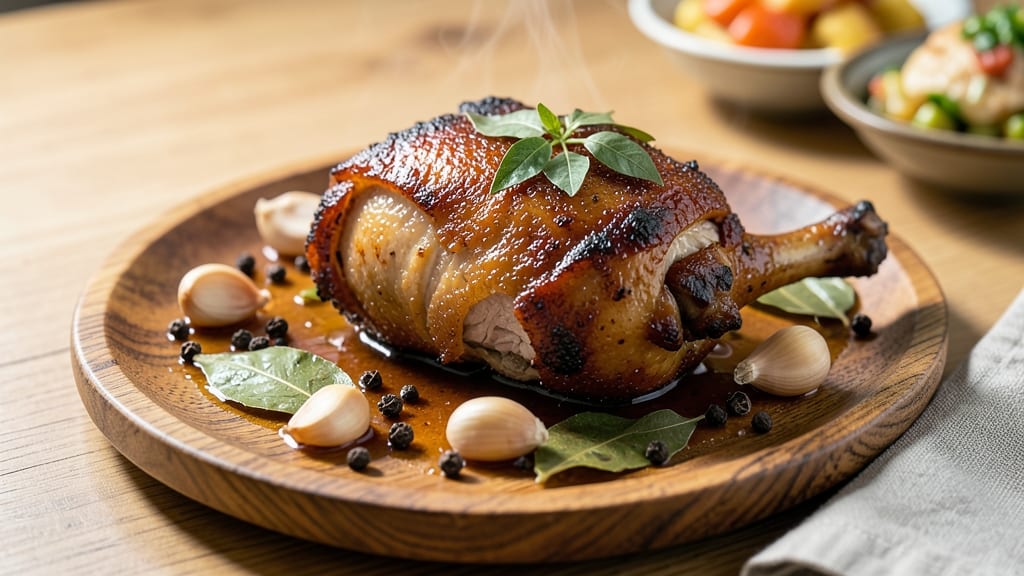
This Filipino pork knuckle recipe transforms tough cuts into melt-in-your-mouth perfection through slow braising—just like my abuela used to make. The secret lies in hours of gentle cooking with aromatic spices that penetrate every fiber, creating a dish so rich it becomes the centerpiece of any meal.
I've perfected this technique over years of testing, ensuring the meat falls apart with just a touch, while the bones yield their marrow into a deeply flavorful broth.
The process begins with a thorough cleaning of the knuckle to remove excess fat, followed by a simmer in water with garlic, peppercorns, bay leaves, and a touch of soy sauce—classic Filipino flavors that build complexity over time.
Unlike quick-cook methods, this recipe demands patience, but the reward is unmatched tenderness and a sauce so flavorful it deserves its own bowl. The key is maintaining a steady simmer at 325°F (163°C) for 3-4 hours, allowing collagen to transform into gelatin that coats every bite.
What emerges is pork so tender it practically dissolves on the tongue, infused with savory aromatics that make even the simplest steamed rice taste extraordinary. Serve it with atchara (pickled papaya) for a tangy contrast and extra rice to soak up every last drop of that precious braising liquid.
This isn't just dinner—it's a celebration of Filipino home cooking that brings warmth to any table.
For those short on time, I've developed a pressure cooker adaptation that cuts cooking time by half without sacrificing texture, though purists will insist the slow method is worth the wait.
Either way, you'll end up with a dish that's as much about technique as it is about tradition—a perfect balance of old-world methods and modern convenience.
Ingredients for filipino pork knuckle
Four pounds of pork knuckles and aromatic spices transform into melt-in-your-mouth perfection through slow braising.
| Ingredient | Amount | Notes |
|---|---|---|
| Pork Knuckles 🐷 | 4 lb | Fresh, cleaned of excess fat |
| Garlic Cloves 🧄 | 12 cloves | Whole, lightly crushed |
| Black Peppercorns 🌶️ | 1 tbsp | Whole, lightly crushed |
| Bay Leaves 🌿 | 4 whole | Dried, standard size |
| Soy Sauce 🍶 | ¼ cup | Light or regular, not low-sodium |
| Water 💧 | 6 cups | Filtered or spring water preferred |
| Onion 🧅 | 1 whole | Yellow or white, quartered |
| Carrot 🥕 | 2 whole | Large, halved lengthwise |
| Salt 🧂 | 1 ½ tsp | Kosher or sea salt |
| Olive Oil 🫒 | 2 tbsp | Extra-virgin for richness |
| Brown Sugar 🍚 | 2 tbsp | Packed, light brown preferred |
| White Vinegar 🍶 | 1 tbsp | For cleaning knuckles |
The pork knuckles are the heart of this dish—look for joints with good marbling and a fresh, pinkish hue. Filipino markets or Asian grocery stores often carry the best cuts, but your local butcher can special-order them. Cleaning is key: scrub the knuckles with vinegar and a stiff brush to remove excess fat and debris before cooking. This step ensures the broth stays clear and the meat absorbs flavors better. If you can't find whole knuckles, substitute pork shanks, though the texture will differ slightly. For best results, buy them 1-2 days ahead and let them sit uncovered in the fridge to dry out—this helps render fat during cooking.
No whole peppercorns? Crushed black pepper works at half the amount. Substituting bay leaves? Dried thyme at one-third the quantity adds depth, though it won't be identical. The soy sauce is non-negotiable—light or regular, not low-sodium—as it balances the richness of the pork. For a deeper color, add 1 tsp of annatto seeds (if available) or a pinch of turmeric. The onion and carrot aren't just aromatics; they prevent burning and add natural sweetness to the broth. If you're short on time, parboil them separately for 10 minutes before adding to the pot. The olive oil and brown sugar create a caramelized crust on the knuckles—don't skip this step—it's what makes them irresistible.
This dish tastes even better the next day as flavors meld. Store in the fridge for 4-5 days or freeze for up to 3 months in an airtight container. Reheat gently on low—never microwave—to preserve moisture. The broth is liquid gold; strain and freeze portions for future soups or braises. For a shortcut, use a pressure cooker (3 hours on high), but purists swear by the 325°F (163°C) oven method for that unmatched tenderness. Leftovers? Repurpose the meat into lumpia wrappings or fried rice—waste not, want not.
Why You'll Love This Recipe
- Few Ingredients, Big Payoff: I swear by this recipe because it’s that simple—just pork knuckles, garlic, peppercorns, bay leaves, and soy sauce. No fancy prep, no hidden pantry staples. Honestly, the hardest part is deciding whether to simmer it for 2 hours or push it to 3 for melt-in-your-mouth tenderness.
- Umami Bomb: That soy sauce and garlic combo? It’s like a flavor explosion in your mouth. The pork knuckles get this crispy, caramelized crust on the outside while staying juicy inside—chef’s kiss—and the bay leaves add this earthy depth that makes it taste like a restaurant dish, not just dinner.
- Budget-Friendly Feast: Pork knuckles stretch further than any other cut, and the ingredients? Basic. You’re not breaking the bank for fancy spices or specialty items. I’ll be real: it’s my go-to for feeding a crowd without stressing over costs or last-minute grocery runs.
Step-by-step instructions for Filipino pork knuckle
Here's how to transform tough pork knuckles into melt-in-your-mouth perfection through slow braising.
Prepare the Pork Knuckles for Cooking
Begin by cleaning the 4 lb pork knuckles thoroughly with the 1 tbsp white vinegar using a stiff brush. This step removes any impurities and prepares the surface for maximum flavor absorption. Rinse well under cold water and pat completely dry with paper towels—moisture is the enemy of crispy skin later in the process.
In a large pot, combine the cleaned knuckles with the 6 cups water, 1 whole onion (quartered), 2 whole carrots (halved lengthwise), 12 cloves garlic cloves (lightly crushed), 4 whole bay leaves, 1 tbsp black peppercorns (lightly crushed), and 1.5 tsp salt. Bring to a rolling boil over high heat for 5 minutes to blanch the meat. This initial boil helps tenderize the collagen and removes any blood or impurities from the surface.
Sear the Knuckles for Depth of Flavor
While the knuckles are blanching, heat the 2 tbsp olive oil in a separate large Dutch oven or heavy pot over medium-high heat. Once the oil shimmers, carefully remove the blanched knuckles from the water (using a slotted spoon) and place them fat-side down in the hot oil. Let them sear undisturbed for 3-4 minutes until the fat begins to render and the skin turns a deep golden brown.
Flip the knuckles and sear the other sides for another 3-4 minutes. This step is crucial—it develops the Maillard reaction that creates deep, complex flavors. If the oil smokes excessively, reduce the heat slightly to maintain a steady medium-high temperature. Once browned, transfer the knuckles back to the blanching pot, discarding the oil.
Braise Until Fork-Tender
Return the seared knuckles to the pot with the blanching liquid and bring everything to a gentle simmer over low heat. The liquid should barely bubble—you're looking for a low and slow cook that breaks down the connective tissue without toughening the meat. Add the 0.25 cup soy sauce and 2 tbsp brown sugar to the pot, stirring gently to combine.
Cover the pot and let the knuckles braise for 2.5 to 3 hours, maintaining a gentle simmer. Check the liquid level occasionally and add hot water if it reduces too much—you want enough liquid to keep the knuckles submerged. They're done when a sharp knife slides in easily and the meat pulls apart with minimal resistance. The internal temperature should reach 195-205°F in the thickest part of the knuckle.
Finish with Crispy Skin and Rich Sauce
Once the knuckles are tender, increase the heat to medium-high and uncover the pot. Let the liquid reduce by half, concentrating the flavors into a thick, glossy sauce. This step enhances the depth of flavor and creates that signature Filipino pork knuckle sauce. If the sauce reduces too quickly, add 1-2 tablespoons of hot water to maintain the right consistency.
Transfer the knuckles to a serving platter, arranging them with the crispy skin facing up. Spoon the reduced sauce over the top and let it sit for 5 minutes before serving. The knuckles should be fork-tender with a crispy, caramelized exterior and rich, gelatinous meat that falls apart at the touch. Serve immediately with steamed rice to soak up every last bit of that flavorful sauce.
Pro Tips For Making Filipino Pork Knuckle
- CRACK THE KNUCKLES FIRST: Don’t skip the 24-hour soak in saltwater—this isn’t just for flavor, it’s for tenderness. I used to rush it and ended up with chewy, tough bites. Use a mix of 1 cup salt to 4 cups water, and let those knuckles sit covered in the fridge. If you’re short on time, a 12-hour soak still works, but don’t skip it entirely.
- SMASH THE GARLIC HARD: Whole garlic cloves in Filipino pork knuckle? Crush them flat with the side of your knife first. I learned this the hard way—whole cloves just sit there like decorative garnish. A few firm presses with a heavy pan or the flat of a knife releases the oils and aromatics, so every bite gets that punchy garlic hit.
- DON’T BOIL IT DRY: Once the knuckles hit the pot, keep the water just covering them by an inch—no more. I’ve seen people add too much water and end up with bland, watery broth. Simmer on low heat (180°F/82°C) and top up with hot water only if the level drops below the knuckles. This keeps the meat moist and the sauce rich.
- SAVE THE PEPPERCORNS FOR LATER: Whole black peppercorns belong in the pot after the knuckles are tender, not at the start. I used to toss them in early, and they’d just float around, adding zero flavor. Add them in the last 15 minutes of cooking so they crack open and infuse the sauce properly. Trust me, it makes a real difference.
Serving suggestions for this recipe
Steamed Rice Essentials
This dish is incomplete without jasmine or long-grain white rice—Filipino-style rice absorbs the rich pork sauce like a sponge. I use 1 cup uncooked rice per person (about 4 cups total for 4 servings) and cook it in a bamboo steamer for that authentic texture.
For extra flavor, add 1 tbsp soy sauce and ½ tsp salt to the cooking water. The rice should be light and separate, not sticky—this lets the pork knuckles shine. 🍚
Atchara for Tangy Balance
No Filipino feast is complete without atchara—pickled papaya that cuts through the richness. Buy it pre-made from an Asian market or make your own by thinly slicing green papaya, soaking in vinegar, sugar, and salt for 3-5 days.
Serve ¼ cup per person alongside the pork. The bright acidity makes every bite feel fresh. For a shortcut, quick-pickle sliced cucumbers with rice vinegar and sugar for 30 minutes. 🥒
Garnish Like a Pro
Elevate your platter with quick-pickled onions (thinly slice 1 small onion, soak in ¼ cup vinegar + 1 tsp sugar for 10 minutes) and fresh cilantro. Sprinkle toasted garlic (lightly fry 4 minced cloves in oil until golden) over the top for extra depth.
I also drizzle a few drops of calamansi juice (or lime) for a citrusy finish that brightens the dish. 🌿
Sauce on the Side
Strain the braising liquid through a fine-mesh sieve and reserve 2 cups for serving. Thin it with 1 tbsp water if needed, then adjust seasoning with salt, pepper, or a splash of soy sauce.
Serve in small bowls so guests can dip their rice—this is where the magic happens. For extra richness, whisk in 1 tbsp butter at the end. 🥄
Vegetable Pairings
Round out the meal with garlic sautéed greens (spinach or kale with minced garlic and chili flakes) or steamed bok choy. Filipinos often serve kinchay (string beans) or sabaw ng talong (eggplant soup) as sides.
These light, crisp vegetables balance the hearty pork. For a modern twist, add roasted sweet potatoes with a pinch of salt. 🥬
Drink Recommendations
Cool down with calamansi soda (mix calamansi juice with soda water and ice) or tsokolate—Filipino hot chocolate made with tablea (chocolate bars) and coconut milk. For beer lovers, a San Miguel Pale Pilsen complements the dish perfectly. Avoid heavy wines; their tannins clash with the soy and pork. 🍹
Nutrition facts
Frequently asked questions
How do I know when pork knuckles are done?
The knuckles are ready when they reach an internal temperature of 195-205°F and a sharp knife slides in easily. The meat should pull apart with minimal resistance, and the bones should yield their marrow when pressed. This usually takes 2.5 to 3 hours of gentle simmering.
Can I use pork shanks instead of knuckles?
Yes, but the texture will differ slightly. Pork shanks are leaner and cook faster, so reduce the cooking time to 1.5 to 2 hours. For best results, use 2-3 shanks instead of 4 knuckles, and add extra aromatics like ginger and star anise to compensate for the lack of collagen-rich connective tissue. The sauce will still be rich, but the meat may not be as gelatinous.
Why does my pork knuckle broth turn cloudy?
Cloudy broth usually means impurities like blood or fat weren't removed during the initial 5-minute blanching step. To fix this, skim off any foam that forms while blanching, and ensure you scrub the knuckles thoroughly with vinegar before cooking. If the broth is already cloudy, strain it through a cheesecloth-lined sieve for a clearer result.
How can I make this recipe faster without a pressure cooker?
For a quicker oven method, preheat to 375°F (190°C) and roast the knuckles on a rack in a Dutch oven with 1 cup water, covered, for 2.5 hours. Add aromatics (garlic, peppercorns, bay leaves) and soy sauce as directed. The oven's dry heat helps tenderize the meat faster than stovetop simmering. For extra speed, use a slow cooker on low for 6-8 hours.
What’s the best way to reheat leftover pork knuckles?
Reheat gently in the oven at 300°F (150°C) for 20-30 minutes with a splash of water or broth to prevent drying. Never microwave—it turns the meat rubbery. For crispy skin, broil for the last 2-3 minutes. Leftovers taste even better the next day as flavors deepen! Store in an airtight container for 4-5 days or freeze for 3 months.