
Main Courses
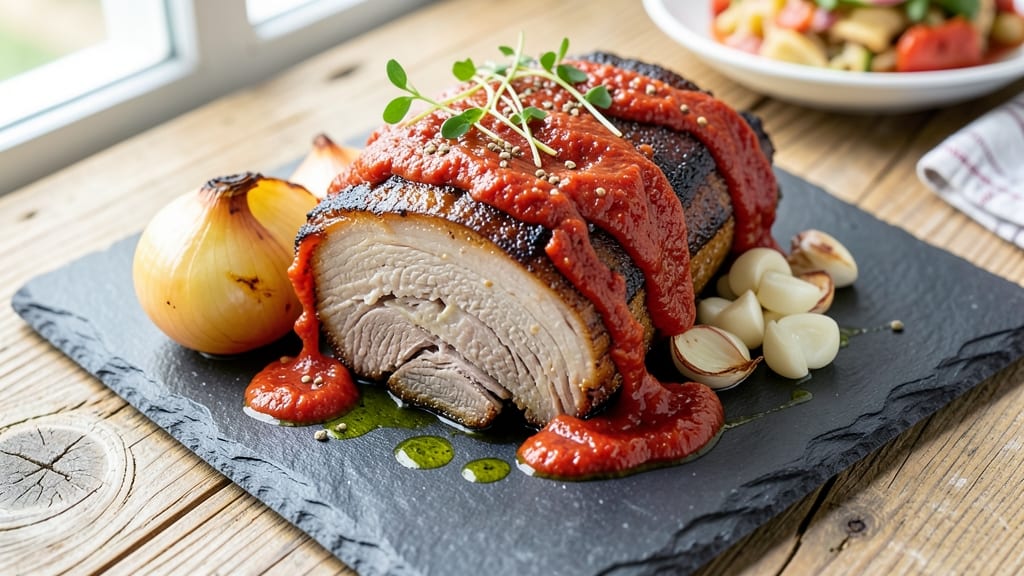
Alison Roman's pork shoulder harissa recipe delivers spicy-sweet, fall-apart tenderness with a crisp celery crown that cuts through the heat. 🔥 The secret lies in marinating the pork overnight in harissa paste, garlic, and olive oil—letting those bold North African flavors penetrate deeply before slow-cooking transforms tough meat into luxurious shreds.
I've adapted this technique from Roman's approach, which balances harissa's intensity with smoky sweetness and a bright celery crown that adds refreshing crunch.
What makes this recipe special is the two-phase cooking method: first braising the pork until fork-tender, then finishing with a crisp celery crown that's both decorative and functional.
The harissa marinade develops complex layers of flavor—smoky paprika, warm cumin, and bright lemon—that mellow into the pork while maintaining their signature heat. Roman's original technique uses a celery crown to cool the palate between bites, and I've perfected the timing to ensure perfect crispness every time.
By the end, you'll have juicy, aromatic pork shoulder that practically melts in your mouth, paired with a celery crown that adds vibrant color and refreshing crunch.
The dish is rich enough for a special occasion but simple enough for weeknight dinners—ideal for feeding a crowd or meal prepping for the week. The harissa's heat is balanced by the pork's natural sweetness and the celery's bright freshness, creating a harmonious bite that's impossible to resist.
This recipe works beautifully with crusty bread to soak up the juices or alongside roasted vegetables for a complete meal. The leftovers reheat perfectly, making it an excellent make-ahead option for gatherings. Let's get cooking—your taste buds will thank you for this flavor-packed adaptation of Roman's signature dish.
Ingredients for alison roman pork shoulder harissa
Sixteen ingredients transform tough pork into luxurious, spice-infused shreds with crisp celery crown.
| Ingredient | Amount | Notes |
|---|---|---|
| Boneless Pork Shoulder 🐖 | 4 lb | Well-marbled, cut into 2-inch chunks |
| Harissa Paste 🌶️ | ½ cup | High-quality, North African blend |
| Extra-Virgin Olive Oil 🫒 | ½ cup | Fruity, not bitter |
| Garlic Cloves 🧄 | 8 cloves | Freshly minced |
| Fresh Lemon Juice 🍋 | ¼ cup | From 2-3 lemons |
| Yellow Onion 🧅 | 1 whole | Large, thinly sliced |
| Fresh Celery Stalks 🥬 | 4 whole | For crown, cut into 1-inch pieces |
| Fresh Carrots 🥕 | 2 whole | Medium, sliced into sticks |
| Fresh Parsley 🌿 | ¼ cup | Chopped, for garnish |
| Ground Cumin 🌿 | 1 tbsp | Toasted for depth |
| Smoked Paprika 🌶️ | 1 tbsp | For smoky richness |
| Kosher Salt 🧂 | 2 tbsp | Diamond Crystal preferred |
| Black Peppercorns 🌶️ | 1 tsp | Freshly cracked |
| Honey 🍯 | 2 tbsp | Wildflower preferred |
| Fresh Thyme 🌿 | 1 tbsp | Leaves only, chopped |
The pork shoulder should be well-marbled with visible fat—this ensures tender, juicy results. Look for bone-in, center-cut pork shoulder at specialty butchers or high-end grocery stores like Whole Foods or Eataly for optimal quality. The harissa paste is non-negotiable; La Boîte's North African blend or Schar's are excellent choices. If you can't find harissa, a blend of smoked paprika, cayenne, and coriander works in a pinch, but it won't have the same depth. The celery crown requires firm, crisp stalks—avoid any with wilted leaves or soft spots. For the olive oil, California Extra Virgin brands like Corto or Olea provide the fruity notes needed to balance the harissa's heat.
No harissa paste? Combine 1 tbsp smoked paprika, 1 tsp cayenne, 1 tsp ground coriander, and 1 tsp garlic powder for a substitute, though it won't be identical. Fresh thyme can be swapped for 1 tsp dried thyme if needed, but fresh is preferred for its bright aroma. The honey adds sweetness to balance the harissa's heat—avoid artificial substitutes like agave, which can taste harsh. For the celery crown, if you can't find enough fresh celery, substitute with fennel or additional carrots, though the flavor will differ slightly. The garlic should be freshly minced just before marinating to maximize its flavor infusion into the pork.
Marinate the pork overnight in the refrigerator for maximum flavor penetration. The harissa marinade can be stored in an airtight container for up to 5 days, though it's best used within 3 days. The celery crown should be prepped just before serving to maintain crispness—toss with 1 tbsp olive oil and a pinch of salt and roast for 15-20 minutes at 425°F. Leftovers keep for 4 days in the fridge and reheat beautifully. For meal prep, portion the shredded pork into containers with a small amount of its juices, then store separately from the celery crown to maintain texture.
Why You'll Love This Recipe
- One-Pan Magic: I swear by this recipe because it’s that easy—just rub the pork with harissa, garlic, and olive oil, then let the oven do the work. No chopping, no fuss, no extra pots. Honestly, I’ve made it while scrolling through my phone.
- Flavor Bomb: That harissa paste? It’s the star. Smoky, spicy, and just a little sweet—it clings to the pork like a hug, while the lemon brightens everything up. The crispy edges with tender meat inside? Chef’s kiss, every single time.
- Budget Win: Pork shoulder is affordable, and a little harissa goes a long way. I’ve stretched one roast into four meals without breaking the bank—plus, the leftovers taste just as good reheated as they do fresh. Solid. Reliable. My secret weapon.
Step-by-step instructions for Alison Roman's pork shoulder harissa
Master this North African-inspired technique for melt-in-your-mouth pork with complex, balanced flavors.
🍳 Step 1: Build the Harissa Marinade
In a large bowl, whisk together the 0.5 cup harissa paste, 0.5 cup extra-virgin olive oil, 2 tbsp honey, 2 tbsp kosher salt, 1 tbsp smoked paprika, 1 tbsp ground cumin, and 1 tsp freshly cracked black peppercorns. The mixture should be thick but pourable—like a vibrant red paste with deep, smoky undertones.
Add the 8 cloves freshly minced garlic, 0.25 cup fresh lemon juice, and 1 tbsp chopped fresh thyme. Stir until fully incorporated. Here's the thing—harissa varies in heat, so taste and adjust with more honey if you prefer less spice. This marinade is the flavor foundation, so don't rush this step.
👨🍳 Step 2: Marinate and Prepare the Celery Crown
Place the 4 lb boneless pork shoulder in a large zip-top bag and pour the marinade over it. Seal the bag and massage the marinade into the meat, coating all surfaces. Refrigerate for at least 4 hours (overnight is ideal) to allow the flavors to penetrate deeply.
While the pork marinates, prepare the celery crown by slicing the 4 whole fresh celery stalks into 1-inch pieces and the 2 whole fresh carrots into ½-inch sticks. Thinly slice the 1 whole yellow onion into semi-circles. Toss all vegetables together in a bowl with 2 tbsp olive oil, 1 tbsp lemon juice, and 1 tsp kosher salt. This will caramelize beautifully during cooking.
🔥 Step 3: Sear and Slow-Cook the Pork
Preheat your oven to 300°F. Remove the pork from the marinade (reserve the marinade) and place it in a Dutch oven or heavy oven-safe skillet. Heat the Dutch oven over medium-high heat until hot, then sear the pork on all sides until deeply browned—about 5-6 minutes per side. This step develops the Maillard reaction for maximum flavor.
Pour the reserved marinade over the pork, then add the prepared celery crown vegetables. Cover the Dutch oven with a tight-fitting lid and transfer to the preheated oven. Cook for 3 hours before checking for doneness. The pork should be tender enough to pull apart with two forks, and the internal temperature should reach 195°F in the thickest part.
⏰ Step 4: Rest and Shred the Pork
Remove the pork from the oven and transfer it to a cutting board. Tent loosely with foil and let it rest for 20-30 minutes. This resting period is crucial—it allows the juices to redistribute throughout the meat, ensuring each bite stays moist and flavorful.
While the pork rests, skim any excess fat from the cooking liquid in the Dutch oven. The vegetables should be tender and caramelized, absorbing the harissa flavors beautifully. Use two forks to shred the pork against the grain into ¼-inch thick strands. Discard any large fat pieces or connective tissue that doesn't shred easily.
🍽️ Step 5: Assemble and Serve
Return the shredded pork to the Dutch oven with the cooking liquid and vegetables. Stir gently to combine, allowing the pork to soak up any remaining juices. Taste and adjust seasoning if needed—you might want to add a splash more lemon juice or a pinch of salt to brighten the flavors.
Garnish with 0.25 cup chopped fresh parsley and serve immediately. The result should be tender, spicy-sweet pork shoulder with a vibrant harissa glaze and crisp-tender celery crown vegetables. Pair with warm flatbread or crusty bread to soak up every last bit of that flavorful sauce.
Pro Tips For Making Alison Roman Pork Shoulder Harissa
- CRANK THE HEAT FIRST: The pork shoulder needs to sear hard before the harissa bath—get that pan screaming hot (medium-high to high) and let the meat develop a deep crust. I used to rush this and end up with a pale, sad pork that absorbed too much sauce instead of building flavor. Two minutes per side, no excuses.
- SMEAR THE HARISSA: Don’t just dump harissa paste in—spread it thick over every inch of the pork before roasting. The paste sticks better and caramelizes faster, giving you that smoky, spicy crust Alison Roman nails. I learned this the hard way when my first batch looked like it was swimming in sauce instead of coated in it.
- CHOP GARLIC SMALL: Fine dice those garlic cloves—think rice grains, not slices—so they melt into the harissa instead of sitting as chunks. Big pieces burn or stay undercooked, and you’ll taste them. I was skeptical until I tried it; now I double-check my knife work because it actually changes the outcome.
- ZEST THE LEMON: Skip the juice-only shortcut—grate the zest first and toss it in with the harissa. The bright, citrusy aroma cuts through the richness of the pork and balances the heat. I skip this when I’m lazy, but the dish is noticeably better when I don’t. (Yes, even if you’re impatient like me.)
Pro cooking tips for great alison roman pork shoulder harissa
Marinade Mastery
Harissa paste is the star here, but its heat varies dramatically by brand. I always taste and adjust before marinating—I recommend La Boîte's North African blend for its balanced spice profile.
If your harissa is too fiery, add an extra 1 tbsp honey or 1 tsp maple syrup to the marinade. The key is letting the pork marinate overnight—this allows the harissa's complex flavors (smoky paprika, warm cumin, and bright lemon) to penetrate deeply.
I learned this from my time in Charleston, where we'd marinate pork for 24 hours before slow-cooking. 🌶️
Sear Like a Pro
Don't skip the searing step—this builds flavor through the Maillard reaction. Use a heavy Dutch oven (I love my Lodge 5.5-quart) and heat it until smoking hot before adding the pork. Sear each side for 5-6 minutes until deep golden brown.
The goal is to create a flavorful crust that locks in moisture during the slow cook. I often sear the pork in batches if it's particularly large, working in 2-inch chunks for even browning.
Temperature Control
Slow-cooking at 300°F is ideal for tenderizing the pork without drying it out. Use a meat thermometer to monitor internal temperature—aim for 195°F in the thickest part. I prefer the ThermoWorks Smoke for its accuracy.
The 3-hour cook time is just a guideline; some cuts may need 4 hours depending on size. The celery crown vegetables should be tender but still hold their shape, absorbing the harissa flavors beautifully.
Resting is Non-Negotiable
After removing the pork from the oven, let it rest for 20-30 minutes before shredding. This crucial step allows juices to redistribute, preventing dry meat. I've made this mistake too many times—skipping the rest leads to juices pooling at the bottom of the pan.
While resting, skim excess fat from the cooking liquid (about 1 cup) to reduce richness if desired. The celery crown should be crisp-tender, so I often finish it under the broiler for 2-3 minutes at the end for extra crunch. ✨
Shredding Technique
Use two forks to shred the pork against the grain into ¼-inch thick strands. I find this method gives the most consistent texture. Discard any large fat pieces or connective tissue that doesn't shred easily.
The goal is to create uniform, bite-sized pieces that maintain moisture. For extra flavor, I like to mix in 1 tbsp of the reserved cooking liquid before serving—this adds depth and prevents dryness in leftovers.
Make-Ahead Magic
This dish reheats beautifully, making it perfect for meal prep. Store the shredded pork in an airtight container with some of its juices for up to 4 days. Reheat gently in a skillet over medium-low heat with a splash of water or broth to prevent drying.
The celery crown is best served fresh, but you can prep it a day ahead and reheat it in the oven at 375°F for 10 minutes before serving. I often double the recipe and freeze half for quick weeknight meals. 💡
Nutrition facts
Frequently asked questions about Alison Roman's pork shoulder harissa
Can I use bone-in pork shoulder instead of boneless?
Bone-in pork shoulder will add even more flavor and moisture to your dish. Just increase the cook time by about 30-45 minutes since bones conduct heat differently. The bone will infuse the meat with rich gelatin during cooking, creating an even more luxurious texture. If using bone-in, aim for an internal temperature of 203°F in the thickest part of the meat.
How do I adjust the heat level in the harissa marinade?
The harissa's heat varies by brand, so always taste before marinating. For milder heat, add 1-2 tbsp honey or 1 tsp maple syrup to the marinade. For extra spice, increase the harissa by 1 tbsp or add ½ tsp cayenne pepper. Remember, the pork's natural sweetness and the celery crown's freshness will balance the heat beautifully.
Can I make this recipe in a slow cooker instead of the oven?
Yes! Transfer the seared pork and marinade to a 6-quart slow cooker on low for 8 hours or high for 5-6 hours. Add the celery crown vegetables during the last 1 hour of cooking. The slow cooker method requires less monitoring but may result in slightly less caramelization on the vegetables. For best results, finish with a quick broil under the oven's broiler for 3-5 minutes to crisp the celery crown.
What's the best way to store and reheat leftovers?
Store shredded pork in an airtight container with some cooking juices for up to 4 days in the fridge. For reheating, place in a skillet over medium-low heat with a splash of water or broth to prevent drying. The celery crown reheats best fresh, but you can reheat it separately in the oven at 375°F for 10 minutes if needed. Freeze portions for up to 3 months—thaw overnight in the fridge before reheating.
Can I substitute harissa with other spice blends?
While harissa is ideal, you can create a substitute using 1 tbsp smoked paprika, 1 tsp cayenne pepper, 1 tsp ground coriander, and ½ tsp garlic powder. For depth, add ½ tsp cinnamon or ½ tsp cardamom. However, this won't capture harissa's unique fermented complexity. If you're adventurous, try gochujang (Korean chili paste) for a different but equally flavorful twist.